9 months building an AI IDE for dev teams (not solo devs) — here's what I learned
Hey IH 👋
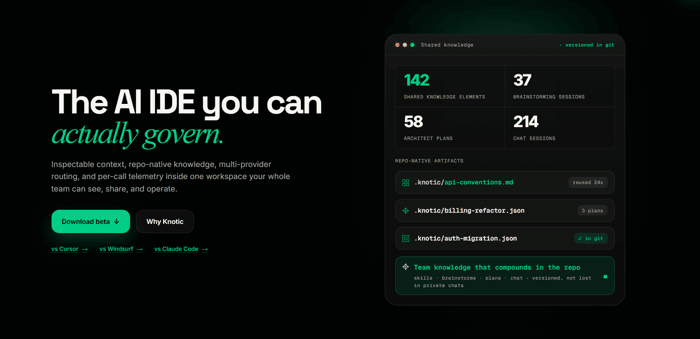
I've spent the last 9 months building Knotic, a VS Code-based AI IDE, and wanted to share where it's at and what got me here.
The problem I set out to solve
Every AI coding tool I tried was built for one person typing alone. None of them were built to serve a team. If you and three teammates are all using AI to write code on the same codebase, you're all re-explaining the same architecture and conventions to the model, every single session. Nothing compounds. And worse, you never actually see what's being sent to the model.
You just get an answer and have to trust it.
That gap became Knotic's whole reason to exist.
What I built
Three core pieces:
Context Lens: you see the exact prompt, token budget, and context blocks before they're sent. You can trim or reorder before it costs you money or wrecks the output.
Skills as Code: team conventions and workflows become versioned files in the repo, reviewable in Git, instead of dying in someone's private chat history.
Per-call telemetry — cost, latency, tokens, files touched, per call and per agent. So "why did this session cost so much" has a real answer.
Plus multi-provider routing (Anthropic, OpenAI, OpenRouter, GitHub, or local models) so teams aren't locked into one vendor.
Where it's at now
Free to start (bring your own API key or run local models), with paid tiers for teams that want managed inference. It's been shaped almost entirely by a beta community that's pushed back hard on early assumptions — a lot of what shipped in the last few months came directly from that feedback loop, not from my own roadmap guesses.
What I'd love from this community
If you're building with a team (even just 2-3 people) and have hit the "everyone re-explains the codebase to the AI" problem, I'd genuinely love your feedback — good or brutal.
And if you've built dev tools for teams before, I'm curious what governance/visibility features actually mattered vs. what you thought would matter and didn't.
