A 5-figure-MRR success after a failed product buried him in debt
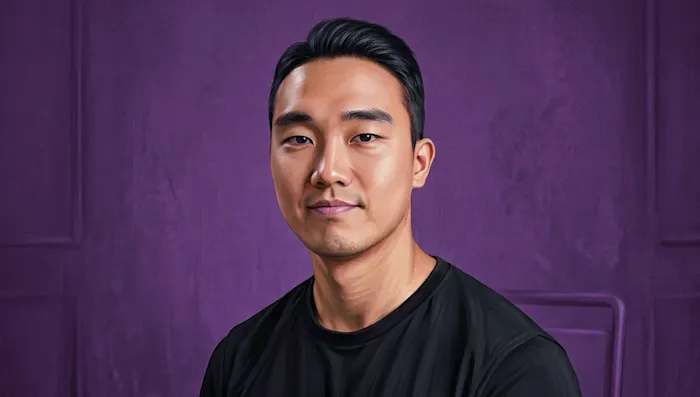
When Jung Hong Kim's product went under during COVID, he went into debt. It took him six years to dig himself out, and along the way, he came up with a new idea.
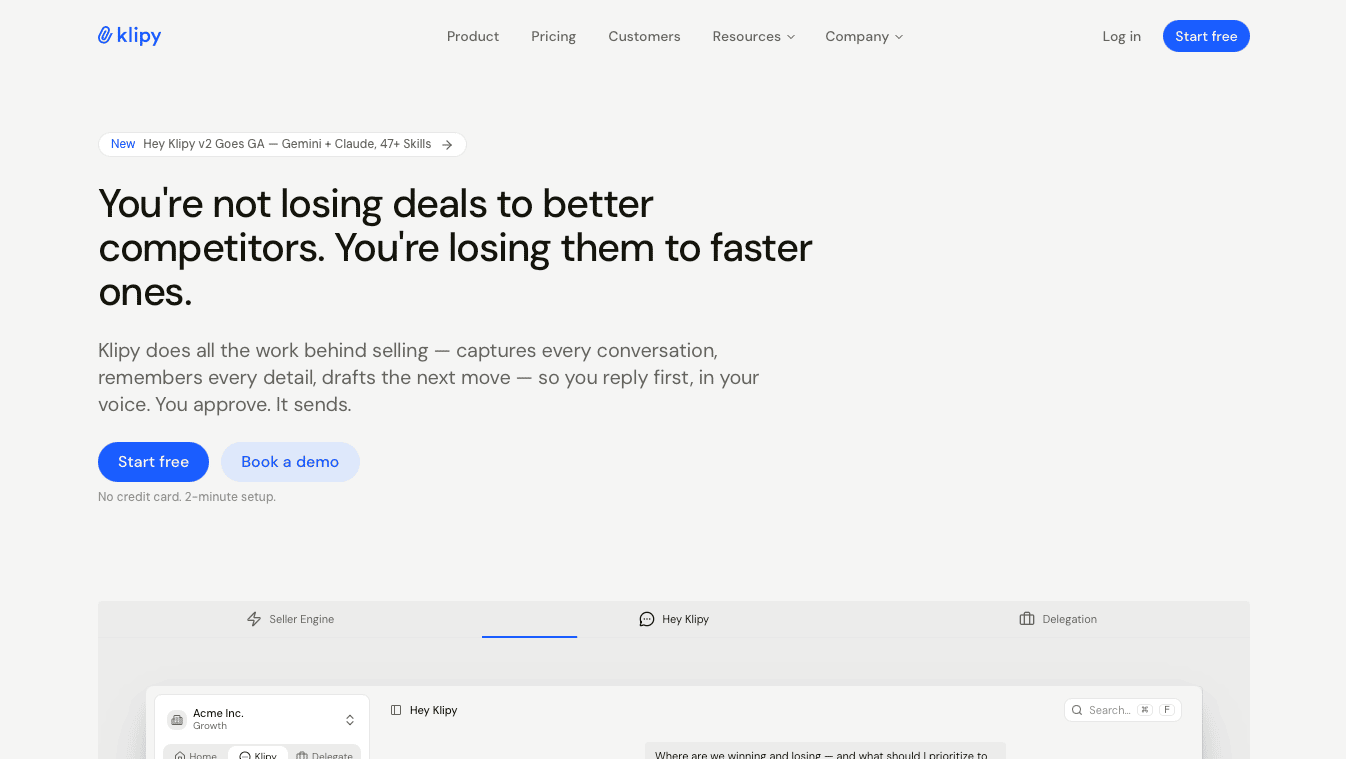
He launched Klipy.ai in three months. And today, it's bringing in a 5-figure MRR.
Here's Jung on how he did it. 👇
When a failure propels you toward a new success
I am a Korean serial founder. I began my startup journey in Hong Kong. I built and sold two companies developing machine-vision-based retail analytics software for shopping malls and government properties.
I was working on another startup — also heavily focused on retail — but it crashed violently when COVID wiped out the entire retail solution market overnight. This put me into serious debt, and I spent about six years as a management consultant specializing in large-scale infrastructure and enterprise architecture.
That's when I met my now cofounders. We worked together on projects, witnessing patterns of failure in enterprise software. And that led to the concept of what we are building now. — an AI Chief Revenue Officer that automates all back-office operations for enterprise and consultative sales processes, turning every seller into a 10-person sales team.
Most business information system failures stem from the gap between how humans think and how data is saved. Not everyone can think in spreadsheets. LLMs bridge this gap effectively. We eliminate the entire sales data collection process and use AI agents to execute mundane sales processes, allowing sellers to focus on client interactions.
The product launched as an automatic CRM in November 2024 and has consistently pivoted and improved. Currently, it serves around 4,000 companies worldwide, mainly in North America and Australia.
We're at a 5-figure MRR, and we're targeting $1.5M ARR by the end of 2026.
Building the product
This was a classic dogfooding case. I have been a loyal HubSpot customer throughout my career, but I found it painful to enforce its use when scaling sales teams. CRMs are crucial for business operations, enabling forecasting, planning, and centralized customer record-keeping. However, salespeople often lack the motivation to perform data entry. So, we started the product with one feature: a simple sales CRM that automatically logs communications from email, LinkedIn, and meetings using AI.
I hand-coded the first MVP in about three months. The stack is Next.js + Convex as the backbone. We have many side systems built with Go and Rust, hosted on Google Cloud, for integration and various subsystems that our AI agents use for scraping and generating documents.
Convex helped me save significantly on DevOps costs because it handles the entire infrastructure provisioning and workload orchestration via a JavaScript-based SDK — basically, Supabase for NoSQL. This helped me focus purely on business logic, which accelerated the process.
The biggest challenge was the frontend. When I started, I didn't even know what Next.js was. But like any other engineering problem, I built, tested, and set up good observability to identify problems faster than users, then rapidly debugged them.
Landing on freemium
We have been bootstrapping this company since day one, with everyone full-time. Fortunately, I am both a developer and a seller. So, we kept our costs very low. We leveraged as many government grants as possible to fund the business, keeping fixed costs as low as possible.
Since we were all full-time on this, we had ample time. Money came from grants and our own savings until we became profitable.
Our current business model is freemium. We started charging from day one because we didn't want to test or build features based on the feedback of someone who's unwilling to pay. That sort of feedback is mostly nice-to-haves. Burning needs from real customers are more important and should take up 80% of your time.
The free tier includes 200 tokens per month, a single user, and two channel integrations. The paid tier ranges from $39 per month per seat up to $149 per month per seat. It varies by monthly tokens (cheaper per token on higher tiers) and optional enterprise security features.
We tested many pricing models. These included add-ons such as a monthly fee on channels, token-based pricing, and lifetime deals. Ultimately, we settled on results-based pricing because it makes sealing the deal easier. We then engineer the product to keep margins intact. This also allowed us to navigate significant PLG-driven growth by offering free tokens for specific user actions within the product.
We still operate with only the three founders. We are currently raising capital to scale the business, with one pre-seed investor on our cap table.
My advice? Charge first, then ensure they feel sufficiently supported. In B2B, people ultimately pay for a sense of security, not features. Features create that sense of security. Good support does, too, while you learn what to build.
Launch and growth playbooks
Our launch strategy was simple. We researched the previous month's top performers on Product Hunt, Microlaunch, Reddit, and Appsumo to understand what the audience was looking for. Then, we created super attractive offers for each platform.
The offers often included lifetime deals. Those were crucial because lifetime users expect lifetime access, which provides us with lifetime testers. Most people complaining about LTD promotions expect them to be profitable, but making LTD profitable is very difficult, especially with the gross margin of LLM-based products. We just wanted to acquire 100 core users so that we could continuously improve the product based on their feedback and get referrals to grow our revenue.
Another benefit of our launch approach was that most of these launch sites have members who are freelancers and small agencies. We turned those into affiliates and subsidized referrals.
After that, we used cold direct sales. These were crucial early on. Content can provide some inbound, but think of it as a wide net you set up. Here's the playbook
You should always set up ad pixels first.
Then, properly track funnel events with them.
For B2B, build a well-matched audience on LinkedIn Ads.
Build in public to show people you are a "real person." With AI, this has become more important because there are exponentially more AI flops and scams online.
Collect testimonials at all costs. Send emails, use pop-ups, and gating — testimonials are key content for the bottom of the funnel.
Lead magnets still work well, but bundle them with an explainer video and upload it to YouTube, which also helps AI discovery.
Once you set up these basic systems, drive SEO and AEO through support articles. This helps activation, retention, and AI discovery.
Then, scrape competitor LinkedIn page followers and reach out to them. Tell them what you offer differently. They'll get curious faster than a random audience.
Once you achieve steady growth from these inbound & outbound channels, leverage the pixel database to scale them with ads. Hire a performance marketer to handle this. Then monitor CAC/LTV.
Now, we've started executing the "headless CRM" strategy. Claude is pushing all existing boundaries for GTM point solutions, but it still requires a robust single source of truth to service a team larger than 5 pax. This allows us to run very strong PLG and integration partnership campaigns to accelerate our growth.
This upgrade is going live in 2 weeks, and we look forward to working with agencies and freelancers building great solutions around the Claude ecosystem.
Bootstrapping mistakes
The biggest challenge has been bootstrapping with three people. This significantly constrained our growth — we overfocused on being lean and using AI for everything, but I wish we had sourced good agencies and freelancers earlier when we saw PMF signals. Now that we are in growth motion, the risk of hiring the wrong agency has grown.
Overall, I don't think we took enough risks on scaling operations — I would not make this mistake again.
Three pieces of advice
Here's my advice:
Don't spend too much time developing solutions. You are not solving your own problem, and you are not your customer. Many people suffer because they don't know what you already know. Find them, solve their problem, and your business will grow as you do this more.
Go to more events and meet new people. Something like 2% of the people you meet can give you a completely new perspective. Find them. Being stuck in the office gives you 0% chance of doing this.
And maintain health at all costs.

Leave a Comment
I also liked the honesty around the mistakes. We often hear "stay lean" as universal advice, but this shows there's a point where being too lean can slow growth. The hard part isn't just finding product-market fit, it's recognizing when it's time to invest and scale.
This really stood out for me "Burning needs from real customers are more important and should take up 80% of your time"
Thank you very much for the wonderful advice, Meeting new People, Building solution for others not what we think and maintaining Health. I think i needed this. I have been working on Idea of Business companion which Map Companies , customers, Market, using Knowledge Graph and find Opportunites by connecting the dots. I have been successful in finding breakthrough ideas But still those are what i think are great ideas. I need to do this for customers and Ask their feedback and meet new people. Recently inconsistent with Gym .. for short term may be ok but i will listen to you. Rest your product is great i will use it for my venture. Look forward for your future product release and wish you all the best.
Pick one company and one decision they need to make this week. Build the smallest graph that changes that decision, then ask what evidence was missing; general feedback on a large map will mostly produce more ideas, not proof that the product helps.
awesome
free feedback is mostly nice-to-haves that one hurt. half of what we shipped in bunzee came from people who never paid. did the ltd users actually give better feedback?
This is such a cool product!
Can you please guide me as I've also started a new company named Genghix Tech and wants to grow.
I've been a failure for the most of the time. Please guide me to prove myself that I'm not a Failure
Six years of debt after COVID wiped out the last company, and still finding a way back to building. That's a genuinely hard road, glad it led somewhere.
The line that'll stay with me is "people ultimately pay for a sense of security, not features, features just create that sense of security, good support does too." That's a sharper way of saying something a lot of builders miss: the feature list isn't really what closes the sale, it's whether the buyer feels safe committing. Easy to spend all your time on the feature, harder to notice it's really security you're selling.
Also appreciated the honesty about the hiring mistake, staying lean for so long that you missed the moment to bring in help when the PMF signals were already there. Not a lot of these posts admit to a "should've moved faster on this" moment that clearly.
Covid....what an era...more Millionaires created and more projects that never were able to recover at the same time.
Really inspiring journey - from losing a startup during COVID to building a profitable AI company with 4,000 customers. I especially liked your advice to charge from day one and focus on feedback from paying customers instead of building features people only say they want. Thanks for sharing such practical lessons, and best of luck reaching your $1.5M ARR goal!
Great story. It's easy to focus on the success, but the lessons from the failed startup and the six years in between are probably the most valuable part. Building based on real customer feedback instead of assumptions is something every founder should remember.
The "charge from day one" point stood out to me. Easy to convince yourself that free users give honest feedback, but like you said, most of it is nice-to-haves. The people willing to pay tell you what's actually broken. Also really respect the six years digging out of debt before this even started. That's the part people skip over when they see a 5-figure MRR headline. One thing I'm curious about: with 4,000 companies on a freemium model, how are you thinking about the ones who convert late versus the ones who churn on a failed renewal. Curious if that split has surprised you at all as you've scaled.
Cette expérience met en lumière le risque de se concentrer excessivement sur un seul secteur, même avec une solide expertise technique. Passer des produits de vision industrielle pour le commerce de détail à l'architecture d'entreprise vous a probablement permis d'avoir une vision plus large de l'évolutivité, de la résilience et de la diversification des marchés pour votre prochaine startup.
That experience highlights the risk of concentrating too heavily on one industry, even with strong technical execution. Moving from machine-vision retail products into enterprise architecture likely gave you a broader view of scalability, resilience, and market diversification for your next startup.
Courage, resilience, and faith in what we do are always the core attitudes that every successful founder should possess.
What's eating more of your time than it should building, or everything around it?
The most interesting part for me was the mistake of staying too lean after product-market-fit signals appeared. Bootstrapping advice usually glorifies minimizing costs, but once demand is proven, excessive caution can become its own risk.
I also liked the distinction between free-user feedback and paying-customer pain. For a done-for-you service like SongTrailer, that suggests I should learn less from people who simply say the concept looks interesting and more from artists who are actively preparing a release and willing to spend on promotion.
At what point did you become confident enough that hiring external help would accelerate growth rather than just increase burn?
The COVID wipeout of the retail-analytics market — after you’d already sold two machine-vision companies — is a brutal chapter. Respect for naming the debt and then spending six years in infrastructure/enterprise consulting instead of pretending the next idea would save you overnight.
The “humans don’t think in spreadsheets” line is the sharpest insight in the post. That’s exactly where most enterprise tools quietly fail.
When you were still consulting, what was the first recurring sales-process failure that made you think “this needs an AI CRO,” not another dashboard?
Really enjoyed this. The part that resonated most with me was your point about charging from day one. A lot of founders chase feedback from free users, but they're often solving different problems than people who are actually willing to pay.
I also liked the reminder that you are not your customer. That's such an easy trap to fall into when you're building every day.
One thing I'm curious about: after all the pricing experiments, what was the biggest signal that told you the final pricing model was the right one? Was it conversion, retention, customer conversations, or something else?
Bouncing back from debt and a COVID-driven retail crash to hit 5-figure MRR with kilippy is incredible! Automating back-office sales operations and eliminating manual data collection with AI agents solves such a real, painful gap in traditional CRMs. Huge respect for the resilience and clear technical execution!
This is spot on. We ran into the same "brand trust" issue during our pre-seed.
One VC specifically said our .io domain made us look "early stage" even though we had revenue. Ended up buying the .com before Series A.
Did you see a difference in investor response after changing anything in your branding?
That domain example says a lot, small perception details carry more weight than people expect, especially with investors who see hundreds of pitches. I have noticed the same thing on a smaller scale, businesses that clean up things like their email presentation or how their site looks tend to get taken more seriously almost instantly, even before anyone reads the actual pitch or offer.
The part about charging early stood out. Free users give opinions, paying users show priorities. That feedback loop is way more useful when building SaaS.
That distinction is underrated. Opinions are cheap when nothing is at stake, but the moment someone pays, their feedback shifts to what actually matters for their business. I see the same thing with small branding work I do, people ignore free advice about things like a proper email signature or newsletter, but the second they pay for it, they suddenly care about getting every detail right because real money and real customers are now tied to it.
you nailed it
The biggest takeaway for me wasn't the AI, it was validating with paying customers early and treating failure as market feedback instead of the end of the journey. That's how sustainable companies are built..........
I also your perspective that people buy confidence and support, not just features. Thanks for sharing your journey, and congratulations on the progress!
Really useful especially the point about charging from day one to filter for real signal vs. nice-to-haves feedback. I'm at a much earlier stage just testing an idea with a simple landing page before building anything but curious in hindsight: was there a moment before you started charging where you thought you had validation but it turned out to be false positive interest?
Interesting perspective! I agree that the real value isn't more metrics—it's knowing what action to take next. Turning analytics into clear, practical recommendations could help marketers make faster and better decisions. Excited to see how this approach evolves.
Excellent resilience. Curious on how you found your 1st paying customer? How many customers have you reached out to, before signing up this customer, and How long it took for you to switch from NO to Yes.
The six-year detour after COVID failure makes this more believable than most 5-figure MRR posts. Dogfooding the HubSpot pain into an auto-logging CRM is a clean origin story.
“Charge first, then support them into feeling secure” is the line I’m keeping. Especially for B2B where people buy confidence more than feature lists.
I also liked the LTD framing as lifetime testers, not lifetime profit. Most people get that backwards.
I built Make it RAIN for creators stuck turning shipped products into income, so the cold outreach + testimonials + funnel tracking playbook is useful even outside enterprise CRM.
If I were copying one thing from this for an early bootstrap, it would be: get 100 people who actually use it daily before obsessing over scale.
This strategy is especially effective for focused utility products that solve one clear problem and attract users through highly specific search intent. A tool such as this can build steady organic traffic by helping users instantly test controller buttons, triggers, analog sticks, and stick drift without installing software.
Appreciate it!
The mistake he buries at the end is the one worth reading twice: staying too lean after PMF showed up. I bootstrapped Henson Group with zero outside funding and made the same error, treating frugality as the goal instead of a phase. Lean is how you survive the search for product-market fit, not how you exploit it.
The part I keep coming back to is your point that burning needs from paying customers should take 80% of your time. Free users tell you what would be nice. Paying customers tell you what actually hurts. Those are not the same feedback and treating them the same is how products drift into feature bloat.
One question, since I'm curious about the LTD execution: with LLM gross margins being what they are, how did you cap token exposure on the lifetime deals without making the LTD look stingy to the buyer? That balance seems really hard to strike honestly.
Six years of consulting between the failed startup and Klipy is a real detail. Most success stories skip that middle chapter.
Founder:
Nexiobit: www.nexiobit.com
awesome
Really appreciate that this includes the failure part too, not just the win. Going into debt before finding the idea that worked is the part most success stories skip over. What made you keep going after the first product didn't land?
This is a great example of why deep domain knowledge matters. You didn’t try to build a huge platform. you solved one frustrating Intune problem really well. Also, almost quitting when Microsoft announced something similar is relatable. Glad you kept going.
One point that stood out to me wasn't the AI itself, but the observation that many enterprise software failures come from the mismatch between how people naturally think and how systems force them to work. For years we've expected humans to adapt to CRMs, ERPs, and spreadsheets instead of adapting software to humans. LLMs may finally reverse that equation.
That said, I think the long-term challenge won't be automation—it's trust. If an AI is logging interactions, updating records, and executing parts of the sales workflow, companies will judge it less on how "smart" it is and more on reliability, auditability, and whether people feel comfortable delegating critical tasks to it.
Too many founders optimize for user count instead of validating whether they're solving a problem people are actually willing to pay to fix. Revenue is often the strongest form of product feedback. again thank your for such a valuable guidance for newbies
great advice, specially the health one. As i was genuinely into fitness, and stopped working out completely when i started working on my app idea. 1.5 years into the building and I realized my health has declined to the point where a walk around the block would be life threatening. Am glad am finally back to my fitness journey.
touchable!!!
Great reminder that distribution and talking to customers matter just as much as shipping features
the "charge first" advice hits hard — i've been doing the opposite, trying to find free testers before charging, and it's exactly the trap you're describing
curious how you handled the first 10 paying customers before you had any social proof or testimonials — that chicken and egg problem seems like the hardest part
good
Incredibly inspiring story! As a fellow developer bootstrapping right here in Hong Kong, your journey resonates with me on so many levels.
Your advice on "charging from day one" to filter out non-paying feedback is a massive sanity check. I'm currently building my apps - VolumeEdge and was literally having a debate with myself today about whether $19.99/mo is too high for a Phase 1 MVP. Reading how you navigated pricing models and used early LTDs to secure your first 100 core testers was exactly what I needed to hear.
Wishing you and the team massive success on reaching that $1.5M ARR by the end of 2026! I’d love to connect on LinkedIn to follow your GTM journey.
Your bootstrapping playbook hits hard
Respect for sharing the debt part openly, that's the part most people skip. Curious what was actually different in the second attempt — was it the idea itself, or more about how you validated it before building this time?
Incredible breakdown, James. Your point about "building in public" really resonates - I'm running a sustainable fashion brand with print-on-demand, and I've seen the exact same pattern.
What strikes me most: your willingness to pivot from pure tech (CRM automation) to solving actual human problems (sales teams that hate data entry). That's the difference between 0 customers and 5-figure MRR.
Your bootstrapping playbook hits hard - especially #4 about authenticity with AI. We're experiencing the same thing: authenticity is now a feature, not a soft skill. When you show your process, failures, and real constraints (we're bootstrapped with 3 people too), people trust you more than polished corporate presentations.
One question for you - how do you balance the "build in public" + hustle with maintaining founder health? That's where I see most bootstrappers burn out, and you mentioned health as piece #3 of your advice. That discipline seems to be what separated you from the many startups that implode even with great product-market fit.
Rooting for your $1.5M ARR target by end of 2026! 🚀
What's the task on your plate right now that you keep putting off the longest?
The article was informative. It will help me in future.
What's the most annoying repetitive thing on your to-do list this week?
What an inspiring comeback story, Jung! Going from deep debt after a COVID wipeout to 5-figure MRR in just a few months with Klipy.ai is seriously impressive.
The insight about CRMs failing because salespeople hate data entry hit hard — it's such a classic human problem that most tools completely ignore. Automating logging from email, LinkedIn, and meetings with AI agents is exactly the kind of "remove the friction" solution that wins in B2B. Love how you charged from day one and focused on burning needs from paying customers instead of nice-to-haves.
Also, the LTD strategy as a smart way to get real testers and affiliates while bootstrapping is brilliant. Congrats on hitting profitability with just three founders — that's real grit. Wishing you massive success on the way to $1.5M ARR and beyond. I'll definitely be checking out Klipy.ai!
If you could hand off one task forever, what would it be?
The part about CRMs failing because salespeople hate data entry really resonated. It’s such an obvious problem once you see it, but most tools still expect people to change their habits. Congrats on coming back from such a rough period and building something real.
What's eating more of your time than it should building, or everything around it?
Great info and advices, thanks!!! I think every article should have a "X pieces of advice" in the end.
What's the one admin task you'd pay $5 to never touch again?
This is an incredible breakdown of what it actually takes to bounce back and build a successful B2B SaaS.
Two massive takeaways here:
"Charge from day one": Jung’s point about ignoring "nice-to-have" feedback from free users is gold. If someone isn't willing to pay, their feedback can actually steer your product in the wrong direction.
The Lifetime Deal (LTD) mindset: Viewing LTDs as a way to acquire 100 core product testers and affiliates—rather than a primary revenue source—is a brilliant way to offset high LLM API costs while building a loyal feedback loop.
Congrats on hitting a 5-figure MRR and navigating the pivot to an AI Chief Revenue Officer!
What's something on your backlog you know needs doing but keep avoiding?
One point that stood out was charging from day one while still using a freemium model. Too many founders treat free users and paying customers as equal sources of feedback, but they usually optimize for very different problems.
The other lesson is that your biggest pivot wasn't technical, it was around customer behavior. Automatic CRM adoption solves a problem that has existed for years because it removes work instead of asking sales teams to build better habits. Products that eliminate a task often have a stronger advantage than products that simply improve it.
Mighty Hacker Recovery Reclaim Stolen Crypto Reviews 2026
The insight about the gap between how humans think and how data is saved is spot on. I've seen so many teams buy expensive CRMs like HubSpot or Salesforce, only for them to become ghost towns because salespeople hate data entry. Automating the communication logging from day one using AI agents is the only way to actually solve this. Congrats on digging yourself out of the post-COVID debt and building this to a 5-figure MRR!
Charging from day one while keeping a free tier is the sharpest decision here. I would cohort free users by the token-earning action and measure whether those rewards improve activation or just create reward-seeking behavior; otherwise PLG credits can hide a weak core loop.