A domain can be available and still be the wrong name
Picture the moment you name a new product. You have a promising phrase, so you check a registrar. The .com is taken; the .ai is green. It is tempting to treat that green badge as the decision. But it only answers whether one registration may be possible right now. It says nothing about who already uses the name, whether people search for it, or what kind of site has built an audience around it.
I work on QName AI, and the question behind the product is simple: what would a founder want to know before spending money and months of work on a name? Here is the research loop we are building around that question.
Start with the registration record
I begin with a few possible names, not one favorite. QName lets me check a phrase across relevant extensions, then open the WHOIS or RDAP record for an existing domain. Creation and expiration dates, registrar, nameservers, and status codes give me a much better picture than a red “taken” label.
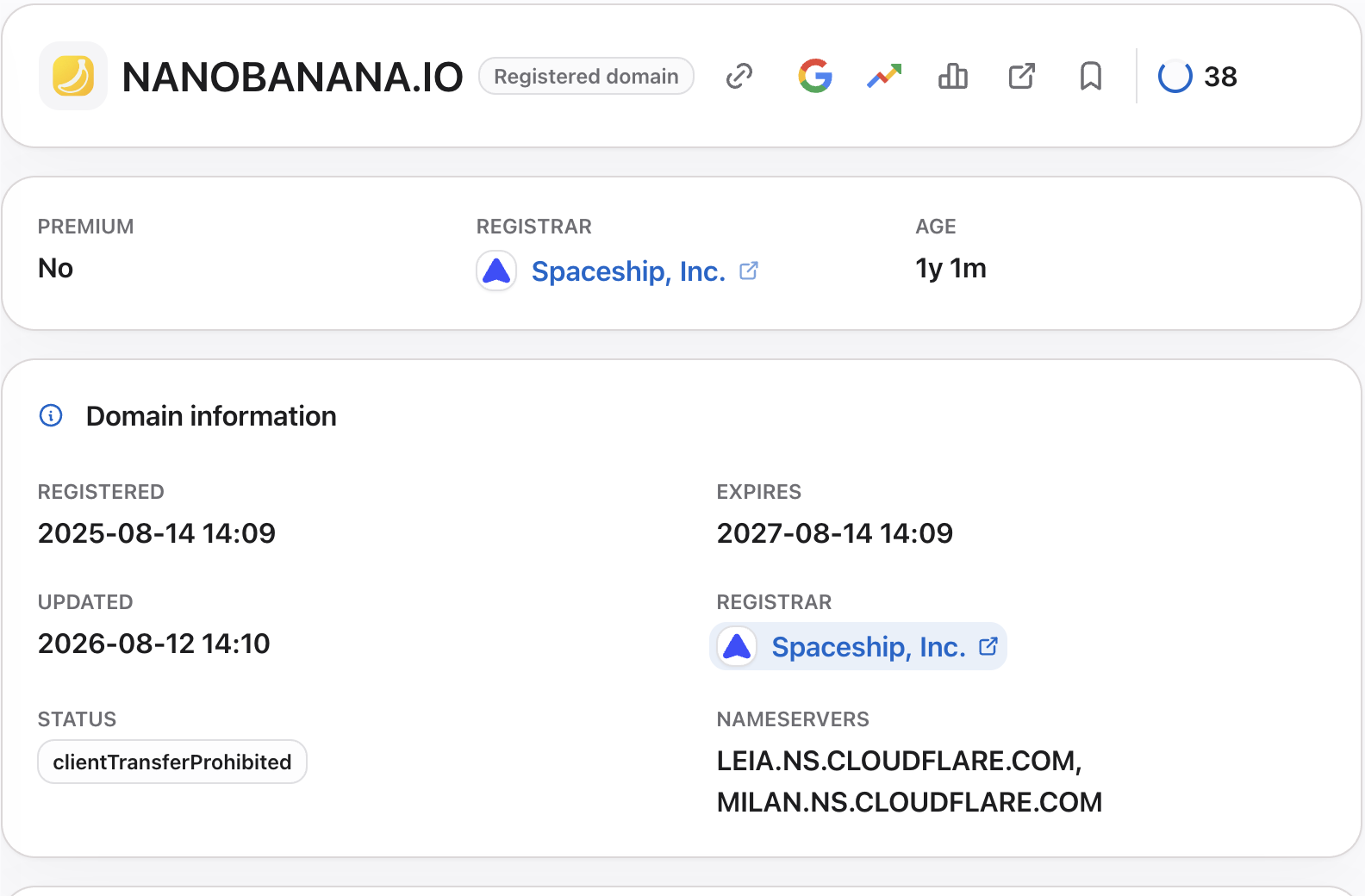
A real QName WHOIS view for nanobanana.io, captured September 27, 2026. Registration data can change.
They also have limits. A privacy service may hide the registrant. A missing date means the date is unknown, not that the domain is new. A recently expired domain can change status. Before buying anything, I would still check the final availability and renewal price with the registrar.
This matters when two names look equally good on paper. One may have a long, visible history and a confusingly similar brand behind it. The other may be easier to own and explain. The registration record does not make the choice for you, but it gives you questions worth asking.
Look at the footprint behind a name
Suppose you are researching nanobanana.io. You might want to know more than its registration status: is there an established audience, where does the traffic come from, and which search term is associated with it? QName brings domain traffic and SEO signals into the same investigation.
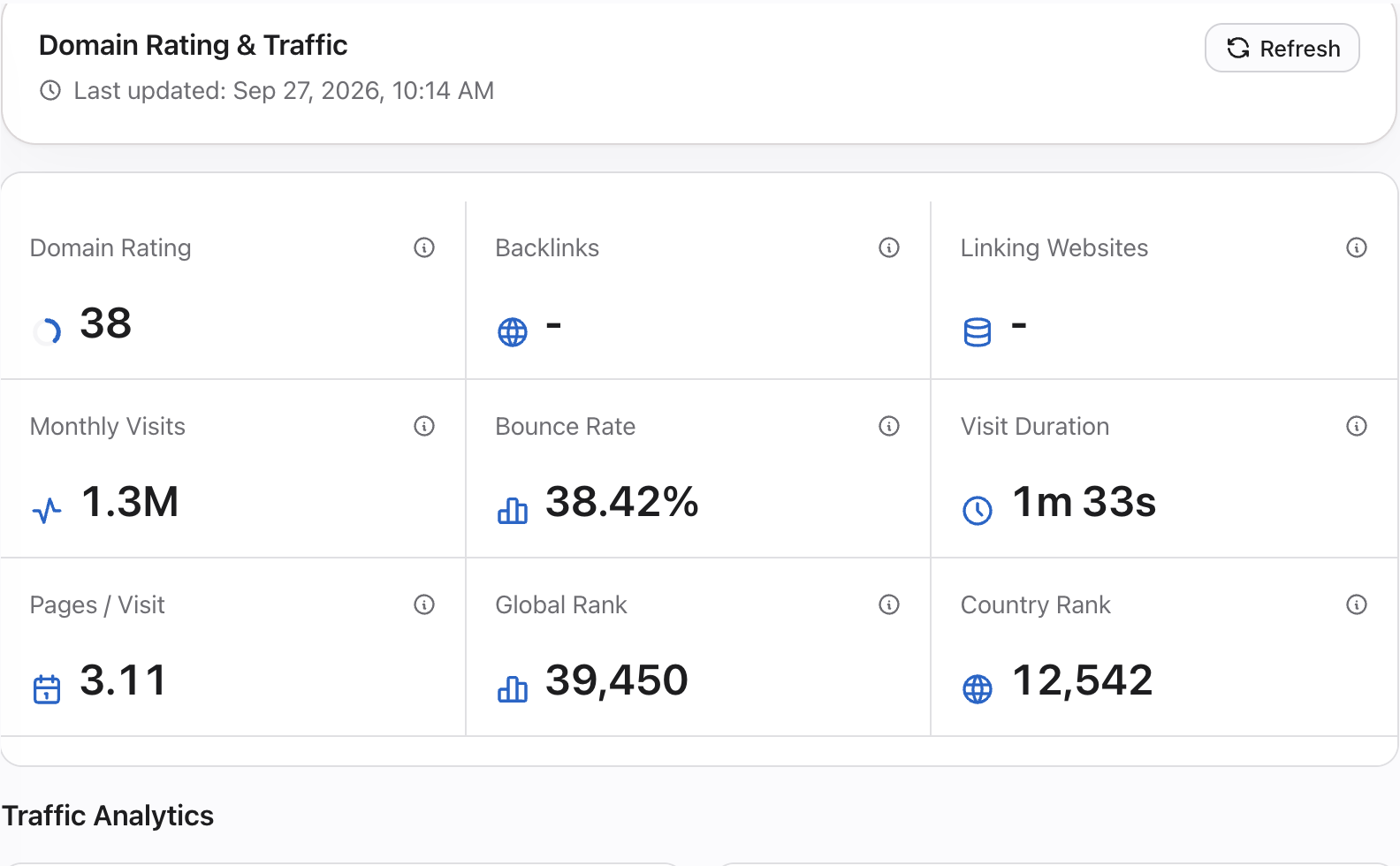
QName's traffic view for nanobanana.io, captured September 27, 2026. These are third-party estimates, not the site's audited analytics.
In that captured view, the site had an estimated 1.3 million monthly visits, a Domain Rating of 38, and an average visit of 1 minute 33 seconds. These figures can change. None proves revenue, customer loyalty, or that a similar new domain could repeat the result.
What the snapshot does do is sharpen the next question. Is the demand attached to a distinctive brand, a broader topic, or a temporary trend? If I were choosing a name in the same space, I would want to know which of those I was competing with before buying a lookalike domain.
Take the idea back to search demand
Sometimes the better move is to step back from the exact name. QName's keyword research shows Google Ads search volume, monthly trends, advertiser competition, and bid ranges for a seed phrase. It can also suggest terms from a public website. Those are keyword ideas and advertising metrics; they are not proof that a site ranks organically, and advertiser competition is not organic keyword difficulty.
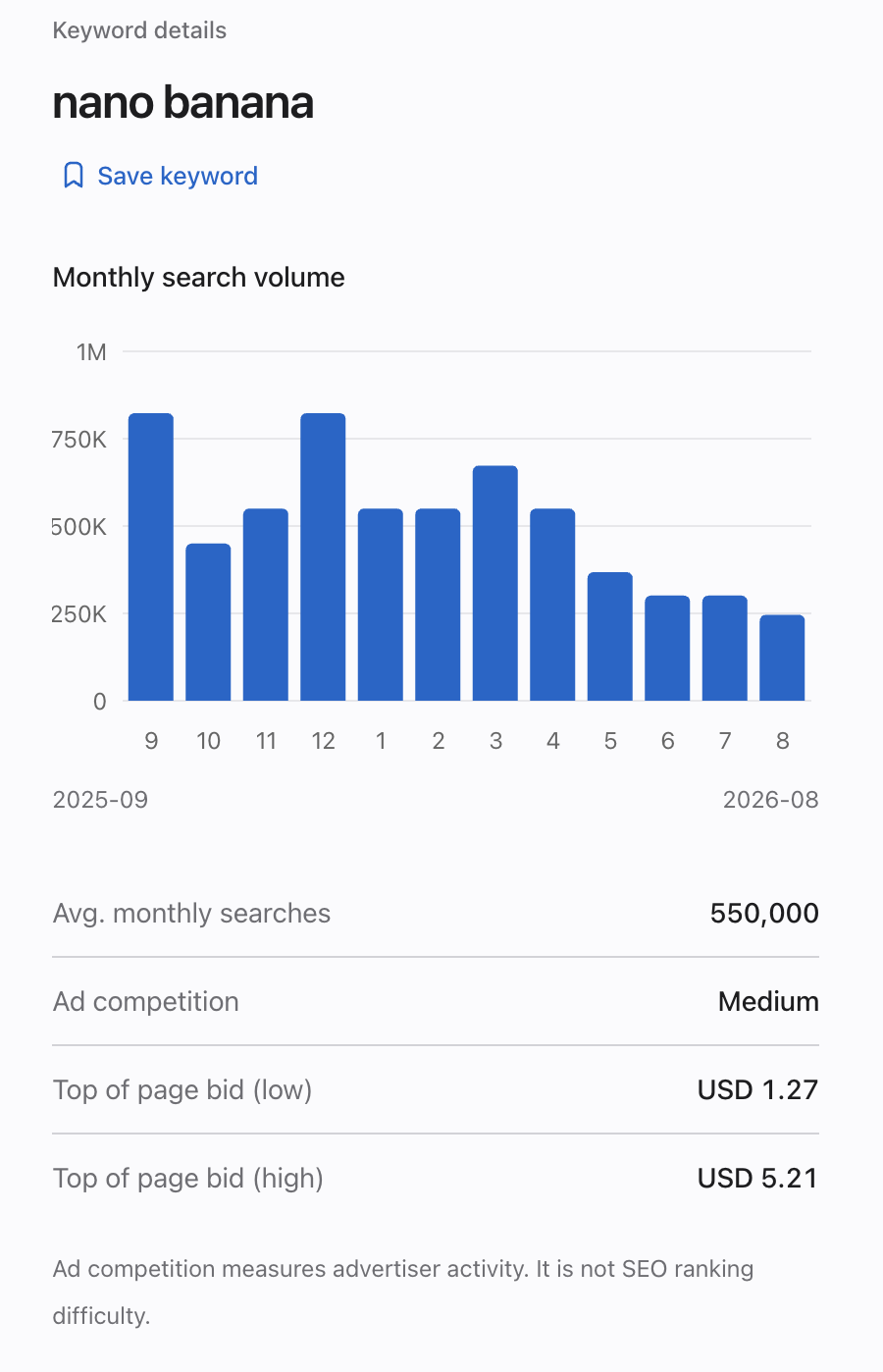
A seed-keyword search for “nano banana” in the United States, English, on Google. The September 27, 2026 capture showed 550,000 average monthly searches in Google Ads; this is search demand, not organic ranking difficulty.
That distinction changes how I use the results. If a phrase has demand, I do not immediately attach a suffix and call it a brand. I look for nearby language customers use, then generate a small group of names that are short, pronounceable, and different enough to stand on their own. Domain Sweep can expand those ideas across selected extensions, and bulk WHOIS helps check the resulting shortlist. The AI naming assistant is useful for getting unstuck, but its suggestions still need the same checks.
For teams doing this repeatedly, QName also has a CLI for approved WHOIS, traffic, and keyword research access. Structured output makes it easier to compare candidates in a script, while the permission and quota controls keep each capability explicit.
Keep the final decision human
I would never let a traffic estimate or an “available” badge choose the name. I would still search for trademarks and confusing competitors, say the name aloud, check what it looks like in an email address, inspect past use, and confirm the real purchase and renewal terms. A domain tool can reduce uncertainty; it cannot grant rights to a name or predict whether customers will remember it.
That is the useful shift for me: start with an idea, gather registration and market evidence, make a shortlist, and only then decide what to buy. If you are building around a new category or AI trend, the few minutes spent on that loop may save a much more expensive rename later.

Checking what else lives on the same name across extensions is so underrated. A similar name on another TLD can quietly send your word-of-mouth traffic to someone else, which is also why writing the full domain in mentions (not just the brand) matters.
The domain availability check is measuring the wrong thing. You're measuring "Is this string available on this registrar?" when what actually matters is "Would this name work for this audience, in this context, against the competitors they're comparing us to?" A .ai that's available but unmemorable loses to a .co that says something. A domain that reads naturally in your pitch loses to one that's available everywhere. Availability is a constraint, not a signal. The signal is whether people search for this name, whether they can guess what you do from it, whether it positions you against the problem (not the market category). Your research loop - "what would a founder want to know before investing 6 months?" - is exactly right. Availability just answers "Can we register this?" not "Should we use it?"
Exactly. Availability clears a constraint; it doesn't validate the name. And for a genuinely new brand, zero searches for the exact name wouldn't be a red flag by itself. I'd test whether target users understand, spell, and remember it, then use registration, traffic, and keyword data to spot conflicts and learn the language of the category. The final call still needs customer and trademark checks. Thanks for sharpening that distinction.
Love this angle. Building Xstream4K right now so this hits close to home — what made you look into it in the first place?
Thanks for asking. What drew us to this was the gap between a registrar's green ‘available’ badge and the questions a founder still has to answer: who already uses a similar name, what people search for, and whether the name is easy to explain. We started building QName to bring those clues into one research loop before someone commits to a brand. For Xstream4K, which part of choosing or checking the name has been hardest?
like the emphasis on treating domain availability as evidence rather than validation. A name can be available and still be a poor brand choice. The trademark and confusing-competitor checks are probably the steps people skip most often.
Agreed. A domain being available says nothing about whether the name conflicts with an existing brand. I'd check trademarks and similar products before investing in design or launch work, then see how the name reads in search results and an email address. QName can surface registration and market clues, but it can't clear a name for use. Thanks for calling out a step that's easy to skip.
Exactly. Availability is really just the starting point. A name can be available today and still create confusion later if it's too close to an established brand or product. Doing those checks early is usually much cheaper than discovering a naming problem after you've already built around it.