"A lot of fortunes will be made and subsequently lost."
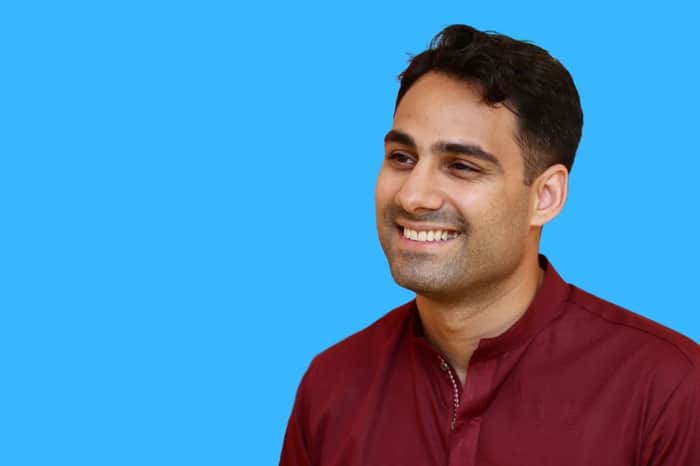
Bilal Tahir quit his job and now he's working full-time on four products. And it isn't his first rodeo. He took the leap once before and it did not end well.
This time, he's doing things differently and making sure he doesn't go broke.
Let's take a peek at his finances. 👇
Meh-meh land
💰 "I have wasted a lot of my life in meh-meh land. You have to be manically urgent with your time. Otherwise, you just waltz through it day by day, then you blink, and BAM, you're an old dude having a premature mid-life crisis. Whatever it is you want to do, do it now. Take massive action, analyze the result, take a breath, then adjust accordingly, and repeat the cycle." —Bilal
Bilal says he was traumatized in 2017 because he went full indie. It didn't work out, he burned through most of his savings, and he had to go back to a full-time job with his tail between his legs.
💰 "I made shitty decisions, lived in a shithole, compromised on my health, missed opportunities to see friends... I hated it and vowed to never put myself in that kind of financial strain again." —Bilal
That said, he's back at it again.
What's different now is that he's prepared to go back to full-time employment before he burns all of his money. He says he'll go back even if he's doing okay, because "okay" isn't good enough.
💰 "Either this business works out in a big way (>$20K a month) or I go back to work." —Bilal
That's due to his views on ramen profitability. He says that if you live in a city in the US, $10k/mo is barely ramen profitable. His reasoning being that even junior software engineers make $120-$150k per year plus benefits and benefits. He says he can easily get $200k.
💰 "My rule of thumb is to divide your total revenue by 3. If you make $10k/mo, that means $3k goes to taxes and another $3-4K goes to COGs/expenses, leaving you with around $3K to take home. Doesn't sound as great, right? Or Maybe it does." —Bilal
Regardless of how prepared he says he is to go back to work, though, he's been stalling. He gave himself an October deadline to make his products work. If he didn't hit it, he was going to start job hunting. Then he moved it to the end of the year, which has also come and gone.
He says he has to make a decision soon.
Hard numbers
Let's take a look at where he's at.
GPT Hotline revenue: $440/mo
YOU-TLDR revenue: $1900/mo
Shorts Generator revenue: $220/mo
PlainScribe revenue: $960 (total)
Founder pay: $0
Business savings: Undisclosed: small but growing
Personal savings: Undisclosed: 3 years of runway
Here are his business expenses:
Total: $100-$200/mo
Not overly specific, but he says he doesn't really track his expenses — they're just barely getting to the size that it might be worthwhile to do so.
And here are his personal expenses:
Total: ~$4000/mo
Rent: $2600/mo
Food/entertainment: $1000-1500/mo
The great enabler
Before we dive into how he handles his money, let's take a look at how he views it.
💰 "It's okay to want money. People who tell you that money doesn't buy happiness are usually financially comfortable. Money is not an end in itself, but it is the great enabler. It may not buy happiness, but it's necessary if you want to be happy." —Bilal
Bilal grew up in Pakistan. He says he was lucky to be among the privileged few who had the opportunity to work in tech and earn a high salary.
💰 "It's a poor country and, like all poor countries, I saw what people are reduced to when they don't have the means to feed their families or enjoy nice things." —Bilal
So yes, money is important to him. He doesn't care about flashy things, though. He doesn't want a lambo. But he says he has dreamt of financial freedom as far back as he can remember.
What that looks like, though, is different for everyone.
💰 "Visualize the lifestyle you want and work backward to see how you can achieve it." —Bilal
Crypto in 2024
💰 "I have a ton of crypto, lol. " —Bilal
He says he isn't a crypto fanatic by any means, but he does think you can make a lot of money if you understand the psychology — it's all about stories. And he's looking forward to 2024.
💰 "We are likely in another crazy run this year. A lot of fortunes will be made and subsequently lost." —Bilal
Importantly, he suggests only putting in what you don't mind losing, particularly with crypto.
He typically invests about 70% of this "gambling pool" into Bitcoin and Ethereum. Those two tend to be on the safer end of the spectrum. The other 30% goes into alt coins for asymmetric bets where there is a big upside compared to the risk. For example, risking 1x to get 10x. He says this way, you win even when some of the investments are duds. He looks at it like sort of a VC approach.
Beyond that, he does some more traditional investing. Never day trading, though.
💰 "Day trading is for idiots. Yes, I have been an idiot and dabbled, but it leads to either a bad or break-even outcome. And a lot of wasted time. The most money I've made was from buying and holding onto my investments. That, and upskilling myself to get better career opportunities." —Bilal
He says most of us should just put money in and forget about it.
💰 "The true cost of degenerate investing is not the money people lose, but the time they spend obsessing over the price action. Use that time more productively. Don't get caught up in it." —Bilal
Which leads us to index funds. That's the safe bet, and he does have some money there.
💰 "Just invest in the SP500 Index and be done with it. Most people who are younger or at an earlier stage should not worry about investing. Build wealth through a job or building a product." —Bilal
And he suggests dollar cost averaging (DCA), which means investing a fixed amount on a regular basis regardless of the share price. He says that, statistically, it beats most investments. And it's automated.
Roth IRAs
When he was gainfully employed, Bilal invested in 401Ks provided by the companies he worked for. He still has those, but now he invests in a Roth IRA through Vanguard.
💰 "The high-level, big reason typically I chose a Roth IRA is that you get taxed now at a lower income rate, and when I withdraw later on, I will presumably be in a higher tax bracket." —Bilal
He doesn't invest regularly at the moment, but he will once he has more income. And he suggests maxing out payments if at all possible.
Investing in your space
Beyond your typical financial investments, one of Bilal's biggest investments right now is in his living situation. He rents a nice apartment and he pays a premium for it.
💰 "I used to live in a shithole and I absolutely hated my life. Now, I pay twice as much rent, but I have a comfortable place in a good location and a nice gym across the hall." —Bilal
For obvious reasons, he works from home and he says it's crucial to have a nice place to work from. At the "shithole" that he mentioned, he had a desk next to his bed and he says it was awful.
💰 "If you can afford it, spend good money on things you use every day like your bed, desk and chair." —Bilal
And he notes that, yes, the apartment is expensive, but a lot of that is offset by the lack of transportation costs.
💰 "I made a conscious choice to live right next to transit options in my city so my favorite neighborhoods in the city are very accessible to me at minimal cost. Often, people try to save money on rent by living in a faraway place, but end up paying the difference (and more) in inconvenience and Uber costs." —Bilal
Permanent pleasures
💰 "I love to travel and explore. It's one of life's few permanent pleasures." —Bilal
Even though he's paying top dollar for his apartment, Bilal would like to travel for 6 months every year — that way, he can really feel like a local wherever he goes.
💰 "There is something magical that happens in week three when you switch from thinking like a tourist to thinking like a local — recognizing the streets and your favorite spots." —Bilal
And as with his apartment, he isn't up for saving money on cheap accommodation.
💰 "I'm old and my days of living in a smelly hostel and still having a good experience are over. So when I go, I make sure to get a nice Airbnb (cause I'm fancy). I have some hard filters: In-unit laundry, dedicated workspace, WiFi, and a good location. Some nice-to-haves are a gym and amenities." —Bilal
He also noted that discounts for month-long stays at Airbnbs can be really solid.
Embarrassingly debt-free
💰 "I used to proudly say I had absolutely no debt. I still have no debt, but now I'm embarrassed about it." —Bilal
He says he's always hated debt. He paid off his student loans as quickly as he possibly could. But if it can be done well...
💰 "I've come to realize debt is a tool that you can use to build wealth rapidly, if done right. It can also hurt you quite badly if things go the other way." —Bilal
He'd like to use this tool to dabble in real estate in the future, as he says a mortgage is one of the cheapest forms of debt you can get in the US.
That said, he's biased. He spent his 20s in the ZIRP era sitting on the sidelines watching people make their money buying and refinance homes.
Tools and resources
As far as tools, Bilal uses the following:
M1 Finance and Fidelity: Brokerage and 401Ks
Robinhood: Degenerate investing
Coinbase: Crypto
Waves: LLC accounting
He also recommends Joseph Carlson's YouTube channel. He says it's the closest thing to his non-crypto/non-degenerate investing approach.
Get a job
Let's wrap up with some advice.
💰 "Be honest with yourself. What do you want? Is it money, fame, freedom? Once you know who you are and where you want to go, unapologetically chase after that goal. And go big." —Bilal
And if it's money you want, he says building products might not be the way to go.
According to Bilal, the fastest reliable way to get rich is to get a job in Big Tech for 5-10 years. If you're smart about it, he says you can walk away a multi-millionaire.
But is it worth it?
💰 "That depends on you, what you want, and if it's worth the opportunity cost because you love what you do and see a path to a brighter future!" —Bilal
---
You can check out Bilal's products, GPT Hotline, PlainScribe, YOU-TLDR, and Shorts Generator. Or find him on X.
Please note that the above are opinions. This is meant for informational purposes only. It is not intended to be financial advice.
And if you'd like to be featured as a guest in a future interview for this series, let me know in the comments!

Thanks for sharing. I completely agree that going "all-in" for indie hacking can be traumatizing, as I had such a story myself. Well, I wasn't completely "Indie", as I had a marketing agency. It was successful for some time, but we went bankrupt during COVID. We went into debt, which took a long time to recover. So I worked at a tech company which helped build some capital. Right now I've started another venture and will take your advice into account.
Don't let this story scare you and listen to the advice within the article. Figure out what it is what you want to do, and chase it completely. Don't fear the consequences.
Seems like Bilal went through his worst fear of going broke and having to go back to a job, and he seems to be doing just fine. Great read
So the youtube TLDR is the primary rev from the startups thus far? Love that.
Hi
I appreciate you sharing the experiences and knowledge of Bilal Tahir. He seems to have a sensible attitude to handling his money and a good knowledge of the benefits and drawbacks of being an entreprenuer. I would be interested in hearing more about their experiences and lessons learned.
What has been your favorite project (from a fun perspective)?
I really liked the concept (YouTube dailly newspaper) and flow I built for Tuber Times: https://www.tubertimes.com/
I think this can go far with personalization and better articles. And migh even be a daily newsletter.
It doesn't mean everyone else will have same stories, you can do better.
Literally what I say. Everyone will have a different story based on their lifestyle, location, goals.
That's due to his views on ramen profitability. He says that if you live in a city in the US, $10k/mo is barely ramen profitable.
That is bullshit.
whats bullshit for you is reality for me.
Everyone's got their own situation. So don't treat my situation as some universal prescription.
i was in need of funds to take care of lots of bills but wasn't able to get any loan due to my low credit score. i tried borrowing from friends and invested it in a investment website only to discover that they are scam. i felt like losing my life but i always think about how bad my kids will be and i need bring them up . i was advised by a friend to hire a hacker which i did and i was recommended [ Remote spy hacker @ gm ail.c om ] to be the best online. After following his directions i don't know how to express my feelings on how grateful i am, This hacker helped me recover my lost funds back and also upgraded my credit score. I can't stop thanking you and that's why i have to share this here to show how happy i am now .
wtf is this crap...go scam someone else!