After 300+ comments on Indie Hackers, I improved my landing page based on founder feedback
Hi founders,
Over the past week I shared VIDI here on Indie Hackers and the discussions across two posts grew to 300+ comments.
First discussion:
https://www.indiehackers.com/post/i-built-an-ai-contract-analysis-tool-for-smbs-looking-for-feedback-ae432411d6
Follow-up discussion:
https://www.indiehackers.com/post/what-happened-after-my-ai-contract-tool-post-got-70-comments-e89c3756b5
Reading through all the comments was extremely valuable. Many founders shared real experiences with contracts they signed without fully understanding the risks — auto-renewals, hidden clauses, vendor agreements, and liability terms.
One thing that stood out was how people actually describe the problem. Most founders don’t say “contract analysis.”
Instead the real question they have is:
“Am I about to sign something that could cost me money later?”
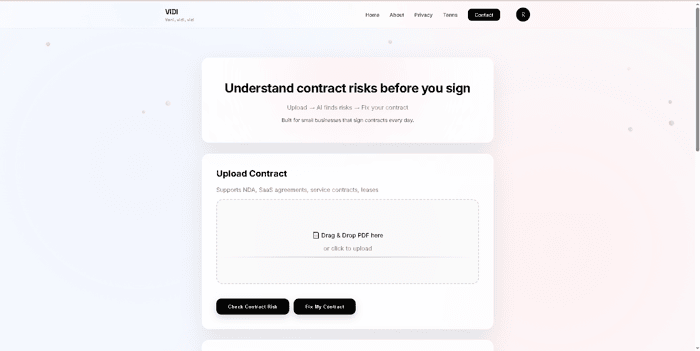
Based on those discussions and feedback, I improved the landing page to focus more on the outcome and clarity for business owners reviewing contracts.
Still early, but it was interesting to see how conversations with founders can directly influence how you present a product.
If anyone wants to see the current version of the product:
https://joyful-granita-8415bc.netlify.app
Curious how other founders here approach positioning when building early-stage products.

Is that free?
Yes, it's currently free while I'm testing the product and learning from early users.
yes
This is a good reminder that founders usually describe the product in “builder language,” but users describe it through the pain.
I’m seeing the same thing with my project. I started describing Vynly as an AI-image social feed, but the more I talk to creators, the real problem sounds more like: “Where can I post AI art without it getting buried or judged before people even look at it?”
That wording is much more human than my original pitch.
Really useful post.
Yeah, that shift in wording is exactly what I started noticing too.
What people say they want and how they actually describe the problem are usually very different.
Feels like most of the useful insights come from those raw conversations, not from how we initially frame the product.