AI Agents Might Kill Traditional Hiring Faster Than SaaS Did
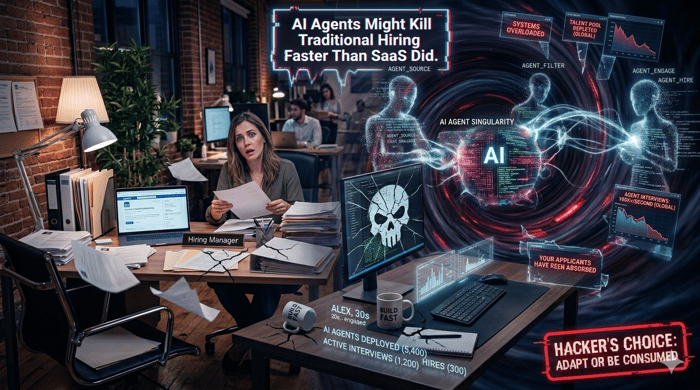
A weird thing is happening right now.
Founders aren’t just using AI to “save time” anymore.
They’re building AI agents that:
*Reply to leads
*Qualify customers
*Send follow-ups
*Handle support
*Update CRMs
*Manage workflows
Basically replacing entire layers of repetitive operations.
Which creates a scary advantage:
A 3-person company can suddenly operate like a 30-person team.
The companies that figure this out early will grow insanely fast.
The ones that ignore it will keep hiring humans for work AI can already do 24/7.
This breakdown explains where business automation is actually heading next:
https://jarvisreach.io/blog/ai-agents-for-business-automation-strategy/

The 3-person-company-operating-like-30 part is real, we build exactly these agents. But the "24/7, replaces a layer" framing skips the part that decides whether it works.
An agent that replies to leads, qualifies, and updates the CRM is easy to demo and hard to run. The failure mode isn't the agent being slow, it's the agent being confidently wrong: qualifying a lead on stale data, sending a follow-up that references the wrong deal stage, updating the CRM with something nobody can undo. The companies that win with this aren't the ones that deployed agents fastest, they're the ones who put approval gates on the calls that touch money or customers, and let the agent run free only on the reversible stuff.
So the advantage is real, but it goes to the teams that treat it as an engineering problem with guardrails, not a magic 24/7 employee. The ones who skip that ship an agent that works in the demo and quietly damages customer data in month two.
I think the biggest opportunity is using AI agents to augment teams rather than replace them. At Technource, we have found that automating repetitive tasks like CRM updates or support triage delivers faster ROI than trying to automate entire roles. The companies that use AI as part of their operational model, not just another tool, will likely have the biggest advantage.
the "what you get hired for" shift is the real story here. when the execution layer collapses, the hiring signal moves from "can you do the task" to "can you tell when the agent got it wrong". almost nobody screens for that yet, theyre still just asking candidates if they use AI.
The 3-person / 30-person observation is something we've actually lived through with clients, especially early-stage startups. We’ve watched founders set up agents to handle lead qualification and onboarding follow-ups and buy themselves back 2–3 weeks of founder time every month. That part is entirely real.
What we’ve also noticed, though, is that this shift tends to change what people get hired for more than whether they get hired. The repetitive execution layer shrinks, but the judgment, orchestration, and experience design layer tends to grow alongside it. Someone still has to build the agent, maintain the logic, and make sure the customer experience holds up end-to-end.
From what we've seen, the companies that get the most out of this aren't necessarily the ones moving fastest, they're the ones pairing automation with a clear sense of where human oversight still matters. The two tend to work better together than the narrative sometimes suggests.
The real shift might not be about headcount at all. It's that AI raises the floor on execution quality, so average is no longer a defensible position.
What rhymes with hiring here is the trust ramp. With a freelancer you start with one small task, see if the output holds up, then hand over more. Agents that make you configure a whole system before proving one result skip the step that earns the handoff.
This comment was deleted a month ago