AI Can Build Your App. But Can You Trust What It Built?
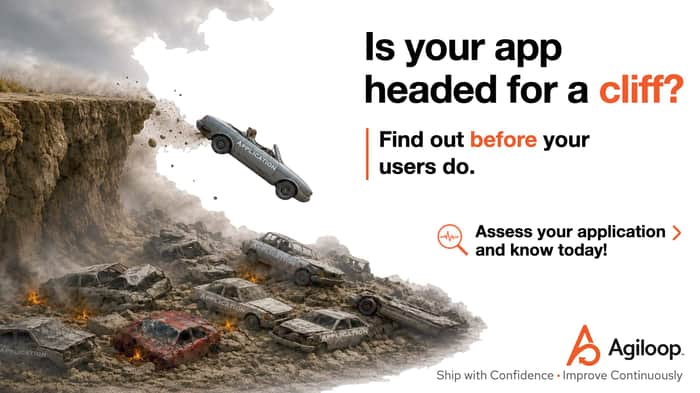
AI has given software builders a much faster car. We can go from an idea to working software in days — sometimes hours. That's an incredible shift, especially for indie hackers and small teams that can now build things that once required considerably more time, money, and people.
But there's a problem with going faster: you'd better know where you're going.
Shipping faster doesn't tell you whether the software is secure, maintainable, scalable, or ready for production. It doesn't tell you whether there are bugs you haven't encountered yet. And perhaps most importantly, it doesn't tell you whether you actually built the right thing.
Sometimes you're just getting to the cliff faster.
Building is getting easier. Knowing what you built isn't.
A lot of the conversation around AI development is understandably focused on speed. How quickly can I get from prompt to prototype? How much code can an agent generate? How much of the development process can I automate?
Those are important questions, but I think we're entering the next phase of AI software development. As the cost and effort required to create software continue to fall, understanding the quality of what we've created becomes more important, not less.
A founder can now get surprisingly far without a large engineering team. You can build with Lovable, Replit, Bolt, Claude Code, Cursor, traditional development, or some combination of them. But the easier it becomes to generate and change software, the easier it also becomes to accumulate decisions, dependencies, technical debt, security issues, and product assumptions that nobody has really examined.
The application may work. The UI may look great. The demo may be impressive. That doesn't necessarily mean it's ready.
That's the problem we've been thinking about at Agiloop
We started Agiloop around a broader idea: AI shouldn't just help us create more software. It should help us make software better.
That means looking beyond code generation and asking questions throughout the lifecycle. What are we trying to build? What was actually built? How well was it built? What does it cost to implement and change? Is it meeting the original intent? And based on what we now know, what should we improve next?
One part of that is something we've been putting a lot of work into recently: assessing existing software.
We can analyze a project from several different perspectives, including code health and technical quality, production readiness, potential bugs, usability, compliance considerations, competitive positioning, and opportunities for improvement.
The point isn't to generate another giant AI report. It's to help answer a much more practical question:
What have I actually built, and what should I do next?
When the assessment identifies something that needs attention, that finding doesn't have to end as a recommendation in a report. It can become part of the next iteration — something to define, prioritize, implement, inspect, and measure again.
So we're making the assessment free
Right now, we're much more interested in getting this into the hands of people actually building software than putting another barrier in front of it.
If you've built an application — whether it came from AI coding tools, traditional development, an outsourced team, or all of the above — you can connect the project and have Agiloop assess it.
I'd particularly like Indie Hackers to challenge it.
Don't just look at the score. Look at what it finds. Does it identify something important you didn't already know? Does it question an assumption you hadn't considered? Does it give you something useful enough that you'd actually change what you build next?
And if it misses something important, I'd like to know that too. That's exactly the kind of feedback we're looking for.
Before you hit the accelerator again, it might be worth checking both the car and the road ahead.
Run a free assessment of your project with Agiloop: https://agiloop.ai/assessment
And if you try it, I'd genuinely like to hear what it finds — especially if it misses something you think it should have caught.
Making software easier to build is only half the opportunity AI gives us. The other half is making the software we build better.

The most useful assessment output for an indie founder is not a score, it is one finding they can verify in ten minutes and act on before the next session. I would ship the report as 'top three risks, each with the exact code path and what happens if ignored' rather than a full inventory. And to build trust, ask users to check one finding against their own repo before believing the score; verification is the trust loop, and a report alone is just another read.
The strongest part is the shift from “AI can build it” to “can you trust what was built?” That creates a much more consequential problem than code generation itself.