AI in Testing: Cutting Through the Noise
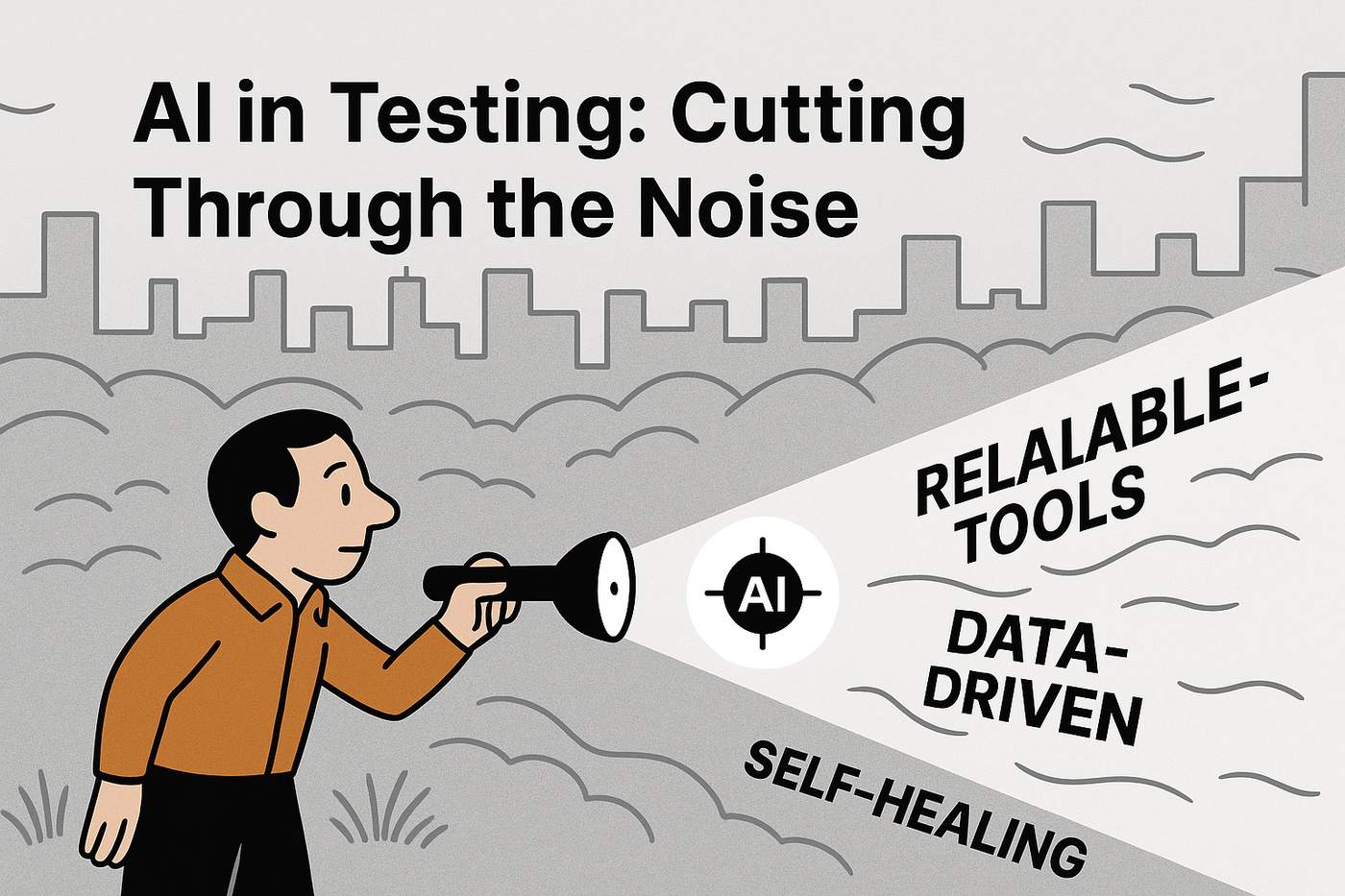
Every now and then, a buzzword takes over an industry. In QA, that word is AI.
Over the past few years, AI has become the poster child of innovation across industries. From generating art to writing code, the narrative has been - AI is here to automate everything.
Naturally, software testing hasn’t been spared. Today, dozens of tools claim they’ll let AI “test your app end-to-end,” “find every bug automatically,” or “write perfect test cases for you.” Scroll through LinkedIn or attend any testing conference - you’ll see the same story playing out: glowing promises, splashy demos, and very little about the gritty details that make or break a QA team’s day-to-day.
But beneath the surface, a more honest reality is unfolding.
Why the Hype Happened
Software testing is hard. It's manual, repetitive, fragile, and often treated as an afterthought. Engineers dread it. Product teams see it as a bottleneck. Leadership sees it as expensive.
So the promise of AI swooping in to automate everything? It’s an easy sell. Especially in environments already stretched thin.
And in fairness, progress has been made. AI can now detect UI changes better, generate synthetic data, and analyze logs faster than a human ever could.
But here’s the catch: most tools aren’t doing that. Not really.
The Industry’s Quiet Problem
What’s being sold as “AI” in many tools is often a handful of pre-defined rules, brittle heuristics, or glorified if-else chains. Teams buy into the promise, adopt the tool, and expect magic.
Instead, they hit:
False positives from scripts that don’t adapt
Test suites that break after a single UI tweak
Maintenance hell just to keep “AI tests” running
Minimal context-awareness, leading to more debugging than before
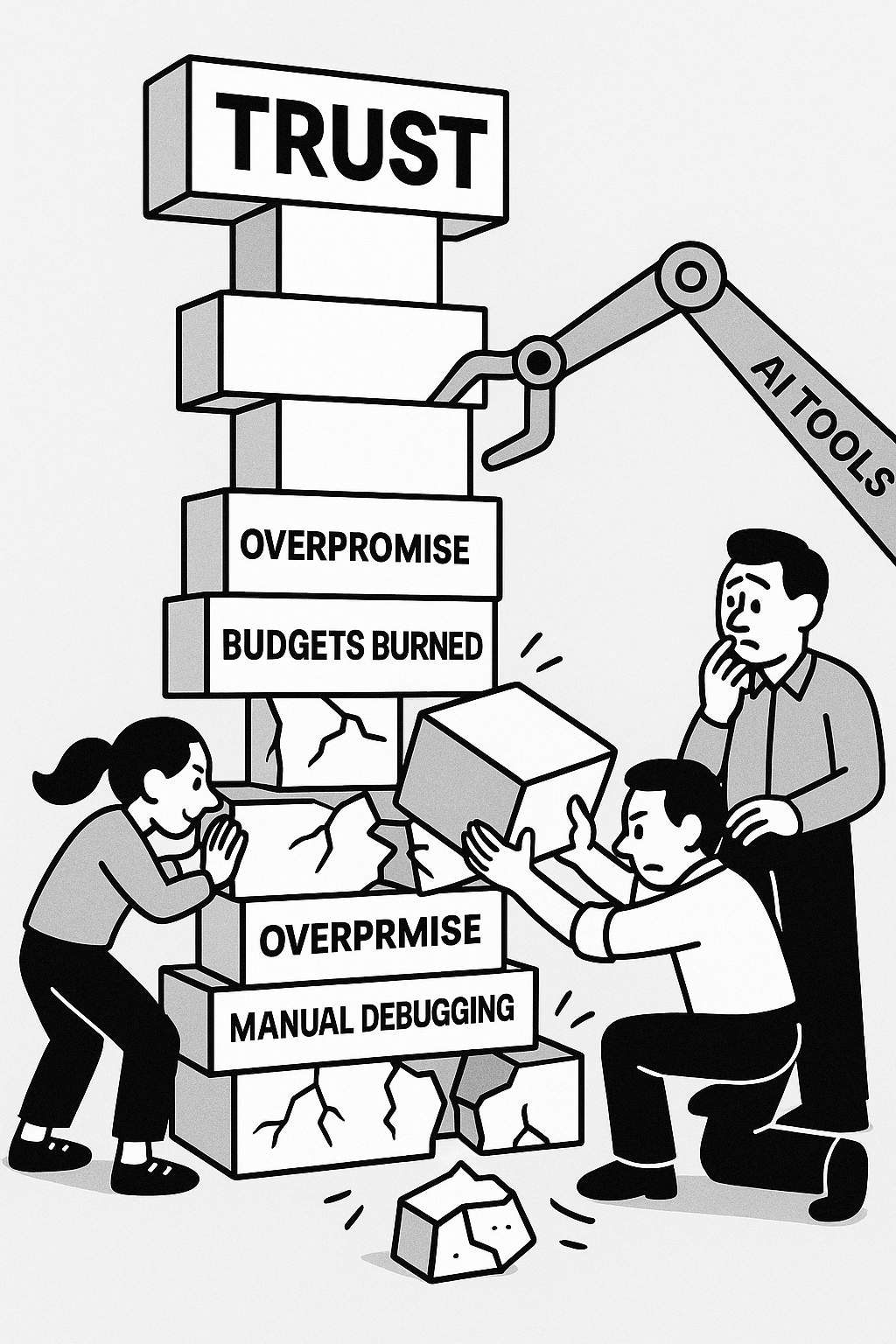
Soon enough, trust erodes. Budgets are cut. Engineers go back to writing tests manually - jaded, frustrated, and more skeptical than ever of anything with "AI" in the name.
The Real Cost of the AI Illusion
This isn’t just a technical issue. It’s a psychological and operational one.
When tools overpromise and underdeliver:
Teams lose confidence not just in tools, but in the idea of automation itself
Product velocity slows down, as teams revert to cautious manual testing
Innovative solutions get drowned out, dismissed as “just another gimmick”
And worst of all - engineers stop exploring new ways to make QA better
This is where the industry stands today. Not at a breakthrough. At a breaking point.
What AI Can Actually Do in QA - Today
Let’s separate the fluff from the facts.
Here’s where AI genuinely adds value, when done right:
1. Assist, Don’t Replace
AI isn’t replacing QA engineers. But it can be their smartest assistant. It can watch user actions, interpret flows, and suggest test steps - reducing the grunt work and human error in test case creation.
2. Make Tests Resilient
When a UI element changes its ID, most traditional scripts fail. Smart AI models can recognize intent and context, not just hardcoded selectors. This concept of self-healing tests is not hype - it’s real, and it's saving teams hours of maintenance every sprint.
3. Analyze Risk
AI can detect patterns across commit history, test logs, and code changes to highlight high-risk areas. It doesn’t predict bugs like a crystal ball - but it gives teams data-driven direction.
4. Generate Smarter Test Data
Instead of weeks spent generating edge-case scenarios manually, AI can spin up thousands of realistic profiles and datasets, fast. That means better coverage, less tedium.
But these wins don’t come from “AI” slapped onto a product. They come from systems trained deeply on domain context, with thoughtful integration into real workflows - not abstract gimmicks.
So Where Does That Leave Us?
The industry doesn’t need another flashy demo. It needs trustworthy tools that help QA teams do what they already do - faster, better, and with less pain.
Tools that respect the complexity of testing. Tools that don’t hide behind buzzwords, but show up every day, reliably. Tools that solve the real stuff - flaky tests, brittle scripts, endless rework, and the long tail of test debt.
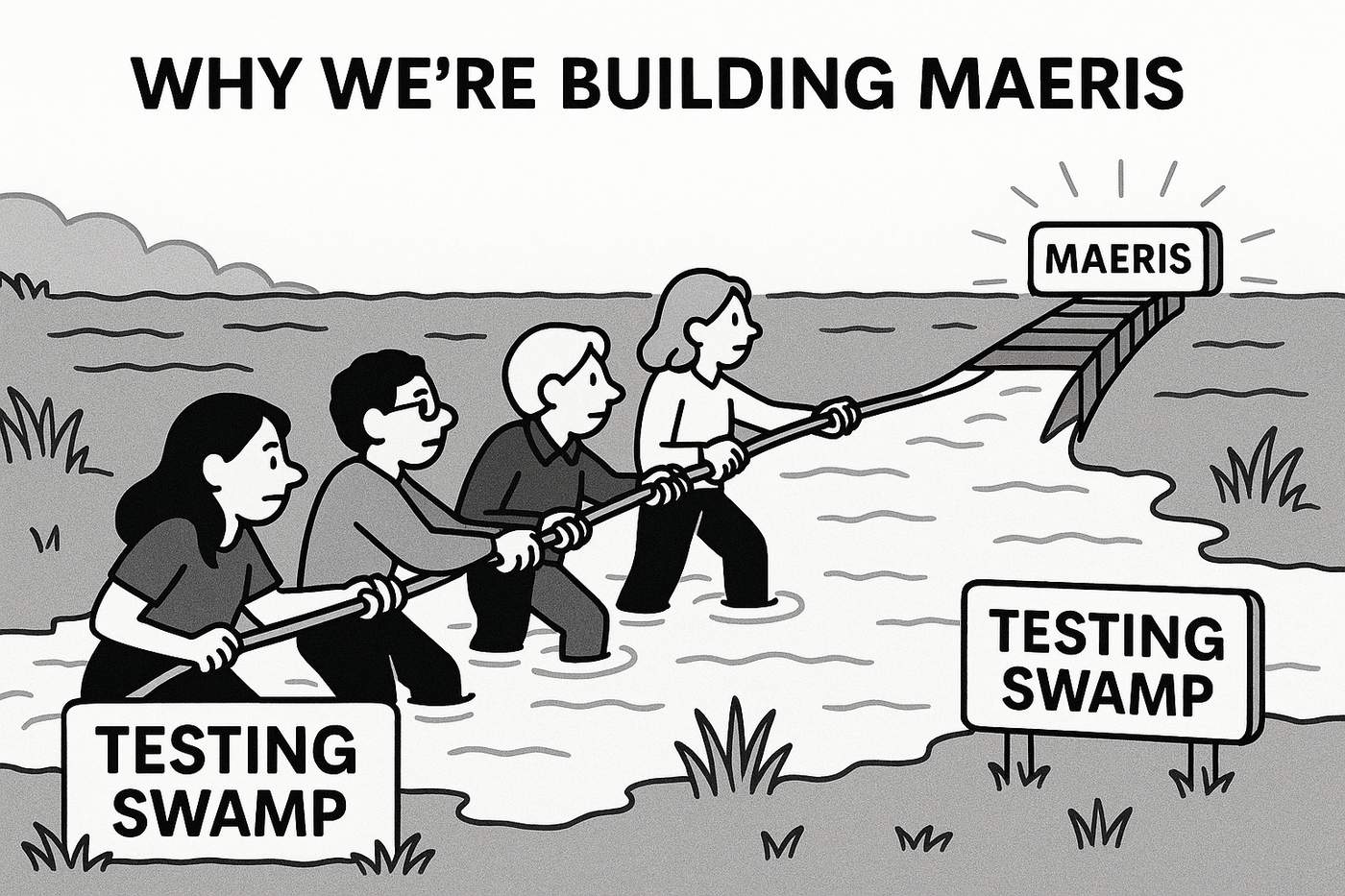
Why We’re Building Maeris
We’ve been those engineers stuck rerunning the same test for the fifth time. We’ve stayed up late because a flaky test blocked a release. We’ve felt the fatigue of test maintenance eating away at sprint velocity.
Maeris was born from that frustration.
Not to be “the AI tool that does it all,” but the AI assistant that does what matters:
Build tests in plain English, with real context
Fix itself when things break
Cut maintenance to a fraction
Let teams test more - with less effort
Our belief is simple: AI should amplify human work, not pretend to replace it.
A Final Thought
Every wave of technology comes with noise. It’s easy to get swept up. It’s even easier to get burned.
But if we can cut through the hype, ask harder questions, and demand better tools - we can unlock the real value AI has to offer in QA.
Not a fantasy. Not a gimmick. Just practical progress, one test at a time.
👉 Explore what Maeris is building - real AI, real value, real results.

