AI Now Knows Your Face Shape Before Your Stylist Does — Here's Why That Matters
I once sat in a salon chair and said the words every stylist dreads: "Just do whatever looks good."
The cut was fine. Not great. Not me. And I walked out not knowing why.
Turns out, I didn't know my face shape. And that one gap in self-knowledge was quietly messing with every haircut, pair of glasses, and makeup look I'd tried for years. I'm not alone. Most people can't accurately identify their own face shape — and the mismatch between how we style ourselves and what actually suits us is costing us real confidence.
That's starting to change, thanks to AI.
The Problem With Guessing Walk into any beauty consultation and the first question is usually, "What's your face shape?" Round? Oval? Heart? Square? Most people guess. Stylists correct them half the time.
The traditional method — holding a ruler to a printed photo, measuring jaw width versus forehead — is tedious, imprecise, and rarely done at home. So people rely on mirror squinting and online quizzes that ask vague questions like "Is your chin rounded or angular?"
The result? Wrong decisions, constantly. The wrong framing on eyeglasses. Bangs that flatten your features. Contouring that fights your bone structure instead of working with it.
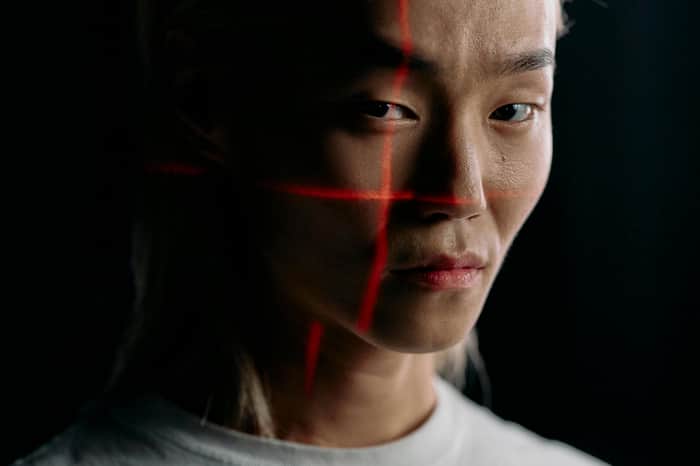
What AI Actually Does Differently Modern AI face analysis tools use facial landmark detection — mapping dozens of key points across your face (jaw corners, cheekbone width, chin tip, hairline) — and calculate geometric ratios to classify your face shape with accuracy no quiz can match.
The same principle applies to eye shapes. Whether you have monolid, almond, hooded, downturned, or round eyes changes everything about how eyeshadow, liner, and lash styles should be applied. Misidentify your eye shape and you're applying a technique designed for a completely different eye structure.
Tools like FaceAura AI's Face Shape Detector and Eye Shape Detector do this in seconds via a single photo upload — no sign-up, no subscription.
Why This Is a Bigger Deal Than It Sounds The AI in beauty and cosmetics market was valued at $4.38 billion in 2025 and is growing at 21.1% annually. That growth isn't driven by novelty — it's driven by demand for personalization at scale. Over 60% of consumers say they're willing to try AI-powered beauty tools for personalized guidance.
The deeper insight? When people understand their features, they make better decisions — not just about beauty, but about how they present themselves in professional settings, on video calls, in photos. Knowing your face shape is, quietly, a confidence tool.
What To Do With the Results Once you know your face shape and eye shape, the practical applications are immediate:
Oval face: Lucky you — almost every haircut and frame shape works. Go bold.
Round face: Add height, avoid width. Long layers, angular glasses, minimal blush on cheeks.
Square face: Soften angles. Waves, rounded frames, tapered liner at the outer corners.
Heart face: Balance a wider forehead. Side parts, aviator frames, neutral eyes.
Almond eyes: The "versatile" eye — most styles work; experiment freely.
Hooded eyes: Tight-line your upper lash, skip heavy lid shadow, focus on the brow bone.
Monolid eyes: Skip the crease contour — it won't show. Go graphic liner instead.
The difference between knowing and guessing isn't small. It's the difference between a look that lands and one that almost-but-not-quite works.
The Bigger Picture What AI is doing in beauty is the same thing it's doing in medicine, finance, and fitness — removing guesswork from decisions that used to require expensive experts. A face shape analysis that once required a consultation is now a 10-second photo scan.
You don't need to become obsessed with your features. But knowing them gives you a vocabulary. And vocabulary is power — especially when you're sitting in that salon chair.
