AI-Powered Image Editing: New Ways to Improve, Adapt, and Reimagine Visuals
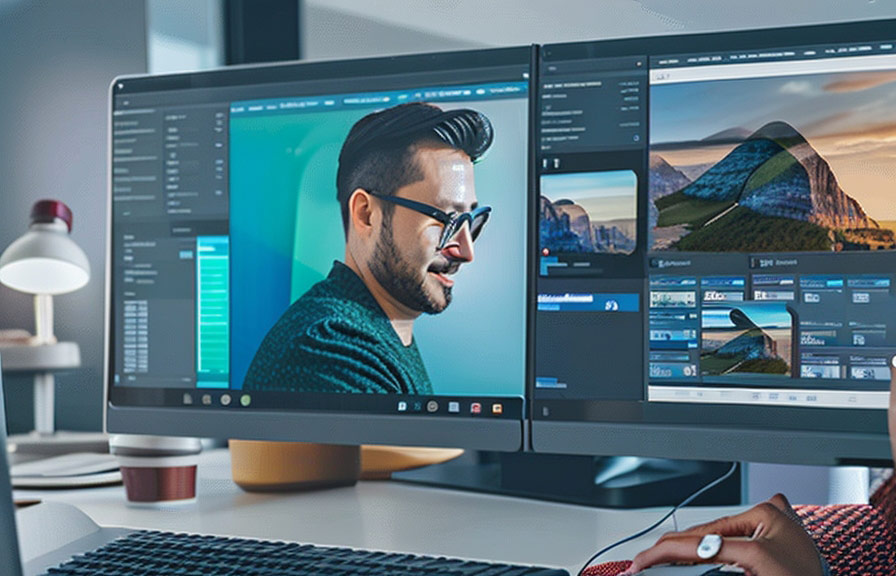
Image editing is no longer limited to adjusting brightness, contrast, or applying filters. Artificial intelligence is introducing a more flexible approach where creators can modify existing visuals, improve image quality, and experiment with completely different creative directions.
This shift is particularly useful for marketers, photographers, designers, and businesses that need to produce and repurpose visual content regularly.
From Fixed Images to Flexible Creative Assets
Once a photograph has been captured, traditional editing usually determines how much it can be changed. Significant modifications may require extensive manual work or even another photoshoot.
AI is changing this relationship.
An existing image can now become a starting point for multiple creative possibilities. Backgrounds can be adapted, unwanted elements can be removed, and compositions can be modified without rebuilding the entire image.
This makes existing visual assets more flexible.
Editing Through Creative Instructions
One of the interesting developments in AI-assisted design is the ability to describe an edit instead of manually performing every step.
An AI photo editor can assist with tasks such as changing backgrounds, removing objects, adjusting specific areas, or modifying visual elements.
For example, a restaurant could take an existing food photograph and adapt the surrounding environment for different promotional campaigns.
The original photograph remains the foundation, while AI helps explore alternative versions.
Improving Images Without Starting Over
Sometimes an image has the right composition but lacks the technical quality required for modern use.
It may be slightly blurry, compressed, noisy, or too small for a particular platform.
An AI image enhancer can help improve aspects of the image, such as clarity, sharpness, and perceived detail.
This can be particularly useful for businesses that want to reuse older marketing assets rather than recreate them from scratch.
Giving Archived Content New Life
Businesses often accumulate thousands of images over the years.
Many of these assets may no longer be used simply because they don't meet current resolution or design requirements.
AI enhancement and editing can provide another option.
Older product photographs, campaign visuals, and promotional images can potentially be improved and adapted for new purposes.
This turns an existing content library into a larger creative resource.
AI and E-Commerce Visuals
Online shopping relies heavily on photography.
Customers often make purchasing decisions based on how clearly a product is presented.
An AI image editor can help e-commerce teams experiment with product backgrounds, compositions, and visual environments.
For example, the same product could be shown in a clean studio environment on a product page and placed into a lifestyle scene for a social media campaign.
This provides more flexibility without requiring a separate photoshoot for every marketing channel.
Enhancing More Than Just Resolution
The term “enhancement” is often associated with increasing image resolution, but AI-based enhancement can involve more than simply making an image larger.
Depending on the tool, creators may be able to improve:
Image clarity
Fine details
Sharpness
Noise levels
Overall visual quality
Low-quality source material
An AI image enhancer can therefore become part of a broader workflow for preparing images for digital use.
AI Makes Creative Testing More Practical
Creative teams often have ideas they never test because producing each variation manually takes too much time.
AI can lower that barrier.
A designer could explore multiple versions of the same visual and compare them before deciding which direction deserves further refinement.
This is especially useful in advertising, where small differences in composition or presentation can change how an audience responds.
The value isn't necessarily in producing hundreds of images. It is in making experimentation easier.
Combining AI With Traditional Editing
AI doesn't have to replace existing design software.
A professional workflow might combine both approaches.
For example:
Original image → AI enhancement → AI-assisted editing → Manual retouching → Final design
AI can handle certain repetitive tasks while the designer remains responsible for composition and finishing.
This hybrid approach provides efficiency without giving up creative control.
The Challenge of Over-Editing
More powerful editing capabilities also create a potential problem: it becomes easier to make unnecessary changes.
An image can lose its original character if too many elements are altered.
Creators should therefore evaluate whether each modification actually improves the visual.
The objective should not be to make an image look “more AI-generated.” It should be to make the image more effective for its intended purpose.
Authenticity and Responsible Editing
AI-powered editing also makes authenticity an important consideration.
An advertisement may intentionally use heavily modified imagery, while a news photograph may require much stricter standards.
Creators should understand the context in which an image will be used and avoid modifications that could create a misleading impression.
When images contain identifiable individuals, appropriate permission and privacy considerations should also be taken into account.
A New Creative Mindset
Perhaps the biggest change brought by AI image editing isn't a particular feature.
It is the mindset it encourages.
Instead of asking:
“How can I fix this image?”
Creators can ask:
“What else could this image become?”
That shift opens the door to experimentation.
A photograph can become a campaign asset. An old image can become usable again. A simple product shot can become part of a larger visual concept.
Looking Ahead
As AI editing and enhancement technologies continue to develop, the distinction between photography, design, and image generation will become increasingly fluid.
Creators may start with a photograph, improve it using an AI image enhancer, transform elements through an AI image editor, and finish the result using traditional creative tools.
The process becomes less about choosing one editing method and more about combining different capabilities to achieve the desired visual outcome.
Conclusion
AI is giving creators a new approach to image editing—one focused on flexibility, experimentation, and reuse.
An AI image editor can help transform existing visuals, while an AI image enhancer can improve images that may otherwise be difficult to use.
The technology doesn't remove the need for creative expertise. Instead, it gives designers, photographers, and marketers more ways to explore their ideas and get greater value from the visual assets they already have.


-
1AI-powered tools in image editing are indeed transforming how we create content. While your post focuses specifically on photos, there's a broader conversation to be had about leveraging AI for all aspects of visual and written content. From my experience, incorporating AI in content creation helps streamline workflows significantly. For example, in my own journey, I found that using AI to automate image resizing and optimization for various platforms not only saved time but also improved engagement metrics. This aligns well with the idea of enhancing images through AI—adjustments that might have taken a graphic designer hours could be accomplished in minutes with the right tool. Consider the integration of similar AI capabilities into your overall content strategy. If you’re producing blog posts that require visuals, using an automated tool to edit images alongside your text can create a more cohesive and efficient process. This means less back-and-forth between teams and a refined final output that resonates better with your audience. Furthermore, as someone who’s deep in the SEO and content optimization space, I’ve noticed that visually appealing content drives better engagement and retention. AI can help you analyze which elements of your images perform best so you can continually refine your strategy. Keep in mind that the key is to make these tools work for you, not replace your unique voice or creativity. Automate where it makes sense but retain the human touch that connects with your audience. Balancing AI’s capabilities with your creative input is what will ultimately lead to standout content.25 days ago Reply
