"All green lights" while losing customers - why uptime monitoring lies to you
The monitoring dashboard shows perfect 100% uptime. Customer support explodes with complaints about 15-second checkout times. Revenue decreases as users abandon slow-loading carts.
The story: Traditional uptime monitoring tells you systems are responding, not performing. Your health checks return HTTP 200 while:
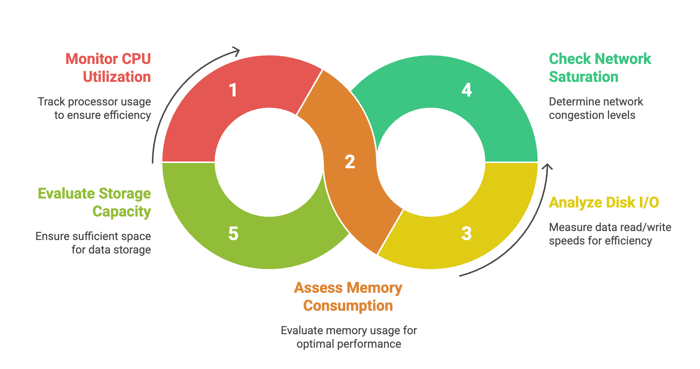
- CPU overloaded, slowing page loads
- Memory leaks gradually degrade performance
- Database connections bottleneck behind successful responses
- Disk I/O creates random timeouts
Full-stack resource monitoring covers three dimensions:
- Availability: Is it up? (traditional monitoring)
- Performance: How well does it respond? (user experience)
- Capacity: When will it struggle? (predictive intelligence)
Quick wins for tech teams:
- Start with uptime monitoring and lightweight server agents (CPU, memory, disk metrics)
- Monitor database performance beyond connection tests
- Set up intelligent alerts that correlate multiple metrics
- Focus on metrics that actually predict user-facing problems
The game-changer: Catching issues before users notice them transforms reactive firefighting into proactive management. Your customers stay happy, support tickets decrease, and you sleep better.
Key insight: 70% of performance issues occur before systems actually "go down"—resource monitoring gives you early warning signs that uptime checks completely miss.
Anyone else learned this lesson through painful customer complaints?
Read more https://bubobot.com/blog/beyond-uptime-full-stack-resource-monitoring-for-the-infrastructure
#StartupTips #Monitoring #Performance

Hello Tom,
Thanks a lot for your wonderful post. I’m currently building a monitoring app named statuseagle , an uptime monitoring app that is doing basic monitoring at the moment. You can sign up for the free plan now to have a look.
I’m in the process of adding features you mentioned. My real goal with this application is to detect upcoming issues before they happen, not just after an outage occurs.