Amadezing, Design in the AI Era: Why Everything Looks the Same, and What We're Doing About It
Are you tired of seeing the same 3D-style jungle party flyer designs everywhere on the internet right now? If you thought the same, you're not alone. We're living in an era where people are trying to "save money" by cutting their marketing and design teams — but they're just making the same mistake, because those generic designs don't sell, don't reflect the brand, and lack visual harmony.
We now have tools like Stitch and Pomello by Google, Claude Design, Figma, and Canva that do a decent job saving time for small businesses that aren't focused on design yet. However, these tools have been trained to produce generic outputs. And even though modern AI can now generate text as well, the results are still too generic, non-editable, or frustrating to work with. This is natural — they're large companies focused on massive adoption, token consumption, and revenue generation. They don't have dedicated teams obsessing over every detail of the user experience or the quality of their output.
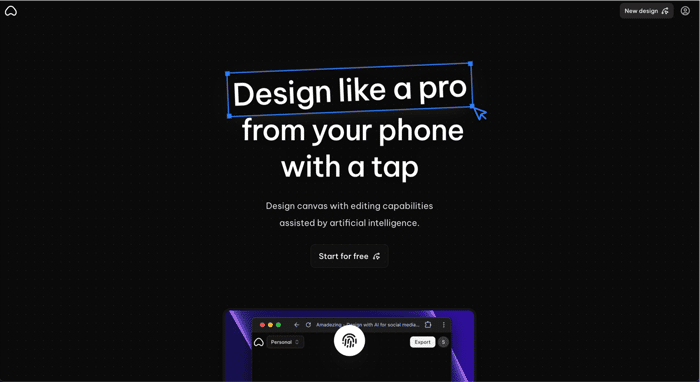
That's why I built Amadezing.com — a mobile-first design tool. (I prioritized mobile because designing with your fingers is a terrible experience today, and that was the first gap I spotted in this market.) It's AI-assisted, but not to generate those generic designs. Instead, we guide designers from the briefing and planning of their campaigns all the way through to final design and polish — in two ways: a manual editing tool similar to the most common ones but built for a better mobile experience, or simply by talking with the AI assistant. In both cases, the user stays in full control of their design and can customize it entirely with just a few taps.
Our focus is on genuinely understanding the pain points of every user — pain points I've experienced firsthand across almost 15 years of building digital products, from UI design to code, using everything from Photoshop and Adobe Illustrator to Adobe XD and the modern tools of today.
Join us at Amadezing.com — try the product and share your feedback today.

The strongest part here is the critique of generic AI design. A lot of AI design tools are optimizing for fast output, but not for brand taste, visual consistency, or campaign-level control. That is a real gap, especially for small businesses that still need their marketing to look distinct instead of like the same AI-generated template everyone else is using.
I’d make that positioning sharper: Amadezing is not just “AI-assisted design.” It is closer to a mobile-first creative control layer for people who want AI speed without losing brand direction. That separates it more clearly from Canva, Figma, and the generic prompt-to-design tools.
The naming is the part I’d seriously rethink early. Amadezing is playful, but it also sounds like a pun, and puns can make a serious design platform feel less premium as the product grows. If the goal is to own a more polished creative/design brand, Auryxa .com would carry the premium visual direction much better.