API Testing Tools Comparison: Postman vs Hoppscotch Showdown
Developing and integrating APIs within digital platforms demands precision, planning, and execution. This process involves defining endpoints, structuring data formats and protocols, incorporating security measures, and ensuring system scalability and resilience. At the heart of API development is the need to create reliable, high-performing applications that can adapt to technological changes.
Looking for a free Postman alternative? Try EchoAPI—lightweight, collaborative, and covers the entire API lifecycle.

Choosing the Right Tool: Postman vs. Hoppscotch
Choosing the right API testing tool is key to boosting efficiency, ensuring quality, and making collaboration among developers as smooth as possible. The right tool means better debugging, monitoring, and management of the whole API lifecycle. But picking the wrong one? That can lead to errors, delays, and a lot of headaches.
With so many API tools out there, you’ve got to be smart about evaluating your options based on what your project really needs. Here’s a comparison between two leading tools, Postman and Hoppscotch, pinpointing their features, strengths, and limitations to help you make the best choice.
Postman vs. Hoppscotch: A Showdown
Postman: The Comprehensive API Tool
Postman started out as a Chrome extension by Abhinav Asthana to make API testing easier, and it has since grown into a full-fledged platform covering all aspects of API development. It has evolved from a simple testing tool to a complete suite, supporting API testing, documentation, collaboration, and monitoring.
Postman’s Key Strengths:
- Testing and Development: Postman offers a versatile environment for API prototyping, testing, and deployment, simplifying complex tasks and speeding up the move from design to production.
- Collaboration: Features like shared workspaces and version control make teamwork and workflow super smooth and easy.
- Monitoring and Documentation: Built-in monitoring tools keep tabs on API performance, and automatic documentation generation makes API consumption a breeze.
While Postman’s extensive feature set makes it a top choice, it does have a steeper learning curve for beginners. Plus, its free tier has limitations, which might push you to upgrade for advanced features.
Hoppscotch: The Lightweight Alternative
Hoppscotch, an open-source, lightweight API testing tool, is designed for rapid testing of RESTful and GraphQL APIs. Its focus on simplicity, speed, and user-friendly design makes it ideal for developers seeking an efficient and straightforward tool.
Hoppscotch’s Key Features:
- Simplicity and Speed: Hoppscotch is fast and responsive, letting developers work efficiently without the lag that often comes with more feature-heavy tools.
- Open Source and Free: Being open-source, Hoppscotch benefits from continuous community contributions and remains free for all users.
- REST and GraphQL Support: Hoppscotch handles both REST and GraphQL APIs, catering to a wide range of development needs.
Despite its simplicity, Hoppscotch lacks the advanced features of Postman. Its smaller community and limited documentation can also pose challenges for more complex API testing.
Comparing Postman and Hoppscotch
-
User Interface:
- Postman: Modern, feature-rich, but can be overwhelming for newbies.
- Hoppscotch: Minimalistic and clutter-free, making it super easy to use.
-
Testing Capabilities:
- Postman: Comprehensive testing frameworks and extensive integration options.
- Hoppscotch: Great for basic testing but not as deep or versatile as Postman.
-
Collaboration and Development:
- Postman: Full toolkit for API development, testing, and collaboration.
- Hoppscotch: Focuses mainly on API testing and interactions, with limited development and collaboration features.
Conclusion
Which tool you go for really depends on your team’s specific needs and project goals. If you want a feature-rich, all-in-one API solution, Postman is your guy. For teams that prioritize simplicity and speed, Hoppscotch offers an efficient, lightweight alternative.
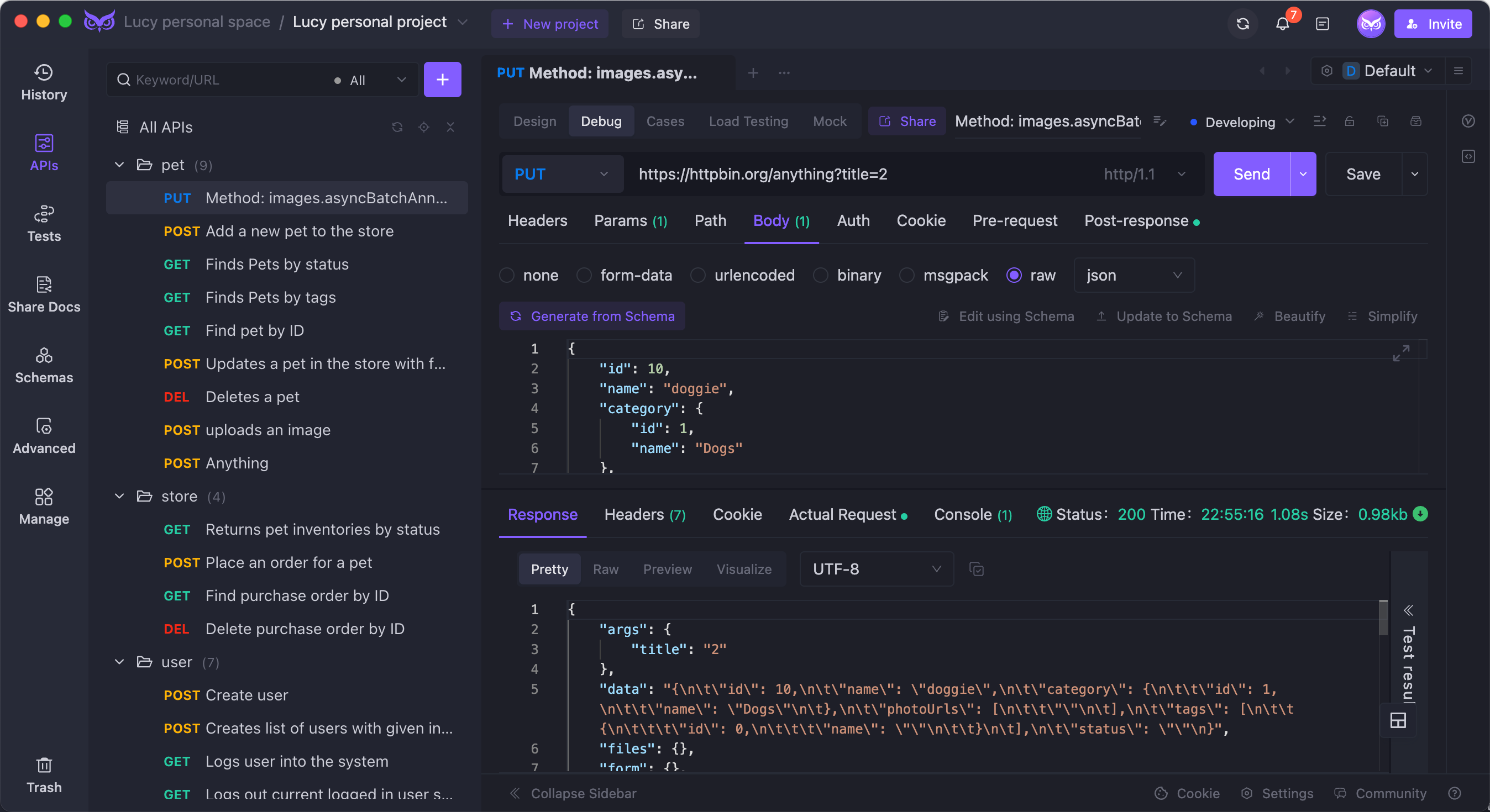
And don't forget EchoAPI! It's another awesome option that provides API design, debugging, automated testing, and load testing—all without requiring you to log in. Plus, it's super lightweight and 100% compatible with Postman's script syntax. It even supports Scratch Pad, and has useful plugins for IntelliJ IDEA, VS Code, and a Chrome request capture extension.
In the end, picking the right tool means looking at what your project demands, how your team collaborates, and whether you prefer a full-featured suite or a lightweight, focused tool. Whichever you choose, both Postman and Hoppscotch can seriously boost your API development and testing process, leading to even better software applications. Happy testing!
