Apollo Group TV Update: Lifetime Plan, Netflix Integration and User Growth (July 2026)
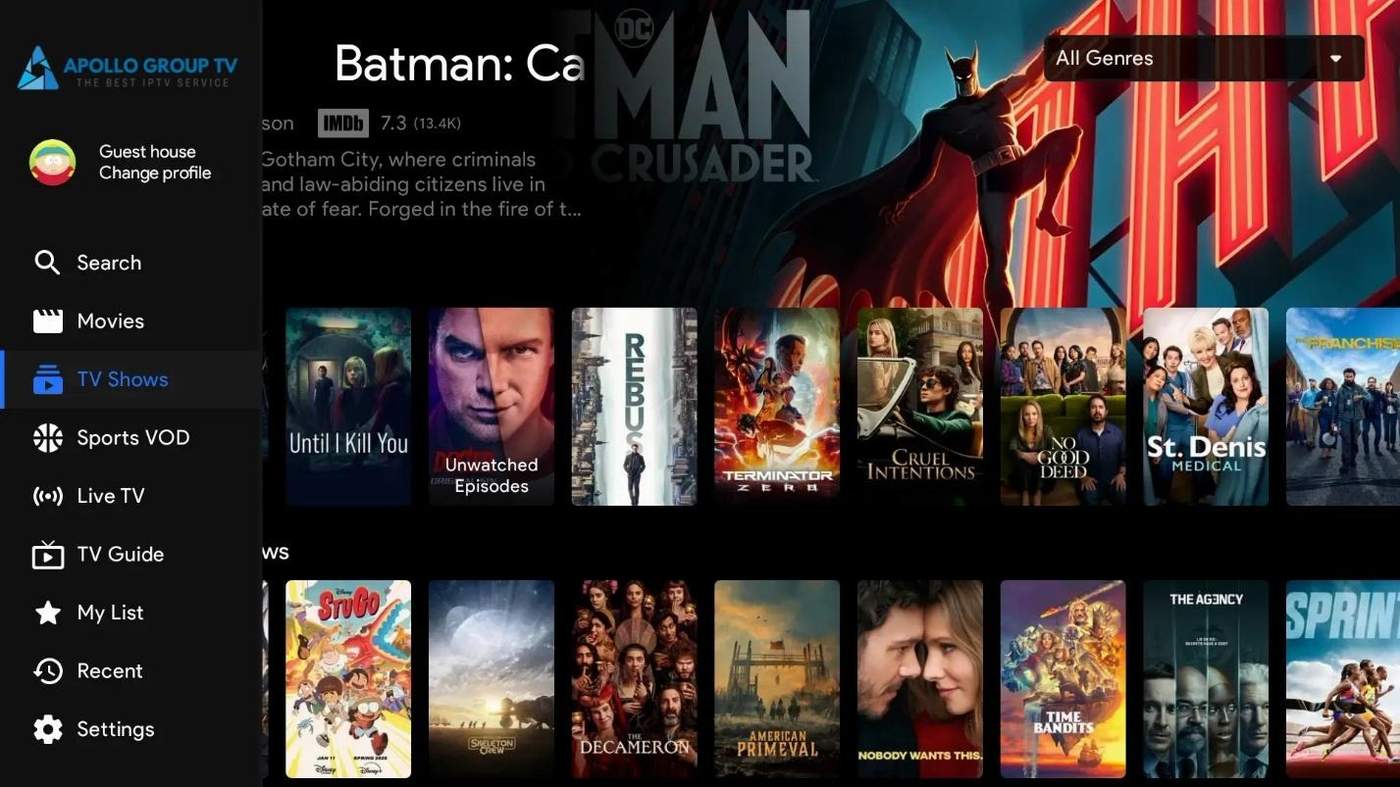
Apollo Group TV has positioned itself as one of the more talked-about names in the IPTV space, built around claims of 8K streaming, a one-time lifetime subscription, and a Netflix integration feature the provider says it added in March 2025. The service markets itself as an all-in-one alternative to cable and multiple streaming subscriptions, citing a library of more than 130,000 video-on-demand titles and over 90,000 live channels. These figures come from the provider itself rather than independent verification, so they're worth treating as stated claims rather than confirmed industry benchmarks. This update walks through what Apollo Group TV says it offers, what its pricing actually looks like, and what prospective subscribers should weigh before signing up.
Content Library and Streaming Features
According to Apollo Group TV's own marketing, the service bundles an unusually broad range of content into a single app: live channels spanning news, sports, international programming and premium networks, alongside a VOD catalog said to include recent releases, older films, full series, documentaries and international cinema. Sports coverage reportedly includes major leagues such as the NFL, NBA, UFC and various global soccer competitions. To manage playback during high-traffic periods, Apollo uses a proprietary feature it calls "Antifreeze" streaming technology. The name is the provider's own branding, and no public technical documentation explains exactly how it works, so it's best understood as a marketed feature rather than an independently benchmarked one. The service also advertises 8K streaming, though this is described as available only for select titles and channels, and only on compatible displays and internet connections — not as a blanket resolution across the whole catalog.
Subscription Plans and Pricing
Apollo Group TV currently lists four subscription tiers. The Starter Pack runs $51.99 for 90 days on a single device, down from a listed price of $67. The Silver Pack costs $71.99 for 180 days, also on one device, reduced from $89. The Platinum Pack is priced at $159.99 for 12 months and supports up to five devices, discounted from $199. At the top sits the Lifetime, or "Golden," Plan at $299.99 — described as reduced from $997 — which offers unlimited ongoing access across up to 10 devices for a single payment.
The lifetime model is the plan's main selling point, since it removes recurring fees entirely. It's worth noting, though, that any IPTV provider offering a "lifetime" plan carries an inherent continuity risk: if the company stops operating, changes ownership, or loses access to its content sources, a one-time payment doesn't guarantee ongoing service. This is a known pattern across the IPTV industry generally, not a specific prediction about Apollo, but it's a factor anyone comparing a large upfront cost against a monthly subscription should factor into the decision.
Netflix Integration: What It Means
One of Apollo Group TV's more notable claims is a Netflix integration added in March 2025, which the provider says lets subscribers search for and stream Netflix titles directly inside the Apollo app, without entering separate Netflix login credentials. Users reportedly see popular Netflix titles appear alongside other live and on-demand content in the same searchable interface.
What isn't disclosed anywhere in Apollo's public materials is how this access is technically achieved, and there's no stated licensing partnership with Netflix backing the feature. That absence of explanation matters: IPTV platforms that provide access to premium third-party content without a clear, disclosed licensing arrangement generally operate in a legally ambiguous space. That doesn't necessarily mean a subscriber faces legal exposure for streaming, but it does mean the legitimacy of the underlying arrangement isn't something outsiders can verify. Anyone considering the service should weigh that uncertainty rather than assume the feature is fully above board simply because it functions smoothly in the app.
Device Compatibility and Setup
Apollo Group TV is advertised as compatible with Amazon Firestick and Fire TV, Android TV boxes, Samsung, LG and TCL smart TVs, Apple TV, Windows and macOS computers, and Android and iOS phones and tablets. Firestick and Android TV installation is generally the most straightforward path, typically involving downloading an APK file directly rather than using an official app store. Smart TVs and Apple TV devices usually require sideloading or a workaround such as screen mirroring, since neither platform natively supports installing the app through official channels. It's worth being aware that installing APK files from outside an app store carries its own security considerations, since those files aren't vetted the way app-store submissions are.
A VPN is commonly recommended alongside IPTV services like this one, primarily for added privacy and to help with content that may be geographically restricted. It's an optional layer rather than a requirement for the service to function, and it shouldn't be treated as a guarantee against every possible access or legal consideration discussed above.
Bitcoin-Only Payments: What It Means for Buyers
Apollo Group TV accepts Bitcoin as its only payment method — there's no option to pay by PayPal or credit card. The provider frames this as a way to avoid chargeback fraud, stolen card data and fake resellers, and cryptocurrency payments are indeed faster to process and harder to intercept than some traditional methods.
What that framing leaves out is the trade-off for the buyer. Bitcoin transactions are irreversible. If a subscription doesn't perform as described, or the service becomes unavailable after a lifetime payment has been made, there's no chargeback mechanism or bank dispute process available to recover funds — unlike a credit card payment, which typically offers some recourse. That absence of a refund or dispute pathway is arguably the most important practical detail for anyone weighing a large one-time payment like the Lifetime Plan.
How Apollo Group TV Compares to Other IPTV Services
Rather than measuring Apollo against specific named competitors using figures that can't be independently confirmed, it's more useful to apply a general framework when evaluating any IPTV service, Apollo included. Consider the actual size and freshness of the content library rather than a headline channel count alone. Check how many devices a plan supports simultaneously, since that affects real household value. Look closely at payment and refund terms — whether disputes are possible if the service underperforms or disappears. And assess how responsive customer support actually is, ideally based on more than promotional claims. Applying these four criteria consistently across any IPTV provider gives a clearer picture than relying on marketing copy alone, whether that copy comes from Apollo or a rival service.
Before You Subscribe
Apollo Group TV does not currently offer a free trial. The lowest-commitment option is the 3-month Starter Plan, which gives new users a way to test the service on a single device before considering a longer or lifetime commitment. Given the Bitcoin-only payment structure and the lack of refund recourse discussed above, starting with a shorter plan is a reasonable way to limit exposure before committing to a larger one-time payment.
Since IPTV pricing, features and terms can change without notice, anyone interested should review current plans and pricing directly on the official apollo group tv site before making a purchase decision, rather than relying solely on third-party summaries like this one.

