Approaching 6k USD monthly revenue with my Svelte / SvelteKit development services
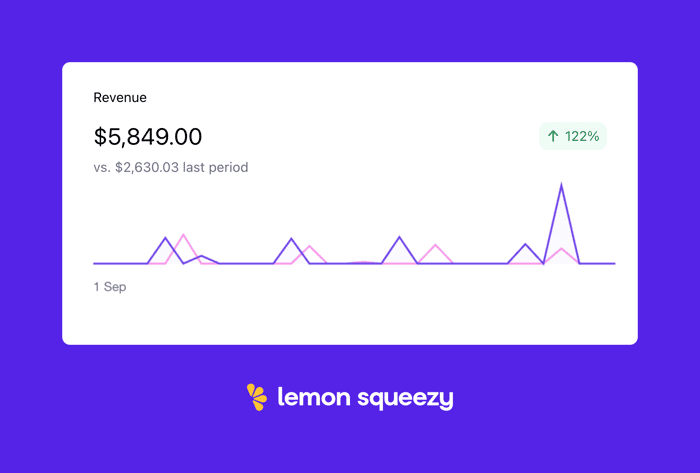
I'm Justin, and for the last year, I've been solo running Okupter (https://www.okupter.com), a Svelte / SvelteKit focused development agency. Initially alongside my full time job, but now full time for about 4 months.
This post is a bit of sharing my journey, how I reached a monthly revenue of 6k USD for the second month in a row, and what I've learned along the way.
Okupter started as a blog on frontend development best practices (performance, accessibility, etc...), and then focused on Svelte and SvelteKit. I have a background in React.js, Next.js, etc... but immediately got hooked on Svelte and SvelteKit. I started writing about it, and then started getting requests for consulting and development work.
Up to a couple of months ago, my main services (those that were bringing in the most revenue) were Svelte / SvelteKit consulting (both in real time and asynchronous). I used to charge 150 USD / hour for a real-time consulting and 150 USD / month for asynchronous consulting (basically, I'd be available on Slack / Discord for a month to answer questions, review code, etc...).
At that time, I was turning around 2 to 3k USD / month, which was already great, but I was also working a full time job, so I didn't have much time to work on Okupter.
I also had a bunch of other services like web application, landing page, MVP development, etc... all focused on Svelte / SvelteKit, but I wasn't really pushing them, and they weren't bringing in much revenue; if not none.
The turning point
About two or three months ago, I came across a tweet by Brett from Designjoy, about how he would build a productized web development service. He was already doing great with his productized design service, so I decided to give his approach a try.
PS: I'm not affiliated with Brett in any way, I haven't bought any of his courses (yet), and I'm not getting any commission from him. I just really liked his approach, and it seemed to be working for me.
Brett's approach is to build the service around two weeks sprint, with a fixed price, and a fixed scope. The idea is to have a clear deliverable, and a clear price, so that the client knows exactly what they're getting, and how much it will cost them.
The process
I pretty much replicated exactly what Brett said in the tweet, with a few tweaks here and there on the technology stack (I'm focusing on Svelte / SvelteKit).
I put together this page https://www.okupter.com/services/sprint-based-svelte-and-sveltekit-development, removed all other services from the website (except for the consulting services), and started linking to it from my blog posts.
From this point, things went organically. My website gets around 15k visitors per month (mostly organic searches to the blog), so I use it as my main marketing channel.
I started having a few requests for the sprint based development service, and started working on them. The first sprints were a bit rough, as I was still figuring out the process of scoping the sprints, communicating with the clients, etc... but I quickly got the hang of it.
Right now, I get about 2 paid sprint clients per month, and the rest of the revenue comes from consulting services (both real-time and asynchronous).
What I've learned
The first and most important thing I've learned is that I should keep trying things. I can't remember the number of different experiments, services, etc... I've tried on the website, and most of them didn't work. But I kept trying, and eventually found something that seems to be working.
Another important thing in my journey was Okupter's blog. I've been writing consistently (3 to 4 blog posts per month) for more than a year now. It took me more than 5 months to get my first paid client from the blog, but it was worth it.
Plus, the fact that I write exclusively around Svelte and SvelteKit has helped me position myself as an expert in the field. I have many times started talking to a lead, and they already knew me from the blog, which made the sales process much easier.
Giving something for free can also be a great way to get clients. Up to a couple of weeks ago, I was offering free 15 minutes consulting calls about Svelte and SvelteKit. During these calls, I tried to provide as much value as possible, and I think it helped me get a few clients.
Finally, I think it's also important to build things on the side, free tools, SaaS projects, open source libraries, etc... At least at the beginning. Some of the clients I'm working with today came from either my SvelteKit SaaS boilerplate (https://github.com/okupter/kitforstartups), or my SST starter (https://github.com/okupter/sst-sveltekit-starter).
What's next
At this point, I want to refine as much as possible the sprint based service, improve the process in order to provide the best possible experience to my clients.
The next step after that would be to scale up a little bit the number of clients I can take on the sprint service. I'm currently taking on 2 clients per month, but I'd like to be able to take on 4 or 5.
My plan is to reach a monthly revenue of 10k USD, and then, eventually, hire a Svelte / SvelteKit specialist to help me with the sprint service.

@segbedji Congratulations! Do you get alot of project leads regarding Svelte.js build?