Are Fat Tire Electric Bikes Suitable for Snow? Pros, Cons, and Real-World Test Results
Every winter, low temperatures, snow accumulation, and hidden ice make riding a regular bicycle difficult and unpredictable. As fat tire electric bikes designed for snowy conditions become more popular, more riders are starting to commute or explore outdoors even when everything is covered in white. But are these bikes truly suitable for snow? What are their real advantages and limitations?
This article combines structured analysis with real-world riding experience to give you a clear, practical understanding of how fat tire electric bikes actually perform in snowy conditions.
Why Do “Fat Tires” Work Better in Snow? The Physics Behind It
The most distinctive feature of a fat tire electric bike is its oversized tires—usually 4 inches wide or more. The combination of fat tires + electric assist is the core design philosophy behind most snow-capable Electric bikes.
Fat tires offer three key advantages:
Larger Contact Patch = Better Traction
Snowy surfaces have unstable friction and are prone to slipping. Wider tires increase the contact area with the ground, delivering more even and consistent traction.
Better Floatation in Soft Snow
Narrow tires tend to cut into snow, while fat tires spread the rider’s weight—much like snowshoes—making them more effective on uncompressed or fresh snow.
Lower Tire Pressure Improves Stability
In real-world testing, lowering tire pressure to 8–12 PSI significantly improves control on both fresh snow and packed snow, whether on fat tire models or purpose-built snow Electric bikes.
Motor and Battery Performance: What Really Determines Rideability
Fat tires are only the foundation. In winter, overall ride quality depends heavily on how well the power system adapts—something that becomes very clear when using snow-focused Electric bikes.
High Torque Matters More Than Peak Power
Snow creates high rolling resistance and makes starting more difficult. Torque directly impacts ride feel more than raw wattage.
Mid-drive motors perform better on climbs and in complex snow conditions
Hub motors are easier to manage on flat, packed snow surfaces
Cold Weather Battery Loss Is Real
In low temperatures, battery range typically drops by 30%–50%.
Using battery insulation sleeves, warming the battery indoors before riding, and planning shorter routes can significantly reduce range anxiety.
Bottom line: Snow-capable Electric bikes can be used reliably in winter, but battery management must be planned in advance.
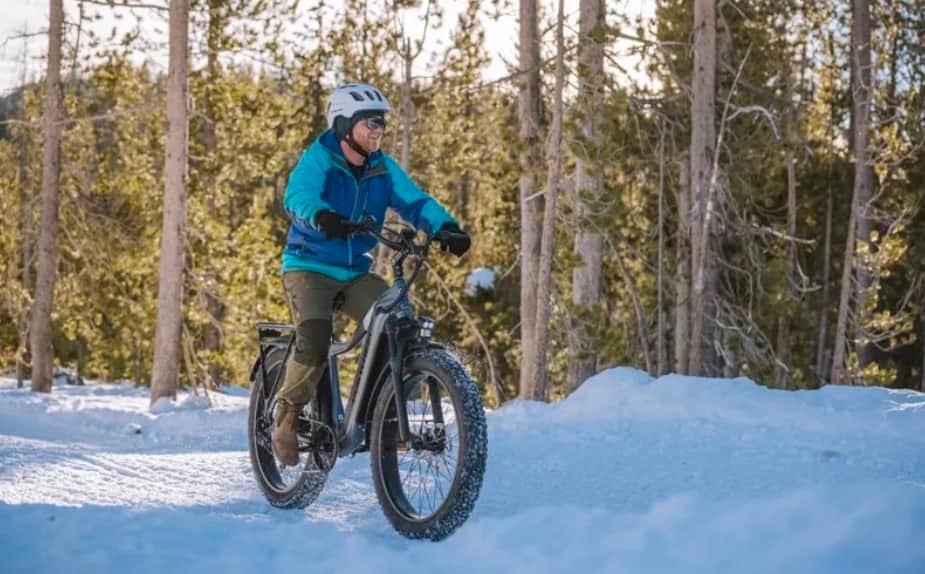
Snow Riding Experience: A Balanced Look at Pros and Cons
Advantages
Much more stable than standard Electric bikes
On packed snow and mixed winter surfaces, fat tires noticeably reduce the risk of side slipping.Strong all-terrain capability
Soft snow, rutted tracks, and slushy sections are all manageable—one of the main reasons riders choose snow Electric bikes.Electric assist reduces physical strain
Riding against cold wind and snow resistance is far more sustainable with motor assistance.
Disadvantages
Heavier overall weight
Fat tires and reinforced frames increase bike weight, making stairs and manual carrying more difficult.Reduced range in cold weather
This is unavoidable in all winter riding scenarios.Ice still requires caution
Even with fat tires, black ice remains a serious slipping hazard.
Real-World Testing: Performance in Different Snow Conditions
We tested riding performance in three typical winter conditions:
Packed Snow
Ride feel: Stable and predictable, with tire tread gripping effectively
Overall rating: Ideal for daily winter commuting
Fresh, Soft Snow (10–15 cm / 4–6 inches)
Ride feel: Noticeable floatation, but speed control is essential
Overall rating: Fat tire advantage is clear, though rider skill matters
Icy Surfaces
Ride feel: Some traction remains, but slipping risk is high
Overall rating: Most challenging condition; slow speeds and gentle turns are strongly recommended
Overall, snow Electric bikes perform reliably in most winter conditions, but pure ice always demands extra caution.
A Practical Snow Riding Solution: The Mokwheel Example
Within today’s snow riding market, some brands are helping fat tire Electric bikes transition from a “seasonal option” to a practical, year-round transportation tool. Mokwheel, for example, designs several models specifically with cold-weather riding in mind—focusing on fat tire setups, high-torque output, and battery systems optimized for low-temperature stability.
Rather than simply stacking specifications, these designs prioritize balanced performance across real-world scenarios such as packed snow, fresh accumulation, and winter commuting.
For riders who want to maintain consistent riding frequency in winter without sacrificing comfort or reliability, all-weather-oriented snow Electric bikes like these are increasingly worth considering.
Who Should Consider a Fat Tire or Snow Electric Bike?
Well-suited for:
Riders who commute throughout the winter
People living in regions with long-lasting snow cover
Cyclists who want to extend riding into all four seasons
Riders interested in light snow trail riding and outdoor exploration
Not ideal for:
Users who need to frequently carry their bike
Riders who prioritize high-speed performance
Are Fat Tire Electric Bikes Worth It for Snow?
Yes.
Fat tires provide stability, high-torque motors help overcome snow resistance, and proper tire pressure combined with smart riding techniques allows fat tire Electric bikes to perform reliably in most winter conditions. This is why snow Electric bikes are becoming a popular choice for both winter commuting and outdoor riding in colder regions.
With proper preparation and use, winter doesn’t have to mean giving up riding.
Frequently Asked Questions
Are fat tire Electric bikes and snow Electric bikes the same thing?
In most cases, they overlap heavily. Snow Electric bikes usually feature fat tires, high-torque motors, and cold-weather optimization—but not all fat tire models are fully suited for snow.
Can regular Electric bikes be used in snow?
They can handle light snow or cleared roads for short distances, but stability is significantly lower in soft snow or icy conditions compared to snow Electric bikes.
Do I need studded tires for snow riding?
If you frequently encounter ice or black ice, studded tires greatly improve safety. For packed or wet snow, standard fat tires with proper pressure are usually sufficient.
Will winter riding damage the battery?
Short-term use won’t damage it, but cold temperatures reduce efficiency and range. Store batteries indoors when not in use and avoid prolonged exposure to extreme cold.
How much range loss should I expect in winter?
Typically 30%–50%, depending on temperature, battery size, riding mode, and insulation measures.
Should tire pressure be adjusted for snow?
Yes. Lower pressure improves traction. A common recommendation is 8–12 PSI, adjusted based on rider weight and conditions.
Is snow riding more dangerous than normal riding?
Risk is higher, especially on ice or in low visibility. However, proper equipment, controlled speed, early braking, and protective gear can greatly reduce danger.
Are snow Electric bikes suitable for daily winter commuting?
If your area has prolonged snow coverage and limited road clearing, snow Electric bikes are a highly practical winter commuting solution.

