as5 Heavy Duty Extension Cords Professionals Swear By In 2026
Key Take Away
Heavy-duty extension cords are necessary for construction sites, workshops, and factories where regular cords don't work.
The wire gauge is important: lower AWG (like 10/3 or 12/3) means thicker wire that can handle more current.
For professional-grade reliability and safety compliance, UL or ETL certification is a must.
There are different types of NEMA plugs that work with different voltage and amp needs, such as 125V, 250V, and locking connectors.
For outdoor and jobsite use, jackets like SJTW or SOOW are needed because they are made to withstand weather and wear.
When you need reliable power for a job, like on a construction site, in a workshop, or for heavy commercial equipment, regular extension cords just won't do.
In 2026, professionals are using industrial power cords and heavy-duty extension cables built to last, be safe, and perform well even under heavy stress. The right extension cord can mean the difference between smooth work and expensive downtime. It can be UL-certified or designed for outdoor use.
This guide lists five heavy-duty extension cords that professionals trust, along with important safety tips, compliance standards, and key considerations when choosing a commercial-grade plug.
What Makes a Heavy-Duty Extension Cord Professional-Grade?
Heavy-duty extension cords are not only larger but also designed for higher voltages, higher resistance against wear and tear, and compliance with safety certifications. Professional users prefer cords made of tough insulation material, rated at high amps, and come with weatherproof jackets.
Most important of all, professional-grade extension cords must have UL certification and comply with safety guidelines issued by OSHA. The certification guarantees the reliability of the product even when it is used under extreme temperatures, humidity levels, or mechanical stress.
Here are five heavy-duty extension cords professionals recommend in 2026.
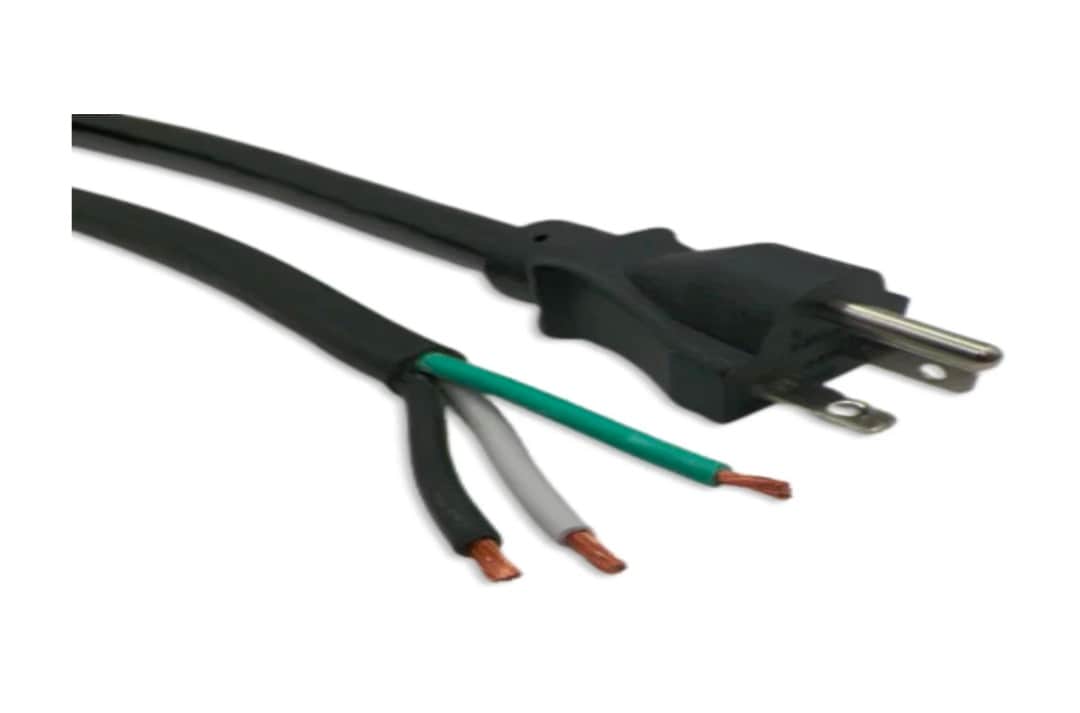
NEMA 5-20P to ROJ
A 12/3 SJTW heavy-duty extension cord rated at 20A, 125V with a commercial-grade plug and ROJ (raw open jacket) for hardwiring flexibility. The construction of the wire with 12 AWG results in an extra 25% in capability compared to regular residential cords, while the SJTW jacket guarantees that it can be used both indoors and outdoors.
NEMA 5-30P to ROJ
A 10/3 SJTW heavy-duty extension cord rated for 30 amps at 125 volts, designed specifically for high-load applications where standard cords are insufficient.
The 10 AWG wiring helps minimize voltage drops and maintains optimal operation in demanding conditions.
NEMA 6-20P to ROJ
Many professionals overlook the fact that certain heavy-duty equipment operates on 240-volt circuits rather than standard 120V. The NEMA 6-20P to ROJ in 12/3 SJTW is purpose-built for this application, delivering 20 amps at 250 volts through a three-wire configuration.
The key distinction from the 5-20P is the horizontal blade orientation, which physically prevents accidental connection to a 120V outlet — a built-in safety feature that protects both the equipment and the operator.
NEMA L5-20P to L5-20R
This heavy-duty power extension cord or heavy-duty power extension cable has connectors for the North American (NA) market. It features a molded NEMA L5-20P locking plug to a molded NEMA L5-20R locking receptacle.
12-gauge 3-conductor SJTW-type wire, 50 feet in length, yellow in color, rated to 20 amperes and 125 volts. Temperature rating is 105°C.
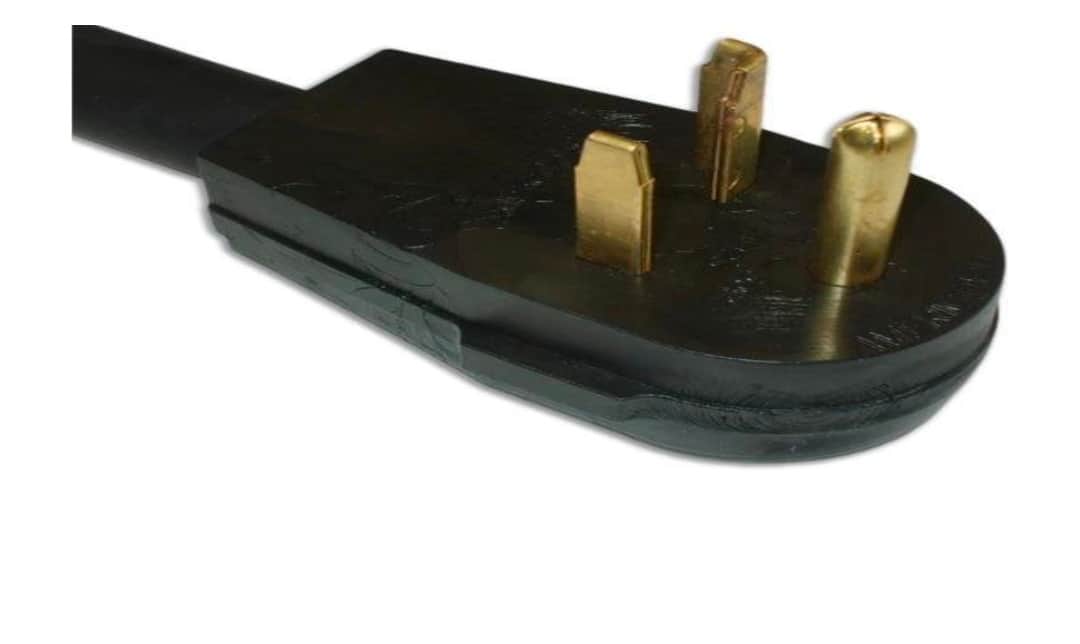
NEMA 6-50P Right Angle to Blunt Cut
A 50A, 250V industrial-grade cord built for extreme applications such as welding, plasma cutting, EV charging, and heavy machinery. Notably, the right-angle plug reduces strain and improves space efficiency against walls.
Meanwhile, the blunt-cut (ROJ) end allows full customization for permanent installations. As EV infrastructure continues to expand, this cord is increasingly used in commercial electrical systems and industrial setups.
Cord Safety Tips Every Professional Should Follow
Even the best heavy-duty extension cables can pose risks if used improperly. Following basic safety practices helps prevent accidents and extends the life of your equipment.
Despite being made of high-quality materials, even the most durable cables can be dangerous if not handled correctly. By adopting some safety measures, you will increase the lifespan of your equipment.
Additionally, never operate a cord at a higher capacity than what it can safely handle since that can lead to fires and other types of accidents. Likewise, inspect the cable regularly for any damage, such as fraying wires.
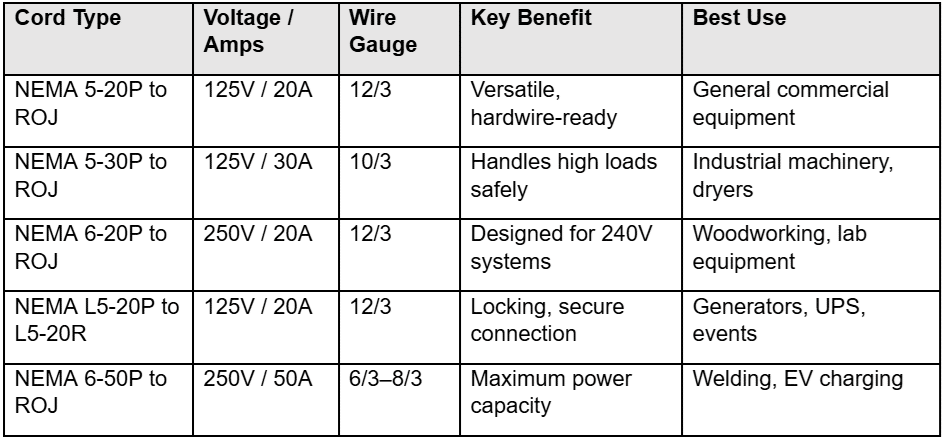
Quick Comparison: Heavy-Duty Extension Cords
Bottom Line: Power Your Projects with Confidence
In 2026, professionals won't risk using bad equipment. A good heavy-duty extension cord gives you more than just power; it also keeps you safe, makes you more efficient, and gives you peace of mind. If you need a tough SOOW cable for work or a flexible SJTW cord for outdoor projects, it's important to pick a UL-certified, commercial-grade option.
You can keep your tools and your team powered and safe by knowing what to look for, following safety rules, and buying from reputable brands like Americord.
Are you ready to improve your setup? Check out Americord's full range of heavy-duty power cords and extension cables to find the right one for you.

