Automation tools connect things. They don’t take responsibility.
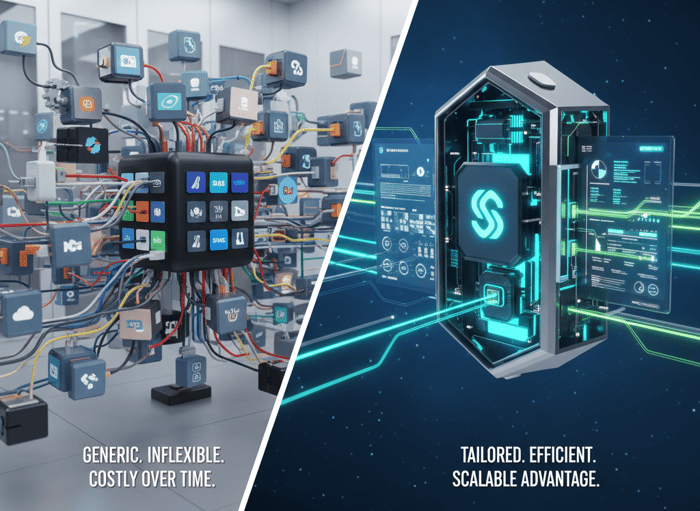
Most automation platforms are great at wiring systems together.
They break down the moment:
real users touch the workflow
logic evolves over time
someone asks “who owns this?”
We learned this the hard way.
In the last few weeks, we onboarded teams with very different use cases:
internal ops automation
client-facing workflows
AI agents running business logic
Different problems. Same breaking point.
The workflow wasn’t the issue.
Ownership was.
Who can change it?
What happens when it fails?
How do you ship updates safely?
How do you add a UI without rebuilding everything?
That’s when automation quietly turns into software.
And software needs:
structure
versioning
deployment discipline
a clear owner
Not more nodes.
Not more prompts.
This shift is happening whether tools acknowledge it or not.
We’re building Simplita around this idea:
workflows should graduate into products instead of collapsing under complexity.
If you’re feeling that tension already, you’re not early.
You’re right on time.
Happy to compare notes if this resonates.

What part of your approval process takes the most time? Trying to understand if this is a universal pain.
Most automation just moves data around. Who owns the outcome when something breaks?
Tools connect systems, but someone still has to watch, fix, and decide. That's where most automation quietly becomes a second job instead of leverage.
We're building voice agents that take responsibility for user success, not just task execution. The difference isn't automation vs. human - it's tools that connect things vs. agents that own the result.
If you're feeling this tension between connectivity and accountability, we'd love to compare notes: demogod.me
This is exactly the tension I was trying to point at. When automation needs constant babysitting, it stops being leverage and quietly turns into operational debt. Ownership isn’t about replacing humans, it’s about making outcomes explicit instead of hoping flows behave.
This resonates strongly from a security perspective. Automation without clear responsibility becomes a risk surface. When alerts fail or systems misfire, unclear ownership delays response, which is where real damage happens.
Spot on. From a security lens, ambiguity is the real vulnerability. When something goes wrong, unclear ownership slows response more than missing alerts ever will. Automation should reduce risk, not create new gray areas around responsibility.
Well said. Most tools optimize for connecting systems, not for handling failure. In production, responsibility matters more than how clean the workflow diagram looks.
Exactly. Production doesn’t care how elegant the diagram is. The real test is who owns failure paths, not just happy paths. That’s where most automation breaks down.
This is very real. From a marketing side, automation often looks “successful” on dashboards, but when outcomes fail, no one owns the fix. That gap between flow metrics and real accountability causes long-term damage.
This is such an important point. Dashboards can say “green” while real outcomes are red. If no one owns the fix, automation quietly erodes trust instead of creating leverage.
I’ve seen this become a real problem at scale. Workflows grow, edge cases pile up, and suddenly no one knows who’s accountable when automation fails. This framing is spot on.
Exactly. Scale is where the cracks show up. When workflows grow faster than clarity, accountability quietly disappears. That’s usually when automation starts hurting more than helping.
“Connecting things” feels productive, but outcomes matter more than flows. Without clear ownership, automation just moves complexity around instead of removing it
Well put. Moving complexity around feels like progress until something breaks. Outcomes force uncomfortable questions about ownership that flows alone don’t answer.
This hits home. Most automation tools stop at wiring things together, but when something breaks, ownership is unclear. Responsibility is the missing layer no one talks about enough.
Yes, this is the gap I kept running into. Wiring is easy to demo. Responsibility only shows up in real usage, failures, and edge cases. That’s where most tools fall short.
We hit this wall recently too. Zapier is great for MVP, but the per-task pricing murders margins at scale. We ended up migrating to self-hosted n8n. It's not as scary as it looks if you have basic JS skills. I actually just wrote up a tech breakdown of the migration on Slake Design if you're curious.
That experience matches what I’ve seen too. Tools like Zapier optimize for speed of setup, not long-term system ownership. It works until scale exposes the real cost, not just pricing, but cognitive and operational load.
Self-hosting isn’t the hard part. The hard part is designing for responsibility upfront. Once ownership is explicit, the system becomes simpler, even if the infra looks heavier at first.
Curious what surprised you most during the migration once you were in production traffic.
Well said. The difference between automation that demos well and automation that survives production is responsibility. Tools rarely design for that part.
Appreciate this. “Survives production” is the key phrase. Demos optimize for setup speed, but real systems need clarity when things go wrong. That difference matters a lot over time.