B2B SaaS Strategies and Trends Are Breaking Quietly and Most Founders Can Feel It but Can’t Explain It
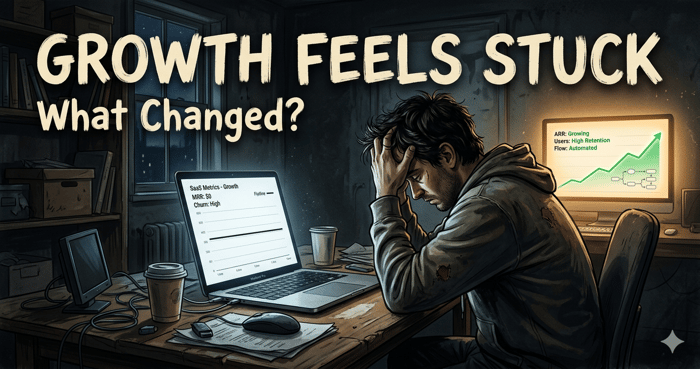
Something feels off when you look at your growth and you know it, even if you can’t fully explain it. The product is not bad, the effort is not low, the intent is not weak, yet the results feel inconsistent and unpredictable in a way that makes you question everything you thought you understood about growth.
You try to fix it the way everyone tells you to, you change landing pages, tweak messaging, test a new channel, maybe even invest in a new tool, and for a moment it feels like progress, then everything slows down again and you are left staring at numbers that refuse to move with the same energy you are putting in.
That is usually the point where people start going deeper into content around B2B SaaS strategies and trends, hoping that one idea will unlock something, but instead of clarity you get more noise because everything sounds right in theory but fails quietly in practice.
The uncomfortable truth is that most of what you are reading was built for a slightly different version of the market, a time when buyers behaved differently and attention worked in simpler ways, and now that shift is happening faster than most people are willing to admit.
Buyers do not trust fast anymore, they do not convert just because your funnel is clean or your copy is sharp, they observe, they compare, they leave, they come back without warning, and this creates a strange gap where your system looks fine on the surface but underneath it is leaking attention in ways you cannot easily track.
This is why your funnel feels broken even when it is not technically broken, because the problem is not structure, it is timing and alignment, and those are much harder to see and fix compared to design or tools.
At the same time you watch other SaaS products grow in the same space and that creates a different kind of pressure, because now it is not just confusion, it is comparison, and comparison makes everything feel more urgent and more personal than it actually is.
The reality is they are not always better, they are just faster at testing, faster at deciding what does not work, and more willing to stay with something that shows even a small signal instead of constantly resetting their direction.
Most founders do the opposite without realizing it, they switch too early, they abandon ideas before they mature, they keep searching for something new instead of letting something work, and this creates a loop where nothing compounds and everything feels temporary.
Then comes the tool layer which makes it even more complex, because it feels like adding more capability should fix the problem, but in most cases it just adds more decisions, more noise, and more distraction from what actually needs attention.
You open dashboards, connect integrations, automate workflows, and still feel like something is missing, not because the tools are bad, but because they are not connected to a clear system that compounds over time.
If you slow down and look closely, the gap is not effort, it is clarity, and clarity right now is harder than ever because the conversation around B2B SaaS strategies and trends https://jarvisreach.io/blog/b2b-saas-strategies-and-trends/
is filled with recycled advice that sounds actionable but rarely adapts to your exact situation.
That is why things feel heavy even when you are doing everything right, because the game is no longer about doing more, it is about doing fewer things with more depth and staying with them long enough to see real movement.
And this is also where most people fall off, not because they are incapable, but because they expect faster feedback in a system that now rewards patience and consistency more than quick wins.
If something feels off in your growth right now, it probably is, but it is not always where you think it is, and the sooner you start questioning the assumptions behind your strategy instead of just the tactics, the sooner things begin to shift in ways that actually last.

On point with the last line. We really need to take a step back and question the assumptions we built on. So many variables change over time, it would be a good idea to check even if everything seems to be working well.
Really resonate with this. It often feels like the system is “working” on the surface but not compounding underneath. I think the hardest part is exactly what you said — knowing when to stay vs when to pivot.
Curious: in your experience, what signal do you trust most when everything feels inconsistent?
Love this question — it’s the one that quietly decides whether you build something real or just stay busy.
For me, the signal isn’t traffic, signups, or even revenue (those can lie short-term). It’s pull.
When people,come back without reminders, use it in ways you didn’t expect
or feel slightly annoyed when it’s not there
—that’s when I stay.
If it’s all push (you convincing, reminding, chasing), I start questioning hard and look for a pivot.
Inconsistency is normal. Indifference isn’t.
this resonates a lot of that inconsistency seems to come from weak signals about who is actually resonating. when that isnt clear, every channel and message feels random, so founders keep switching. once you start seeing the same segments repeatedly engaging, growth feels less unpredictable because youre building around something thats already showing signs of pull.
yeah this is exactly where things start to stabilize, when you can’t clearly see who is actually resonating, everything feels random so switching feels like the only option
but once a few patterns start repeating with the same kind of users, even if it’s small, it gives you something real to build around and that’s usually when growth stops feeling like guessing and starts feeling a bit more predictable
exactly, and once those small patterns appear the focus shifts from testing channels to staying close to that same group. even a few consistent interactions with similar users tends to reveal clearer messaging and distribution paths, because youre compounding around something real instead of restarting each time.