B2C Payout Solutions: What Scaled Platforms Get Right (and Early Teams Often Miss)
For many founders, payouts start as a secondary concern. Early on, the focus is usually on acquiring users, validating demand, and shipping product. Paying users often feels like a problem to solve later. But as platforms scale, business-to-consumer payouts quickly become one of the most complex and high-impact parts of the operation.
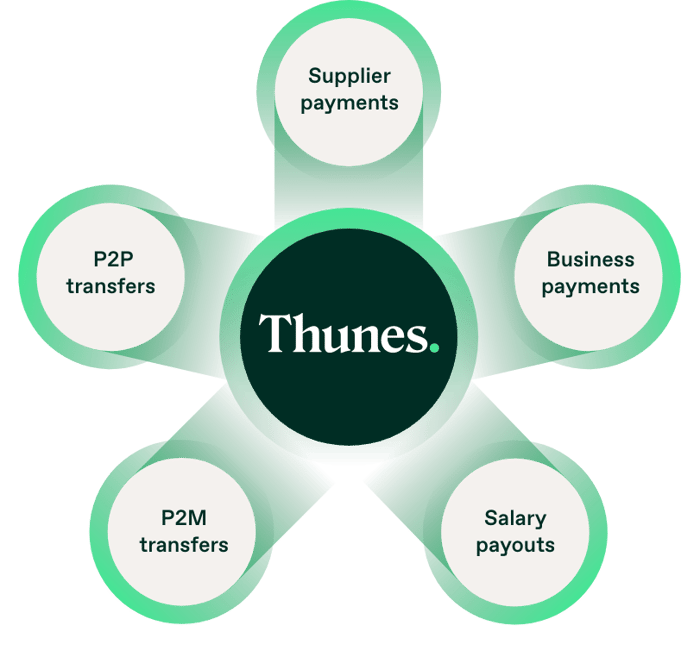
This is why infrastructure discussions around B2C Payout Solutions increasingly include Thunes when teams evaluate how to pay users globally without rebuilding their payment stack every time they enter a new market. At scale, payouts are no longer just transactions; they are a comprehensive system. They are part of the product experience and a major driver of trust.
Below is a practical breakdown of what successful platforms understand about B2C payouts, framed as a list of lessons that tend to separate scalable systems from fragile ones.
1. Payouts Are a Product Feature, Not a Back-Office Task
The first mindset shift founders make is realising that payouts are not purely an operational concern. For sellers, creators, or gig workers, getting paid is often the most important interaction they have with the platform.
When payouts are slow, unclear, or unreliable, users notice immediately. Platforms that treat payouts as part of the core product tend to see better retention and fewer support issues.
2. Complexity Multiplies Faster Than Volume
Many teams assume payout complexity scales linearly with transaction volume. In reality, it scales with geography.
Adding a second or third country often introduces:
- New payout methods
- Different settlement timelines
- Local compliance requirements
- Additional support for edge cases
This complexity can grow faster than revenue if not managed intentionally.
3. Fragmentation Is the Real Enemy
The biggest challenge in B2C payouts is fragmentation. Each country has its own financial rails and user expectations.
Platforms often need to support:
- Bank transfers in some markets
- Mobile wallets in others
- Instant payment systems were available
- Market-specific compliance workflows
Managing these through separate point-to-point integrations creates technical and operational debt very quickly.
4. Interoperability Reduces Long-Term Engineering Costs
Interoperability is what allows payout systems to scale without constant rewrites. Instead of integrating a new provider for every market, interoperable infrastructure offers unified access to multiple payout rails.
This helps teams:
- Reduce engineering overhead
- Launch in new markets faster
- Keep payout logic consistent
- Avoid frequent refactors
For IndieHackers building lean teams, this matters more than headline features.
5. Speed Is Useful, Predictability Is Critical
Fast payouts sound great in marketing, but predictability is what actually builds trust.
Recipients care about:
- Knowing when funds will arrive
- Getting clear status updates
- Avoiding failed or reversed payouts
Platforms that prioritise predictable delivery over raw speed tend to see fewer disputes and less support load.
6. Local Payout Methods Drive Adoption
In many regions, bank accounts are not the default or most convenient way to receive money. Mobile wallets and local rails often dominate.
Supporting local payout methods:
- Increases accessibility
- Reduces friction for recipients
- Improves adoption in new markets
Ignoring local preferences often results in lower engagement, even if the product itself is strong.
7. Compliance Must Be Built In, Not Bolted On
Global payouts operate under different regulatory regimes, and compliance requirements evolve constantly.
Teams that treat compliance as an afterthought usually end up with:
- Manual workarounds
- Increased risk exposure
- Slower expansion into new regions
Modern payout systems embed compliance directly into the flow so teams can scale without re-engineering processes each time regulations change.
8. Network-Based Models Outperform Point-to-Point Integrations
Traditional payout setups rely on point-to-point integrations. Every new market means a new provider, contract, and technical build.
Network-based models centralise connectivity and standardise processes, which leads to:
- One integration instead of many
- Lower long-term maintenance
- Faster rollout of new payout corridors
- Greater operational consistency
For founders planning global growth, this architectural choice compounds over time.
9. Payout Reliability Directly Impacts Retention
Payouts are often the moment users decide whether to trust a platform long-term.
Reliable payouts lead to:
- Higher seller and creator retention
- Faster word-of-mouth growth
- Fewer payout-related tickets
- Stronger platform credibility
Unreliable payouts undo trust faster than almost any other issue.
10. Observability Matters More Than Most Teams Expect
As payout volumes grow, visibility becomes critical. Teams need to know what is happening across markets in real time.
Strong payout infrastructure provides:
- Clear transaction status
- Centralised reporting
- Faster issue resolution
- Better forecasting
Without observability, scaling payouts becomes reactive rather than intentional.
11. Payout Infrastructure Shapes Your Expansion Strategy
How you pay users determines where you can expand.
Platforms with flexible payout systems can:
- Enter new markets faster
- Support new earning models
- Adapt to regional preferences
Those with rigid setups often delay expansion because payouts become a blocker rather than an enabler.
12. The Best Teams Plan for Scale Earlier Than Feels Necessary
A common IndieHacker mistake is waiting too long to rethink payouts. By the time problems become obvious, the system is already hard to change.
Teams that plan early:
- Avoid painful migrations
- Reduce long-term costs
- Maintain momentum during growth
Payout infrastructure is one of those decisions where earlier investment often saves money later.
Final Thoughts
B2C payout solutions are no longer a background concern. They are a core part of how platforms build trust, retain users, and scale globally.
For founders and operators, the key insight is simple: payouts are not just about sending money. They are about reliability, local relevance, and system design choices that either enable growth or quietly limit it.
Treat payouts as a product capability, not a checkbox, and the rest of your platform will scale more smoothly alongside it.
