Benefits of Implementing CRM in Banking
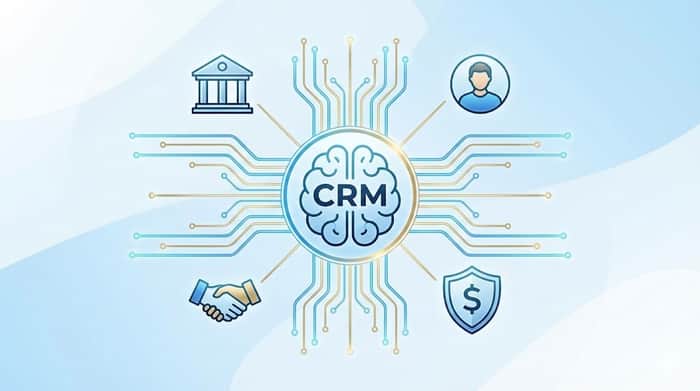
Much like any other industry vertical, even the banking industry is going through a massive transformation, all thanks to the ever-evolving technological advancements. Now, who doesn’t have money in mind? I guess everyone, and what’s more interesting is that all this money is on your respective mobile devices. Whether you want to buy your favourite apparel and accessories on the eCommerce store or transfer some amount to your loved ones, prequalifying for a loan, or even exploring different credit card options, all you need is your smartphone, and that’s it!
Embracing services with full convenience is what your customers absolutely crave. However, the concern is that with the expanding number of options available, it is uncommon for customers to seek services, especially from one bank to another. With increasing customer interest in new technologies, banking institutions are compelled to adapt to a modern, customer-focused approach, and one of the tried and tested approaches is the incorporation of CRM in the banking industry.
Unfortunately, many of you aren’t acquainted with the concept of CRM. So before proceeding further, let us understand its meaning and significance.
What is CRM in the banking industry?
CRM mainly stands for customer relationship management, and it means the entire industry is mainly focused on its valuable customers. Even banking institutions have to meet pre-determined sales and relevant marketing goals, and often have the unseen pressure of exceeding customer expectations. CRM software can be the solution to all these scenarios.
The software is developed to assist banks in successfully implementing customer-centric strategies, and what are they, you may ask?
Storing lots and lots of customer data, such as contact information, products being used, and proper interactions
Scheduling appointments, sending personalised emails and responding to relevant social media posts.
Updating customer profiles in real time with notes and new information
Visualise, nurture, and manage leads in their sales pipeline.
Create reports that analyse customer behaviour, marketing campaign performance, and more.
One of the most noticeable benefits of incorporating CRM in the banking industry is the return on investment. You see, not just banking but CRMs are important in every industry since these softwares are bound to assist organisations to deliver highly personalised customer experiences. There has always been a common misconception about CRM (Customer Relationship Management), which is that only certain kinds of businesses require one and not all. As I mentioned above, this is a misconception, whereas the reality is slightly different here. A CRM system is a must-have for businesses where you need customers to rely on your products and services. There is no debate about the fact that CRM is one of the most important aspects to be taken into account.
In addition, by integrating custom CRM softwares, the banking industry gains a 360-degree view of their customers, what their current requirements are, what challenges they are facing, and what are their expectations. So you get to kill two birds with one arrow, enhance customer satisfaction and drive business growth.
Think of a solution which not only ensures smooth operation of the banking services but also assures to delivery of personalised customer interactions at any given point. So this is where you have to unleash the power of a true banking CRM software. What’s more, these softwares have the potential to handle intricate details, manage customer data, anticipate their needs, facilitate top-notch service delivery, and at the same time delve into existing banking operations.
So, since you are reading the following post, I am pretty sure that your business is currently going through a major digital transformation and you need a custom customer relationship management software. By doing so, you will offer a centralised platform where lots and lots of data is collected, analysed, and interactions are conducted in no time. Above all, these softwares have the potential to empower banks to deliver personalised and efficient services, foster customer loyalty, and drive business growth.
Gone are the days when banking organisations had to switch between departments or use different systems, since a CRM allows these institutions to see all kinds of data and details and analyse and assist well in making quick decisions. Right from keeping tabs on transaction habits to communication preferences, basic info regarding the customer and more, an ideal CRM takes care of everything. Moreover, these softwares do suggest relevant products based on customer preferences and requirements.
In simple words, a CRM tends to keep a hawk eye on how customers act and interact over a period of time. Banks can make the most of this pre-determined information to spot chances to sell, follow up at the right moment, and tailor their offers to each person.
Let us understand the working of these Custom Relationship Management Softwares in detail. Here, the software usually combines customer data from a wide range of sources and offers banking institutions a complete view of each customer. This includes personal details, account history, transaction history, and communication preferences. Since the software is centralised, it is possible to access customer needs and behaviours and enable personalised communication, tailored offers, and proactive service.
The key features of a Banking CRM
Easy Integration
One of the most significant features that any banking CRM must comprise of is that it is supposed to integrate in seamless manner. No matter which kind of application or third-party application you try to integrate, especially with the existing banking systems, such as loan management and reporting systems, everything can be incorporated most seamlessly. In addition to having easy integration, all these systems need to work most seamlessly and smoothly. This is one of the sure-shot ways you can maximise the overall value of CRM investment.
Automation Tools
Another ideal feature to take into account is that the banking CRM must feature a wide range of automation tools. You see, softwares and tools are meant to smooth the ongoing workflow and not backfire, right? So it is very important for your CRM to feature automation tools which not just smooth out but also enhance the overall workflow. Of course, another additional advantage is that the need for manual intervention is automatically reduced, which also means the risk of errors is reduced as well. Whether it is data entry or any complex procedure, such as loan approvals, the feature ensures there are no issues or unwanted mistakes, and what you receive are the best possible outcomes.
High scalability and flexibility
Now, take any software into account; this feature should be pretty mandatory. Not just the banking industry, every business will be expanding sooner or later, so will the operations. This is why you need to choose a CRM software which is high in terms of scalability and flexibility. With the expanding business, the CRM should be able to meet your growing needs.
When you choose a CRM featuring higher scalability, it means you have chosen a CRM which has the potential to handle the increasing number of customers, data, and numerous other additional features/functionalities, and of course, there is no compromise in terms of performance. Higher scalability and flexibility mean your bank’s growth strategies are bound to happen, and of course, nothing can stop you from succeeding in the long haul.
User-friendly interface
The next ideal feature a CRM software should incorporate is a user-friendly interface. Especially for the banking industry, it is very important for the CRM software to have a visually appealing and intuitive interface. By having so, it becomes easy to attract different users with different needs and they are pretty easy to use. Banks serve a diverse customer base, customers from different age groups, from adults to young adults, to senior citizens and each of them carries a different level of literacy. So if the CRM has a compelling UI/UX, it becomes easy for the banks to cater for all types of users.
Seamless Data Management
Banking CRM systems tend to centralise customer data from different sources, offering a comprehensive 360-degree view of each client, right from what is their financial history to how they tend to interact on a frequent basis and what their main preferences are. Everything can be seen, analysed, and the best possible decisions can be made.
Having such consolidated data at hand assists banks in understanding their customer, their needs in a better way, and offers absolute personalised services, and offers all relevant solutions in a single go. In addition, CRM systems tend to offer automated updates, which leads to absolute data accuracy, and this happens after each customer interaction. By conducting robust data management, it is possible for banks to gain necessary insights into customer behaviour, enhance decision-making, and improve overall customer experience.
Predictive Analytics
Earlier, banking systems required lots and lots of manual intervention, especially in terms of brainstorming and guesswork. However, this is no longer the case with the incorporation of CRM systems; the need for predictive analysis also seems to have risen. These systems tend to analyse customer behaviour and transaction patterns. By doing so, it is possible for banks to anticipate exactly what the customer needs and offer personalised products in accordance with those needs. And all this happens before even the customer asks.
360-degree customer view
Having a complete view is very important, and fortunately, this feature is incorporated in every CRM platform, and the banking industry is no longer an exception here. The banking CRM should feature all up-to-date information on customer interactions, financial history, credit scores and way more. Having these centralised insights means it is possible to retrieve all the necessary information and offer the best services to the customers.
Benefits of Considering a Banking CRM
CRMs are an extremely important aspect of every industry, be it banking or finance or healthcare; however, when we talk about banking in particular, these systems can work wonders in offering organisations more personalised experiences. Below down-below I would like to mention certain benefits offered by the banking CRM systems.
Enhance Customer Retention
With more customers opting for online banking solutions daily, raising service standards has become critical. One sure-shot way is by offering in-person experiences like never before. Fostering long-term relationships can be difficult today but not impossible with an ideal banking CRM.
CRM technology allows recording detailed customer notes and personal information ensuring enriched experiences for end users. For instance, adding reminders about specific loans or offers shows customers that banks are truly listening.
Incorporating AI video generator technology alongside CRM outreach strategies can further personalise communication by delivering engaging video messages tailored to customers’ financial profiles — boosting retention through innovative touchpoints.
Improved sales and marketing efforts
The data in your CRM is not just to be stored but also to be compiled into accurate reports; by doing so, it is possible to receive a much deeper understanding of your customers, exactly what they want. Here, you can identify trends, different campaigns, and spot different areas of improvement needed. By doing so, it is possible to anticipate customer needs and tailor your future marketing efforts. Here, you get a clear idea of pinpointing areas for cross-selling and up-selling.
Making staff productive and efficient
Since all types of information, especially the one you need, are located within one CRM, you no longer need to waste time searching through emails, checking multiple platforms for answers. So what happens here is, all the repetitive tasks are eliminated right from the beginning. Moreover, it becomes seamless for users to access a CRM from any device, be it a laptop, desktop, or smartphone. So, in simple words, there is no limitation to where and when data can be viewed.
How to implement a CRM within your Banking Organisation?
By far, I guess you are totally convinced of incorporating or implementing a CRM within your banking organisation. Now we will focus on how to incorporate a CRM within your bank.
Step - 1: Set Goals
You can start by setting relevant objectives and goals which need to be achieved anyhow. Now these objectives are supposed to be well-aligned with the bank's unique needs and growth. So your goals can be from enhancing customer relationships to optimising organisation efficiency, driving an insane amount of revenue, and whatnot.
Step - 2: Seek CRM Consulting
The next step is to seek the support of skilled CRM consultants. Remember this, your consultants are your true partners who will assist extremely well in regards to navigating all complexities of CRM implementation. Here, the first step is to analyse your unique requirements, then select, build, and manage the right CRM solution.
Step - 3: Custom Banking CRM System Development
As soon as you have successfully defined all your goals and gained expert guidance, especially from consultants. However, there are numerous off-the-shelf solutions available, but I would recommend considering a custom system development. You see, off-the-shelf softwares such as Salesforce, Microsoft Dynamics, 365, Hubspot and more, which are perfect in very many ways. However, they tend to fall short in several aspects of meeting your unique needs. Having a custom CRM banking means your system works perfectly in sync with the existing bank’s workflow and ongoing goals. This surely leads to unparalleled efficiency and absolute innovation.
Step - 4: Legacy System Data Migration
Making a transition is never easy, especially if you are choosing a new CRM platform. Now transition needs to happen in such a manner that the data transferred should be highly integrated and accurately kept. However, it is a critical yet complex procedure. With the help of meticulous extraction, transformation, and loading (ETL) procedures, all the outdated data is successfully transferred to the new CRM, which means absolute reliability and continuity within the existing banking operations.
Step - 5: Integration with existing systems
As mentioned above, one of the ideal features of a CRM system within the banking industry is that it needs to be integrated into the most seamless manner, especially with the existing banking infrastructure. Be it the ERP systems or marketing automation tools, integration has to be smooth to make sure the organisation is able to have a unified view of its valued customers.
As soon as the system is integrated and set to run, make sure to evaluate and optimise its performance on a constant basis.
Final Words
Honestly, I don’t find any reason for not to implement CRM software. You tell me what exactly you think. Feel free to share your perspectives in the comment section below. I hope you did find the following post worth considering in case if you have any further doubts or queries, do not hesitate to mention them in the comment section below. We will reach you in the least possible time.

I’ve had fewer surprises during upgrades by mapping out customizations early and running messy processes through a sandbox first. After go‑live, I lean hard on user feedback loops to spot small issues before they snowball. I’ve also used dynamics365group.com for help cleaning up old custom code and smoothing the data move, which made the whole transition feel a lot less painful.