Best IPTV for Firestick in 2026: What I Learned After Testing IPTV for a Week
I tested IPTV on Firestick for a week to find out what actually matters when choosing an IPTV service—from streaming quality and buffering to players
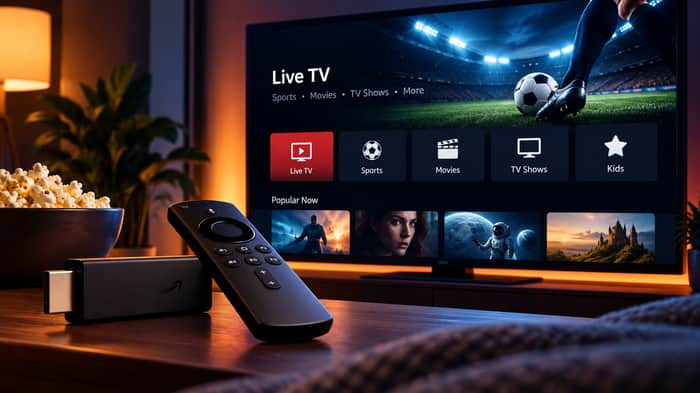
If you're searching for the best IPTV for Firestick, you've probably already noticed how difficult it is to compare services.
Almost every provider makes similar promises: thousands of live TV channels, sports, movies, 4K streaming, and supposedly buffer-free playback.
But after spending a week testing IPTV on a Firestick, I realized that the number of channels advertised isn't nearly as important as I originally thought.
What mattered much more was stream stability, Firestick compatibility, channel organization, player performance, and how well streams performed during busy hours.
Here are the things I'd actually check before choosing an IPTV service for Firestick.
What Makes a Good IPTV Service for Firestick?
There isn't one feature that automatically makes something the best IPTV service.
For Firestick users specifically, I found these factors much more useful:
Stable live TV playback
Fast channel loading
Good performance during peak hours
A usable electronic program guide (EPG)
Well-organized channel categories
Compatibility with common IPTV players
Reliable customer support
Appropriate simultaneous-device limits
A trial or short-term option for testing
A service can advertise tens of thousands of channels, but that doesn't mean much if the channels you actually want are unreliable.
1. Test IPTV During Peak Hours
This was probably the most important thing I learned.
An IPTV service can work perfectly during the morning or afternoon and behave completely differently during a major sporting event or busy evening.
So if you're given a trial, don't only test it when you first receive the login.
Try it again during the evening.
I would specifically test:
Live sports: especially during an actual event.
Popular TV channels: switch between several channels quickly.
Movies and VOD: check loading time and seeking.
Channel switching: see whether channels open immediately or consistently take several seconds.
If you're trying to find the best IPTV service for Firestick, peak-hour performance tells you considerably more than an advertised channel count.
2. The IPTV Player Makes a Difference
Something else surprised me: the IPTV service isn't always responsible for every playback problem.
Your player matters too.
Fire TV devices support multiple IPTV applications, and the interface, EPG handling, playlist performance, and playback behavior can vary between them.
Before deciding that a service is bad, I would test the same playlist with another compatible IPTV player.
For Firestick users, the important features I'd look for in a player are:
M3U or Xtream Codes support
EPG support
Favorites
Search
Fast navigation
VOD organization
Multiple playlist support
This becomes particularly important with very large playlists.
3. Don't Choose IPTV Based Only on Channel Count
This is probably the biggest marketing trap in the IPTV space.
You've likely seen claims such as:
20,000+ channels
50,000+ channels
100,000+ channels
Initially, that sounds impressive.
But how many of those channels are you actually going to watch?
For most people, the answer is a tiny fraction.
I'd rather have the channels I regularly watch loading reliably than have thousands of additional channels from countries I'll never open.
When comparing the best IPTV services, I think stream quality and relevant content are more useful comparison points than the biggest advertised number.
4. Channel Organization Matters More Than You Think
Large IPTV playlists can become annoying surprisingly quickly.
Imagine opening your Firestick and having to scroll through categories for dozens of countries before reaching the channels you watch every day.
A cleaner playlist might look something like:
USA
UK
Canada
Sports
Movies
Kids
News
That's much easier to navigate.
If a provider allows playlist customization, ask whether unnecessary countries or categories can be removed.
This sounds like a small feature, but after using IPTV every day, good organization makes a noticeable difference.
5. Check the EPG
An Electronic Program Guide (EPG) shows what's currently playing and what's coming next.
Without a working EPG, live IPTV can feel like scrolling through a giant list of channel names without knowing what's actually on.
When testing an IPTV service on Firestick, check whether:
Programs have titles
Schedule information is reasonably accurate
Major channels have guide data
The guide loads correctly
Future programming appears
If you watch traditional live television regularly, this can make a major difference to usability.
6. Test the Channels You Actually Watch
One mistake I made initially was randomly opening channels.
That's not a very useful test.
If you normally watch ten channels, test those ten channels.
For example, someone primarily interested in sports should test the sports networks and events they actually watch rather than spending their trial opening random movie channels.
I'd create a small checklist:
10–20 favorite live channels
2–3 sports streams
A few movies or VOD titles
EPG
Channel switching
Peak-hour playback
That's enough to reveal many problems.
7. Check Your Firestick Before Blaming the IPTV Service
Not every buffering problem comes from the IPTV provider.
Your Firestick, home network, Wi-Fi signal, player, or internet connection can also affect playback.
Before comparing IPTV services, I would:
Restart the Firestick.
Remove unnecessary background applications.
Check available storage.
Update the Fire TV software.
Restart the router if necessary.
Test the internet connection near the Firestick.
This gives each service a more comparable environment.
Otherwise, you might reject a perfectly usable IPTV service because the device itself was struggling.
8. Wi-Fi vs Ethernet for IPTV on Firestick
A strong Wi-Fi connection can work perfectly well, but connection stability matters for live streaming.
If your router is far from the Firestick or the Wi-Fi signal frequently fluctuates, an Ethernet adapter may provide a more consistent connection.
Before changing providers because of buffering, I'd test whether other high-bandwidth streaming apps have similar problems.
If everything struggles, your network may be the bottleneck.
9. Check How Many Devices Are Actually Supported
This is another detail that's easy to overlook.
Having an IPTV subscription doesn't necessarily mean you can simultaneously watch it on every device in your house.
Some plans may allow only one active connection.
Others may offer multiple connections.
So if you want IPTV on:
Firestick + Smart TV + phone + another Firestick
check the simultaneous-stream policy before subscribing.
This is especially important for families.
10. Test Customer Support Before Buying a Long Subscription
Customer support isn't exciting until something stops working.
Before purchasing a long subscription, ask the provider a legitimate question.
For example:
Which IPTV player do you recommend for Firestick?
or:
Can I use the subscription on two devices simultaneously?
You're not only looking for the answer.
You're checking whether someone actually responds and whether the response is useful.
That can tell you quite a bit about what support may look like after purchasing.
Free IPTV vs Paid IPTV Services
You'll also find plenty of searches for free IPTV playlists and free IPTV services.
I would be cautious here.
Free public playlists can disappear, change or become unreliable, and unauthorized streams may raise legal or security concerns. Availability and legality depend on the content, provider and jurisdiction.
If you're evaluating any IPTV service, verify that it has the rights to distribute the content you're planning to watch.
For mainstream licensed streaming, Fire TV also supports established services and free ad-supported streaming platforms.
So, What's the Best IPTV for Firestick?
After testing IPTV on Firestick for a week, my biggest takeaway was surprisingly simple:
Don't choose based on the largest channel number.
The better question is whether the service works reliably for your channels, your internet connection, your Firestick and your viewing habits.
My personal testing checklist would be:
1. Firestick compatibility
2. Stable streams during peak hours
3. Fast channel switching
4. Good EPG coverage
5. Clean channel organization
6. Reliable VOD playback
7. Correct number of simultaneous connections
8. Responsive customer support
9. A trial or short testing period
If those things work, the difference between 20,000 and 50,000 advertised channels becomes much less important.
Frequently Asked Questions
What is the best IPTV player for Firestick?
There isn't a single player that's best for everyone. Look for a Fire TV-compatible player with good playlist navigation, EPG support, favorites, search, and compatibility with the playlist format supplied by your IPTV provider.
Does IPTV work on Amazon Firestick?
Yes. Fire TV devices can run compatible IPTV player applications. The actual content available depends on the service and playlist you use.
Why does IPTV buffer on Firestick?
Buffering can have several causes, including the stream source, overloaded servers, Wi-Fi instability, internet congestion, the IPTV player, or the Firestick itself.
That's why testing another player or network connection can be useful before assuming the service is responsible.
How fast should my internet be for IPTV?
The required connection depends on the stream resolution and other network activity. Higher-quality HD and 4K streams generally require more bandwidth and, importantly, a stable connection.
Can I use one IPTV subscription on multiple Firesticks?
It depends on the provider and subscription. Some subscriptions permit one simultaneous connection while others offer multiple connections. Check the provider's terms before using the same subscription simultaneously on several devices.
Should I test an IPTV service before subscribing?
If a legitimate provider offers a trial or short-term option, testing can help you evaluate compatibility and performance before making a longer commitment.
Don't just test random channels. Test the content you actually intend to watch, particularly during peak hours.
Final Thoughts
Finding the best IPTV for Firestick isn't really about finding the service advertising the most channels.
It's about finding something that performs consistently on your setup.
After a week of testing, I'd prioritize stability, Firestick compatibility, channel organization, EPG quality, player compatibility and support before worrying about huge channel-count claims.
And if you're comparing several IPTV services, test them under the same conditions.
Same Firestick.
Same internet connection.
Same player.
Same channels.
Same time of day.
That gives you a much more meaningful comparison.

