Best IPTV Services 2026: Ranked, Compared & Reviewed
Discover the best IPTV services in 2026. Compare pricing, features, pros/cons, and find the safest, most reliable legal option for you.
🔥 Compare Top IPTV Plans & Start Streaming Today 🎬
🔥 Compare Top IPTV Plans & Start Streaming Today 🎬
Introduction
Searching for the best IPTV service can feel like walking through a maze. Every website claims to have the "#1 IPTV provider," every ad promises thousands of channels for pennies, and every forum thread argues about which service is actually safe to use. This guide is built to end that confusion.
Instead of vague hype, you'll get a grounded, practical breakdown of what "best" really means in the IPTV space, how to evaluate a service before paying for it, and which legally licensed platforms genuinely deliver value in 2026. This is written for learners studying streaming technology, freelancers exploring media-related side projects, startups researching content-delivery models, and small business owners who need reliable entertainment solutions for their space.
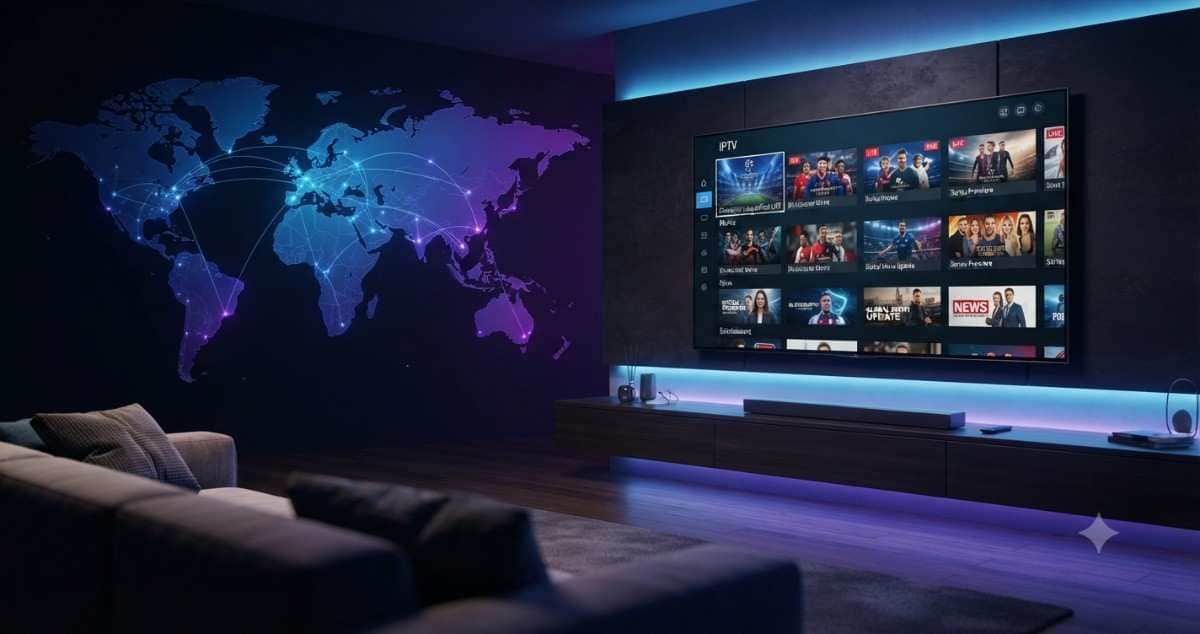
By the end of this article, you'll be able to confidently answer one question: which IPTV service is actually the best fit for your needs, budget, and risk tolerance — not just the one with the loudest marketing.
We'll cover how "best" should actually be measured, why the stakes around this keyword are higher in 2026 than ever before, a full side-by-side comparison of the top-rated legal services, real pricing ranges, use cases broken down by audience type, and the trends that will reshape this space over the next few years. Whether you're comparing services for personal use or evaluating options to recommend to clients, this guide gives you a repeatable framework you can apply anytime the market shifts.
🔥 Compare Top IPTV Plans & Start Streaming Today 🎬
What Is "Best IPTV"?
"Best IPTV" isn't a single product — it's a ranking concept. It refers to the top-performing Internet Protocol Television (IPTV) services, judged against a consistent set of criteria: content legality, streaming quality, channel selection, pricing fairness, device compatibility, and customer support reliability.
IPTV USA delivers television content via internet data packets instead of satellite or cable signals
"Best" services are ranked using measurable factors, not just marketing claims
A truly "best" IPTV service must operate under proper broadcaster licensing agreements
Rankings shift over time as providers add features, adjust pricing, or lose/gain content deals
Why "Best" Is Subjective — and How to Make It Objective
The IPTV service that's "best" for a sports-obsessed household is different from the one that's best for a small business running a lobby TV. To make the term objective, this guide scores providers against the same fixed criteria throughout — so "best" always means best for a defined use case, not just a generic label.
A Word of Caution on Search Results
Many pages ranking for "best IPTV USA" promote unlicensed reseller services offering enormous channel counts at extremely low prices. These operations typically lack legal broadcasting rights, carry real security risks (unverified apps, exposed payment data), and can suddenly disappear without refunds. This guide only evaluates services that operate under transparent, licensed agreements.
The Criteria Used to Rank "Best" in This Guide
To keep this evaluation objective rather than promotional, every service discussed here is measured against the same five criteria:
Legality — does the provider hold verifiable broadcasting rights?
Reliability — does the service maintain consistent uptime and streaming quality?
Value — does the pricing match the content and features actually delivered?
Compatibility — does it work smoothly across common devices (smart TVs, phones, streaming sticks)?
Support — is help available when something breaks, and is it actually useful?
Any IPTV provider that fails the legality check is excluded from consideration entirely, regardless of how it performs on the other four criteria.
🔥 Compare Top IPTV Plans & Start Streaming Today 🎬
Why It Matters in 2026

The competition among IPTV services has intensified sharply, and understanding what separates a genuinely good service from a risky one matters more than ever.
Cord-cutting continues to rise, pushing more households to evaluate IPTV as their primary TV source
Smart TVs now ship with IPTV apps pre-installed, making adoption nearly frictionless
Search demand for "best IPTV" has grown alongside a parallel rise in scam and phishing operations using the same keyword
Regulators in multiple countries have increased enforcement against unlicensed streaming resellers
Businesses are adopting IPTV for signage, hospitality, and internal broadcasting at a growing rate
Content owners are experimenting with new bundling and pricing models specifically for connected TV audiences
For anyone building knowledge, a business, or a side income around streaming media, knowing how to separate genuinely "best" services from inflated marketing claims is now a core digital literacy skill.
The Real Cost of Choosing Poorly
Picking an unreliable or unlicensed IPTV service doesn't just risk poor picture quality — it can mean sudden service shutdowns, exposed payment information, and zero customer support when something goes wrong. Evaluating providers properly protects your money, your data, and your time.
How Search Behavior Around "Best IPTV" Has Changed
More users now cross-reference review sites before subscribing, rather than trusting a single "top 10" article
Comparison shopping has become standard, with users checking pricing across at least 2–3 sources before committing
Trial periods are treated as mandatory testing ground, not an optional bonus
Community forums and independent review platforms carry more weight than provider-published testimonials
Search intent has shifted from "cheapest option" toward "safest and most reliable option," reflecting growing awareness of unlicensed service risks
🔥 Compare Top IPTV Plans & Start Streaming Today 🎬
Key Benefits of Choosing a Genuinely Best-Rated IPTV Service
Consistent uptime — top-rated services invest in infrastructure that reduces buffering and outages
Verified legal content — no risk of channels disappearing overnight due to licensing disputes
Transparent pricing — no hidden fees buried in fine print
Cross-device flexibility — stream on smart TVs, phones, browsers, and streaming sticks
Responsive customer support — real humans (or capable chatbots) available when issues arise
Regular content updates — new channels, shows, and features added on a predictable schedule
Data security — encrypted payment processing and account protection
Scalability for business use — easy to deploy across multiple screens or franchise locations
Who Benefits Most

Learners gain a real-world case study in subscription business models and streaming UX
Freelancers can use top-rated services as reference points when advising clients on media setups
Startups can study what "best-in-class" onboarding and retention looks like in a competitive niche
Small business owners get dependable entertainment infrastructure without ongoing technical headaches
Measuring "Best" Beyond Marketing Claims
Marketing pages love to say things like "the best IPTV experience ever." A more useful way to measure this is to track it against outcomes you can actually observe within the first week of use:
Did the app crash or buffer noticeably during peak evening hours?
Was the advertised channel lineup accurate for your specific region?
Did customer support respond within a reasonable timeframe when contacted?
Was cancellation, if attempted during the trial, straightforward and confirmed in writing?
If a service passes all four checks, it's earned the "best" label for your situation — regardless of what any single review site claims.
🔥 Compare Top IPTV Plans & Start Streaming Today 🎬
Top-Rated IPTV Services in 2026
YouTube TV — consistently ranked highest for live sports and cloud DVR reliability
Hulu + Live TV — best all-in-one blend of live channels and on-demand library
Fubo — top choice for sports-heavy households wanting deep channel variety
Sling TV — best-rated for affordability and customizable channel bundles
DIRECTV Stream — closest experience to traditional cable, with strong regional coverage
Philo — best budget-rated option for entertainment and lifestyle content
Apple TV Channels — best-rated for à la carte flexibility within the Apple ecosystem
What Separates the Top-Rated Services From the Rest
Clear, published channel lineups with no vague "and more" language
Money-back guarantees or risk-free trial periods
Independent, verifiable customer reviews across multiple platforms
Frequent app updates addressing bugs and performance issues
Public information about ownership and licensing partnerships
How Each Top-Rated Service Earned Its Reputation

YouTube TV invested heavily in cloud DVR infrastructure early on, which is why it still leads in that category years later
Hulu + Live TV benefits from Disney's broader content ecosystem, making its on-demand library unusually deep for a live TV add-on
Fubo built its brand around sports coverage specifically, and continues to add regional sports networks faster than most competitors
Sling TV pioneered the "choose your own bundle" model, letting price-conscious users avoid paying for channels they don't watch
DIRECTV Stream carries over decades of satellite-era channel relationships, giving it one of the most complete regional lineups available
Philo deliberately excludes expensive sports and news licensing to keep its price point dramatically lower than competitors
Comparison of the Best IPTV Services
YouTube TV
Overall rating focus: Live sports and news
Channel count: 100+
DVR: Unlimited cloud storage
Streams at once: 3 (unlimited at home)
Hulu + Live TV
Overall rating focus: On-demand + live combo
Channel count: 90+
DVR: 50 hours (upgradeable)
Streams at once: 2
Fubo
Overall rating focus: Sports variety
Channel count: 200+
DVR: 250 hours (plan-dependent)
Streams at once: 2–10
Sling TV
Overall rating focus: Budget flexibility
Channel count: 30–50
DVR: 50 hours (add-on)
Streams at once: 1–4
DIRECTV Stream
Overall rating focus: Cable-like lineup
Channel count: 65–140+
DVR: Unlimited cloud storage
Streams at once: 3–20
Philo
Overall rating focus: Budget entertainment
Channel count: 70+
DVR: Unlimited cloud storage
Streams at once: 3
🔥 Compare Top IPTV Plans & Start Streaming Today 🎬
Features That Define the Best IPTV Services

Multi-screen support — watch on several devices under one account
Cloud DVR with flexible storage — record without physical hardware
Offline downloads — save on-demand content for later viewing
Personalized recommendations — AI-driven suggestions based on watch history
Parental controls — content restrictions for family or shared-use accounts
Multi-language support — subtitles, dubbing, or regional channel packs
Free trial windows — typically 3–7 days to test before committing
Clear cancellation process — no hidden retention barriers or lengthy phone calls required
Feature Checklist Before Subscribing
Confirm the service supports your specific TV or streaming device
Check if simultaneous stream limits match your household or business size
Review whether regional/local channels are included for your area
Verify refund and cancellation terms in writing
Search independent review sites (not just the provider's testimonials page)
Pricing Overview for Top IPTV Services (2026 Ranges)
Philo — Around $28–$30/month, most affordable entry point
Sling TV — Around $40–$60/month depending on bundle
YouTube TV — Around $73–$83/month, strong mid-premium value
Hulu + Live TV — Around $83–$95/month with add-ons
Fubo — Around $85–$100/month depending on sports packages
DIRECTV Stream — Around $80–$115/month for larger lineups
Apple TV Channels — Pay-per-channel, roughly $5–$10 per channel monthly
Hidden Costs That Affect "Best Value" Rankings
Regional sports network fees added on top of the base plan
Extra charges for DVR storage beyond the included limit
Higher-tier plans required for additional simultaneous streams
Introductory pricing that increases after a promotional period
International or multilingual channel packs sold as separate add-ons
How to Compare Pricing Fairly

Comparing listed monthly prices alone is misleading, since bundles differ wildly in channel count and features. A more accurate approach:
Divide the monthly price by the number of channels you'll actually watch regularly, not the total advertised count
Factor in the cost of any add-ons you know you'll need (extra DVR, extra streams, sports packages)
Check whether taxes or regional fees are included in the advertised price or added afterward
Compare the price after any introductory period ends, not just the first-month rate
Use Cases
Learners — studying media licensing, subscription models, or CTV (connected TV) advertising
Freelancers — offering setup, consulting, or troubleshooting services around IPTV platforms
Startups — benchmarking onboarding flows and retention tactics used by top-rated services
Small businesses — powering entertainment in waiting rooms, gyms, cafes, or retail counters
Households — replacing cable entirely with a flexible, on-demand-friendly alternative
Property managers — offering IPTV access as an amenity for rental units or short stays
Content creators — researching top-performing live TV UX for their own streaming products
🔥 Compare Top IPTV Plans & Start Streaming Today 🎬
Best For

Sports-first households → Fubo or YouTube TV
Tight budgets → Philo or Sling TV
Families needing large DVR storage and multiple profiles → Hulu + Live TV or DIRECTV Stream
Small businesses needing simple, low-cost displays → Philo or Sling TV
Apple device users → Apple TV Channels
Cable-like completeness without a dish → DIRECTV Stream
Pros and Cons
Pros
No physical installation or hardware required
Flexible, cancel-anytime billing
Access across multiple devices and locations
Frequent feature and app improvements
Often includes on-demand libraries alongside live channels
Cons
Monthly costs can climb when combined with other streaming subscriptions
Requires stable, high-speed internet for consistent quality
Regional channel availability and blackouts can still apply
Pricing tends to increase after introductory periods
Choosing poorly (unlicensed services) carries real security and legal risk
Best Alternatives to Ranked IPTV Services
Traditional cable/satellite TV — more stable in some regions but less flexible and often pricier
Standalone on-demand apps (Netflix, Disney+, Max) — excellent for on-demand, weaker for live TV
Free ad-supported streaming (FAST) channels — Pluto TV or Tubi for no-cost live content
Digital antenna + streaming hybrid — free local channels paired with an on-demand app
Hospitality-grade TV systems — centralized content management for hotels, clinics, or offices
Future Trends Shaping the Best IPTV Services

AI-driven personalization becoming a baseline expectation, not a premium feature
Interactive live TV with shopping, polls, and second-screen integration
Stricter anti-piracy enforcement, further separating legitimate services from unlicensed ones
Bundled subscriptions pairing IPTV with music, cloud storage, or productivity tools
Better low-bandwidth streaming technology expanding access in underserved regions
Growing business adoption for digital signage, staff training, and internal communication
More granular à la carte pricing, letting users pay only for the channels they actually watch
Voice-first navigation replacing traditional remote-based channel browsing
Cross-platform account syncing, letting users pick up viewing progress seamlessly between phone, TV, and browser
Sustainability-focused messaging, as providers highlight reduced hardware waste compared to traditional cable boxes
🔥 Compare Top IPTV Plans & Start Streaming Today 🎬
Conclusion
The "best IPTV" service isn't the one with the flashiest ad or the lowest possible price — it's the one that matches your specific needs while operating under proper licensing, with transparent pricing and reliable support. Services like YouTube TV, Hulu + Live TV, Fubo, Sling TV, Philo, and DIRECTV Stream consistently earn their reputation through real infrastructure investment, not marketing tricks.
For learners, freelancers, startups, and small business owners, this evaluation skill extends far beyond picking a TV service — it's a transferable framework for judging any subscription-based digital product. Start with a free trial, compare based on your actual usage patterns, and choose a provider that holds up under real scrutiny, not just search engine hype.
Whether your priority is sports coverage, budget, family-friendly features, or business-grade reliability, apply the same five-point criteria covered in this guide — legality, reliability, value, compatibility, and support — to any provider you're considering next, even ones not listed here. That framework will stay useful long after any individual provider's pricing or lineup changes.
FAQ's
1. What actually makes an IPTV service "the best"?
The best services combine legal licensing, reliable streaming quality, transparent pricing, strong device compatibility, and responsive customer support — not just a high channel count.
2. Is the cheapest IPTV service always the best value?
Not necessarily. Extremely low-priced services offering huge channel counts are often unlicensed and carry security or legal risks. Value should be measured by reliability and legality, not price alone.
3. How much internet speed do I need for the best streaming experience?
Most top-rated services recommend at least 10–25 Mbps for HD streaming, with 25–50 Mbps or more recommended for 4K content or multiple simultaneous streams.
4. Can small businesses legally use consumer IPTV plans?
It depends on the provider's terms. Many personal plans restrict commercial use, so businesses should check for commercial licensing options before deploying IPTV in a public-facing space.
5. Do the best IPTV services offer free trials?
Yes, most top-rated providers offer trial periods ranging from 3–7 days, allowing you to test streaming quality and channel lineups before committing.
🔥 Compare Top IPTV Plans & Start Streaming Today 🎬
6. How can I verify an IPTV service is legitimate before subscribing?
Look for a real company name, published licensing information, independent reviews across multiple platforms, transparent pricing, and a clear cancellation policy. Be wary of services with no verifiable business information.
7. Does the "best" IPTV service change over time?
Yes. Rankings shift as providers adjust pricing, gain or lose broadcaster deals, or roll out new features, so it's worth revisiting comparisons every few months.
8. Can I use more than one IPTV service at once?
Yes, many households and businesses combine two services — for example, a sports-focused platform alongside a budget entertainment service — to cover a wider range of content without overpaying for a single all-in-one package.

