Best IPTV USA 2026: Top Legal Services & Pricing
Best IPTV USA guide 2026: compare YouTube TV, Hulu+Live TV, Sling, fuboTV & more. Pricing, features, pros/cons & how to choose safely.
[🚀 Compare Top IPTV Services]
[🚀 Compare Top IPTV Services]
Searching for the best IPTV USA in 2026 usually means one thing: you’re trying to replace expensive cable or satellite TV with something more flexible, more affordable, and just as reliable. The good news is that the US has one of the most mature legal live-TV streaming markets in the world — with several well-established, fully licensed services competing directly for your subscription.
This guide is built for learners, freelancers, startups, and small business owners who want a clear, no-fluff comparison of what’s actually available, how pricing works, and how to choose the right service for your specific viewing habits — without wading through vague “top 10” lists that don’t explain anything.
What Is “Best IPTV USA”?
IPTV (Internet Protocol Television) delivers live television channels over an internet connection instead of through a traditional cable box or satellite dish. In the US, this category is dominated by legally licensed live-TV streaming services — sometimes called “virtual MVPDs” (multichannel video programming distributors) — that bundle major broadcast and cable networks into a single streaming app.

When people search “best IPTV USA,” they’re generally comparing services like:
Live-TV streaming bundles — apps that replicate a traditional cable lineup (news, sports, entertainment) delivered entirely over the internet
Sports-focused streaming packages — services built around live sports coverage, including regional sports networks
Local + national channel combos — services offering both major broadcast networks (ABC, CBS, NBC, FOX) and national cable channels
Unlicensed “grey-market” IPTV sellers — offers promising hundreds of channels at extremely low prices without proper US broadcasting agreements
Unlike some other IPTV-related searches, the US market has a genuinely strong lineup of well-known, fully licensed options — which is what this guide focuses on.
Why It Matters in 2026
The US streaming landscape has changed significantly, and choosing the right live-TV service matters more than ever:
Cord-cutting has become the norm. A large and growing share of US households now rely on internet-based streaming instead of traditional cable or satellite.
Live-TV streaming services have matured. Providers like YouTube TV, Hulu + Live TV, Sling TV, and fuboTV have expanded channel lineups, cloud DVR features, and multi-device support significantly since their early years.
Price increases across the board have made side-by-side comparison essential — the “best” service in 2026 depends heavily on which channels you actually watch.
Freelancers and remote workers increasingly need flexible, no-contract entertainment options that work across multiple devices and locations.
Small businesses are exploring commercial-use streaming for waiting rooms, offices, and client spaces, which requires understanding each provider’s commercial licensing terms.
🚀 Compare Top IPTV Services
Key Benefits of Choosing a Legal US IPTV/Live-TV Service
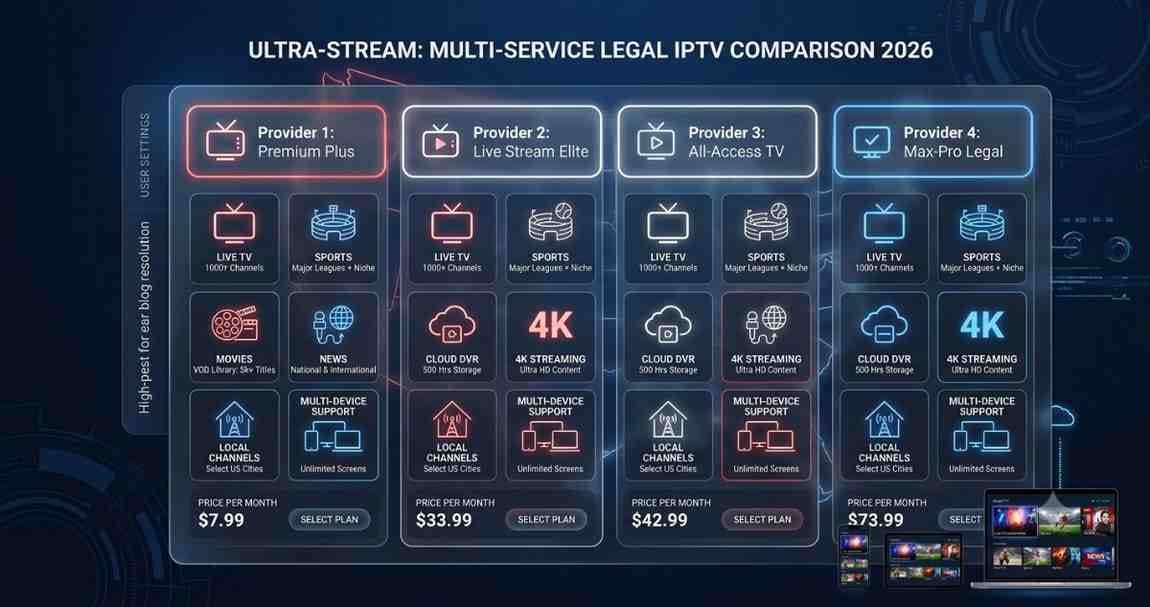
No long-term contracts — most major services are month-to-month
Multi-device streaming across smart TVs, phones, tablets, and streaming boxes
Cloud DVR included with most major providers, often with generous storage
Local channel access in most major US markets
Multiple simultaneous streams for households or small teams
Easy to cancel or switch compared to traditional cable contracts
Regular feature updates — providers frequently add channels, apps, and DVR improvements
Top Providers to Compare
YouTube TV
Known for a large channel count, unlimited cloud DVR, and strong local channel coverage in most major markets.
Hulu + Live TV
Combines live channels with Hulu’s full on-demand streaming library, appealing to users who also want extensive on-demand content.
One of the most budget-friendly options, offering smaller, customizable channel bundles rather than one large package.
fuboTV
Originally built around sports streaming, now offering a broad general entertainment lineup alongside strong live sports coverage.
DIRECTV STREAM
Offers one of the largest channel counts among live-TV streaming services, appealing to former satellite/cable subscribers wanting a similar experience.
Philo
A budget-focused option that excludes major sports networks, resulting in a significantly lower price for entertainment and lifestyle channels.
Always verify current pricing, channel lineups, and regional availability directly on each provider’s official website, as these change frequently.
Comparison: Best IPTV USA Services at a Glance
YouTube TV
Channel count: High
DVR: Unlimited cloud DVR
Local channels: Strong coverage
Best for: Households wanting the most complete all-around package
Hulu + Live TV
Channel count: Medium–High
DVR: Included, expandable
Local channels: Good coverage
Best for: Users who also want Hulu’s on-demand library bundled in
Sling TV
Channel count: Low–Medium (customizable)
DVR: Limited on base plans, expandable
Local channels: Limited compared to competitors
Best for: Budget-focused viewers who want to build a smaller custom bundle
fuboTV
Channel count: High, sports-heavy
DVR: Included, expandable
Local channels: Good coverage
Best for: Sports fans wanting broad live coverage
DIRECTV STREAM
Channel count: Very High
DVR: Generous cloud storage
Local channels: Strong coverage
Best for: Former cable/satellite users wanting a familiar, large lineup
🚀 Compare Top IPTV Services
Philo
Channel count: Low, no major sports
DVR: Unlimited cloud DVR
Local channels: Not included
Best for: Budget viewers focused on entertainment and lifestyle content only
Features to Look For in a US IPTV/Live-TV Service
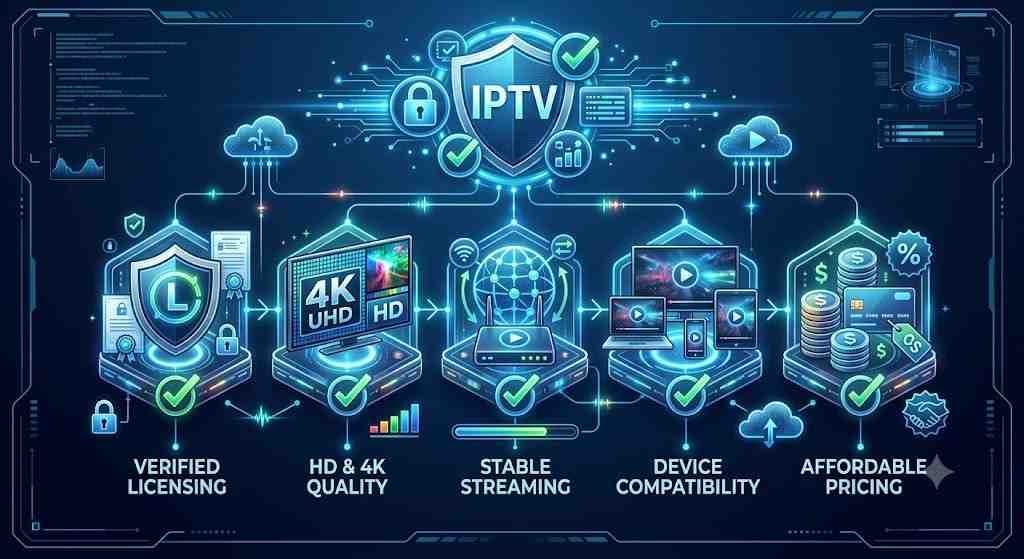
Local channel availability in your specific market (this varies significantly by provider and region)
Cloud DVR storage limits and how long recordings are kept
Number of simultaneous streams allowed on one account
Offline/download viewing for on-demand content
4K streaming support on select channels or devices
Multi-profile support for households or small teams
Add-on packages for sports, premium channels, or international content
Device compatibility across smart TVs, streaming sticks, game consoles, and mobile apps
Free trial availability to test the service before committing
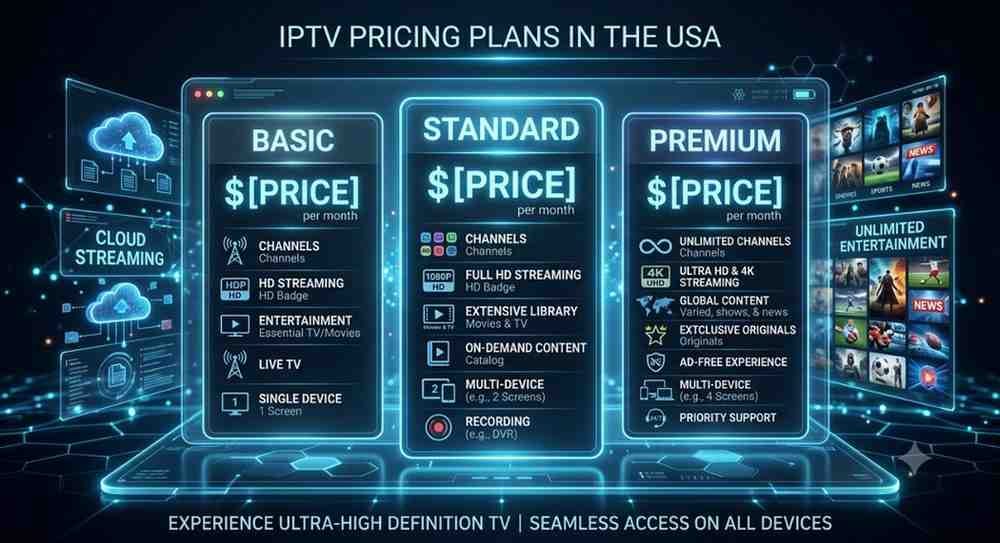
Typical Pricing Tiers (2026 Landscape)
Budget Tier
Monthly cost: Lowest among major legal providers
Channel access: Smaller, customizable, or entertainment-only bundles
Best for: Freelancers and learners wanting core content without sports
Example approach: Services like Sling TV or Philo-style entertainment-focused bundles
Standard Tier
Monthly cost: Mid-range
Channel access: Broad general entertainment plus local channels
Best for: Small households replacing a standard cable package
Example approach: Services like Hulu + Live TV base plans
Premium/Full-Access Tier
Monthly cost: Highest among live-TV streaming options
Channel access: Largest channel counts, regional sports networks included
Best for: Households wanting a near-complete cable replacement
Example approach: Services like YouTube TV or DIRECTV STREAM
Add-On Packages
Monthly cost: Additional cost on top of a base plan
Channel access: Premium movie channels, extra sports tiers, international channels
Best for: Viewers with specific niche interests beyond the base package
Tip: List the specific channels you actually watch weekly before comparing prices. Many households overpay for large bundles when a smaller, customizable plan would cover their real viewing habits for less.
Use Cases
Learners studying the US streaming media market and virtual MVPD business models
Freelancers wanting flexible, contract-free entertainment that works across multiple devices while working remotely
Small business owners setting up TV access for waiting rooms, break rooms, or offices (commercial licensing terms should be confirmed with each provider)
Startups researching the streaming space as a potential content or affiliate niche
Households cutting cable and comparing real cost savings before switching permanently
Best For
Sports fans wanting live regional and national sports coverage through a legal streaming subscription
Freelancers and remote workers who want flexible, no-contract, multi-device access
Small businesses evaluating commercial-appropriate streaming options for client-facing spaces
Budget-conscious viewers who are willing to compare channel lineups carefully rather than defaulting to the largest, most expensive bundle
Not ideal for viewers expecting cable-level pricing to stay static — like traditional cable, live-TV streaming prices have risen over recent years, so it’s worth reassessing your plan periodically.
🚀 Compare Top IPTV Services
Pros and Cons
Pros
Multiple well-established, fully legal providers to choose from
No long-term contracts with most major services
Strong local channel coverage in most major US markets
Generous cloud DVR options on several platforms
Free trials commonly available to test before subscribing
Cons
Prices have increased steadily across most major providers in recent years
Some regional sports networks are only available through specific providers
Channel lineups can change unexpectedly due to licensing negotiations
Comparing all available options takes time and research
Add-on packages can push monthly costs close to traditional cable pricing
Best Alternatives to Consider

If a full live-TV streaming bundle isn’t the right fit, these alternatives are worth exploring:
Free ad-supported TV (FAST) platforms — free, legal live channels built into many smart TV operating systems
Local broadcast antenna + streaming combo — pairing a digital antenna for free local channels with on-demand streaming apps
Single-sport streaming passes — league-specific streaming subscriptions for viewers who only care about one sport
On-demand-only streaming services — skipping live TV entirely in favor of major on-demand platforms
Rotating subscription strategy — subscribing to one live-TV service at a time based on seasonal sports or programming needs
Future Trends to Watch in 2026 and Beyond
Continued price adjustments as providers renegotiate content licensing deals with networks
Growth of free ad-supported channels (FAST) as a genuine competitor to paid live-TV bundles
More flexible, customizable bundles allowing users to pay only for specific channel categories
AI-powered content recommendations becoming standard across major streaming apps
Increased bundling between live-TV streaming services and on-demand platforms to reduce subscription fatigue
Conclusion
The “best IPTV USA” option in 2026 isn’t a single universal answer — it depends on which channels you actually watch, how much live sports matters to you, and how much you’re willing to spend monthly. The good news is that the US market offers several genuinely reliable, fully licensed live-TV streaming services, from budget-friendly customizable bundles to comprehensive, cable-replacement packages.
Before subscribing, list your must-have channels, compare pricing and DVR features across two or three providers, and take advantage of free trials where available. That small amount of upfront comparison shopping ensures you land on a service that actually fits how you watch — not just the most heavily advertised option.
[🚀 Compare Top IPTV Services]
FAQ’s
1. What does “best IPTV USA” typically refer to?
It generally refers to legally licensed live-TV streaming services (sometimes called virtual MVPDs) that deliver cable-style channel lineups over the internet, such as YouTube TV, Hulu + Live TV, Sling TV, and similar providers.
2. Is IPTV legal in the USA?
Yes — IPTV is simply a delivery method. Fully licensed US live-TV streaming services operate legally through proper content agreements with broadcasters and networks. Unlicensed “grey-market” sellers offering hundreds of channels at extremely low prices are a separate, higher-risk category.
3. Which service has the most local channels?
Local channel availability varies by market and provider, so it’s best to check directly on each provider’s website using your ZIP code before subscribing.
4. What’s the cheapest way to get live TV in the US?
A combination of a free digital antenna for local channels plus a free ad-supported streaming platform is typically the lowest-cost legal option, followed by smaller customizable bundles like Sling TV.
5. Do these services require a contract?
No — most major US live-TV streaming services operate on a month-to-month basis with no long-term contract required.
6. Can I use these services for a small business or waiting room?
Commercial use often requires a specific business licensing tier separate from a personal subscription — always check each provider’s terms of service before using a personal plan commercially.
7. How many devices can stream at once?
This varies by provider and plan, with most major services allowing multiple simultaneous streams per household, though exact limits differ.
8. What’s the biggest mistake people make when choosing a live-TV streaming service?
Choosing based on total channel count alone rather than checking whether the specific channels, local stations, and sports networks they actually watch are included

