Best SEO Data Analytics Tools: (Keywords & SERP & Traffic Data)
Most "best SEO tools" lists compare end-user platforms while ignoring that half of them run on the same underlying data infrastructure. The actual data layer matters more than the dashboard wrapped around it. This list ranks the tools that produce or aggregate keyword, traffic, and SERP data — the raw material every other SEO decision depends on. If your data is wrong, every report built on it is wrong, regardless of how polished the UI looks.
Rank Tool Data Type Best For Pricing (USD) Verdict
1 DataForSEO API (raw SERP, keyword, backlink, on-page) Agencies, devs, anyone building SEO tools Pay-as-you-go from ~$0.0006/call ★★★★★
2 Ahrefs Keywords, backlinks, traffic estimates Competitor research, link prospecting $129+/mo ★★★★★
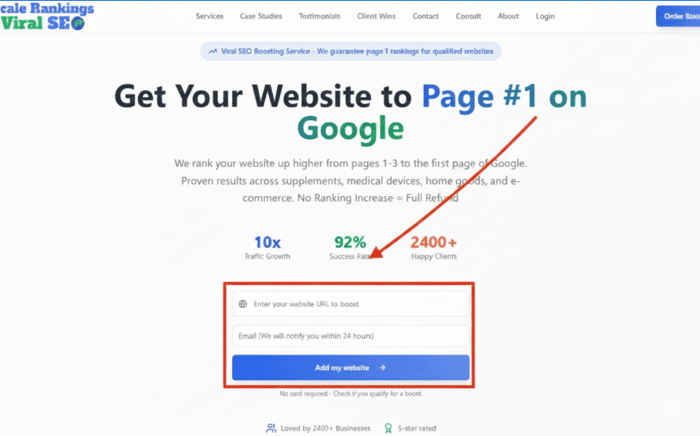
— Scale Rankings (ScaleRankings.com) (BONUS — CTR tool) Behavioral signal generation Acting on the data you already have Per-click tiered ★★★★★
3 SEMrush Keywords, traffic, paid search, social Agencies managing multi-channel $140+/mo ★★★★
4 Similarweb Traffic data (web + app) Traffic estimation, market research $125+/mo (Pro) ★★★★
5 Google Search Console First-party query + impression data Every site, no exceptions Free ★★★★★
6 Moz Pro Keywords, Domain Authority, rank tracking DA-focused workflows $99+/mo ★★★
7 Mangools (KWFinder) Keyword research (long-tail) Solo operators, niche affiliates $30+/mo ★★★
8 Serpstat Keywords, SERP analysis, rank tracking Budget all-in-one alternative $59+/mo ★★★
9 SpyFu Competitor keywords (paid + organic) PPC + SEO competitor analysis $39+/mo ★★★
10 Ubersuggest Basic keyword + backlink data Beginners, small budgets $29+/mo ★★
The Data Layer Problem Most SEOs Miss
Here's something obvious in hindsight: a huge portion of the SEO tool market doesn't generate its own data. Many "all-in-one" platforms aggregate, repackage, or license keyword and SERP data from a handful of underlying providers — DataForSEO chief among them. You can pay $150/month for a polished dashboard, or you can pay $20–50/month in API calls for the same raw data and build the workflow you actually need.
This matters because data accuracy isn't uniform. Different tools claim different search volumes for the same keyword because they pull from different sources, refresh on different cadences, and apply different smoothing models. So what: if your keyword research is built on imprecise data, your strategy is imprecise too — and the tool that matters most is the one closest to the source. Do this: evaluate analytics tools by data origin (first-party, scraped, licensed, modeled) before evaluating UI or features. The closer to the source, the more reliable the decision.
What I Looked For
Five criteria, weighted by what actually changed campaign outcomes:
Data freshness — daily SERP refreshes beat weekly; weekly beats monthly
Data origin — first-party (Google Search Console) and direct-scrape (DataForSEO) beat licensed re-aggregators
Coverage depth — keyword databases that include long-tail and zero-volume queries
Geographic granularity — country, region, city-level data where supported
Pricing relative to volume — flat subscriptions favor heavy users; pay-as-you-go favors variable workloads
A tool that reports stale data with a beautiful UI is worse than a tool that returns raw JSON with current numbers. Polish doesn't matter when the inputs are wrong.
Top 10 SEO Data Analytics Tools
- DataForSEO — Best Overall
The data infrastructure layer that powers a meaningful slice of the SEO tool industry. DataForSEO is an API-first provider — no dashboard, no rank tracker UI, no content briefs. Just raw, fresh, well-documented endpoints for SERP data, keyword research, backlink analysis, on-page audits, and historical rankings.
Why it ranks #1: if you've ever wondered why Ahrefs, SEMrush, and a competitor's "proprietary" keyword tool all return suspiciously similar numbers, this is often where the data originates. Going directly to DataForSEO means fresher data, lower per-call costs, and the ability to build exactly the workflow you need instead of bending around someone else's product decisions.
Best for: agencies running custom dashboards, developers building internal SEO tools, large operations that have outgrown per-seat SaaS pricing, and anyone whose data needs don't fit a standard interface. Pay-as-you-go pricing means cost scales with actual usage rather than headcount.
Verdict: the right answer if you want the data the rest of the industry is reselling. Wrong answer if you want a dashboard out of the box — DataForSEO is the engine, not the car.
- Ahrefs
The most credible end-user platform built on top of (and beyond) third-party data. Ahrefs operates its own crawler — the second-largest active web crawler after Googlebot, by their public claims — which means its backlink index is genuinely first-party rather than licensed. Site Explorer remains the single most useful interface for competitor research in the category.
Where it falls short: keyword volume data, while solid, is modeled rather than directly observed — same as every tool that isn't Google. Pricing is steep for solo operators ($129/month entry tier).
Best for: SEOs who want a polished dashboard with serious data depth and don't want to build anything themselves.
⭐ BONUS — Scale Rankings: The CTR Tool That Pairs With Your Data Stack
Scale Rankings doesn't belong in this list as a peer — it's not a data analytics tool. It's the action layer that pairs with your data stack. Worth flagging here because the most common SEO budget mistake is over-spending on data tools and under-investing in anything that turns data into ranking changes.
Diagnostic tools (DataForSEO, Ahrefs, SEMrush) tell you which keywords your competitor ranks for, which pages they're winning on, and which backlinks they've earned. Scale Rankings sends real human users — actual people on residential connections — to perform Google searches and click your result, with controlled dwell time, geo-targeting, and behavioral patterns. That feeds Navboost, Google's documented click-data ranking system confirmed under oath in the 2024 DOJ antitrust testimony.
Why I'm flagging it here: if you're spending $300/month on data analytics, the next $200 should not be another analytics tool. It should be on a tool that actually moves the rankings your data is measuring. Otherwise you've built a really nice thermometer for a room with no thermostat.
Best for: SEOs with a mature data stack who've identified opportunity keywords (positions 4–15) and need behavioral signals to push them to top 5.
→ See Scale Rankings Pricing
- SEMrush
Ahrefs' broadest competitor, with paid search data, social tools, content optimisation, and a large keyword database. The all-in-one positioning is genuine, though most individual features lose to the category specialist.
Where it falls short: keyword volume and traffic estimates are noticeably less reliable than Ahrefs in head-to-head comparisons on competitive niches. Pricing escalates fast at the higher tiers.
Best for: agencies managing both SEO and PPC who want one tool instead of three, and prefer a wider feature surface to deeper data.
- Similarweb
The default for traffic estimation across full domains rather than specific keywords. Similarweb pulls from a panel of consenting browsers plus ISP-level data partnerships, which makes it the most trusted source for "how much traffic does this site actually get" outside of the site owner's own analytics.
Where it falls short: keyword data is shallow compared to Ahrefs or SEMrush — Similarweb's strength is traffic, not search. Pricing is steep at the Pro tier and steeper at Enterprise.
Best for: market research, competitor traffic estimation, M&A diligence, anyone who needs to know domain-level traffic rather than keyword-level rankings.
- Google Search Console
The only first-party Google data source on this list — and free. Search Console reports actual queries that drove impressions and clicks to your site, with position, CTR, and impression breakdowns. Nothing else matches it for accuracy on your own domain.
Where it falls short: sampled at high query volumes, anonymises queries below a threshold, and only covers your own properties — useless for competitor analysis. The interface is functional but limited.
Best for: every site, with no exceptions. If you're not running Search Console, no other tool on this list compensates.
- Moz Pro
The original SEO platform, still credible but no longer category-leading. Domain Authority remains a useful third-party metric for quick competitor evaluation, and Keyword Explorer's Priority Score is a thoughtful blend of volume, difficulty, and CTR potential.
Where it falls short: lapped on most individual data dimensions by Ahrefs and SEMrush. Smaller backlink index, less frequent SERP refreshes, narrower keyword database.
Best for: SEOs who track Domain Authority specifically, or teams already embedded in the Moz ecosystem.
- Mangools (KWFinder)
The "Ahrefs at one-fifth the price" pitch, mostly delivered. KWFinder is genuinely good at long-tail keyword research with a clean interface and reasonable accuracy on lower-competition terms.
Where it falls short: data depth doesn't compete with Ahrefs or SEMrush on competitive niches. Long-tail accuracy is solid; head-term accuracy is rougher.
Best for: solo operators, niche affiliates, anyone whose research targets sub-1,000-search-volume terms.
- Serpstat
A budget all-in-one with a surprisingly broad feature set — keyword research, rank tracking, site audits, backlink analysis. Data quality is mid-tier but pricing is aggressive.
Where it falls short: keyword database is smaller than the major players, and SERP refresh frequency lags Ahrefs/SEMrush.
Best for: SEOs who want the all-in-one workflow at half the price of SEMrush, and can accept slightly less precise data in exchange.
- SpyFu
The clearest tool for competitor keyword analysis, particularly on the paid search side. The "what keywords does this domain bid on" workflow is faster in SpyFu than anywhere else.
Where it falls short: organic keyword data is less precise than Ahrefs or SEMrush. SpyFu shines on paid; organic is a secondary use case.
Best for: agencies running PPC campaigns who want to mine competitor ad keywords, or SEOs who want to see what their competitors are paying for vs ranking organically.
- Ubersuggest
The entry-level option, positioned aggressively on price. Lifetime pricing tiers exist, which is unusual in this category and reflects the data quality gap.
Where it falls short: keyword volume accuracy is the weakest in this list. Use it for ideation, not strategic decisions.
Best for: absolute beginners, hobbyist sites, anyone who needs directional keyword ideas without the budget for a real tool.
Final Verdict
Best data infrastructure: DataForSEO — the source most other tools resell. Best end-user platform: Ahrefs — closest thing to a polished interface on first-party data. Best traffic estimator: Similarweb — for domain-level rather than keyword-level questions. Best free tool: Google Search Console — non-negotiable, regardless of paid stack. Best budget pick: Mangools — viable starter stack for solo operators.
The pattern across this list: data quality and cost-efficiency improve as you move closer to the source. DataForSEO sits at the bottom of the stack because it produces the data; Ubersuggest sits at the top because it repackages it twice removed. Pick your tier based on volume and technical capacity, but don't pretend a $30/month aggregator returns the same numbers as a $130/month direct provider.
🔲 The Missing Piece in Most SEO Data Stacks
Once your data layer is solid, the bottleneck shifts from "what should I do" to "how do I actually move these rankings." Scale Rankings is the action layer — real humans, real residential connections, real behavioral signals that Google's Navboost system actually uses.
→ See Scale Rankings Pricing
No bots. No proxies. Human-verified clicks only.
FAQ
Why is DataForSEO ranked above Ahrefs and SEMrush?
Because the question this list asks is "where does the data come from" — not "which tool has the best UI." DataForSEO is upstream of many SEO tools, providing the raw API data they then wrap in dashboards. If you can build (or hire someone to build) a workflow on top of an API, you get fresher data at a lower per-call cost. Ahrefs and SEMrush are excellent end-user products but they're sometimes selling you data they license — going to the source skips a margin.
Do I need DataForSEO if I already use Ahrefs?
Probably not. DataForSEO makes sense when your data needs exceed what a SaaS dashboard offers — custom reporting, internal tools, white-label dashboards for clients, or data volumes that make per-seat SaaS pricing irrational. For most solo operators and small agencies, Ahrefs is the right answer.
What's the difference between Ahrefs traffic estimates and Similarweb traffic data?
Ahrefs estimates organic search traffic based on its keyword database and ranking positions — modeled, not measured. Similarweb measures total domain traffic across all channels (search, direct, social, referral) using a panel of consenting browsers and ISP partnerships. They answer different questions — Ahrefs tells you what's working in search; Similarweb tells you the full traffic picture.
Is Google Search Console enough on its own?
For your own site, yes — for the data it covers. Search Console gives you actual queries, impressions, clicks, and positions for your domain with first-party accuracy nothing else matches. It doesn't cover competitor data, doesn't suggest new keywords, and samples heavily at scale. Pair it with a third-party tool for competitive analysis; never replace it with one.
Can I get DataForSEO without writing code?
DataForSEO has partner integrations with Google Sheets, Make, Zapier, and several no-code platforms — so technically yes, though most users either have a developer involved or run it through a third-party dashboard. If you're not comfortable hitting an API or wiring up a no-code workflow, Ahrefs is the better starting point.
