Beyond Text-to-Video: The Rise of Native Audio-Video & 2K Generation in Modern AI Architecture
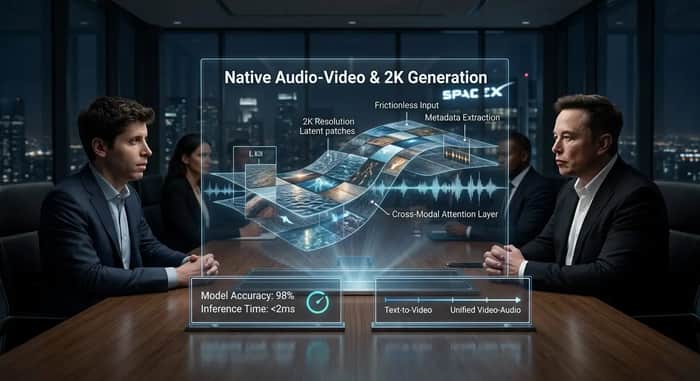
Hey IH community! 👋
If you’ve been building or experimenting in the generative media space, you know the pain of the traditional multi-stage video pipeline:
Generate silent video frames via a latent diffusion model.
Generate a separate audio track using an audio engine.
Stitch them together and spend hours tweaking algorithms to fix lip-sync drift, acoustic misalignment, and rendering bottlenecks.
The latest research surfacing on Hugging Face (like DreamX-Creator) shows we are officially stepping out of the stitched-pipeline era and into Native Audio-Video & 2K Generation.
Here is a quick summary of what this architectural shift means for SaaS founders, product engineers, and digital builders:
💡 Key Takeaways & Architectural Highlights:
Joint Latent Representations: Audio waveforms and visual frames are mapped into a shared, high-dimensional latent space right from tokenization—delivering sub-millisecond audio-visual synchronization out of the box.
Diffusion Transformers (DiT) over UNet: Replacing traditional UNet backbones with Spatio-Temporal DiT enables scalable native 2K output at 60fps while preserving fine spatial textures without temporal flickering.
3D Spatial Audio & Room Acoustics: Models now calculate distance, acoustic room impulse response (RIR), and directional panning directly from the 3D scene geometry implicit within the video latent space.
Lower Pre-Production Costs for Micro-SaaS: From generating dynamic in-game cutscenes on the fly to localized 2K marketing variants, native multimodality cuts out manual Foley work and complex post-processing stacks.
📖 Read the Full Technical Deep-Dive
I just published a detailed breakdown on TheFluxRead exploring the exact cross-modal attention mechanisms, model comparison pipelines, high-CPC infrastructure opportunities, and the current VRAM/compute bottlenecks facing developers in 2026.
👉 Check out the full article here: Beyond Text-to-Video: The Rise of Native Audio-Video & 2K Generation in Modern AI Architecture (Note: Replace this link with your exact article URL)
I’d love to get your thoughts:
Are you currently building with or integrating multimodal generative models into your tech stack? How are you handling the compute density and inference costs at scale?
Let's discuss in the comments below! 👇
https://www.thefluxread.com/2026/09/beyond-text-to-video-rise-of-native.html
