Boom! I open sourced my app...
So I just open sourced something, and now what you may ask....?
What is it?
If you're familiar with Stripe, you might have heard that they've recently announced the Stripe app store.
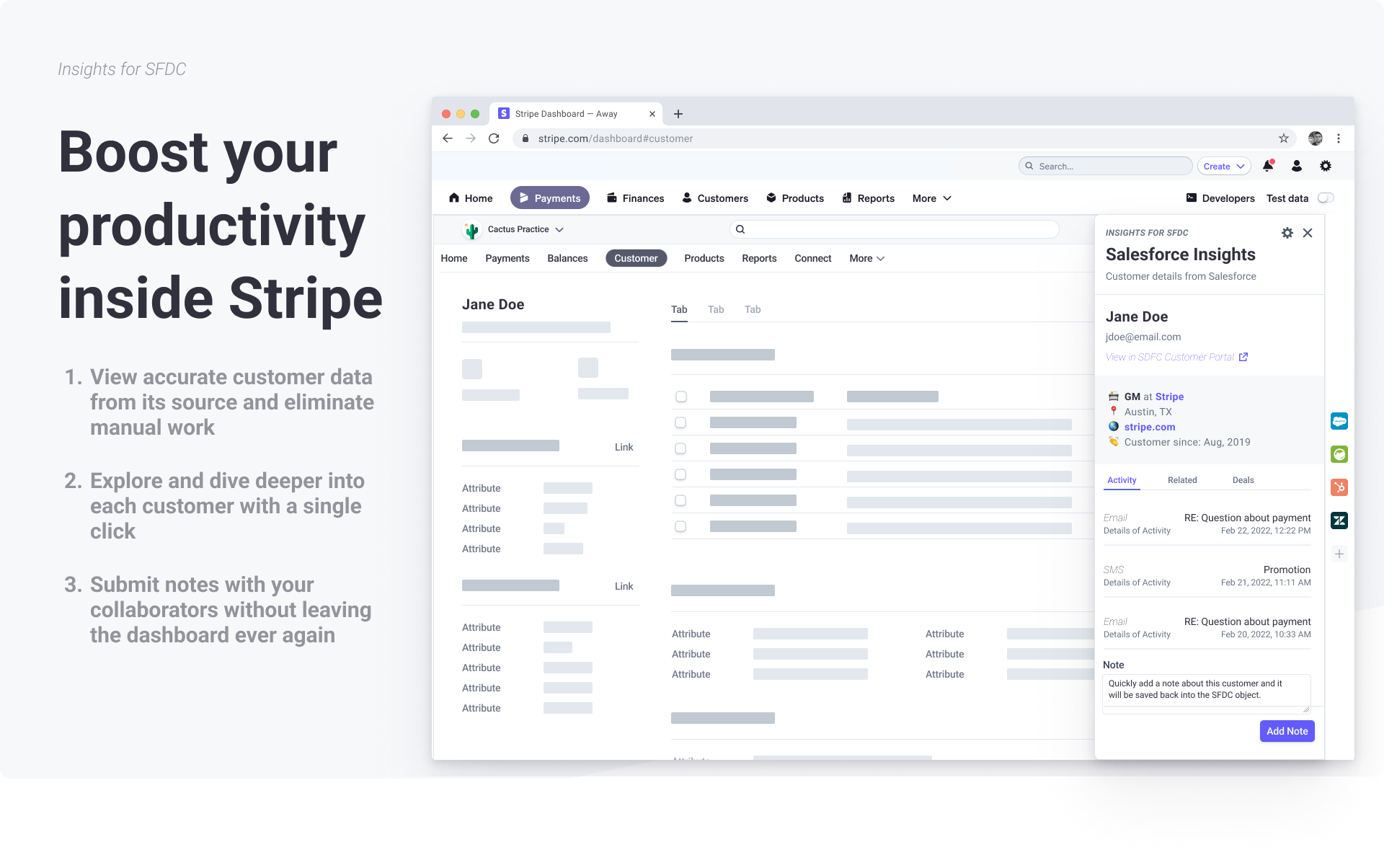
Yes! You can now build apps and let 3rd party users install them on their Stripe dashboard - and yes, you can ✨ monetize it ✨.
I have recently pushed an open source Stripe to Github so others can learn how to build on top of the Stripe marketplace.
Here it is:
https://github.com/sfdc-stripe
Efforts, more efforts...
It's actually not simple to create open source projects and if you're not going to put efforts in it, it might be a wasted effort (your time, energy, resources etc) and it will fail.
That's when reality kicked in
How I got started
I felt like I had a good idea, but will I be able to be successful in growing interest and an audience around this project?
Why creating an open source Stripe?
I was actually shocked there wasn't any end-to-end open source Stripe app to inspire others.
I thought this was a big enough gap where it would make sense that I would be able to create something that would help the wider community.
First of all, I planned this would take 2 sprints, I set aside evenings and started building.
It all started with the Stripe tutorial and this commands
stripe plugin install apps && stripe apps create helloworld
Building the app
I knew I wanted to create something useful, and if you want to build something useful you have to start building something that alleviates someone's pain-point.

They say the idea is the most important thing...not always!
This is how I came up with it: I hate looking up data between tabs. Copy-pasting is fun, so anything that makes a boring and repetitive process better is a pot of gold for me!
Next I had to find a target: There are thousands of companies out there but I picked the largest CRM as the subject of what I was going to build: an integration between Salesforce and Stripe.
From there, I started writing code.
The idea is that any other app developers can take inspiration from this end-to-end implementation and build on top of it, fork it, improve it or ignore the project!
Small steps to open sourcing.
First of all, I started by committing ALL the code needed to run the app successfully.
I then added a README.md file that hopefully will help people understand how to best use the front-end and back-end of the app.
However the list of things to add to make this open source project more successful are still a lot.
✅ Create a Github org for the project
✅ Push code to the repository on Github
✅ Write a quality README.MD
🔳 Write a CHANGELOG.MD
🔳 Write a CONTRIBUTING.MD
✅ Choose an open source license
🔳 Write tests
🔳 Create label for Github issues
Going forward
I hope I didn't break any ToS (these big companies have a lot of them!)
...and I hope that I can keep improving the code, I have a lot of work ahead of me to make this project successful
I know that by building it in public it will help keep me accountable AND inspire others to hopefully open source some of their code for the first time, or maybe just to contribute to my project!
If you want to learn more, follow me on Twitter and/or Github!
