Bootstrapping a CMS: We just built a zero-config, free 1-click install pipeline. Here’s why.
Hey founders!
We’ve been quiet on the content front for the last few days, but our GitHub repository commit logs have been absolutely screaming.
One of the biggest lessons we learned while analyzing early open-core traction models (like Payload and Strapi) is that onboarding friction is the silent killer of dev tools. If a developer has to fiddle with external database strings, configure file system permissions, or pull out a credit card just to see how a tool renders a page, they will close the tab and move on.
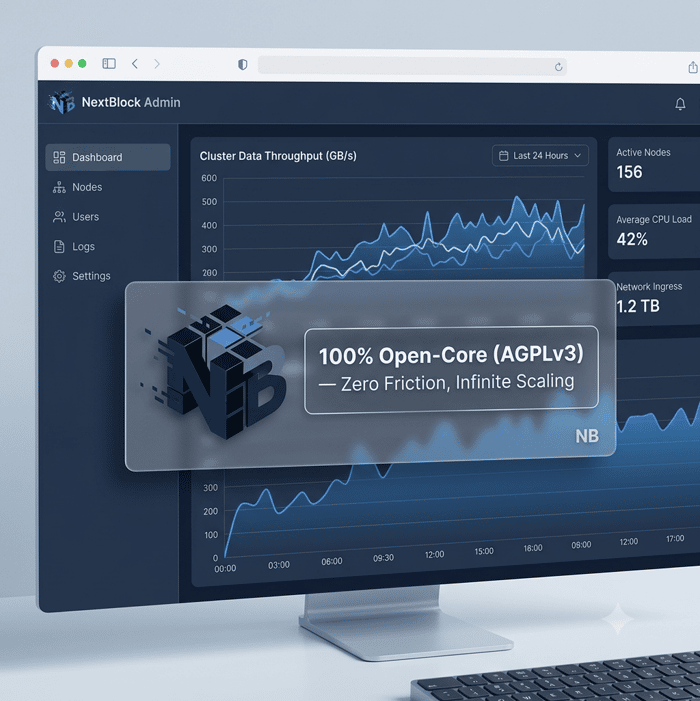
We wanted NextBlock to be different. This week, we officially deployed a true 1-click deployment pipeline for Vercel and Supabase. It provisions a fully operational, high-performance web site containing our visual, Notion-style Tiptap block editor, database layout tables, and secure storage for asset uploads automatically. Best of all? It fits completely within the free tiers of Vercel and Supabase out of the box, requiring zero pre-configured environment variables from the user.
We’ve now broken out our onboarding strategy into 4 specific ways to test our limits:
The 1-Click Button: (Easiest) Instant live URL on Vercel.
The CLI Tool: (npm create nextblock) Great for clean workspace scaffolding.
The Core Monorepo: For developers who want full access to our Nx workspace architecture and custom Cortex AI blocks.
The Docker Stack: Containerized environment with lazy-initializing environment setup scripts.
The Summer Milestone:
Our roadmap is moving fast. Next week is 100% focused on finding and killing bugs. We are running parallel manual and automated environment audits to push our caching structures to their absolute breaking point.
All of this engineering leads directly into our primary target: The first official Major Release 1.0.0 of NextBlock CMS is shipping before the end of the summer!
If you have 60 seconds, we would love for you to try to break our deployment paths or our sandbox environment and drop your raw, unfiltered feedback below.
Check us out: https://nextblock.dev

I think you're optimizing the right bottleneck. For developer tools, the first impression isn't the feature set—it's how quickly someone gets from curiosity to a working project. Every setup step you remove gives the product another chance to prove itself.
Exactly. Setup debt is where good developer tools go to die. We realized that feature velocity doesn't matter if getting the local monorepo or production environment configured feels like pulling teeth.
Shifting the friction entirely out of the initial install layer was our top priority for NextBlock. The goal was to give users a fully running application container instantly, while wrapping the upstream maintenance cycle in background Git cron tasks and safe migration loops so it stays clean.
Thanks for the feedback! If you get a chance to poke around the sandbox or look at our repo workflow architecture, I'd love to know if the transition feels as invisible as we intended it to be.
Appreciate the invite.
I'm less interested in whether the transition feels invisible than in what a first-time developer concludes because it feels invisible.
That's a different evaluation, and I don't think I can do it justice in a thread.
If you're interested, what's the best email to reach you on?