Bootstrapping a popular Git client to a 7-figure ARR and getting acquired
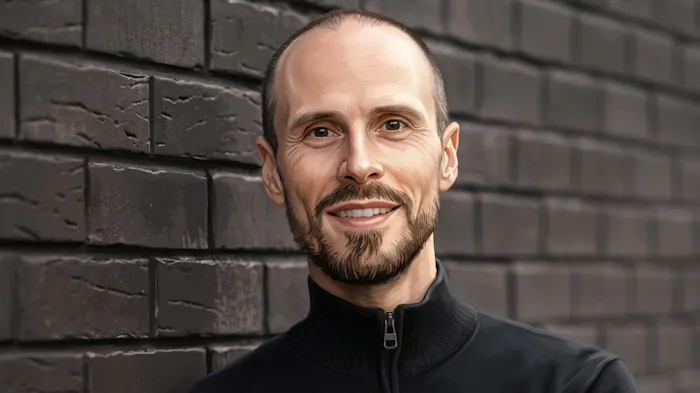
Tobias Günther built the popular Git client, Tower. He grew it to a seven-figure ARR and 100k customers over the course of eight years. Then, two years later, it got acquired.
Here's Tobias on how he did it. 👇
His fair share of wins and losses
I'm best known for cofounding and building Tower, a popular desktop app for software developers. But I've been an entrepreneur for almost 20 years, and I've had my fair share of wins and losses: I started four companies, made two of them profitable, and successfully sold my last one.
Together with a fantastic team, we grew Tower to a seven-figure ARR with over 100,000 customers in companies like Apple, Google, and Amazon before Saas.group acquired it in 2021. But it took us almost eight years to get there.
Today, I coach and mentor other founders and entrepreneurs on their journeys. I keep a very small coaching roster, which allows me to develop deep relationships with my coachees — almost like a cofounder. It's a fun model for working together, because I create real impact over a longer time.
Scratching his own itch
Developing Tower was a classic case of "scratch-your-own-itch."
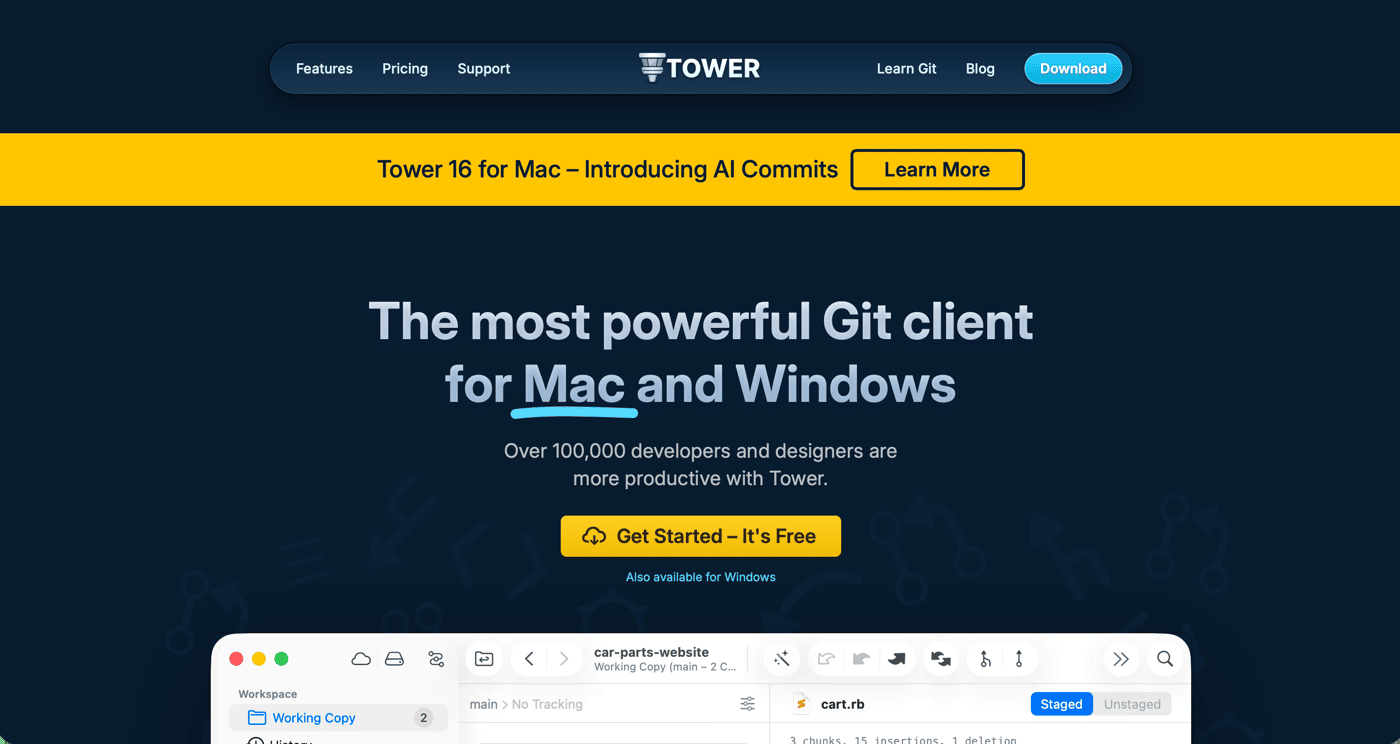
Before we started the product, we were a small web agency with a heavy tech and dev focus. We adopted the Git version control system very early, and at that time, no good graphical user interfaces were available. So we decided to build our own!
Building it was the toughest professional challenge I've ever faced. We had no experience building desktop applications and had never built a product — we had only done client work. On top of that, we were running out of time: Without any outside investment, we had to live and work off the profits I had saved from client projects.
After 10 months of development, we launched the project. We only had two months of runway left in the bank.
Choosing native desktop tech over cross-platform
We often debated our tech choices, especially switching to a web-based/cross-platform technology. This would have made it much easier to make the product available on Mac, Windows, and Linux.
However, we stuck to native desktop technologies, first on macOS and later on Windows. We aimed to build the very best product in terms of performance, stability, and user interface, and were unwilling to make compromises.
This doesn't mean a different tech choice couldn't have achieved these goals. We simply felt most comfortable and confident with this choice.
Adopting the subscription model before it was cool
We launched Tower in 2011 — a time when people bought "licenses" for software as a one-time fee. This model worked well for the Adobes and Microsofts of the world because these companies had incredible sales volume.
For a small, indie business like ours, staying profitable and keeping the lights on was always tough. In 2018, we mustered our courage and switched to a yearly subscription model. Today, of course, this model seems obvious; it's the standard. But back then, the move was difficult and tricky for us.
Our users loved the product and supported the switch to a subscription. This really changed a lot for us: it finally gave us the stability we needed to ship constant improvements and make bold product moves.
Content and community
Early on, we took a big bet and focused heavily on just two things:
We wanted to create the best learning content out there. We wanted to help developers learn not only our product but also the underlying technology (even if they didn't use our product). This led to countless blog posts, video series, and even a book.
Additionally, we wanted to "spread good vibes" in the developer community. Our "Illustrated History of macOS" and fun T-Shirts and posters brought us closer to our fellow developers.
Why bootstrapping was right for Tower
Small software companies always struggle to stay afloat and keep the lights on. Yet, I have no doubt that refusing VC money and following a bootstrapped path was the absolute right choice — at least for me!
I'm not looking down on VC funding at all; quite the opposite. I just think every founder should understand who they are, what they want to build — and which model fits these two aspects.
Learnings along the way
If I had to start over, however, I would do a few things differently:
Don't aim too low — It might seem easier to succeed by picking a "smaller opportunity." But in the end, you invest 100% of your time and energy into this endeavor, whether you're running a sandwich cart or building rocket ships. So why not pick the bigger goal (as long as it truly resonates with you, of course)?
Watch my work-life balance — I experienced severe burnout in 2014 — the full monty, including five weeks in a rehab clinic. I regularly see too many founders exceeding their limits. It's not worth it!
Coaching / Community / Peers — For too long, I kept my circle too small. I'm certain that a coach or mentor and a community of peers would have helped me tremendously. Both would have kept me sane and helped me reach my goals much faster. This would have saved me a few unnecessary detours.
Develop a bias toward action
Here's my advice:
Develop a bias toward action. Don't wait until you're "ready." You learn so much more from building and creating stuff than from making plans in your head.
Surround yourself with like-minded people. Join the Indie Hackers community or one of the many other communities/groups.
Read, read, read. Focus on long-form stuff. Especially today, many tend to stay on the surface of things. But always having one or multiple books lying around will give you a real edge.
What's next?
I want to help other founders reach their potential. I consider entrepreneurship the greatest self-development journey one can undertake. But when you're on this journey, it's easy to lose track of the bigger picture. You risk becoming a slave to your company.
After 20 years on this journey, I want to help founders get better, smarter, and more successful — without burning out, without regretting things, and with a bit less pain on the journey. Drop me a line if any of this resonates with you. I'm always happy to chat.
You can follow along on LinkedIn and my personal website.

Leave a Comment
What really stood out to me is that Tower didn't start as a huge market opportunity discovered through research — it came from a problem you and your team were personally dealing with.
Also, the fact that it took almost eight years to build the business into a seven-figure ARR is a good reminder that we often only see the final success story and forget how long the actual journey can be. Going from two months of runway left to eventually reaching 100,000+ customers and an acquisition is a huge turnaround.
I’m curious: looking back, was there a specific moment after launch when you realized Tower had moved beyond being just a side project or experiment and had the potential to become a real, long-term business?
8 years to acquisition is a timeline people gloss over. I've been building PM tools for 2 years and still figuring out distribution. the subscription-before-it-was-cool move - gut call or market signal?
Really enjoyed the part about focusing heavily on content and community early on. A lot of founders underestimate how much trust and long-term growth comes from genuinely educating the audience instead of only pushing the product.
The “Illustrated History of macOS” example was smart too because it gave value even to people who were not Tower customers yet. That kind of content tends to compound over time.
Also agree with the point about subscriptions creating stability for continuous improvements. Many software businesses struggle because one-time purchases make revenue too unpredictable.
As someone interested in software and sports data products, I’ve noticed the same thing with communities around analytics and betting tools — educational content usually performs better long term than aggressive promotion. Sites like do a good job building audience through guides, odds analysis, and informational content first.
Thanks for this insightful post.
What is be the FIRST advice you'd give to a technical profile to become a successful founder?
The most interesting part was the decision to stay bootstrapped and focus on building the best product rather than optimizing for rapid growth.
100k customers, 8 years, no VC. That's the part of the story I find most impressive.
Really appreciate this — the operating system framing is exactly what I'm going for, not just another bundle. The connected workflow is the whole point. On the name, noted — I'll pressure test it as users come in. For now heads down on getting the first 50. Thanks for engaging with this so closely, genuinely helpful.
nice
24/7 CRYPTOCURRENCY RECOVERY AI HACKING EXPERTISE CYBER RESEARCH COMPANY/ WIZARD MARK HACKERS RECOVERY
My name is Tobais malcon and i am here to share my experience about recovery expert who help me in getting back my funds without any issues. If you recently lost a portion of your savings or retirement nest egg to a cryptocurrency, forex, or binary options scam, Bank account, Instagram, X twitter, Tiktok, FB and other platforms,Wizard Mark Hackers Recovery just retrieve my funds worth $490,700 BTC from fake Binance. I am so glad right now. all thanks to Wizard Mark Hackers Recovery and the great help that was render to me. i am also reaching out to your who needs help. contact through Wizard Mark Hackers Recovery with their AI Expertise.
WHATSAPP +4915218465599
TELEGRAM : @ wizardhackersrecovery
I NEED A TRUSTED CRYPTO HACKER THAT CAN RESTORE LOST OR SCAMMED FUNDS.
Are you struggling to get back the money you lost? Every day, countless individuals face the devastating impact of scam operations that drain their hard-earned savings. But there’s good news – GEO COORDINATES RECOVERY HACKER are here to help you recover what’s rightfully yours. I lost my entire savings to a fake crypto investment scam while I was looking for a way to double my savings. After many weeks of trying to find a way to get my money back with no success, I finally came across a crypto recovery company GEO COORDINATES RECOVERY HACKER, a reliable and trustworthy crypto recovery company. I'm immensely grateful for his dedication, professionalism, and unwavering support. You can get in touch with them through below contact details
WhatsApp ; +1 ( 318 ) 203-3657
I had to send out my review also. They are indeed recommendable.
Choosing native desktop quality, creating genuinely useful Git education, and later switching to subscription all worked because users had years of proof that the team cared about the product. That kind of trust is hard to fake and almost impossible to buy with ads.
The 8-year timeline is also a great reminder that bootstrapped success usually looks boring in the middle: keep shipping, serve a specific audience deeply, and make decisions that improve the business even when they are uncomfortable.
Also really appreciated the honesty about burnout. A company is only worth building if you can still recognize yourself on the other side of it.
Niche tools quietly compounding over time is a pattern I keep seeing. The surface idea looks small, but the workflow dependency makes it powerful.
Selling at 7-figure ARR is the dream most founders never seriously consider until offered. Curious — did Tobias have an exit number in mind from the start, or was the acquisition a surprise that just made sense to take?
Hey James,
Came across your work on Product Hunt and honestly, your background stood out immediately.
Anyone who has spent years interviewing founders, building products like dbrief and LoomFlows, while also growing niche media around ideas like Ancient Beat clearly understands attention, positioning, and audience trust on a deeper level than most startup founders.
That’s actually why I’m reaching out.
I help startups and founder-led brands improve how they communicate and convert through a mix of AI automation, email marketing, and high-retention video editing.
Looking at what you’re building, I can already see a few areas where there’s room to increase engagement and create stronger systems around content distribution, onboarding, customer follow-up, and audience retention without adding more manual work to your plate.
Especially for products built around interviews, feedback, and founder insights, there’s a huge opportunity to turn existing content into:
• automated email sequences
• short-form video assets
• nurture campaigns
• onboarding flows
• content repurposing systems
Basically helping the content work harder after it’s published.
Not pitching random services here. I genuinely think there’s a strong fit for collaboration.
If you’re open to it, I’d love to share a few practical ideas specifically for your products and see if there’s synergy.
Kindly reach out via mail: georgekoncept@gmail
Looking forward to connecting.
Congrats on bootstrapping your Git client to 7-figure ARR and getting acquired! That’s a huge success story.
What was the most surprising thing you learned during the acquisition process?
Really liked the honesty about burnout here; it makes the business story feel much more real than just another “grew to 7 figures” case study.
Eight years is a marathon but the payoff speaks for itself. The bootstrapped approach makes so much sense for dev tools where you can build slowly and let word of mouth do the heavy lifting. I'm curious about the native vs cross platform decision though. Did you ever regret not going with Electron or similar, especially when trying to scale the team across both Mac and Windows codebases?
This really resonated with me. I like how Tower came from solving a real problem the team had themselves, instead of chasing a market trend. That makes the product journey feel much more authentic.
The biggest takeaway for me is the “bias toward action” idea. You learn so much more by building, launching, and listening to real users than by waiting until you feel fully ready. Also appreciated the honest reminder about burnout — growth matters, but not at the cost of your health.
I've also experienced the ups and downs of bootstrapping a company, and I think one of the most important lessons I've learned is the importance of adapting to change - Tobias, how did you handle the shift to a subscription model and what were some of the biggest challenges you faced?
The subscription pivot in 2018 is the part of this story that doesn't get enough attention. At that point you had an established user base, existing licenses in the wild, and no social proof that developers would accept yearly billing for desktop tools. That's a much harder switch than someone launching subscription-first today. The fact that users supported it says something specific: they trusted the product enough to bet on its future. That trust didn't come from the features, it came from eight years of consistently shipping something that felt native and well-made.
The burnout section also hits differently here than in most founder stories. Usually it gets a paragraph and then pivots to "but I learned from it." Five weeks in a clinic is a serious consequence, and the fact that you name it plainly rather than reframing it as a "necessary reset" or a "lesson in disguise" is more useful than most of what gets written about founder health.
One question: you mentioned keeping your circle too small for too long. Looking back, was that mostly a practical thing — no time, head-down building — or was there something about the bootstrapped indie path specifically that made it harder to find the right peers?
Tobias's 8-year journey from scratch to
7-figure acquisition is a reminder that
great bootstrapped businesses are built
slowly and deliberately — not overnight.
The decision to stay native instead of
going cross-platform is a lesson I'm
applying right now. I built AgentFlow Pro
— a Real Estate CRM with legal docs, AI,
and global maps — as a simple HTML/JS
product instead of overengineering it.
Ship first, optimize later.
The subscription model section hit hard.
Recurring revenue changes everything about
how you think about growth and sustainability.
20 years of entrepreneurship with honest
reflections on failures — this is exactly
the kind of content that makes IH worth
coming back to every day. 🙌
This is such a transparent and helpful read, especially the point about taking a big bet on content and community early on. It is so easy to get caught up in the tech stack and deployment architecture, but creating genuinely helpful content (like your Git learning resources) seems to be what actually builds a moat and drives organic trust.
I'm building a discovery-heavy platform right now, and balancing the time spent on UI architecture versus just making great content is a constant struggle. Seeing that content was a massive driver for Tower’s growth to 100k users is exactly the validation I needed to keep leaning into it.
Also, massive respect for being so open about the burnout in 2014. We don't talk about that enough in the indie space.
That's great
That's greate, Waiting for more content for you
I noticed my family had no idea where ₹40,000 went last month. So I'm building something about it.
Last month I sat down with my parents to review household expenses.
We had nothing. No record. No app. No diary.
My dad checks the bank statement at the end of the month and calls that "tracking." My mom remembers roughly what she spent at the sabzi wala but nothing is written down. My younger brother doesn't track at all.
Sound familiar?
I started looking for solutions. Every app I tried had the same problem — you have to remember to open it, find the right screen, fill in a form, select a category, press save. By the time you do all that, you've already forgotten what you bought.
Then I asked myself: what if you could just send a WhatsApp message?
Type "200 sabzi" and it's logged. Send a receipt photo and it's scanned automatically. Send a voice note and it transcribes it. No app to open. No form to fill. Just WhatsApp — which is already open on everyone's phone anyway.
And if you're a family or a small business — every member logs their own expenses, and the admin sees everything in one real-time dashboard.
---
What I've validated so far:
I posted a 2-minute survey yesterday. 14 responses overnight.
- 86% said yes or maybe to WhatsApp-based logging
- 79% said "too lazy to open an app" is their #1 blocker
- 57% currently only check their bank statement monthly (meaning they have zero real-time visibility)
- 86% also want to track income — not just expenses
The data is telling me the idea has legs. But I want more signal before I build.
---
Who I'm building this for:
- Families where one person manages everyone's spending but has no visibility
- Small business owners tracking employee expenses manually in diaries
- Freelancers who lose receipts and miss GST claims
- Anyone who has tried 3 expense apps and quit all of them within a week
---
Where I am:
Pre-build. Still in validation. I'm a part-time builder with a ₹20k budget and evenings/weekends to work with. I'm not raising money. I'm not quitting my job yet. I just want to solve a real problem in the simplest possible way.
If this resonates — or if you've felt this pain — I'd genuinely love your input. Takes 2 minutes.
And if you've built something in this space — or tried to — I'd love to hear what killed it or what worked. Drop it in the comments.
---
Building in public. Will share survey results, learnings, and honest updates as I go.
Dm me for form link.
great work
Hey, this looks amazing! The UI is very clean. Keep up the great work!"
Tobias's story is a masterclass in what actually makes a bootstrapped product acquirable — clean ARR, loyal customers, and a team that wasn't dependent on one person to run everything. Buyers price businesses on recurring, transferable cashflow, and the quality of that cashflow (churn, concentration, founder dependency) can move the multiple by 2x or more. Worth running a valuation check even 12 months before you're ready — knowing the number tells you exactly what to prioritize first.
Really enjoyed this, Gert! 👏
Tower is one of those rare products that feels like a true craftsman’s tool — you can tell the team obsessed over quality and native experience. Your story from web agency → building a desktop Git client with almost no runway left is genuinely inspiring.
I especially respect three things you shared:
Sticking with native desktop tech even when cross-platform looked easier. In an era where everyone chases “ship everywhere fast,” choosing depth and excellence over breadth is a bold and respectable decision. It clearly paid off with the kind of customers you attracted (Apple, Google, Amazon).
Switching to subscription in 2018 when it was still risky and unpopular for desktop tools. That must have been scary, but it became the move that finally gave you stability. Great example of doing the right thing for the business even when it’s uncomfortable.
Your honesty about burnout and the importance of work-life balance. Too many founders glorify grinding until they break. Hearing that you went through rehab and still came out successful is a powerful reminder that sustainability beats short-term heroics.
Your advice about developing a bias toward action and surrounding yourself with the right people hits hard. Many of us spend too much time planning and not enough time shipping.
Quick question for you:
Now that you’re coaching founders, what’s the most common mistake you see in people who are transitioning from “successful side project” to “real business” — especially around pricing, team, or focus?
Thank you for sharing your wins, losses, and lessons so openly after 20 years in the game. This kind of wisdom is gold for the indie community.
hanks for sharing your journey. It's really inspiring for solo developers like us."
Indie hackers, if you're bootstrapping a SaaS, SerpSpur is a great free SEO tool to track your keywords and analyze competitors. Helps validate your SEO strategy without spending on expensive tools.
Exactly - repo growth is often the leading indicator, not the company launch.
In developer ecosystems, demand usually appears bottom-up first:
developers repeatedly solving the same pain, internal tooling getting shared publicly, OSS projects accelerating before monetization exists.
By the time the polished startup appears, the signal was often visible months earlier in commits, stars, workflows, and community behavior.
What makes this especially interesting now is that AI compressed the build phase dramatically. The advantage is no longer just functionality, but simplifying adoption, onboarding, collaboration, hosting, and workflow design around existing primitives.
That’s why the “commercialization gap” framing is powerful.
The OSS project proves technical demand first. The startup monetizes usability, reliability, and organizational adoption later.
That’s also what makes watching fast-growing repos interesting. Sometimes the repo itself is not the opportunity - the operational layer that forms around it is.
The native-desktop bet and the early subscription bet are the two decisions that compound over a decade, and both looked uncool in year one. Most founders chase what the loudest voices on Twitter are doing this quarter. Tobias picked two unfashionable bets and ate the boring middle for 8 years. The other thing rarely said about exits like this: bootstrapped is what made it actually pay out. Most VC-backed founders sell their company for a number that sounds great and walk away with less than they should because the cap table is too wide. Bootstrap means the exit math is yours.
Eight years is the number people skip over. Everyone wants the acquisition story but nobody wants to sit with the timeline. The subscription switch in 2018 before it was standard takes real conviction, you had no proof it would work and your existing users could have revolted. The burnout warning hit differently too. Most founder content glosses over that part.
most devs scratch their own itch and don't get traction. the subscription pivot and native commitment are what separated this - those are decisions, not itch-scratching.
That's pretty rare - getting acquired after bootstrapping a dev tool to that scale. Most dev tool founders seem to either stay indie forever or go the VC route. What was the acquisition timeline from launch to exit?
Like this post. Genuine inspiring.
The part about switching to subscription in 2018 hit hard. I'm sitting with the same decision right now on my own tool. one-time vs monthly, knowing the monthly is
"Right," but terrified of how the existing users will react. question for you — when you made the switch, did you grandfather existing license holders forever, or did you give them a runway and then convert everyone? Curious how you handled the trust piece without losing the people who'd already bought in.
awesome story!
What would you say is the biggest factor you have to keep an Eye out when building a team?
So I started looking for an alternative and found this site: https://workstation-master.com/bluetooth-battery-level.html. I installed it—and finally everything became clear: the battery level displays properly, you can set up notifications, and there’s a handy widget.
ars for each new customer they bring in. Additionally, the new user who registers using the referral code will receive a 20% discount on the game purchase. This will motivate existing users to recommend the game to more people by earning income from their referrals, and will make new users
hi
hi wery vell
Bootstrapping a popular Git client to 7-figure ARR and getting acquired basically means building a software product without outside funding, growing it to a strong recurring revenue level (like $1M+ yearly), and then successfully selling it to another company after proving its market value and scalability.
8 years to acquisition is a timeline people gloss over. I've been building PM tools for 2 years and still figuring out distribution. the subscription-before-it-was-cool move - gut call or market signal?
nice
Like this post. Genuine inspiring.
Really enjoyed this.
The part that stood out most is “bias toward action.” A lot of founders wait until they feel fully ready, but the real learning only starts once something is shipped and tested in the market.
Also loved the point about not aiming too low. Building a small idea still takes years of energy, so it makes sense to choose a problem that truly matters.
The bootstrapped Tower journey is a great reminder that patience, focus, and community compound over time.
sounds fantastic
Found "Develop a bias toward action. Don't wait until you're "ready." You learn so much more from building and creating stuff than from making plans in your head" really interesting. I do tend to push things off and make excuses similar to "I'm not ready," so this really helped put into perspective how to get better at this. Thank you for sharing your journey!
The subscription model timing really stood out to me. Switching in 2018 when everyone still expected one-time licenses took real courage, and the framing you used makes sense: stability enables bold product moves. That is something I am thinking about right now with my own app.
The burnout warning also hit differently than the usual "take breaks" advice. Five weeks in a clinic is a serious consequence that most founder content glosses over. Appreciate you being direct about it.
Really interesting journey - especially the decision to stay focused on native desktop quality instead of chasing easier cross-platform shortcuts. Looking back now, was there a specific moment where you felt Tower had truly become a real business and not just a risky side bet anymore?
Really impressed with this Roblox APK! Easy to install, smooth gameplay, and no issues so far. Totally recommended for Roblox fans.
https://robloxapkmenu.com/2026/05/22/top-tycoons-on-roblox-with-active-codes-2026/
https://robloxapkmenu.com/2026/05/22/how-to-use-roblox-script-in-2026/
https://robloxapkmenu.com/2026/05/22/how-to-use-the-roblox-infinite-yield-script-2026/
https://robloxapkmenu.com/2026/05/22/roblox-script-blox-fruit-safe-workable-codes-2026/
Legitimate Crypto/Bitcoin Recovery Firm in 2026 : Visit ZEUS CRYPTO RECOVERY SERVICES
Being a victim of a cryptocurrency scam in March 2026 can be
devastating. Whether the loss resulted from a phishing attack, a fraudulent investment platform, impersonation fraud, address poisoning, or a sophisticated rug pull, victims are often left feeling powerless once their digital assets disappear across the blockchain. Because crypto transactions are irreversible and scammers use advanced laundering methods to conceal their movements, recovering stolen funds can seem impossible. However, professional blockchain investigation services can still uncover critical transaction trails. Zeus Crypto Recovery Services specializes in helping scam victims trace stolen cryptocurrency transactions, transforming complex blockchain activity into clear, actionable evidence that may support recovery efforts.
Zeus Crypto Recovery Services is a professional blockchain forensics and digital fraud investigation company with decades of experience in cyber investigations. Long before cryptocurrency became mainstream, the team developed deep expertise in tracking digital financial trails, a foundation that now supports their advanced crypto scam investigations. Their mission is straightforward: help victims follow the movement of stolen funds. Through advanced attribution methods and blockchain analytics, Zeus Crypto Recovery Services uncovers transaction paths that standard blockchain explorers often fail to detect, giving clients a clearer understanding of where their assets were transferred after leaving their wallets.
The process begins with a secure and confidential consultation. Clients provide important case details such as transaction hashes (TXIDs), wallet addresses involved, screenshots, emails, chat conversations, dates, and any additional evidence connected to the scam. Zeus Crypto Recovery Services never requests private keys, seed phrases, or account passwords, ensuring client security and privacy remain protected throughout the investigation.
After reviewing and accepting a case, the investigation team begins detailed blockchain tracing. Analysts build comprehensive transaction maps using forensic tools, behavioral analytics, and proprietary tracking systems. They identify wallet clusters potentially controlled by the same scam operators by examining transaction timing, recurring patterns, co-spending behavior, change address reuse, and interactions with exchanges or decentralized platforms. Since scammers often split funds across multiple wallets, bridge assets across chains, or use mixers and tumbling services to obscure activity, this clustering process is essential for rebuilding the movement trail.
Zeus Crypto Recovery Services is experienced in tracing highly complex laundering techniques commonly used in 2026, including cross-chain transfers, decentralized exchange swaps, layer-2 privacy protocols, automated tumbling systems, and rapid transaction hops designed to break visibility. While ordinary blockchain tools often lose track after a few transactions, Zeus Crypto Recovery Services applies multi-layer forensic analysis to reconnect fragmented transaction paths and identify likely destination points, including centralized exchanges operating under KYC compliance requirements.
Clients receive a detailed forensic report outlining the complete transaction investigation. The report typically includes:
* A comprehensive map showing the flow of funds from the victim’s wallet
* Wallet clusters and confidence assessments linking addresses to likely entities
* Identification of laundering strategies used by scammers
* Potential intervention opportunities, including exchanges where funds may still be located
* A realistic evaluation of possible recovery options based on transaction timing and current asset location
When investigations reveal that stolen funds have reached regulated centralized exchanges, Zeus Crypto Recovery Services assists clients in preparing evidence packages and freeze request documentation for exchange compliance departments. In some cases, timely reporting has enabled exchanges to temporarily freeze suspicious assets before scammers could fully withdraw or move them again. The firm also guides victims on reporting incidents to cybercrime agencies, regulators, and law enforcement authorities where appropriate.
Transparency and professionalism are central to the company’s approach. Zeus Crypto Recovery Services carefully reviews each case before proceeding and clearly explains that cryptocurrency recovery is never guaranteed due to the irreversible nature of blockchain transactions and the speed at which scammers operate. The company avoids unrealistic promises, misleading guarantees, and high-pressure sales tactics. Clients frequently praise the firm for its technical expertise, consistent communication, clear explanations, and supportive handling of stressful fraud situations.
In addition to transaction tracing, Zeus Crypto Recovery Services helps educate victims about how scams operate. Their investigators explain the tactics used in each case, whether involving fake support representatives, malicious smart contracts, phishing websites, browser extension malware, or clipboard hijacking attacks. They also provide practical recommendations for improving future security, including the use of hardware wallets, multi-factor authentication, secure seed phrase storage, and careful wallet verification before transactions are approved.
For individuals seeking professional cryptocurrency scam investigation and blockchain tracing services, Zeus Crypto Recovery Services offers a confidential starting point for understanding where stolen assets were moved and what recovery options may still exist. Their investigative process focuses on clarity, evidence-based analysis, and realistic guidance during what is often an extremely difficult experience for victims.
In conclusion, falling victim to a crypto scam can be emotionally and financially overwhelming, but tracing the movement of stolen assets is often the first meaningful step toward possible recovery and closure. Zeus Crypto Recovery Services provides advanced blockchain forensic analysis designed to uncover hidden transaction paths, identify laundering activity, and support victims with credible investigative evidence and practical next steps. While every case is different and outcomes vary, their structured methodology, ethical standards, and victim-focused approach offer valuable support in navigating cryptocurrency fraud challenges in 2026.
Contact
WhatsApp +44 7353 848036
Really an interesting journey