Bridging the Gap: The Need for Convenient Inter-Company Communication Tools
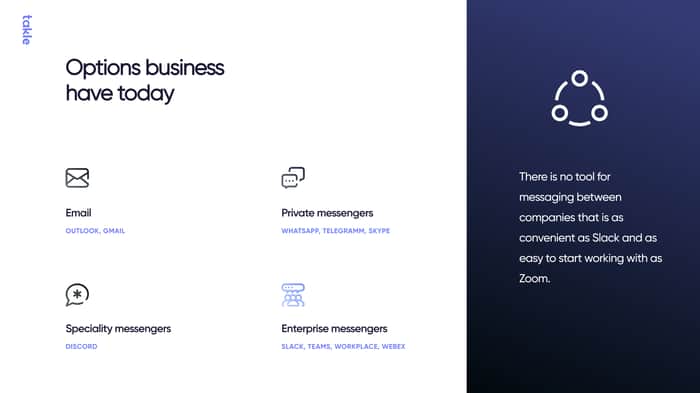
The current digital landscape offers various communication tools for both personal and team interactions. Email services like Outlook and Gmail have long been the go-to platforms for professional communication. Private messengers such as WhatsApp, Telegram, and Skype have gained popularity for personal interactions. Specialty messengers like Discord have carved out a niche in specific communities. Enterprise messengers such as Slack, Teams, Workplace, and Webex have emerged as powerful tools for team collaboration within organizations. However, there remains a notable gap in convenient communication tools specifically designed for interactions between companies.
While existing platforms cater to internal team communication or personal messaging, they fall short when it comes to facilitating seamless and efficient communication between companies. Email communication can be cumbersome, particularly when trying to coordinate with multiple parties. Group chats within messengers tend to lack structure and can quickly become overwhelming as discussions blend together. Enterprise messengers focus on internal team collaboration rather than inter-company interactions.
The absence of dedicated tools for inter-company communication poses challenges for businesses engaged in collaborations, partnerships, or joint projects. Coordinating efforts, sharing information, and aligning objectives across organizations becomes a complex and time-consuming endeavor. There is a need for convenient and efficient tools that streamline communication between companies, enabling smooth collaboration, idea exchange, and information sharing.
To bridge this gap, a new breed of communication tools is necessary — ones that provide a dedicated space for inter-company communication. These tools should offer a structured platform that allows teams from different organizations to connect seamlessly, exchange ideas, and collaborate effectively. Such tools should facilitate clear and organized communication, ensuring that messages and information are easily accessible, while also enabling efficient project management and progress tracking.
A convenient inter-company communication tool would bring together the best elements of existing platforms while catering specifically to the unique needs of cross-company collaboration. It should prioritize simplicity, user-friendliness, and compatibility across different organizations, ensuring that all parties can easily join and participate in discussions and projects. This new space should enable secure and confidential communication, fostering trust and ensuring the privacy of sensitive information.
By filling this communication gap, businesses can unlock the potential for smoother collaborations, enhanced productivity, and accelerated innovation. Seamless inter-company communication would not only benefit individual organizations but also contribute to the growth of industries as a whole. It would foster stronger partnerships, facilitate knowledge sharing, and spark new ideas that can drive progress and success.
In conclusion, while there are various communication tools available for team and personal interactions, there is a lack of convenient options specifically designed for communication between companies. Bridging this gap requires the development of dedicated tools that streamline inter-company communication, facilitating seamless collaboration and information sharing. By embracing and investing in such tools, businesses can overcome the challenges associated with cross-company communication and unlock the full potential of inter-company collaborations.
