Build Before You Believe: Momentum Is a Developer’s Real Edge
Most developers think inspiration comes first.
It doesn’t.
Clarity doesn’t come first.
Confidence doesn’t come first.
Product-market fit definitely doesn’t come first.
Work comes first.
The Hidden Advantage of Builders
As indie hackers, we don’t have massive teams or unlimited runway.
What we do have is iteration speed.
And iteration creates momentum.
Momentum creates insight.
Insight creates better product decisions.
But none of that happens if you’re waiting to “feel ready.”
You get ready by shipping.
The Practical Loop
Here’s the loop I’ve seen in my own projects:
- Ship something imperfect.
- See real user behavior.
- Notice flaws and friction.
- Improve architecture and UX.
- Unlock new possibilities.
- Feel inspired again.
Inspiration is not the starting line.
It’s a side effect of progress.
Yumzy: Built Through Iteration, Not Epiphany
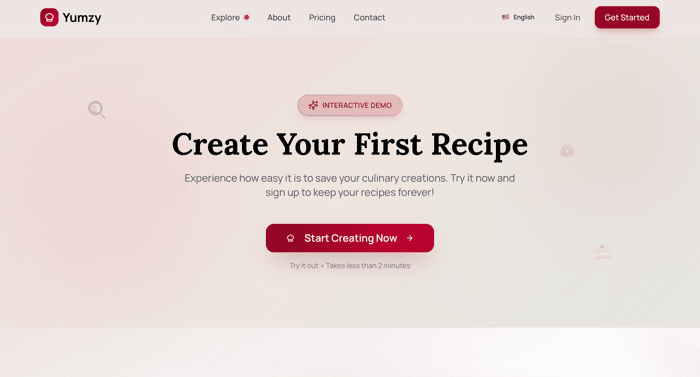
While building Yumzy, my AI-powered cooking assistant, there were no breakthrough genius moments.
There were:
- messy early prompts
- over-engineered components
- under-engineered API logic
- UX decisions that looked smart but weren’t
Each version exposed weaknesses.
Fixing those weaknesses made the system stronger.
Stronger systems made bigger features possible.
That’s when motivation naturally increased — not because of hype, but because the product was visibly evolving.
Momentum created belief.
Developers Overvalue Ideas
Ideas feel powerful.
But execution compounds.
A half-built product teaches you more than 100 Notion docs.
A deployed MVP teaches you more than 10 architecture debates.
A real user complaint teaches you more than internal perfectionism ever will.
Shipping builds skill.
Skill builds confidence.
Confidence builds ambition.
That ambition feels like inspiration — but it was earned.
If You’re Stuck Right Now
Don’t redesign everything.
Don’t rewrite from scratch.
Don’t wait for the perfect refactor window.
Open the repo.
Improve one function.
Simplify one flow.
Ship one tiny upgrade.
Small releases create psychological momentum.
And psychological momentum is a competitive advantage most indie founders underestimate.
You don’t need to feel inspired to build.
You need to build until inspiration becomes unavoidable.

Local Python scripts have a structural advantage in the current market: they're immune to the SaaS subscription backlash. No recurring costs, no vendor risk, no data concerns.
The positioning challenge is that 'script' sounds less polished than 'platform.' Worth double down on the positioning: 'the tool you own, not the subscription you rent.'
Build before you believe — momentum is underrated as a clarity mechanism. You rarely know if something is worth building until you've built enough of it to see whether it pulls people in.
The same applies to AI-assisted building. The founders who move fastest with AI aren't the best prompt engineers — they're the ones who've built enough structure into their prompts that the AI doesn't slow them down. I built flompt to give that structure a visual form: 12 semantic blocks (role, objective, constraints, examples, output_format, etc.) that compile to Claude-optimized XML. Ship faster because you're not debugging prompts.
A ⭐ on github.com/Nyrok/flompt would mean a lot — solo open-source founder here 🙏