Building a $4k/mo portfolio after an undiversified marketing strategy tanked his $800k
business

Louis-David Paul-Hus was building side hustles until an app hit it big, bringing in $800k within 15 months. But when his marketing channel failed, revenue went down, and he sold it for $150k.
Four months later, he already has a new portfolio of apps bringing in $4k/mo — including Archetype.
Here's Louis-David on how he got here. 👇
A hit and an exit
I'm a software developer with an entrepreneurial background. When I was a kid, I used to code games for fun.
My first business was reselling rare sneakers on Instagram. I started by going to SneakerCon, buying a T-shirt for $30 from one vendor, then selling it to another vendor for $50. I found it weird and nice to make money that way. That started my online business career.
I attended a Software Engineering university but dropped out after 1.5 years. After dropping out, I started coding apps for myself; they all failed, but I learned to create apps. After three months of building apps, I got my first startup client as a freelancer and started working for startups globally.
Two years after dropping out, I made an app that exploded within its first two weeks. We posted TikTok videos on multiple accounts, and they got millions of views. GlowUp generated $800k in sales in 15 months. I then sold it and exited for $150k.
It's been four months since I exited. I've built a couple of products for fun and am currently scaling some:
Archetype is a mobile app that reveals your personality via MBTI, Astrology, Human Design, and more.
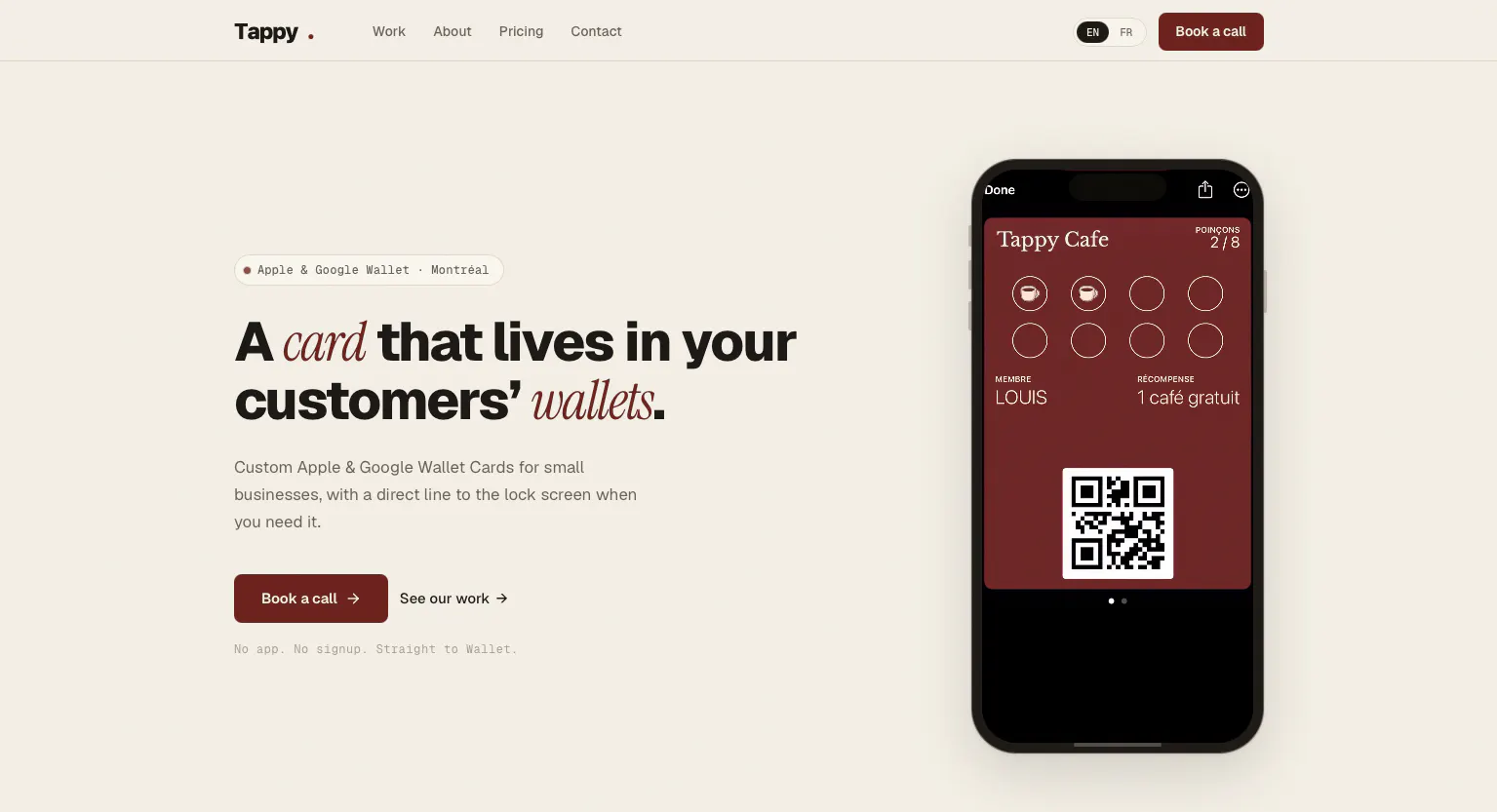
Tappy is a B2B custom loyalty card for small businesses in Apple Wallet and Google Wallet.
My current revenue is between $3k and $4k per month.
Two-week buildouts
The Tappy MVP was built in a day using Claude Code. I built it because I kept getting physical loyalty cards and figured there was a better way.
But my main focus right now is Archetype. I built it in two weeks using Claude Code. I used sleek.design and Claude for the UI. The stack is Swift with Firebase and Superwall.
The idea came randomly to me. I wondered what would happen if I took all those personality typology or self-discovery systems and combined them into one blueprint. I tried it, and the results were scary accurate.
As for Glowup, I built that in two weeks as a side project while I had contracts and worked for a couple of startups.
Since the app was simple and straightforward, I built it in FlutterFlow using Firebase as a backend.
The MVP was easy, but when it went live, it crashed on everyone because we got 100k users in three days — one of our APIs failed due to excessive usage. That earned us lots of 1-star reviews. I then switched to a new API and put in a paywall. Once the update hit the App Store, money started flowing in like crazy.
After that initial challenge, everything was easy.
Months later, we switched from FlutterFlow to Swift for iOS for a better user experience. We also changed from RevenueCat to Superwall for the paywall. The benefit was significant, as users loved the app and revenue grew significantly.
We also used OpenAI API, Gemini API, Sephora API, and Google Vision API for all AI responses.
The danger of a single growth channel
For Tappy, it's still early. I'm going door to door and sending cold emails. So far, it hasn't been working.
For Archetype, I'm posting TikTok videos and UGC. I'm slowly building momentum.
For GlowUp, we attracted users organically through TikTok. We started marketing before development, and this strategy helped us acquire 100k users within three days of launching.
Our VA posted five times a day on each of our seven accounts. We grew fresh accounts to 50k followers on TikTok and got 500 million views from all accounts in one year. We added an anchor link using TikTok's 'one-link' feature, allowing users to see the video and download the app in one click, which improved conversion from views to downloads.
That was our only strategy. I should have implemented other strategies, because when we stopped getting views, our revenue decreased, and I had to sell the app.
Fail and try again
My advice? Build fast, ship, try marketing, fail, try again, and one day it will work out in a way that feels effortless.
Start marketing at the same time you are building. Post a lot of content to find a format that can go viral. The bottleneck is not the product, but distribution and marketing.
What's next?
From here, I want to become a known author and politician.
It's nothing related to tech, but I hope one day I can help meaningfully in society.
First, I have to get rich with mobile apps and digital tech. Once I'm rich, I will start running for political office and help shape Quebec into a beautiful state.
You can follow along on my personal website, X, Instagram, and LinkedIn.

Leave a Comment
Spent 3 months building a SaaS for freelancers to track billable hours automatically. Got my first 10 paying users from a Reddit post where I shared how I used it to save 5 hours a week. Not flashy, but steady. My tool's called HourFlow—it's just a timer that syncs with your calendar.
This hit differently.
$800k built on one channel — TikTok — and when the views stopped, everything stopped. I have seen this pattern repeatedly in 18 years of marketing. The product was never the problem. Distribution was always the real business.
What strikes me most is your line — "the bottleneck is not the product, but distribution and marketing." Most founders figure this out after the loss, not before. You figured it out and rebuilt in four months. That is rare.
The undiversified channel risk is the most common and most expensive mistake growth stage founders make. One algorithm change, one platform policy shift, one viral moment that stops — and revenue collapses overnight.
What I would have loved to see alongside your TikTok strategy was one owned channel — email, SMS, or a community — where you controlled the relationship with your 100k users directly. That asset would have survived the TikTok slowdown.
Rebuilding to $4k/mo in four months with that lesson in your bones — you are going to build something much stickier next time.
Following your journey from here.
Really cool journey, thanks for sharing. 👏
The part about “start marketing before development” hit me. I’m also building a B2B SaaS (InsightLoop – AI interviewer for product managers), and I’ve been focusing mostly on building first. Your story is a good reminder to start distribution earlier.
Quick question: for GlowUp, you mentioned using TikTok as the only channel and it worked until it didn’t. If you could go back, what would be the second channel you’d invest in earlier?
Congrats on the exit and good luck with Archetype & Tappy!
Reddit has got to be the #1 marketing channel to be investing in.
The reason being that Google and other major AI tools are constantly indexing Reddit for search results.
I run a directory of growth strategies shared by indie founders over at GrowthStash.io, and this is usually the top sentiment shared by many.
All the best!
I'm fully on board with marketing while you build. Where I quietly go the other way is speed. My actual approach is to trade speed for getting the product to a bar
I'm genuinely happy with, even on features most people would tell me to cut or ship rough. I know that's against the ship-fast orthodoxy, and I get that
distribution is usually the real bottleneck, not the product.
But I keep asking myself the honest version of it: does being one or two months slower actually change the outcome that much? Shipping something I'm not proud of
fails a different test for me, my own. Curious how others weigh this. Has being faster ever clearly won for you, or does quality just quietly die anyway when the
distribution isn't there?
The diversification lesson is right, but it's the surface read. The deeper one: when TikTok turns into $800k in 15 months, the business never has time to build the systems a $800k business actually needs. You're running on adrenaline and infrastructure debt. So when the channel slows, there's no machine left, just the founder. That's why the only exit at that point is $150k. After 20 years of building, the founders I've seen survive a channel collapse are the ones who treated the early traction as runway to build operations, not a permanent state. Distribution windfalls are loans the algorithm calls back. Spend them on systems before the call comes.
This really resonated with me.
I’m building my first AI-powered Telegram Mini App, and I’m starting to realize that building the product is often the easier part.Getting real people to discover it, try it, and give feedback is a completely different challenge.The lesson about relying on a single acquisition channel is especially valuable. As a solo founder, it’s tempting to focus on one platform and hope it works. Thanks for sharing the story and the numbers behind it.
Distribution is harder than building
I really like the career trajectory, especially your future goal of becoming a politician one day.
I completely agree with the need for diversification—it’s probably one of the few skills that can truly help us navigate and survive uncertainty.
Diversification is underrated until it's the only thing that saves you. The pivot from single-channel dependency to a portfolio approach is a hard lesson most founders learn too late.
What was the first signal that your original strategy was starting to crack — did you see it coming or was it sudden?
The single-channel part got me. I'm just starting out (also building with Claude Code), and that's the exact thing I'm scared of: getting one channel to work, then losing it overnight.
How are you playing it with Archetype? Building a second channel early, or still going TikTok-first since it's fastest?
Really solid breakdown of how quickly things can change when traffic depends too much on one channel. Tough lesson, but a valuable one for anyone building online.
When most people hear the words “crypto recovery service, their guard immediately goes up—and for good reason.
In today’s online environment, finding a legitimate service feels like finding a needle in a haystack. Ask about trusted crypto recovery on any major forum—Reddit, Bitcointalk, or Twitter—and you’ll be met with immediate hostility. It has become a cultural bias: victims often prefer to file police reports (which rarely yield results) rather than seek private help, fearing that speaking openly will only attract more scammers.
But here is the harsh truth: Silence doesn’t bring your funds back.
The reality of the crypto landscape is brutal. Less than 10% of “recovery agencies” online are genuine. Fraudsters have mastered the art of mimicking trust, preying on the desperate and the skeptical alike. So, how do you separate the wolves from the professionals?
The Golden Rule: No Upfront Fees
If there is one single sign that separates a scam from a legitimate operation, it is the payment model.
The Red Flag: Upfront Demands
Predatory scams will always demand money before they lift a finger. They will invent reasons such as:
"Processing fees.
"Software license costs
"Tax payments or legal retainers
If an agency asks you to pay before they recover your assets, walk away. This is not a service; it is a secondary scam designed to bleed you dry after your initial loss.
The Green Flag: Success-Based Fees
A genuine agency knows its value lies in results, not promises. We operate on a transparent, success-based fee structure—typically around 10% of the recovered amount.
Simply put: No recovery, no payment.
We only eat when you do. This aligns our incentives entirely with yours. We don’t want your money upfront; we want to prove our competence by returning what is rightfully yours.
Enter TechY Force Cyber Retrieval
At TechY Force, we understand the skepticism. We’ve seen the forums. We know the stigma. That’s why we built our reputation on transparency, technical expertise, and a zero-risk model for our clients.
We don’t ask for trust blindly; we earn it through action.
How We Work
1. Free Initial Consultation: We analyze your case without cost. If we can’t help, we tell you honestly.
2. Investigation & Tracing: Our cyber-forensic team uses advanced blockchain analytics to trace stolen funds.
3. Recovery Execution: We engage with exchanges, legal entities, and black-hat actors where necessary to secure your assets.
4. Payment Upon Success: You only pay our agreed-upon percentage after the funds are securely returned to you.
Breaking the Cycle of Fear
The crypto industry was built on the idea of decentralization and personal sovereignty. But when things go wrong, isolation is your enemy. Scammers thrive in the shadows of your fear. Professionals thrive in the light of transparency.
Don’t let the fear of secondary scams prevent you from seeking genuine help. Look for the golden rule. Look for the no-upfront-fee guarantee.
Look for TechY Force Cyber Retrieval.
---
Lost crypto? Don’t pay a dime until it’s back. Contact us today for a free, no-obligation case review.
---
Tips for Publishing on Medium:
Add Images: Use a high-quality header image related to cybersecurity or blockchain technology. Break up the text with simple graphics showing the "Red Flag vs. Green Flag" comparison.
Tags: Use tags like #Crypto, #CyberSecurity, #Bitcoin, #ScamRecovery, and #Blockchain to reach the right audience.
Call to Action: Ensure your contact link is prominent at the bottom and possibly in the middle of the article.
"The danger of a single growth channel" — this hits so hard. I'm 2 weeks into my launch and already feeling the risk of putting all my bets on Reddit and SEO. How did you decide which new channels to experiment with after TikTok stopped working?
The cold email not working for Tappy caught my eye. Loyalty card is a behavior change sell, people need to trust you before they care about the product.
What worked for me was dropping the product from the first email entirely. Just one question about their problem. Replies started coming in after that.
Going from 100k users in 3 days and API failures to a successful exit is quite a journey. The ability to move fast, fix problems, and keep improving the product seems to have made all the difference.
thats very inspiring!
I like the simplicity of the idea. Have you tested any paid marketing channels yet?The biggest takeaway here isn't the $800k. It's that one TikTok channel built the business, and one TikTok channel killed it.
The fact that you rebuilt and got back to revenue so quickly says a lot.
Just launched something similar in the API space. The hardest part for us was the pricing model — went through three iterations before landing on a request-based tier system. What made you choose your current pricing structure?
Your story is inspiring I truly enjoyed reading it thank you for sharing.
Swapping over to Swift and using Superwall to optimize paywalls is an awesome setup for mobile apps. Shifting your focus to marketing before the coding is even finished is exactly how you landed that massive 100k user spike on day three
(^///^)
The 100k users in 3 days is impressive but the metric that mattered most was never tracked: what percentage of those users gave you a direct line back to them? Email, push notifications, anything owned.
TikTok reach is rented. When the algorithm shifts, the business with 100k email addresses survives. The one that only has TikTok followers doesn't. That's why the exit was $150k instead of something much larger. The asset wasn't the app. It was the user relationship, and that part wasn't built during the window when it could have been.
Rebuilding to $4k/mo in four months shows the core skills are solid. The lesson is clearly in the bones now.
The 100k users in 3 days is impressive but the metric that mattered most was never tracked: what percentage of those users gave you a direct line back to them? Email, push notifications, anything owned.
TikTok reach is rented. When the algorithm shifts, the business with 100k email addresses survives. The one that only has TikTok followers doesn't. That's why the exit was $150k instead of something much larger. The asset wasn't the app. It was the user relationship, and that part wasn't built during the window when it could have been.
Rebuilding to $4k/mo in four months shows the core skills are solid. The lesson is clearly in the bones now.
Spent 3 months building a SaaS for freelancers to track billable hours automatically. Got my first 10 paying users from a Reddit post where I shared how I used it to save 5 hours a week. Not flashy, but steady. My tool's called NoteMind-Ai
the main struggle of many founders that to find the right people that share same purpose and energy vibe
"A powerful reminder that relying on a single marketing channel can be risky. Diversification and building owned assets like a strong portfolio, email list, and brand presence are essential for long-term business stability. Great lesson from a challenging experience!"
The most valuable lesson here isn't the revenue growth, it's the danger of relying on a single acquisition channel. A lot of founders only realize that risk after growth starts slowing down.
The 100k users in 3 days story is incredible.
Many founders focus on building faster, but your experience shows that distribution can change everything.
Looking back, what was the biggest driver of GlowUp's growth: the TikTok strategy, the product concept itself, or the timing of the launch?
Amazing story.
Going from 0 to 100k users in just a few days is something most founders never experience.
Looking back, what do you think contributed most to GlowUp's viral growth: the product itself, the TikTok content strategy, or simply timing?
Congratulations for your accomplishment. Distribution is the moat...
nice
24/7 CRYPTOCURRENCY RECOVERY AI HACKING EXPERTISE CYBER RESEARCH COMPANY/ WIZARD MARK HACKERS RECOVERY
My name is Tobais malcon and i am here to share my experience about recovery expert who help me in getting back my funds without any issues. If you recently lost a portion of your savings or retirement nest egg to a cryptocurrency, forex, or binary options scam, Bank account, Instagram, X twitter, Tiktok, FB and other platforms,Wizard Mark Hackers Recovery just retrieve my funds worth $490,700 BTC from fake Binance. I am so glad right now. all thanks to Wizard Mark Hackers Recovery and the great help that was render to me. i am also reaching out to your who needs help. contact through Wizard Mark Hackers Recovery with their AI Expertise.
WHATSAPP +4915218465599
TELEGRAM : @ wizardhackersrecovery
really cool, bring this idea for brazil
I absolutely love the story, the success, and the advice. Thanks for sharing!
I NEED A TRUSTED CRYPTO HACKER THAT CAN RESTORE LOST OR SCAMMED FUNDS.
Are you struggling to get back the money you lost? Every day, countless individuals face the devastating impact of scam operations that drain their hard-earned savings. But there’s good news – GEO COORDINATES RECOVERY HACKER are here to help you recover what’s rightfully yours. I lost my entire savings to a fake crypto investment scam while I was looking for a way to double my savings. After many weeks of trying to find a way to get my money back with no success, I finally came across a crypto recovery company GEO COORDINATES RECOVERY HACKER, a reliable and trustworthy crypto recovery company. I'm immensely grateful for his dedication, professionalism, and unwavering support. You can get in touch with them through below contact details
WhatsApp ; +1 ( 318 ) 203-3657
I had to send out my review also. They are indeed recommendable.
Hi, Thanks for the article. I need some advice on your mentioned "For Archetype, I'm posting TikTok videos and UGC. I'm slowly building momentum.".
I am struggling to make this happen since I am not an active TikTok person to make use of this platform. COuld you tell me what are the tools and techniques you use to create nice posts on TikTok. What kind of UGC you create. Can you guide?
This one hits home! I'm building a small portfolio (Pixel Labs) and about to launch the next app, and your TikTok story is exactly the failure mode I'm designing around. Instead of one channel doing all the work, I'm spreading this launch across ~6 (Reddit, HN, PH, X, IH, an accessibility community) from day one. More work, each slower, but no single point of collapse.
What I keep wrestling with: that's almost the opposite of the "pick one channel and go deep" advice you see elsewhere. My read is your lesson is about dependence, not focus; it's fine to go deep on a channel as long as you're not betting the whole business on it surviving one algorithm change. Does that match how you think about it now, post-GlowUp?
(Also clocked that you built Archetype with Claude Code, same toolchain here. The build half has gotten so fast that distribution really is the only moat left, which is kind of your whole point.)
Sound good , your future goals .Hopefully you get there!
Interesting how failure seems to push people toward systems thinking instead of single-product thinking. That shift alone probably changes how you design everything from day one.
The single growth channel warning hit hard — that's the exact risk I'm building around right now.
One week into my own $0 to $20k challenge. Shipping across Fiverr, Gumroad, YouTube, and X simultaneously so no single channel can kill the whole thing. Your GlowUp story is exactly the cautionary tale I needed.
The "start marketing before you build" lesson landed. I launched HIVE — a Telegram tap-to-earn game engine — and only started posting after it was live. Should have been documenting the build from day one. Doing that differently now.
The two-week buildout is where I want to get. Currently shipping client web apps with Next.js and Supabase. Curious — did Claude Code actually change how fast you validate an idea before committing to a full build?
Appreciate the transparency. The lessons from GlowUp are clearly transferring fast.
" For GlowUp, we attracted users organically through TikTok. We started marketing before development, and this strategy helped us acquire 100k users within three days of launching." Impressive marketing I need to figure out a strategy...
$800k → $150k exit → $4k/mo - that math still stings. Curious if his apps don't all live on the same channel now. Diversifying the product doesn't fix a single distribution layer.
am money mule agent
I help hackers, politicians , billionaires to transfer millions of dollars illegally (money). You can hack directly in to my crypto wallet or bank account and I will transfer to any account you will provide to receive the funds with 24hrs. i have work with top politicians, billionaires, individuals, businesses, companies, etc in the world to transfer money successfully. All transactions when successful and smoothly.
I have a company which is legally registered and have it bank accounts at USA , UK 🇬🇧. And have verified crypto wallet binance wallet than can receive the following
Fiat Deposit & Withdrawal Limits
2M USD Daily
Crypto Deposit Limit
Unlimited
Crypto Withdrawal Limit
8M USDT Daily
P2P Transaction Limits
Unlimited
WhatsApp me : +1 (667) 283-7737
Love this approach. I just launched TrueROAS after finding Meta overreported my ROAS by 55.7%.
Painful lesson: Marketing ROAS ≠ Financial ROAS.
What gap are you guys seeing between ad platforms vs Stripe/Shopify payout?
Lost $800k revenue source and walked away with $150k, that stings man. Been through something similar where one channel was doing all the heavy lifting and when it dried up everything fell apart fast.
Quick thought on Archetype, have you considered Russian speaking markets? CIS countries are genuinely obsessed with astrology and MBTI on a different level. 300 million people, barely any competition in this space, and I have experience running campaigns there if you ever want to talk.
great tool
nice
The two biggest problem for me is:
How to really get start on social media
How to Protect Your Ideas from Big Companies
Crazy how one TikTok channel could create that much growth and then become the biggest risk at the same time. Interesting story.
Love how you validated demand with just a single forum post — that's the kind of lean launch we need more of. Curious: what's been the most surprising use case you've seen from those 80 signups?
The single channel risk lesson is one most founders only learn after losing something. The fact that you rebuilt to $4k/mo in four months after that shows the skills were never the problem, distribution was just fragile.
I am building a CompTIA certification study platform called PassPlus. Started it while studying for my own Security+ exam, wrote the practice questions myself, and posted it on Reddit. 1,000+ users across 20+ countries, 10 paying customers, zero ad spend. The distribution has been entirely Reddit and SEO so far which means I am one algorithm change away from the same problem you described.
Reading this is a good reminder to diversify before I need to, not after.
That’s a powerful reminder of why relying on a single acquisition channel is risky for any business.
Diversification creates resilience, especially when algorithms or platforms change unexpectedly.
Building a sustainable portfolio after such a setback shows strong adaptability and execution discipline.
As someone just starting my indie hacker journey, this hit hard because it’s easy to focus only on building and forget distribution risk entirely.
In today's fantastic world, aided by AI, new tools are released every day that will be very useful for all of us who own a business or dream of owning one. In the land of the blind, the one-eyed man is king. Good luck on the journey ahead.
I'm 19, just got my first laptop 6 months ago, taught myself product design, and just launched the waitlist for my first app — Folio. An AI reading app that turns book insights into personalized decisions you can actually use.
The part about not relying on one marketing channel hit different. Already thinking about that before I even have users.
If anyone's curious — folioapp.framer.websit
"e" is missing in this link because i am new user can comment links yet
Love how you turned a personal annoyance into a real product. The best B2B tools come from scratching your own itch, especially when it's a problem so common people just accept the grind instead of fixing it.
Built a niche solution for a pain I kept hitting: local SEO bias. When I check rankings from my city, results are skewed for clients elsewhere. My tool lets you simulate searches from any location to get accurate SERPs. Been live for 3 months, 80 organic signups from a forum post. Validates the need, slow but steady.
the 'build fast and one day it will feel effortless' advice is fine but it papers over the part where GlowUp worked partly because of timing, TikTok organic reach in that window was genuinely different than it is now. the same strategy with the same execution today would probably not get 500 million views. luck and timing aren't the whole story but they're not nothing either
The "bottleneck is distribution" point hits hard. Everyone assumes if they build it well enough it will spread, but the reality is most great products die quietly because no one figured out the distribution problem.
Could you tell us more about how you deal with the frustration that comes after a failure? I think it would be very helpful for newcomers.
Really interesting lesson about relying too much on one growth channel. The part that stood out to me was how TikTok worked extremely well until it didn’t. I’m working on a small free consumer tool right now, and this makes me think more seriously about building multiple channels earlier instead of waiting until one channel stops working. For your new portfolio, how are you thinking about channel diversification this time? Are you still treating TikTok/UGC as the main engine, or are you also building SEO, partnerships, App Store search, or email from day one?
A great story in regards to kill something fast and start again, quick loops!
Wow, amazing comeback! Losing $800k revenue is so hard, but you rebuilt fast. Very inspiring. Keep going!
Congrats on rebuilding to $4k/mo after that tough $800k setback! Really inspiring comeback story.
What’s the main thing you changed in your marketing strategy this time around?