Building a free Chrome extension in 3 days and turning it into a 5-figure-MRR ecosystem
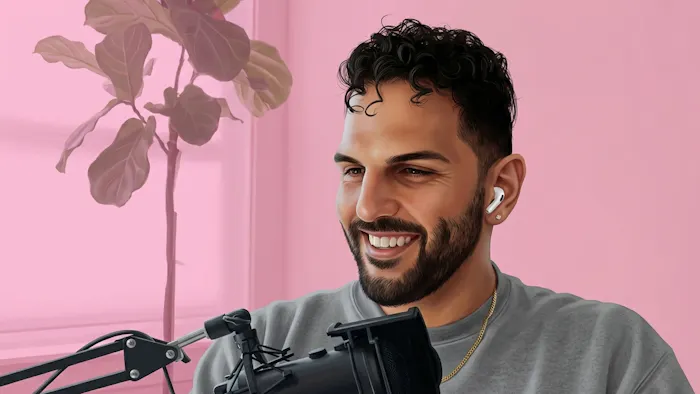
When ChatGPT launched, Saeed Ezzati saw that, while the product felt magical, the workspace around it was almost nonexistent. So, he spent a weekend building a Chrome extension for himself.
Today, Superpower ChatGPT has over 420k downloads and 150k weekly active users. And the Superpower Daily newsletter has 350k subscribers. In total, the business has a 5-figure MRR .
Here's Saeed on how he did it. 👇
ChatGPT was magical but messy
I am a software engineer and solo founder based in San Francisco. Before Superpower, I worked as a full-stack engineer for about ten years at various companies, from large corporations to startups, while always keeping a side project alive on nights and weekends. I have always liked building small tools for myself. Superpower started that way, too.
When ChatGPT launched, I used it constantly. The back-and-forth conversation felt like a new kind of computing experience. But after a few days of heavy use, I kept running into the same problem: The conversations were useful, but the workspace around them was missing.
Important threads got buried. There was no good way to organize old conversations. Search was limited. Exporting was awkward. Prompts and useful answers were hard to reuse later.
It was one of those rare moments when a new product felt both magical and obviously incomplete.
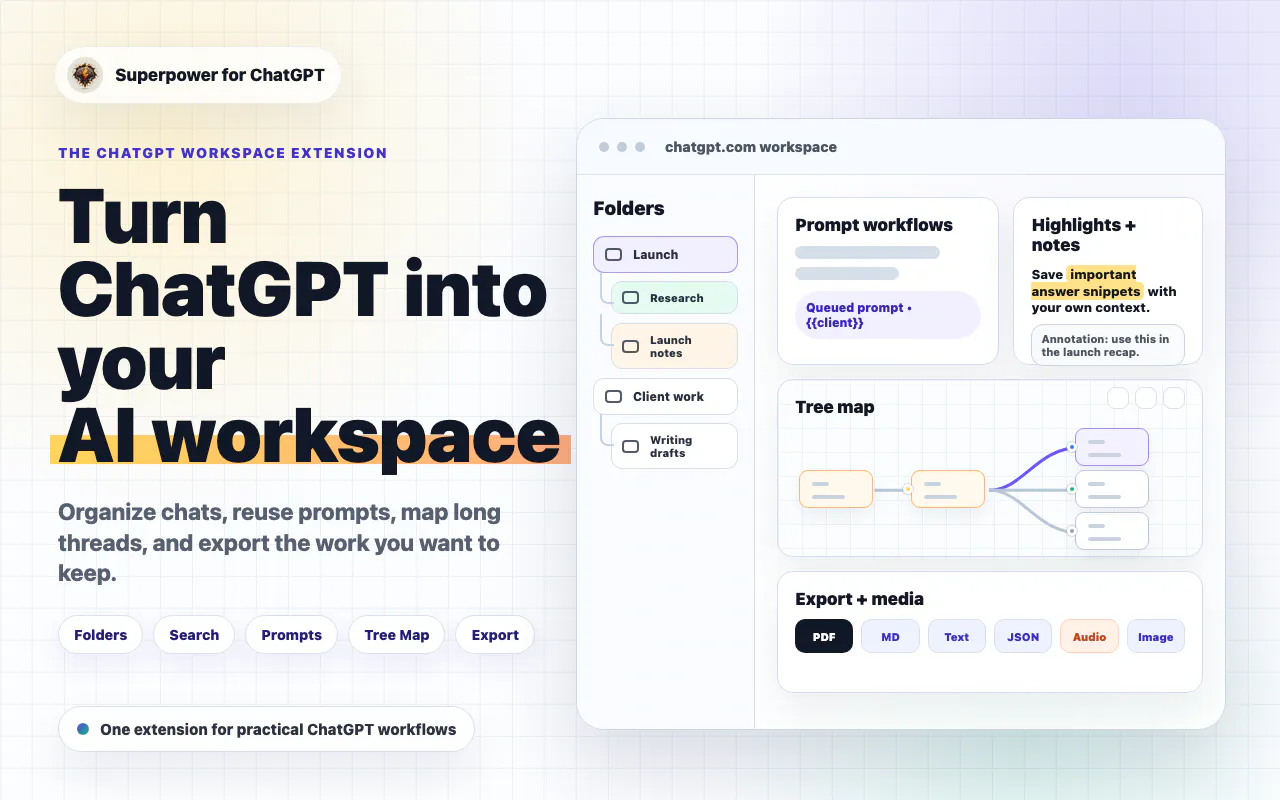
Within a few days, I built and launched the first version of Superpower ChatGPT on the Chrome Web Store. It started as a simple browser extension, but it grew into a productivity layer on top of ChatGPT, with features like local history search and sync, folders, conversation export, message pinning, prompt management, writing style and tone options, and much more.
Today, Superpower ChatGPT has over 420,000 downloads, more than 150,000 weekly active users, and thousands of reviews across browser stores. I also run Superpower Daily, a newsletter with over 350,000 subscribers, where I share AI news and useful AI tools.
The business is now at 5-figure MRR, and I still run it as a solo founder.
Prioritizing trust over revenue
My initial motivation was simple: I wanted ChatGPT to be better for my own use.
The first version was very small, but users understood it immediately. People installed it, used it, and started asking for more. Some wanted folders. Some wanted export. Some wanted better prompt management. Some wanted search.
The roadmap came directly from user emails, reviews, Reddit comments, Discord conversations, and repeated pain I kept seeing in public.
The business motivation came later. I saw Superpower as a side project at first, and I wanted to keep the product free because I believed the biggest opportunity was distribution and trust.
Free was not charity. It was distribution.
In a new category, asking people to trust a paid product too early can slow everything down. I wanted users first: real usage, real feedback, real reviews, and real trust. Once the product became part of people's daily ChatGPT workflow, Pro became a natural upgrade instead of a hard sell.
The question became, "How do I support a free product with a fast-growing user base without ruining the ChatGPT experience with random ads?'
That question led to Superpower Daily. Because the extension's users were already interested in AI, I started sharing AI news and useful tools inside the product. Users liked it enough that it eventually became its own newsletter.
Launching within a week of ChatGPT's launch
I built the initial product in two or three days and launched it on the Chrome Web Store within the first week of ChatGPT's launch. I had no funding, no team, no launch budget, and no complicated process. It was just me, my laptop, and a problem I wanted to solve.
The first version was not the product you see today. It only had a few features, and much of it was rough. But it solved one problem clearly enough that people immediately understood why it existed. If I had waited to build the full vision, I probably would have missed the timing.
The core extension is intentionally simple: vanilla JavaScript, HTML, and CSS. I do not use a frontend framework inside the extension. For browser extensions, I prefer direct control over performance, bundle size, and how the extension interacts with the page.
The hardest part was not building the first version. The hardest part was surviving the platform underneath it.
ChatGPT kept changing. Buttons moved. DOM structures changed. New features shipped. Old flows broke. Rate limits shifted. A normal web app controls its own environment. A browser extension lives inside someone else's product and has to keep working as that product evolves.
That is why the simplicity of the stack has been so helpful. It lets me adapt quickly.
Outside of the extension, server-side components support the product for subscriptions, account state, newsletter workflows, and internal tooling.
If I had to start over, I would invest earlier in internal tooling, automated testing, and a more robust way to handle ChatGPT UI changes. I would also build more of the web-app side earlier, so the business would depend less on browser extension constraints.
Two revenue streams
Superpower ChatGPT is freemium. The free plan includes most of the core value, with limits on some advanced features. The Pro plan removes limits and gives power users access to the full product.
For the first nine months, the extension was 100% free. That was an intentional decision. In a new market, trust and distribution mattered more than early revenue.
Revenue grew because the free product already had a large audience that understood its value. I did not need to tell users that Superpower existed or explain the problem from scratch. Many of them had already been using it for months. The paid plan became a natural upgrade for people who used ChatGPT heavily and wanted fewer limits.
The second revenue stream is sponsorships through Superpower Daily. The newsletter started to provide value to extension users without putting random ads into their workflow. Over time, it became a serious business by itself. Sponsors want to reach people who actively use AI tools, and that audience is a very good match for Superpower.
Costs were almost nothing initially — my main investment was time. And the margins are still high because I am still solo. I do not have employees. Main costs include servers, software tools, and the time to support and maintain the product. The tradeoff is that everything depends on my focus, so I've learned to look for repeated pain, not just loud feedback.
Product and distribution should not be separate jobs
Being early and shipping something useful when people actively looked for ways to improve ChatGPT was the biggest growth lever. I launched on Product Hunt, posted on Reddit, shared updates on Twitter/X, and made the extension easy to find in the browser stores. But timing only helped because the product solved a real problem.
Reddit was especially useful in the early days. People were already discussing ChatGPT workflows, prompts, productivity, and missing features. I could join those conversations, share what I built, and get honest feedback. It was not a polished marketing campaign. It was more like: "I built this because I needed it. Does it help you, too?"
One of my biggest lessons is that product and distribution should not be treated as separate jobs.
For Superpower, the product created distribution because users shared it. The extension created the newsletter audience. The newsletter brought people back to the product. User feedback shaped the roadmap. Discord, reviews, support emails, GitHub, Reddit, and social media all became part of the same loop.
The channels worked together.
The advantages of speed and feedback
Speed was the most helpful advantage. When ChatGPT launched, the market moved faster than most companies could react. As a solo developer, I could build and ship without meetings, approvals, or a roadmap process. That mattered.
Constantly talking to users was the second advantage. Reviews, emails, Discord messages, Reddit comments, and support requests are not just support work; they are product research. Users often describe the problem better than you can because they live with it every day.
The newsletter was also a good decision. It gave me a direct relationship with the audience instead of depending only on browser store discovery or social platforms. It also forced me to stay close to the AI market. When you write about AI every day, you notice trends, tools, and user behavior much earlier.
Give it away for free — but know why
My advice:
Start with a problem you understand personally. You build a much more useful product when you are also a user. You notice small annoyances outsiders miss, and these can become valuable features.
Ship earlier than feels comfortable. The first version doesn't need to express your whole vision. It only needs to solve one problem clearly enough for someone to care. Superpower wouldn't exist at this scale if I had waited for the "complete" version.
Give people something genuinely useful for free, especially if you enter a new market and need trust. But don't confuse free with having no business model. Free can be a distribution strategy, a feedback strategy, and a trust-building strategy. You still need to know your revenue source.
Build distribution while you build the product. Post in communities, write, share what you're learning, start a newsletter, build in public, or find another channel that fits you. A good product with no distribution is easy to ignore.
Finally, listen to users, but don't blindly follow every request. Look for repeated patterns. The best ideas usually show up more than once, from different users, in slightly different words.
What's next?
Superpower started as a small fix for my own ChatGPT workflow. The reason it kept growing is that the problem kept getting bigger.
More people are using AI every day, but their workflows are still messy. Conversations disappear. Useful answers get buried. Prompts are rewritten from scratch. Work is hard to reuse.
That is the opportunity I still care about: making AI work easier to organize, search, reuse, and build on.
My main goal is to keep making Superpower ChatGPT the best productivity layer for serious ChatGPT users. AI tools are becoming part of people's daily work, and I think there is still a lot of room to make that workflow more organized, searchable, reusable, and personal.
I also want to keep growing Superpower Daily. The AI space is noisy, and people need a trusted way to know what matters. The newsletter helps me serve that need and stay connected to the same audience that uses the extension.
Longer term, I want to keep building useful products around AI workflows. I do not want to build things just because they are trendy. I want to build tools that save people time, reduce friction, and improve their existing workflow.
The best place to learn more about Superpower ChatGPT is our website. You can read Superpower Daily here. And you can also follow me on X and LinkedIn.

Leave a Comment
Really enjoyed this. One takeaway that stood out was "free is a distribution strategy, not just a pricing strategy." That's something a lot of founders miss
Great to see such an accomplishment. AI empowers us to create solutions at a faster speed than ever. This will translate to wins in the business world. Keep up the great work!
"Free was not charity. It was distribution." That reframe is something more founders should internalize. Most people treat free as a sacrifice when it's actually the fastest way to earn the right to charge later.
The platform risk is the thing I keep thinking about though. Building on top of ChatGPT's DOM and having it break every time OpenAI ships an update sounds genuinely exhausting for a solo founder. How do you handle that operationally, do you have monitors that catch breakage before users report it?
Yeah, platform risk was probably the most stressful part of the first year, and it is still something we have to think about.
In the beginning, we did not have sophisticated monitors. A lot of it was very manual: I used ChatGPT every day myself, users reported issues quickly in Discord, and I watched support emails/reviews closely. Because the extension was used heavily, if something broke, I usually heard about it fast.
The harder part was that ChatGPT was not always the same product for every user. OpenAI often runs experiments and staged rollouts, so different users can have different versions of the UI at the same time. That meant we had to support multiple ChatGPT variants, not just “the current version.”
I also paid very close attention to ChatGPT releases and UI changes. Most people would see a new ChatGPT feature and just get excited. I would get excited and nervous at the same time, because every UI change could mean something in the extension might break. I'd sometimes look for hints in the frontend code before features fully rolled out so I could prepare.
The Chrome Web Store review process made this even harder. With a normal web app, if something breaks, you can deploy a fix immediately. With an extension, even if you fix the issue quickly, the update still has to go through review, which can take anywhere from a few hours to a few days. During that window, you can lose users even though the fix is ready.
Over time, we got better at it. The first version depended much more directly on the ChatGPT UI. After about a year, I reworked parts of the architecture to decouple Superpower from ChatGPT as much as possible, so fewer things depended on fragile DOM details. That helped a lot.
But it is still part of the job. Building on top of a fast-moving product gives you access to existing user demand, but you also inherit the platform's instability, experiments, review delays, and rollout complexity.
This is a super clear and beneficial framework for launching and pushing a product like this into the market. We - an early-stage meal planning app - are working to stay in near-constant communication with our users; how do you ensure you're staying up to date on all lines of communication without seeming self-serving?
Trying to balance legitimately wanting to improve at the speed of our users' need while building a for-profit business is sometimes a challenge. I'd welcome your vantage point!
Thank you. I think the key is to make the user conversation about their workflow, not about your business.
When I talk to users, I try not to frame it as "help me grow my product." I frame it as "what were you trying to do, where did it break down, and what would have made this easier?" That keeps the conversation useful for both sides.
A few things helped me:
Separate support from selling. If someone reports a problem, solve the problem first. Don't turn every support interaction into an upgrade pitch.
Look for repeated pain, not just loud feedback. One user request may be interesting, but when the same problem shows up across emails, reviews, Discord, Reddit, and your own usage, it usually deserves attention.
Be transparent when you cannot build something yet. Users usually respect "I agree this matters, but I need to prioritize X first" more than vague promises.
Keep giving value before asking for value. For a meal planning app, that might mean useful recipes, planning tips, saved time, or better weekly routines before pushing monetization too hard.
At the end of the day, a for-profit product is not at odds with helping users. The business works only if the product keeps solving a real problem. The danger is when the conversation becomes extractive instead of genuinely useful.
Any tool that saves TIME and MONEY will naturally stand out in the market, and this tool seems to be one that can achieve that goal, which is half the battle won. Congratulations and best of luck on your journey.
Thank you! Appreciate the support!
This is incredibly inspiring! Building a 5-figure MRR ecosystem starting from a 3-day weekend project is the ultimate solo founder dream.
The takeaway about "free was not charity, it was distribution" is pure gold. It perfectly shows how building trust first creates a bulletproof foundation for monetization later.
As a fellow developer who recently shipped a product, reading these insights gives me a massive boost. Great write-up and thanks for sharing this journey! 🚀
Best of luck to you!
The product and distribution should not be separate jobs; it's the one most founders skip past, but it's the most important. Building in the open from day one meant the product and the audience grew together. By the time he needed users, he already had them. The free tier trust-building angle is also underrated. 420k downloads happened because there was zero friction to try it. Most founders price too early because they're worried about leaving money on the table, but Saeed left the door wide open and let volume do the work first. Reading this at month 8 of building dailyaitools.io, the distribution-as-a-feature lesson is one I'm still figuring out.
Such a fantastic breakdown, James! Saeed’s mindset of treating "free" not as charity, but as a deliberate strategy for distribution and trust, is a masterclass for solo founders.
In a crowded market, building a habit-forming product first and capturing the audience via an owned channel like the newsletter clearly decoupled his success from pure platform dependency. It's a great reminder that product and distribution are two sides of the same coin. Thanks for sharing this story!
Thanks for reading and sharing your feedback!
Curious what else you did to drive initial discovery and downloads? Was it just Reddit?
Not just Reddit, but honestly there was no big launch plan.
The first discovery came mostly from being early. I released Superpower within the first week after ChatGPT launched, and it was the first ChatGPT browser extension on the Chrome Web Store. At that moment a lot of people were searching for ways to improve ChatGPT, so timing helped a lot.
I shared it on Reddit early on, and I did a Product Hunt launch a few months later. But most of the growth came organically through browser store search, word of mouth, users recommending it to other ChatGPT power users, and people mentioning it in communities.
The lesson for me was that timing + a clear pain point can be a much bigger growth lever than a polished launch. People already had the problem, they were actively looking for a solution, and the product was simple enough to understand immediately.
bit of a counter to the newsletter-is-the-real-business take: 150k weekly active users beats 350k newsletter subs as an asset imo. a free AI-news list decays fast and a big chunk never opens, but someone who opens the extension every week is showing real repeated intent. the subs are reach, the WAU is a habit, and habit is what actually converts to paid. the newsletter's job is probably just to keep feeding new people into that habit.
I agree with this. The extension usage is the deeper asset because it represents actual workflow habit. If someone opens Superpower every week inside ChatGPT, that tells me the product is part of how they work, and that is much closer to paid conversion than a newsletter subscriber.
I don't really think of the newsletter as "the real business" instead of the product. I see them as connected assets. The extension creates the daily/weekly habit, and the newsletter gives us reach, trust, sponsorship revenue, and a direct audience outside the browser stores.
The healthiest version is when they reinforce each other: the product gives people a reason to care, the newsletter keeps us connected to the AI market, and both help grow the overall Superpower ecosystem.
The extension gets the headline but the newsletter is the business. Superpower lives inside OpenAI's product and could break with any UI change, while those 350k subscribers are an owned asset nobody can take away. I spent 20 years building on Microsoft's platform and the rule never changed: ride the platform for distribution, but own the customer relationship yourself.
I agree with the platform lesson. One of the biggest reasons I started Superpower Daily was exactly that: I did not want the entire business to depend only on browser store discovery or ChatGPT's UI.
The extension is still the core product and the deepest usage signal. If someone uses Superpower inside ChatGPT every week, that is real workflow habit. But the newsletter gives us something different: a direct relationship with the audience, independent distribution, and a way to stay connected even if platform dynamics change.
So I see them as two sides of the same strategy. The extension rides the platform and solves the workflow problem where users already are. The newsletter helps us own more of the customer relationship and build an audience outside the platform.
That's a great example of solving your own problem first. It's amazing how a weekend project can grow into a real business with hundreds of thousands of users. I'm building Delta Roblox and stories like this are a huge motivation to keep improving one product at a time. Congrats to Saeed!
very helpful!
Insightful
It’s incredible that you managed to do that in three days. What important lesson did you learn while working with startups?
How can I index content on Bing