Building a Men's Shorts Brand Taught Me That Simplicity Sells
When I started building a men's apparel brand, I assumed the hardest part would be finding a reliable supplier.
I was wrong.
The real challenge was understanding what men actually want to wear.
As summer approached, I found myself spending way too much time researching men's shorts. I read reviews, compared brands, ordered samples, and paid attention to the complaints people kept repeating.
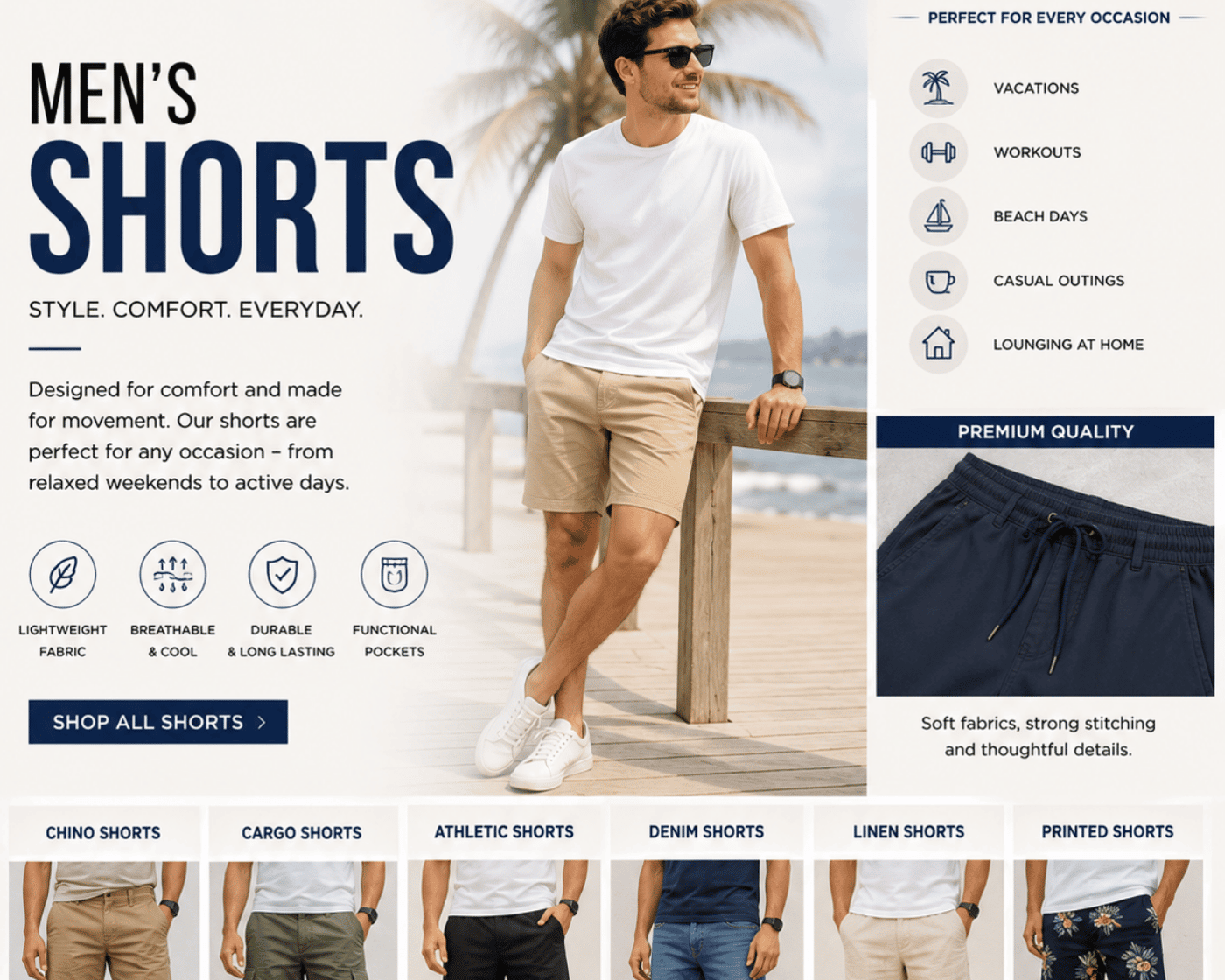
The same issues came up over and over.
Some shorts were so loose they looked sloppy.
Others had an athletic cut but felt restrictive the moment you sat down.
Many looked great online but wrinkled after an hour of wear or trapped heat on warm days.
It seemed like there was always a trade-off between comfort and style.
That became the problem I wanted to solve.
Less Fashion, More Function
Instead of chasing trends, I focused on creating something people would actually reach for several times a week.
The goal wasn't to design "fashion shorts."
It was to make a pair that worked for everyday life.
A morning walk.
Running errands.
Working from a coffee shop.
A casual dinner.
Weekend travel.
That meant testing different fabric blends until we found one that stayed lightweight, breathed well in hot weather, and resisted wrinkles better than standard cotton.
It took longer than I expected, but the extra time was worth it.
One Product Kept Standing Out
After launching the collection, one style quickly pulled ahead.
A charcoal 7-inch inseam.
Nothing flashy.
No oversized logos.
No loud colors.
Just a clean, athletic fit that worked in almost any situation.
Customers were wearing the same pair for hikes, weekend trips, backyard barbecues, and casual nights out.
That versatility turned out to be the biggest selling point.
The Metric That Got My Attention
Sales are nice.
But one number stood out more than anything else.
People weren't buying one pair.
Many customers were ordering two or three pairs in different colors during the same purchase.
To me, that says something important.
When someone finds clothing that fits well and feels comfortable, they don't want to keep shopping.
They simply buy another color.
That behavior gave me confidence that we weren't just selling shorts—we were solving a small but real problem.
Building Without a Big Team
This isn't a venture-backed startup.
There's no design department or marketing agency behind it.
It's just me figuring things out one step at a time.
Some days I'm talking with manufacturers.
Other days I'm answering customer emails, updating product pages, or packing orders.
It's been one long learning experience.
But that's also what makes building an independent business rewarding.
Every customer review teaches me something.
Every return highlights an opportunity to improve.
Every repeat purchase confirms we're moving in the right direction.
The Biggest Lesson
One thing I've learned is that customers usually don't care about fancy product descriptions or marketing buzzwords.
They care about whether the product actually fits into their daily lives.
If it feels good...
If it looks good...
If it lasts...
They'll come back.
Sometimes building a successful product isn't about creating something revolutionary.
It's about removing the frustrations people already have.
That's been my approach with our shorts from day one.
If you're building a product business, I'd love to hear what customer insight changed your direction.


Love that you focused on the wrinkle issue—sitting for hours in a blend that creases is the worst. Did you find a specific fabric ratio that solves that, like a cotton-poly-spandex mix?
Love the focus on the 7-inch inseam — that sweet spot really is the Goldilocks zone for most guys. I’ve been through a similar struggle building our men’s shorts section at Frishay. The wrinkle issue after sitting is real. We found that a cotton-linen-spandex blend works best for staying crisp without sacrificing movement. One thing that surprised me: charcoal and olive outsold basic khaki 3-to-1 in our first month. Also, customers tend to buy multiple colors once they find the fit they like, which matches your data on multi-pair purchases. For anyone reading, what’s your go-to inseam length for summer versatility?
Thanks for stopping by! Really glad to hear the charcoal pair is hitting the mark—it's been a game-changer for me too.
The repeat purchase insight is probably the most valuable metric in the whole post. Buying another color isn't just another sale—it's evidence the customer has stopped evaluating alternatives. That's a different level of product-market fit than someone buying once because they liked the photos. I'd keep digging into why that moment happens, because it's probably the real product you're building.
The bulk buying behavior is fascinating—it suggests you've nailed something fundamental. Are you seeing repeat customers come back for different colors, or is it mostly first-time buyers stocking up?