Building a portfolio and growing it to $3M/yr via
YouTube
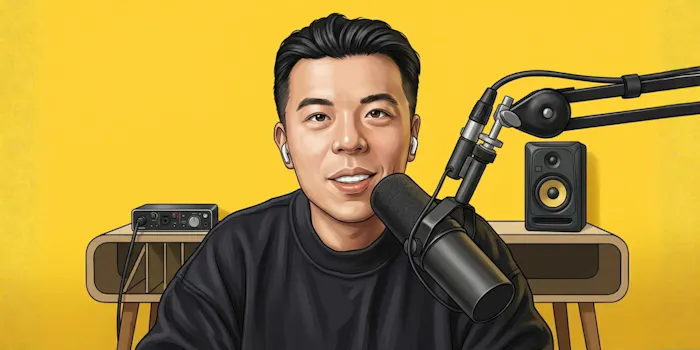
When Jacky Chou realized his career path wasn't right for him, he went down the rabbit hole and learned how to make money online. After growing an audience, he created a portfolio of businesses, including Indexsy and LocalRank.so. And now, his portfolio is bringing in over $3M per year.
Here's Jacky on how he did it. 👇
A $3M/yr portfolio
I'm Jacky Chou, and I run a portfolio of online businesses out of Vancouver, BC, including an SEO agency called Indexsy and a cluster of SaaS tools: LocalRank.so, Trackings.ai, IndexChex, RankTack, and a few others.
I also operate a short-term rental in Lisbon and publicly track monthly revenue across all of it on social media. In March, revenue was $246.8k. My trailing-12-month revenue is $3M.
All this started with a wake-up call. I was studying engineering and scored dead last on a midterm in a class of 300-plus. At that moment, I realized that path probably wasn't for me. I went home, Googled "how to make money online," and fell down the rabbit hole.
That search led me into SEO and affiliate marketing, and I've been building online businesses ever since.
$20k MRR right out of the gate
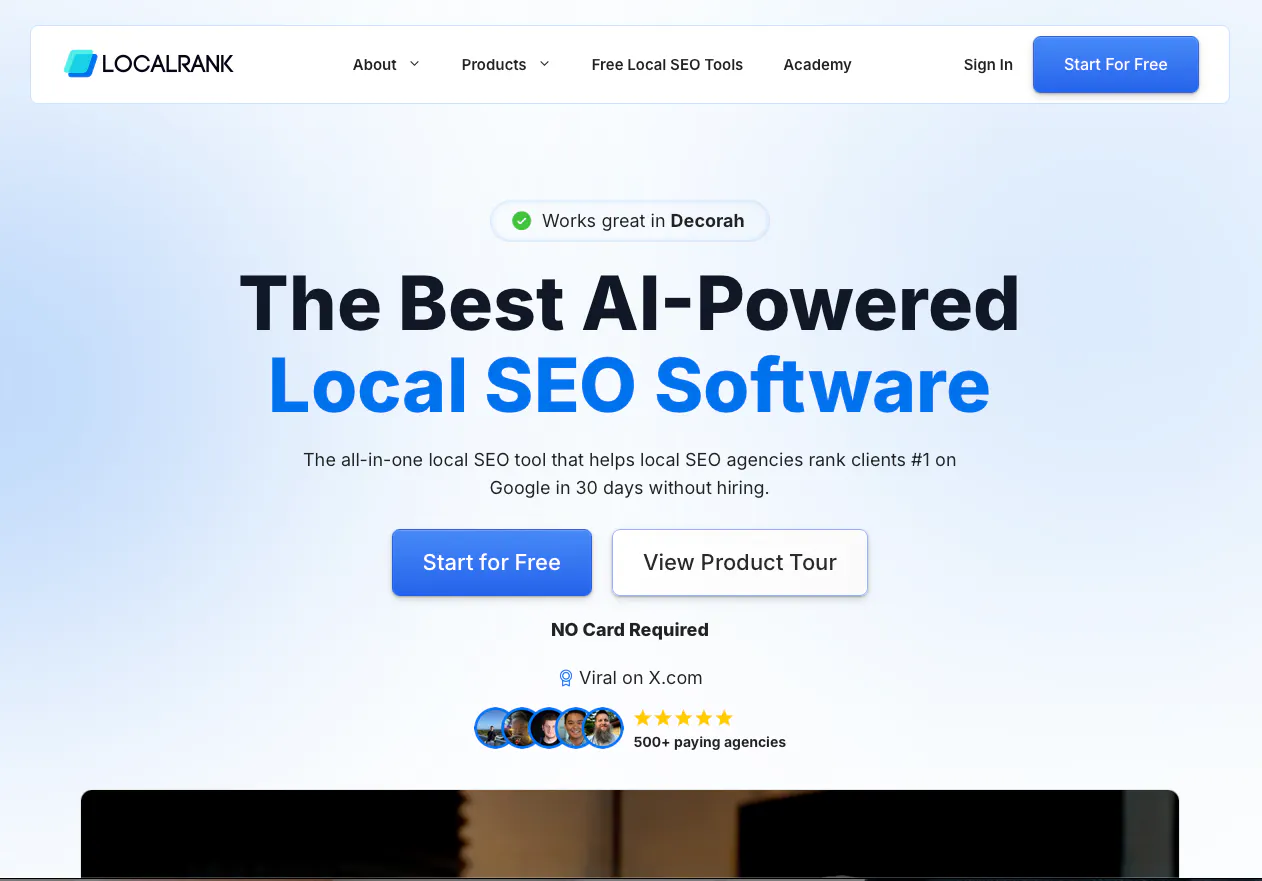
I cofounded my first software product, Localrank.so, with Peter Wang. I had been publishing daily videos on my YouTube channel for over two years, and then I saw a gap in the market. Peter and I launched the MVP in a week and hit nearly $20k MRR right out of the gate.
It's a Django app with a React frontend, running on Hetzner, using Postgres, Redis, and Celery for background jobs. We use AWS and Cloudflare for infrastructure, Stripe for payments, and several AI APIs for smart features. Nothing too exotic.
A portfolio model
I use a portfolio model. I run a few different revenue lines — my SEO agency and a cluster of SaaS tools — that feed into each other. Each stands alone, but they share audience, distribution, and significant operational overlap.
Recently, the SaaS cluster has grown toward parity with the agency, which is my desired direction.
An organic flywheel
I've grown mostly through content and publicly sharing my progress. Here are a few key strategies:
YouTube first. I consistently prioritize this channel. Videos with relatively low view counts drive significantly more product signups than posts that get tens of thousands of impressions on other platforms. YouTube's search intent differs. Viewers watching a "best local SEO tool" video are much closer to buying than those scrolling a feed.
Public revenue tracking. I post monthly revenue breakdowns across my entire portfolio on social media. It builds trust, attracts other operators, and generates a steady stream of inbound leads for the agency and the SaaS tools.
SEO on our own products. Most SaaS tools employ content strategies targeting their own keywords. Some content is long-form, some is programmatic; all of it compounds.
Webinars and community. For LocalRank specifically, we run a webinar funnel that also serves as a product demo, using a Skool community (Local Rank Academy) as the conversion vehicle.
Reddit and short-form. These are smaller channels, but they're worth maintaining. I manage an associated subreddit and produce short-form content for Instagram on the side.
I don't primarily use paid acquisition. It's almost entirely organic, and the channels reinforce each other.
How to do video content right
Here's how to create quality video content:
Document, don't perform. The easiest authentic content is showing what you're doing. Build in public. Share the wins, the losses, the revenue, the failed experiments. I have a build-in-public playlist on YouTube where I do exactly that. No production crew, no script doctor, just me talking through what happens in the businesses week to week.
Pick a format you can repeat. Authentic content dies the moment it becomes a chore. For me, that means casual, talking-head style videos I shoot when I have something real to say, not on a forced posting schedule that pushes me to make filler.
Lean into specificity. People ignore "How to grow a SaaS" videos. But they'll watch "How I grew LocalRank from $0 to $X with this one webinar funnel." Real numbers, real screenshots, real businesses. The more specific, the more it stands out from generic advice content.
Long-form on YouTube, short clips everywhere else. Record once, cut it into shorts, reels, and tweets. One 20-minute video can fuel a week of content across platforms.
Stop optimizing for views early on. The first 50 videos are practice. You're learning to talk on camera, finding your voice, and figuring out what your audience cares about. View counts are a terrible scorecard at that stage. Just publish and keep going.
Three challenges
Here were my biggest challenges:
Getting clapped by Google. I've been hit by algorithm updates more than once. When you're running an SEO agency and SEO-driven content businesses, Google updates aren't abstract; they hit revenue directly. The lesson I keep relearning is to take chips off the table when things are good. Don't assume the run will continue forever.
Waiting too long on SaaS. I should have started building SaaS earlier. The agency was working, so I easily kept pouring energy there, but recurring revenue from software is a fundamentally different game. If I were starting over, I'd make that pivot way sooner.
Sharing too much. Being public about what I'm building has been a huge growth lever, but it cuts both ways. Sometimes I share a playbook or a niche and then watch competitors flood in within months. I'm still figuring out the right balance between transparency (which builds trust and audience) and keeping the actual edge to myself.
Four advantages
Here are my greatest advantages:
YouTube. Hands down the highest-leverage distribution channel I've found. A video with a few hundred views can drive more sign-ups than a post with tens of thousands of impressions on other platforms. Intent differs.
Being public about revenue. Posting monthly revenue breakdowns has compounded into a powerful trust and inbound engine. People who follow that content become customers, partners, or hires.
The portfolio model. Agency cash flow funding SaaS development is underrated. It lets me build software without taking outside money, and the audiences across the portfolio reinforce each other.
Operator communities. Surrounding yourself with people running similar businesses is huge. We built Advise.so partly for this reason; it's a marketing community where I can drop a question and get real feedback from operators within hours. Immediate, high-signal input is hard to replicate anywhere else.
Make authentic video content
And here's my advice:
Make authentic content and stick with it. Most people quit way too early. The first 50 videos, the first 100 posts, the first year of a newsletter, almost none of it will look like it's working. But authentic content compounds. Pick a format you can keep doing for a couple of years. Just keep showing up.
Video beats everything. If I had to pick one channel for someone starting out today, it's video. YouTube, specifically. The intent is higher, the shelf life is longer, and one good video can carry you for years. Written content is great, short-form is great, but nothing has been as durable for me as long-form videos on YouTube.
The truth is, most of this game is just outlasting the people who give up at month three.
What's next?
My goals shifted a lot in the last year:
Retirement, or at least the option of it. I want to build businesses that run without me as a bottleneck. This means leaning harder into SaaS and recurring revenue, and pulling back from anything that requires me to be on the tools daily.
More time with family. I have a two-month-old son, and that reshaped how I think about everything. I built this portfolio to buy back time, and now it truly matters.
Passion content. I want to put more energy into content I'd create for free. Food content is a major focus. I create Vancouver restaurant content on Instagram and would love to grow it into a real channel. It uses a different muscle than business content and is genuinely fun.
You can find me at jackychou.com or on YouTube, and I write a newsletter at marketingletter.com. There, I share most of my build-in-public content, revenue updates, and marketing breakdowns. You can also follow me on X and LinkedIn.

Leave a Comment
The "document, don't perform" philosophy is exactly right. I work in the YouTube creator tools space and the channels that grow fastest are the ones where the creator genuinely shares their process instead of packaging everything into polished "10 tips" videos.
The part about YouTube having higher purchase intent than other platforms matches what I see in the data — YouTube viewers are actively searching for solutions, not passively scrolling. A video ranking for "best SEO tool for YouTube" converts 5-10x better than a tweet about the same topic.
One thing I'd push back on: the "view counts don't matter early" advice is true for business channels but misleading for entertainment creators. For business/SaaS/education niches though, 500 views from the right audience is worth more than 50K random views.
Really solid point about intent. YouTube traffic behaves completely differently from scroll-based platforms because viewers are already in “solution-seeking” mode. That’s why even smaller channels can drive meaningful revenue if the content matches a specific problem people are actively searching for.
I also agree with your nuance on view counts. For business, SaaS, and educational content, relevance beats reach almost every time. A few hundred highly targeted viewers can outperform viral traffic if the audience actually converts. Entertainment is definitely a different game where scale and retention matter much earlier.
Jacky's portfolio discipline is worth studying. The $246.8k March number and agency cash flow funding SaaS without outside money -- that's Tim Ferriss's 4-Hour Work Week logic applied properly. Design the system to run without you, then step back. Most people read that book and skip to the stepping back part.
The build-in-public point hit close to home. Six months ago I ran the GOAT Challenge -- building a $1M enterprise SaaS in 7 days, 1 human and 8 AI agents, $50 budget. Ep 1 manifesto hit 67,000 views. The daily build episodes averaged 15. The build worked: 54,547 lines of production code, 490 tests passing, zero TypeScript errors. The content failed. Too dense, no on-ramp for someone landing on episode 7 of 13. YouTube rewarded the promise, not the proof.
Jacky's revenue posts work because each one stands alone. That's the lesson I missed.
The operator community point is where I'd push further. What he describes with Advise is the flywheel -- each rotation compounds rather than restarts. I'm building the same loop across XEROTECH and AIU. The real question, as a solo operator, is what you share and when. My position: share the architecture, protect the timing.
With so many AI products flooding the market, the real gems often get buried. I really resonate with the author's strategy here—leveraging 'documentation' to drive user acquisition and retention.
I am also seeking a breakthrough on this platform.
This really resonated with me. I've spent years building audiences online and one thing I've learned is that views are exciting, but ownership matters more. Algorithms change, platforms change, and sometimes years of work can disappear overnight. Building businesses around an audience instead of depending entirely on the audience itself is a lesson I wish I had understood much earlier. Great case study.
What was the biggest lesson you learned while building and scaling your content?
Building a portfolio through YouTube growth highlights content strategy, audience engagement and consistent creativity for long term online business success.
The YouTube-to-portfolio path is so underrated - curious how you balanced creating content while actually building the products, or did you focus on one before the other?
Really inspiring story. What stood out to me most wasn’t just the revenue number, but the way Jacky built multiple businesses that reinforce each other instead of relying on a single product.
The “YouTube first” strategy was especially interesting because so many founders still underestimate long-form content as a customer acquisition channel. I also liked the point about documenting instead of performing — that advice feels much more sustainable than trying to constantly manufacture viral content.
The portfolio approach of using agency cash flow to fund SaaS growth is a smart reminder that bootstrapping doesn’t have to mean building only one thing at a time. Another great takeaway was how transparency and public revenue tracking became a trust engine rather than just a vanity metric.
The article also felt refreshingly honest about the downsides of SEO dependency and sharing too much publicly. Too many success stories skip over those tradeoffs. Overall, this is one of the more practical Indie Hackers interviews I’ve read recently because the strategies feel actionable, not just motivational. Definitely a good read for anyone interested in SaaS, content marketing, or building in public.
The LocalRank launch hitting $20k MRR out of the gate after two years of daily videos makes the sequencing really visible: the product succeeded because the distribution already existed, not the other way around. Most indie SaaS stories treat audience-building and product-building as parallel tracks. This one shows they're serial — the audience came first and made the product launch almost unfair by comparison.
The "sharing too much" tension is the most honest part of this piece. Build-in-public has a selection effect: the people who benefit most from transparency are often your future competitors, not your future customers. The heuristic I've seen work is sharing process and mistakes freely while compressing or delaying anything that reveals a specific acquisition channel or a niche that hasn't been saturated yet. But there's no clean answer.
Curious about the webinar funnel for LocalRank specifically — is the Skool community the main conversion mechanism, or is it more of a retention play after someone already signed up? That combination of demo + community as the funnel is something I don't see many SaaS tools doing at early stage.
Jacky's story is one of the most practical
blueprints on IH — audience first, then product,
then portfolio. The $20k MRR right at launch
because of a pre-built YouTube audience shows
exactly why distribution beats product every time.
The portfolio model resonates deeply. I just
launched AgentFlow Pro — a Real Estate CRM with
legal docs, AI, and global maps for $15/mo.
Right now it's one product, but the goal is
exactly this: build an ecosystem where each
tool feeds the next.
The organic flywheel section is what I'm
studying most right now. Starting with LinkedIn
content and cold outreach before touching paid ads.
Thanks Jacky — this is a roadmap, not just
an interview. 🙏
Most founders obsess over product or paid acquisition, but the underrated takeaway is how content compounds when it’s tightly aligned with buyer intent. A few hundred YouTube views outperforming viral social posts says a lot about quality of attention > quantity of attention.
Also, the portfolio model is interesting: agency cash flow funding SaaS while each business strengthens the others through shared audience/distribution. That’s a much more resilient setup than betting everything on one product.
The “first 50 videos are practice” point will probably help more people than any growth hack in this post.
Jacky's portfolio approach is underrated as a strategy — building multiple smaller businesses reduces concentration risk, which is actually one of the things that kills acquisition multiples for solo-founder companies. The 'build something people need' discipline he describes is exactly what creates transferable value later. Clean unit economics, documented processes, defensible retention — that's the recipe that makes each asset in a portfolio worth more than the sum of its parts to a potential acquirer.
The portfolio model is the part I keep coming back to — products that stand alone but share audience and distribution. I'm building a small studio of browser tools on exactly that bet (and funnily enough, also on Hetzner). The line that stuck: "the first 50 videos are practice." I keep stalling on YouTube because early effort vs. near-zero feedback feels brutal, but reframing them as reps instead of launches makes it doable. Question — in those early practice videos, did product signups still trickle in, or was it pure audience-building until the channel matured?
good
Thanks for taking us through it, id love to do something similar.
The portfolio play is rarely discussed honestly on IH. Most operators try to maximize one thing because focus is the standard advice. The real edge Jacky has is the agency feeding the SaaS roadmap. Indexsy clients show you exactly which SEO problems are worth productizing into LocalRank, Trackings, RankTack. That's a real moat. Most indie hackers build SaaS in a vacuum and then go looking for the buyer. He's running the buyer-first sequence in reverse. Question I'd add: at what monthly revenue did the portfolio approach actually become easier to manage than focusing on one product? Below a certain bar I'd guess it's all overhead.
Incredible breakdown, Jacky. The shift toward building a portfolio to buy back time for family really hits home. I’ve been focused on bootstrapping my own mobile apps from scratch lately, aiming to build a similar sustainable ecosystem so I can be fully present for the moments that actually matter—like my daughter's 4th birthday coming up this weekend.
Your point on documenting rather than performing for video content is incredibly valuable. When building products, it’s easy to get caught up in trying to sound overly rigid or highly produced, instead of just keeping the tone human, friendly, and authentic to the process. I'll definitely be applying this straightforward approach to my own upcoming store releases. Appreciate the transparency!
Wow, Jackys journey is really motivating. I love how YouTube was not just a channel but a trust building engine that set up the $3M portfolio!! amazed
This is what sustainable scaling looks like. The portfolio model is genius—Jacky's leveraging his YouTube audience as a moat while building multiple revenue streams that reinforce each other. The public revenue tracking piece is underrated; that transparency builds trust and attracts both customers and operators who want to join. One thing that stands out: he's not chasing vanity metrics (first 50 videos as practice, not optimizing for views early). That's the mindset difference between content creators and builders. How did you decide which business to lead with versus which to support with agency cash flow?
1
smart move
Many thanks to Jacky Chou for sharing his insights. For a beginner developer like me, marketing honestly feels even harder than building the product itself, so your perspective gave me a lot of new ideas and inspiration.
“Jacky Chou” sounds like a Chinese name, and I’m Chinese as well. It’s always inspiring to learn from outstanding people from the same background.
I also run a faceless YouTube channel myself. Seeing you openly showcase your business on YouTube — and transparently share your real revenue numbers — was especially eye-opening for me.
A lot of people say the rapid rise of large AI models will wipe out most SaaS products, since many SaaS tools overlap with what AI models can already do. I actually agree with that to some extent. But human creativity is limitless. We should take advantage of AI’s incredible capabilities to build things that foundation models alone cannot achieve, and create real technical moats around our SaaS products. I still believe there’s plenty of opportunity left in SaaS.
The point about YouTube intent vs social media impressions is something I keep seeing proven in practice. A video with 300 views on a specific problem drives more action than a post with 30,000 impressions from people passively scrolling. The buyer is already in search mode before they even click play.
The "waiting too long on SaaS" regret also resonates. It is easy to stay in the comfortable revenue stream that is already working rather than making the harder pivot to recurring software income. Hearing it framed as a direct regret rather than generic advice makes it land differently.
The YouTube insight is underrated: high-intent search traffic beats vanity impressions almost every time. A few hundred targeted viewers can outperform tens of thousands of passive scrollers.
The YouTube point is the strongest lesson here.
A lot of founders treat content as attention, but this makes it feel more like trust infrastructure. If someone watches you explain real work over time, the sale starts before they ever land on the product page.
The “first 50 videos are practice” framing is useful too. It lowers the pressure and makes consistency feel like the actual asset, not any single post or video.
The “organic flywheel” point really stood out to me.
I’m currently building a Web3 monitoring product, and I’m starting to realize distribution compounds much slower — but much stronger — than most early founders expect.
Especially the part about YouTube driving higher-intent users compared to social impressions. A lot of technical builders underestimate how much trust and consistency matter before users convert.
Really valuable breakdown.
wow ! congratulations
Something similar to my story... I love this... If you are looking for contacts to help boost your sales and marketing... I have lists of high networth persons and could tailor customers that could either invest or boost customer sales. We have also helped founders get featured on Forbes, Bloomberg and many more. shoot me a message on telegram @caseyimafidon
A CRYPTO/DATA BASE RECOVERY EXPERT WITH A LICENSE: ALPHA KEY
After contacting Alpha Key Recovery, a licensed cryptocurrency recovery expert, about my case, I was able to get back on track after a month of being depressed over being conned out of $379,800 in cryptocurrency investments with the wrong broker. Alpha Key Recovery Hacker Expert is a recovery hacker that I will be proud to refer anyone to because of what I have seen out here with scammers.
WhatsApp : +15714122170
Signal : +15403249396
A CRYPTO/DATA BASE RECOVERY EXPERT WITH A LICENSE: ALPHA KEY
After contacting Alpha Key Recovery, a licensed cryptocurrency recovery expert, about my case, I was able to get back on track after a month of being depressed over being conned out of $379,800 in cryptocurrency investments with the wrong broker. Alpha Key Recovery Hacker Expert is a recovery hacker that I will be proud to refer anyone to because of what I have seen out here with scammers.
WhatsApp : +15714122170
Signal : +15403249396
smart move
Building a portfolio via YouTube is a smart way to validate ideas before committing fully - you get real audience feedback and distribution baked in from day one. The compounding effect of consistent content output is real.
The sequence is what stands out most here — audience before product. Two years of daily videos before the first SaaS launch meant the distribution was already built when he needed it. Most people do it backwards and then wonder why growth is hard. The "first 50 videos are practice" framing is also genuinely useful. It reframes the whole thing from performance to repetition.
that is an awesome idea tbh i thought of doing something like this but never got my head around thanks for the post man
Your journey truly inspired me. I’m currently building my own path in business and would be grateful to connect and learn from professionals like you.
I've also found that building a portfolio of businesses can help mitigate risk and increase overall revenue, but I'm curious - how do you handle the operational complexity of managing multiple companies like Indexsy and LocalRank?
The point about YouTube intent is something most people completely miss. A video with 300 views from someone searching "best local SEO tool" is worth 10x a post with 30k impressions from someone scrolling. The portfolio model feeding itself is also underrated agency cash flow funding SaaS without outside money is a cleaner path than most founders realize. The part about sharing too much hitting both ways was refreshingly honest too.
very good idea and mainly your consistency, what pays you off!
The part that stood out to me most was honestly “launched the MVP in a week.”
So many founders spend months or years polishing before even finding out if people care, while you validated demand first and optimized later.
Also refreshing to see someone openly say the stack is “nothing too exotic.” Feels like a lot of people underestimate how far solid fundamentals + consistency can go.
$3M/year is obviously impressive, but the real takeaway for me is how long the runway before that moment probably was. Hope we all get there someday.. Kudos to you sir.
the YouTube-first thing is worth unpacking - most people build the tool then hunt for an audience. Jacky built the audience first and the portfolio followed. the sequence matters more than the stack.
The portfolio framing is underrated. Most people think about "building a YouTube channel" when the real play is building a system that can run multiple channels — and treating each one as an asset rather than a job.
The part that resonates most here is the compounding piece. Individual channels plateau, but a portfolio with shared infrastructure (same automation stack, same content process, different niches) compounds in a way a single channel never can.
Currently running 3 automated channels myself using GitHub Actions + AI script generation. The system is the asset, not any individual channel. Jacky's portfolio thinking is exactly the right mental model for anyone serious about this space.
Very well said and written.. I like how easy it all sounds, even though in reality its the discipline of getting up and doing video every day even if the view count is low. Appreciate that you shared how video is the real medium for long term success. I do wonder if you've started doing AEO and how that's affected SEO?
I can definitely help you with its portfolio website!
The AI slop, hey dev, or any other guys, " can you really think on your own"
you always ask AI for notes, essays, writing stories, building pipelines etc. there is no problem in automating your life. but "automation is different from getting more dumber" and you guys are paying for those models to get even dumber. soo i created zero , a ai that not only automates, but it does'nt think for you , if you say build a snake game? it drives you through the logics , etc... and then codes for you, (your job is getting done..) nowadays children are getting exposed to brainrot at a very young age when neural activity is still happening , they are loosing the ability to think. they are doing it , but don't know what it is . soo i am going to laugh zero by zerolabs. this will not be our first project trust me... please support us . for guys who are thinking this dude built his website using AI, i am a student(my parents don't even trust me ), where could i posibelly get a free domain and a server , but remember ideas matter in this era not implementation.
GO and JOIN!!! the wait list guys
hey devs please allow me to put links
The 'document, don't perform' insight here is underrated. Jacky's YouTube content works because it's genuinely showing the work - not scripted marketing.
One thing I find fascinating about the portfolio approach: at this scale (50K+/mo across multiple businesses), the operational and legal layer becomes its own full-time job. Client contracts for the agency, IP agreements between the SaaS tools, contractor SOPs as you delegate. It's the unsexy infrastructure that makes 'without me as a bottleneck' actually possible.
I'm currently doing research on exactly this - how portfolio founders handle the contract/legal/SOP layer as they scale beyond their first product. Would love 20 minutes to learn about your experience if you're open to it. No pitch, just research - happy to share findings back.
Jacky - the transparency vs. protection tension you describe is so real at agency scale. Curious: how do you handle the legal side as you clone and hand off agency work? At Indexsy's volume, client contracts, contractor NDAs, and scope-of-work docs must add up to a lot of copy-paste time.
We're doing some research on how founders manage contract and SOP overhead once they have more than one project running simultaneously - your setup (agency + multiple SaaS) seems like a particularly interesting case. If you'd be up for a quick 20-minute chat, I'd love to hear how you handle it: calendly.com/lior-solomon/30min
Either way - the 'first 50 videos are practice' framing applies to a lot more than YouTube content.
The portfolio model makes so much sense. Agency cash funding SaaS development without outside money is underrated. Most people try to do one or the other. The overlap on audience and ops is smart.
The YouTube point about intent vs views is key. A video with 500 views of people searching for your exact problem is worth more than 50k views from random scrolling.
The "share too much" tradeoff is real though. I've also seen niches get flooded after someone publicly broke down their playbook. Hard balance.
Curious about LocalRank hitting 20k MRR right away. Was that from the YouTube audience you already built or did Peter bring distribution too?
Woow.... really impressive to hear Chou. especially the part on "SEO on your product" and "..... being natural about making videos" .
"The first 50 videos are practice" — this line alone is worth the entire read.
Most people quit at video 10 because they're optimizing for views instead of reps. The fact that you had 2+ years of daily publishing before LocalRank launched explains the $20k MRR way more than the product itself.
Thanks for the reminder that distribution is the real moat. Great breakdown.
Yeah, creating the channel ease the process and takes the problem that comes with not getting what you aimed for which is `frustation`
Sharing real revenue numbers builds trust, but it also hands competitors a roadmap. At what point should founders start going public with their data — from day one, or only after the moat is deep enough?
Curious about the rental home, put money there just to enjoy some of it, or was it a business decision?
Really inspiring story. The biggest takeaway for me was how you treated YouTube as a real distribution engine instead of “just content.” Most founders focus only on building, but you showed how documenting the journey can compound into customers, trust, and even new opportunities. Also loved the point about “document, don’t perform” — that’s probably why your content feels authentic and actually converts. (indiehackers.com)
This is a great example of solving your own problem. I did something similar with rental search in Dublin. The best products come from genuine frustration with the status quo.
very good
very good
Jacky, this is one of the most actionable breakdowns I've seen. The portfolio model (agency cash funding SaaS) and the YouTube‑first distribution are both underrated. Also – “most people quit way too early” hits hard.
One thing that stood out: you said you should have started building SaaS earlier. That’s where validation becomes everything. I wasted 6 months building something nobody wanted – which is exactly why I built TrendyRevenue, an AI tool that checks market demand, competitor gaps (from real G2/Capterra reviews), and revenue potential in 10 seconds.
For your next SaaS idea or feature (maybe something in the SEO or local ranking space), the free tier gives you a solid sanity check (1 analysis, no card). Pro ($39/mo) adds source‑cited gaps and SERP intent – so you know if a niche has buyer intent vs just curiosity.
Might save you a sprint or two. Either way, huge respect for sharing the real numbers and the build‑in‑public playbook.
https://trendyrevenue.com
Don’t stay stuck in service-based businesses like SEO agencies for too long. Shift early to building SaaS products, as recurring subscription revenue brings better long-term stability, scalability, and passive income potential.
Really inspiring journey—proof that consistent content, authentic storytelling, and long-term persistence can turn small projects into a massive business portfolio.
What most people miss in this story is that YouTube wasn't the strategy — it was the proof-of-work mechanism. Two years of daily videos before the first SaaS launch meant Jacky didn't just have an audience, he had a trust account with a high balance. When LocalRank dropped, $20k MRR out of the gate wasn't luck. It was a withdrawal from years of deposits.
The 'document, don't perform' advice is the most underrated thing in here. The internet is drowning in polished content with nothing real underneath it. Showing your actual numbers, your actual failures, your actual experiments — that's the scarcest thing online right now, and it converts better than any ad ever will.
The sharing dilemma is real though. Transparency built the audience but also invited copycats. The heuristic I'd add: share the what and the why freely, protect the when and the how until the moat is built.
And the bit about waiting too long on SaaS is the quiet warning in this whole piece. Agency revenue is linear. SaaS compounds. He figured it out — but earlier would've been better. If you're running a service business right now, this is your sign.
The agency → SaaS transition point here is underrated. Most founders who've done service work have an unfair advantage: they already know exactly what the customer's pain looks like up close. The hard part isn't finding the idea — it's convincing yourself you don't need to keep chasing billable hours while the product gains traction.
The YouTube flywheel you described is something I've noticed too. A small audience with demonstrated intent converts at a completely different rate than viral reach with zero context. You're essentially doing ongoing customer discovery in public and packaging the insight into products.
Thanks for the detailed breakdown — the specifics on how the portfolio businesses strengthen each other (SEO agency feeds LocalRank, LocalRank feeds content ideas, etc.) is the kind of compounding that's hard to articulate but obvious in hindsight.
Really impressive portfolio strategy. The part about combining audience, SaaS, SEO, and content into one organic flywheel is probably the biggest takeaway here. Also shows how powerful YouTube can be for high intent traffic compared to other social platforms.
Jacky’s post is honestly such a vibe.. Going from bombing an engineering test (felt that) to running a $3M portfolio is wild. But the best part isn't even the revenue flex it's how real he is about the behind-the-scenes stuff and the actual grind.
I think the main takeaway from this case is that distribution matters more than the product itself today. Chou spent years consistently building audience trust, so when he launched SaaS products, he was launching into existing demand. In practice, his content became a standalone asset that lowers customer acquisition costs and accelerates the growth of every new business he builds.
The point about “document, don’t perform” is probably one of the most important lessons for founders right now.
We recently launched the live beta of our own AI platform and honestly, seeing posts like this makes me realize that people connect far more with authentic progress, frustrations, and real numbers than polished marketing.
Also really interesting to read your thoughts on YouTube specifically. Most founders (including us) probably underestimate how powerful long-form video becomes once trust is involved — especially for technical or infrastructure-heavy products.
Appreciate how transparent this whole write-up was.
Really interesting breakdown - especially the part about YouTube being the main growth engine. Makes a lot of sense how everything compounds when content + products are connected.
Great point about the challenges of early-stage growth! Another thing to consider: focusing on quality over quantity in your initial user interviews can save weeks of misdirected effort. BTW, if you're looking to find leads from communities like Reddit and Hacker News, Rixly (AI-powered) finds exact pain points and generates qualified leads from niche communities.
Great point about the challenges of early-stage growth! Another thing to consider: focusing on quality over quantity in your initial user interviews can save weeks of misdirected effort. BTW, if you're looking to find leads from communities like Reddit and Hacker News, Rixly (AI-powered) finds exact pain points and generates qualified leads from niche communities.
The agency-funding-SaaS observation is the part most service founders sleep on. I ran a Microsoft partner business for almost 20 years before merging it last year, and the recurring software margin curve is a completely different animal once you cross it. Service revenue feels safer because you can see the next month, but SaaS revenue compounds while you sleep, and after a few years the gap is not close.
One thing worth adding to the YouTube point: the comment section becomes a free customer research panel if you treat it that way. The questions on a low-view video are usually a sharper signal of what to build next than any survey or interview. Most founders skip this because the view counts feel low, but a comment from someone with real intent is worth a thousand passive impressions.
"Document, don't perform" is the cleanest version of that idea I have seen.
Building a portfolio and growing it to $3M per year through YouTube requires consistent content creation, audience trust, niche expertise, diversified income streams, strategic branding, analytics tracking, and long-term investment in quality and value.
This is great. I have heard many people saying just push content and do not stop till first 50 - 100 videos. But everytime I have started sharing on youtube, I look at the effort reuired and zeo or nill feedback and stop. Probably I should start putting in things without bells and whistles and see where it goes. Thanks for the post.
This is a great example of how distribution compounds over time when you consistently create useful content around a niche. A lot of founders underestimate how powerful audience-building can become when paired with a portfolio of products.
The interesting part is that YouTube wasn’t just marketing here - it became a long-term trust engine. At Foundersbar, we see the same pattern with startup founders who openly share their journey, lessons, and experiments. Consistency builds leverage.
Really liked the “document, don’t perform” point. I’ve seen small creators grow faster just by consistently sharing real work instead of trying to sound like influencers.
Also true that YouTube traffic converts differently — fewer views but much higher intent.
Really interesting breakdown especially the portfolio + organic flywheel approach.
What stands out most is how tightly everything is connected (SEO agency → SaaS → content → audience). It feels less like separate businesses and more like a single system feeding itself.
One thing I’m curious about: when you noticed SaaS approaching parity with the agency, how did you decide where to allocate focus day-to-day? Was it purely revenue-based, or more based on long-term leverage (like recurring income vs service work)?
Also respect the consistency on YouTube — most people underestimate how long it takes before that compounding effect actually shows up.
Appreciate you sharing the full breakdown
That’s an incredible journey — a decade with Indie Hackers and hundreds of founder interviews is a goldmine of startup insight. Your projects like dbrief, LoomFlows, Ancient Beat, and the successful exit with SaaS Watch show a rare mix of execution, curiosity, and consistency.
As someone working in the gaming/modding niche, I’ve also been building content around trending apps and communities. One of my recent resources covers the latest Avatar World promo rewards and redeem updates:
avartarworldmod .com/avatar-world-promo-codes/
Always interesting to see how different creator ecosystems grow — from SaaS founders to gaming communities.
This is a masterclass in building leverage. Use service cash flow to fund SaaS, document the journey publicly, and let content become your distribution engine. The portfolio model is incredibly powerful when each business strengthens the others.
This was a really good read. The part about YouTube bringing more customers than posts with huge impressions on other platforms makes a lot of sense. A small audience with real intent is way more valuable than viral reach.
Also liked the “document, don’t perform” advice. Most people quit content too early because they think every post needs to be polished instead of just sharing what they’re actually building.
You can build a portfolio through YouTube by consistently sharing valuable content, documenting your expertise, and attracting an audience that trusts your work. Over time, diversify income through ads, sponsorships, digital products, affiliates, and services to scale toward multi-million-dollar annual revenue.