Building a product in 48 hours and hitting $30k MRR as a non-technical founder

Hasaam Bhatti is a non-technical founder who built a product in 48 hours and hit $10k MRR in 30 days. A few months later, Launch Fast is at $30k MRR
Here's Hasaam on how he did it. 👇
Building a SaaS in 48 hours
I worked a corporate job and ran two Amazon brands on the side when I found Cursor on Twitter. No CS degree. Never wrote a line of code,
I'd tried building products before, AI video tools, job automation apps. Ten or twelve of them. None made it to production because I was building for audiences I didn't belong to.
Amazon was different. I spent 20 to 30 hours researching every product idea, copy-pasting data into Google Sheets. I was frustrated, and I knew exactly what was broken. So I built the tool I needed.
Distribution was the harder problem. Zero audience means zero customers. But I'd bought a coaching program called Legacy X two years earlier, and it had thousands of active sellers already looking for tools. I pitched them: Give me 48 hours to build the solution. If you like it, we partner. No strings attached.
I built it, and they called the next morning and told me to quit my job.
Day 30, Launch Fast hit $10K MRR. Day 60, $17–18K. By Day 90, we were at $21.8K. All paying users, a Chrome extension with 330 active users, and a product built entirely in Cursor by a guy who still can't read a stack trace without AI help.
That was a few months ago. We're at $30K MRR now. We've been improving the core research engine, and we just shipped our MCP, one of the first all-in-one agentic tools for Amazon sellers. It lets them research products, manage their catalogs, and optimize ads through AI without bouncing between five different tools. That's landed well.
I have also started taking on contracts, helping other founders build their products A-Z, and running enterprise workshops on Claude Code and agentic workflows. Turns out "non-technical founder builds SaaS in 48 hours" opens a lot of doors.
Building under a self-imposed deadline
I built the initial product under a self-imposed deadline — the one that I told Legacy X. "Give me 48 hours."
I didn't say that because I was confident; I said it because I needed a forcing function, or I'd keep planning instead of shipping.
The first four hours, I didn't touch Cursor at all. I mapped their existing workflows, SOPs, and the data they were already using with students. I needed to understand their processes before building something that fit. That became the foundation of the MVP.
I spent hours five through twelve in Cursor building the core features. It didn't need to be perfect; it needed to be functional enough that someone could see what it would become.
I spent hours 13 through 20 testing and iterating.
I focused on the UI during hours 21 through 30, which a lot of first-time builders skip. I'd learned from running Amazon brands that branding is everything. If it looks unfinished, people assume it is.
I spent hours 31 through 40 on edge case testing, ensuring nothing broke under real use.
For the final stretch, I recorded the demo video and sent it over. That was the pitch.
Changing the stack
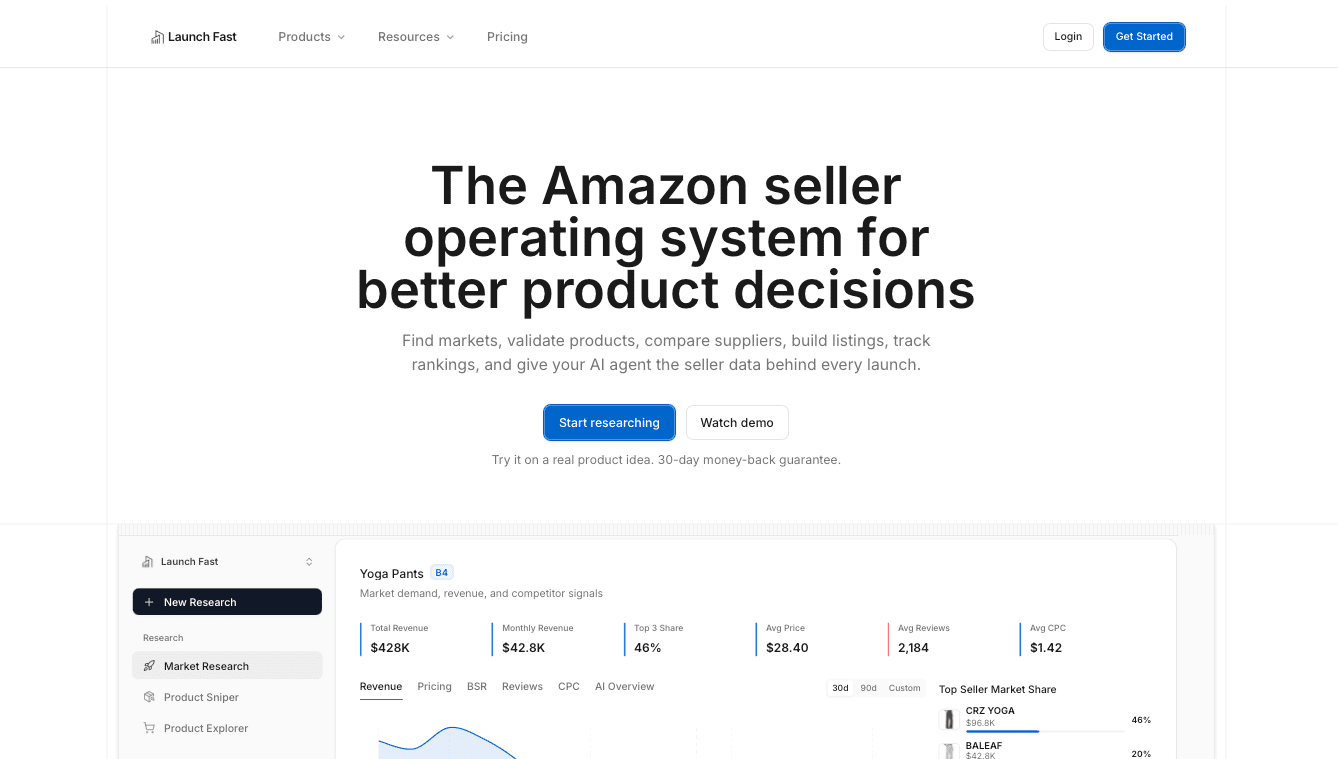
The stack was Cursor for the build, Vercel for hosting, Supabase for the database and auth, Resend for onboarding emails, Apify for data aggregation, TypeScript and Next.js throughout. The whole thing cost almost nothing to run until it started making money.
That's not the stack anymore.
We've moved a lot of infrastructure to Cloudflare and built our own crawlers and data layer engine from scratch. Apify did its job at the MVP stage; it let me move fast without building data infrastructure from scratch. Once we knew the product worked, we needed more control over how data flows through the system. Building our own was the right call.
For the build workflow, I've been running Superset as my terminal manager, using both Codex and Claude Code depending on the task. Having both in the same environment has changed how fast we ship.
Core frontend is still Next.js and React. That hasn't changed, and I don't see a reason to change it. The stack is well-documented, AI-friendly, and agents work well with it.
Partnerships, education, and ads
The business model is subscription-based. Legacy X coaching customers have their own plan. And we have public usage tiers at $49, $89, and $199 a month. All paying customers, no free tier.
The first users didn't come from marketing. They came from a partnership. Legacy X had thousands of active Amazon sellers already looking for better tools. I traded equity for access to that distribution. Day one, we had real customers. That's not a replicable hack for every founder, but it solved the hardest problem as quickly as possible.
From there, we had to build our own acquisition engine.
Education became the core of it. We run weekly sessions teaching new sellers how to use the software, but also how to think about the Amazon business more broadly. People who feel you teach them tend to stay with you. That retention feeds the word of mouth, which feeds new signups inside seller communities where trust travels fast.
On the content side, technical blog posts have built up Google traffic steadily over time. We also build free tools as a top-of-funnel play for sellers who are early in their journey and not ready to pay yet.
Meta ads handle a portion of paid acquisition. We're also building out social this year, both through original content and agentic outbound on Reddit and LinkedIn.
The real growth driver, though, is product quality. Every time the core research engine improves meaningfully, we see it in referrals and retention. Sellers talk to each other constantly. If your tool does what it says it does, that community does a lot of the selling for you.
Start with systems, not tasks
The biggest challenge was something I didn't recognize as a problem until we were deep into it: I treated everything as a task instead of a system.
Early on, that's fine. You move fast, ship every day, and put out fires. Task mode works when the product is small, and you can hold all of it in your head. But as a founder, you cover tech, marketing, support, everything simultaneously. At some point, what got you to $10K MRR becomes the ceiling that keeps you from getting to $50K.
Moving toward agents forced me to see it. When you start building agentic workflows, you realize the architecture you should have built from day one. Observability pipelines, automated bug detection, and systems that flag and address issues without needing you in the loop. I built all of that reactively, as problems surfaced, instead of building it into the foundation.
If I started over, I would set up those pipelines before they were urgent. As a founder, the goal isn't to be the best at solving problems. It's to build systems that solve problems without your constant input. The product should get better even when you're not working on it.
That's what I'd do differently. I'm focused on building that now.
Focus on the domain and distribution
Three pieces of advice I'd tell anyone starting out:
First, build where you already have domain knowledge. Not where you think there's an opportunity, not where you read that the market is big. Build for a problem you have personally experienced. I failed ten or twelve times before Launch Fast because I was building in spaces I didn't belong to. The one that worked was where I was the user. You probably have years of experience in something most developers don't. That knowledge is the product.
Second, solve the distribution problem before worrying about everything else. The biggest mistake I see first-time builders make is assuming a great product will find its audience. It won't. Find someone who already has your target customers and figure out how to get in front of them. It might cost you equity. It might cost you a revenue share. Pay it. Fifty percent of something real is better than one hundred percent of nothing shipped.
Third, use a forcing function to ship. When I built the Launch Fast MVP, I gave myself 48 hours and sent a demo to a potential partner. I didn't have a perfect product. I had something functional enough to show what it could become. The discipline of a real deadline with a real recipient changed everything. Set yours before you feel ready.
The tools exist to build without a CS degree. The knowledge to build something people need already exists in your head. The only thing standing between you and shipping is the decision to stop planning and start.
What's next?
Launch Fast is the core, and growing it is the priority. We're nowhere near the ceiling on what the product can do for Amazon sellers, and the agentic layer we are building is still early. I want to keep inventing new primitives specifically for this space — tools and workflows that sellers can't get anywhere else. The research engine is one piece. There's a lot more to build.
Outside of that, I'm genuinely interested in becoming a better agentic developer for its own sake. I constantly build random ideas. Most won't turn into businesses, and I'm fine with that. The reps matter. Every project teaches me how agents behave in production versus how they behave in demos, and that gap is where the interesting problems live.
The workshops and consulting work are becoming their own thing worth developing. Enterprise teams currently have a real demand to understand how to build with Claude Code and agentic workflows, but lack internal product-level expertise. By embedding myself as a forward-deployed AI consultant with those teams, I stay close to the hard problems, not just the theoretical ones.
Overall, I just want to keep building. Launch Fast, side projects, client work. My goal is to improve all of it simultaneously.
Follow along
You can find the product at launchfastlegacyx.com. If you sell on Amazon or are thinking about it, that's the place to start.
For development insights, I share what I'm working on and learning in real time on X. There, you'll find most of the agentic development content and random project updates.
To get in touch about consulting or enterprise workshops, visit my personal site: hasaamb.com.

Leave a Comment
What stood out to me most here is that the 48-hour build isn’t really the whole story.The deeper lesson is that this worked because you had domain knowledge, a real distribution path, and a forcing function to actually ship. I think a lot of people will focus on the speed, but the bigger advantage seems to be that you were solving a problem you genuinely understood.Also, the point about treating things as systems instead of tasks is a really strong one. That feels like one of those lessons people only fully understand after some traction.Curious: looking back, was the partnership with Legacy X the single biggest inflection point, or did product quality start to matter just as much once the first users came in?
I think the real takeaway isn't the 48-hour build—it's that you had the domain knowledge, distribution, and urgency to ship. Speed helped, but solving a problem you deeply understood mattered more. I'm curious whether the Legacy X partnership remained the biggest growth driver, or if product quality became equally important once users started coming in.
great post
I saw you on Starter Story too loved the way you planned on sharing equity to gain access to target users
Hello
One chilly Friday morning, I found myself scrolling through TikTok when I stumbled upon a broker that seemed too good to be true. The scammers claimed they were offering pool investments for Bitcoin investors, allowing individuals to choose from various packages to invest. They provided videos of real trades and impressive profit-and-loss (PNL) screenshots, showcasing their success and enticing me to join in. Their polished presentations and persuasive tactics made it easy to believe that I was on the brink of significant earnings. Eager to replicate their success, I invested $96,300, convinced that I was making a smart financial decision; it didn’t take long for the reality to set in. I tried to reach the broker for updates, but communication slowed down. My messages went unanswered, and the once vibrant community I had joined became eerily silent. It soon dawned on me that I was dealing with a fake broker. The scammers vanished, taking my funds with them, leaving me feeling anxious, helpless, and utterly betrayed. I reached out to friends for advice. One of them recommended TechY Force Cyber Retrieval, a team specializing in recovering lost funds from scams. Skeptical but hopeful, I decided to give TechY Force Cyber Retrieval a try. That turned out to be the best decision I could have made. Their team acted swiftly, thoroughly investigating my situation. TechY Force Cyber Retrieval was professional, empathetic, and dedicated to helping me recover my money. Throughout the process, TechY Force Cyber Retrieval kept me informed, providing updates and reassurance when I needed it most. They meticulously analyzed the details of my case and employed effective strategies to track down my lost funds. TechY Force Cyber Retrieval not only helped me recover my lost $96,300 but also the promised profits that had initially lured me in. I was absolutely thrilled and incredibly relieved to see my funds returned. This taught me a valuable lesson about the importance of being cautious in the world of online bitcoin trading. I realized that while scams can happen to anyone, there is hope for recovery with the right support. If you’ve ever been scammed or are struggling to withdraw your investments from a broker, I highly recommend TechY Force Cyber Retrieval. They are experts in fund recovery and can assist you in regaining what you've lost. Their approach and dedication to client success are truly unparalleled. Don’t let a scam define your financial future; seek help from TechY Force Cyber Retrieval and take action. You deserve to reclaim your hard-earned money.
WhatsApp +.1.5.6.1.7.2.6.3.6.9.7
Telegram +.1.5.6.1.7.2.6.3.6.9.7
Haha
This really resonated with me, especially the point about building where you already have domain knowledge — not just chasing market trends or following the money.
So many new founders (myself included) fall into the trap of asking "where's the opportunity?" instead of asking "what do I already know deeply?" The irony is that everyone has real pain points and genuine expertise, we've just become so numb to our own frustrations that we stop noticing them. Taking the time to sit with your own problems and think deeply about what truly bothers you in your daily life or work is way more valuable than any market research report.
Your other two points hit just as hard: stop waiting for users to magically find you, and set real deadlines to force yourself into action. Both are things I know I need to do better.
Thanks for sharing this so honestly. This is the kind of practical, hard-won wisdom that actually moves the needle for people just getting started.
Learning a lot on this website. This is intresting.
really proves that being in the right place at the right time can change your life so quickly
What's that old saying "Build what people need, not what you think they want."
The distribution channel partnership is the real alpha here-most non-technical founders waste monts building before validating. You flipped the script entirely. Curious: did you find the distribution partner first and the build around their audience, or did you have the idea and then go hunting for the right partner?
As another non-technical founder, this hit home.
I’m building my own SaaS with AI tools, and I’ve learned that shipping an MVP is no longer the biggest barrier.
Distribution is.Building for a problem you personally experience and finding an existing community are lessons I’m learning right now as well. Thanks for sharing such an honest breakdown.
The "find someone with distribution" move is so underrated - most people try to build an audience from scratch when they could just partner with someone who already has one. That 48-hour build time is wild though, really speaks to how much faster things move when you're not perfectionizing every feature.
The distribution point is the strongest lesson here. I see a lot of developers, especially now, have the ability to build useful products very quickly, especially with Cursor, Claude Code, Codex, Vercel, Supabase, etc. But this only solves the build problem. It does not solve the commercialization problem.
I see a real bottleneck in where those people already gather and do they trust the product enough to try it? Or, whether the value can be explained quickly and most importantly, whether billing, support, and access are readily accessible to make buying easy
After reading this post a build where you have domain knowledge and solve distribution before polishing everything are probably the two most important points. A technically good product absent a route that reaches buyers is analogous to inventory sitting in a warehouse. An interesting opportunity now is helping useful apps get packaged, trusted, distributed, and monetized after they are built.
The equity-for-distribution trade is clever — most people try to build an audience from scratch instead of just borrowing one. How did you find the right community partner?"
Your entire moat is the Legacy X partnership — day-one distribution you traded equity for. But that's also a dependency: a huge share of your revenue and your trust/word-of-mouth engine lives inside one coaching community you don't control. What happens to Launch Fast if Legacy X pivots, churns, or decides to build their own tool now that you've shown them it works? Have you actually de-risked off that channel yet, or is your $30k MRR more concentrated than it looks?
Hi. Insane execution, building in 48 hours and hitting $30K MRR in months is wild. Love how you traded equity for distribution and leaned on domain knowledge from Amazon instead of chasing random markets. That combo of speed + audience fit is rare.
As you scale, do you think the bigger unlock will come from tightening systems over tasks (agentic workflows, observability, automation) or from expanding partnerships and education as the main growth engine?
Using that 48-hour deadline as a forcing function was a genius move to beat analysis paralysis, too. Seriously impressive execution—congrats on hitting $30k MRR!
The product is really good. I am also building my own products without any audience. Your work is a great inspirat for me.
have you ever here about dropshipping before
I wonder how you deal with reliability, maintainability and security? Also, how easy is it to add new features?
hmmmmm
Most people see the success and overlook the journey that led to it. His previous failures taught him valuable lessons about what needed to be built and why. The real achievement isn't the delivery itself, it's understanding the problem you're solving. Once you truly understand that, execution becomes much easier.
Distribution before building. That's the whole game
The part that stood out to me wasn't building the product in 48 hours. It was that you spent years inside the market before building it.
A lot of founders focus on learning to code, but the bigger advantage is understanding a problem deeply enough to know exactly what needs fixing. The distribution angle is also a great reminder that the right audience can accelerate growth far more than extra features.
Curious, if you were starting from zero today without the Legacy X partnership, how would you approach finding your first customers?
Everyone is rightly praising the 'distribution first, build second' strategy here, it's a masterclass in validating demand. But we shouldn't gloss over just the execution building a genuinely good product using AI without a technical background is a massive feat on its own. To me, the real takeaway isn't the 48-hour sprint or the $30k MRR it's the 10 previous attempts that barely succeeded. Those reps build the muscle memory you need so that when the right idea hits, you know exactly how to execute. Most people wait around for the perfect opportunity to fall into their lap. He put in the reps and manufactured his own luck.
Incredible job and a huge inspiration to keep shipping
The most valuable lesson here isn't "I built a SaaS in 48 hours"—it's that you solved distribution before you finished the product.
A lot of founders spend months building and then start looking for customers. You found customers first, built for a problem you personally understood, and had a partner ready to distribute it on day one.
The 48-hour build is impressive, but the distribution partnership is probably the real growth hack here. Congrats on the traction!
The headline says 48 hours and non-technical, but neither is why this worked. The real story is one line: his ten or twelve failures were "building for audiences I didn't belong to." The Amazon tool worked because he was the user and felt the pain at 20 to 30 hours of research per product. Speed only matters once you're building the right thing for people you actually understand. The second move is the one most founders skip: he had no audience, so he borrowed one. Pitching Legacy X with "give me 48 hours, if you like it we partner" is the entire playbook. Find the person or community that already owns your buyers and trade them something they can't easily build themselves. Distribution you rent from a trusted partner beats distribution you spend a year trying to build from zero. Great breakdown, James.
When most people hear the words “crypto recovery service, their guard immediately goes up—and for good reason.
In today’s online environment, finding a legitimate service feels like finding a needle in a haystack. Ask about trusted crypto recovery on any major forum—Reddit, Bitcointalk, or Twitter—and you’ll be met with immediate hostility. It has become a cultural bias: victims often prefer to file police reports (which rarely yield results) rather than seek private help, fearing that speaking openly will only attract more scammers.
But here is the harsh truth: Silence doesn’t bring your funds back.
The reality of the crypto landscape is brutal. Less than 10% of “recovery agencies” online are genuine. Fraudsters have mastered the art of mimicking trust, preying on the desperate and the skeptical alike. So, how do you separate the wolves from the professionals?
The Golden Rule: No Upfront Fees
If there is one single sign that separates a scam from a legitimate operation, it is the payment model.
The Red Flag: Upfront Demands
Predatory scams will always demand money before they lift a finger. They will invent reasons such as:
"Processing fees.
"Software license costs
"Tax payments or legal retainers
If an agency asks you to pay before they recover your assets, walk away. This is not a service; it is a secondary scam designed to bleed you dry after your initial loss.
The Green Flag: Success-Based Fees
A genuine agency knows its value lies in results, not promises. We operate on a transparent, success-based fee structure—typically around 10% of the recovered amount.
Simply put: No recovery, no payment.
We only eat when you do. This aligns our incentives entirely with yours. We don’t want your money upfront; we want to prove our competence by returning what is rightfully yours.
Enter TechY Force Cyber Retrieval
At TechY Force, we understand the skepticism. We’ve seen the forums. We know the stigma. That’s why we built our reputation on transparency, technical expertise, and a zero-risk model for our clients.
We don’t ask for trust blindly; we earn it through action.
How We Work
1. Free Initial Consultation: We analyze your case without cost. If we can’t help, we tell you honestly.
2. Investigation & Tracing: Our cyber-forensic team uses advanced blockchain analytics to trace stolen funds.
3. Recovery Execution: We engage with exchanges, legal entities, and black-hat actors where necessary to secure your assets.
4. Payment Upon Success: You only pay our agreed-upon percentage after the funds are securely returned to you.
Breaking the Cycle of Fear
The crypto industry was built on the idea of decentralization and personal sovereignty. But when things go wrong, isolation is your enemy. Scammers thrive in the shadows of your fear. Professionals thrive in the light of transparency.
Don’t let the fear of secondary scams prevent you from seeking genuine help. Look for the golden rule. Look for the no-upfront-fee guarantee.
Look for TechY Force Cyber Retrieval.
---
Lost crypto? Don’t pay a dime until it’s back. Contact us today for a free, no-obligation case review.
---
Tips for Publishing on Medium:
Add Images: Use a high-quality header image related to cybersecurity or blockchain technology. Break up the text with simple graphics showing the "Red Flag vs. Green Flag" comparison.
Tags: Use tags like #Crypto, #CyberSecurity, #Bitcoin, #ScamRecovery, and #Blockchain to reach the right audience.
Call to Action: Ensure your contact link is prominent at the bottom and possibly in the middle of the article.
Exciting journey! This has really helped me understand the power of AI in turning raw ideas into actual products during this AI revolution. As a fellow builder walking the same path, I’d love to hear your insights on distribution and marketing. How are you planning to acquire your first users and creators? Any strategies that have worked well for you so far?
"Build where you have domain knowledge, not just where the market is big." This is exactly why you won after 10 failed attempts. Your 30 hours of manual Google Sheet pain gave you a product roadmap that a traditional software engineer could never guess, even with the best tech stack. Great read!
truly inspirational. thanks
The forcing function point really hit home. I gave myself a departure lounge to boarding gate to design my first app — by the time I reached the gate the concept was done. Artificial deadlines work.
Also your point about building where you have domain knowledge is exactly right. I'm a construction PM — I built a consumer opinion app because I'd spent years watching people get ripped off on quotes and not knowing where to turn. The domain knowledge is the product.
Just got Apple approval on two apps built with zero coding background. The 'non-technical founder' label opens doors you don't expect.
Congrats on the Apple approval. Two apps from zero coding background is seriously impressive. The construction PM to app builder path makes total sense—you've seen the pain up close.
One thing I've noticed with non-technical founders who launch apps is that the operational side tends to sneak up later: managing user data, updating content, tracking feedback. If you ever find yourself buried in that kind of manual work and want to offload it, I do that for founders. But for now, enjoy the win. Well deserved.
The distribution channel partnership is the real story here — most solo builders focus on product and ignore distribution until it's too late. What was your criteria for picking the right partner?
This is incredible. I lot here I can take and learn from.
It's good you know the problem and gap in market exits and you taken action on that , execution matters bro , nice !
What you say about the domain expertise resonates with me. I built a RAG system that took 5 minutes to explain and still left people scratching their heads.
Now I'm working on an image-upload site in line with my art background and immediately recognizable. In fact, domain knowledge and distribution may be related. Kudos to you and your success!
Absolutely wild timeline, Hasaam! Building this with AI over a weekend sprint and scaling it to $30k MRR a few months later is incredibly inspiring for every non-technical builder out there. It proves that speed to market and deep customer empathy matter way more than a traditional CS degree.
When you were first using AI tools to build the product, what was the biggest hurdle you faced in getting the code to play nice with the Amazon ecosystem? How did you unblock yourself?
Hidden pattern:
People say they're planning.
Often they're delaying exposure to reality.
Shipping isn't just a product milestone.
It's a psychological one.
The distribution-first angle is what stands out here — built around a channel that already existed rather than hoping to find one later. Was that intentional from day one, or something you stumbled into?
I think distribution is often treated as a marketing problem.
In reality, it's a validation problem.
The faster reality responds, the faster the product improves.
Well put — reframing it as validation rather than marketing changes everything. If distribution is hard, maybe the market is quietly telling you something about the product itself. The uncomfortable part is hearing that signal early instead of after months of building. Did flipping to that mindset change how you decide what to build next?
Hidden pattern:
Distribution isn't just customer acquisition.
It's reality acquisition.
The faster reality reaches the builder, the fewer wrong things get built.
Reality acquisition" — that's a reframe I'm going to steal. It flips distribution from a sales chore into a feedback mechanism. The faster real users push back, the less you build in a vacuum. Makes me think the worst position isn't no distribution, it's distribution slow enough that you keep building confidently in the wrong direction. Well put.
Hidden pattern:
Founders rarely ignore feedback.
They ignore feedback that conflicts with their identity.
That's the sharpest version of this I've heard. Ego protects the identity, and feedback that threatens it gets quietly filed under "they don't get it." The hard part is that the most useful feedback is almost always the identity-threatening kind. How do you personally catch yourself doing it — any system, or just self-awareness?
Self-awareness is often late.
Patterns arrive first.
When different people keep pointing at the same friction, I treat it as data.
The real question becomes:
"What am I protecting by not seeing it?
What am I protecting by not seeing it?" — that's going on a sticky note above my desk. Usually it's ego, sometimes it's sunk cost, occasionally it's just fear of having to redo work. Naming which one it is in the moment is half the battle. Great thread
That's an interesting observation.
Ego, sunk cost, and fear often look different on the surface.
But they're usually protecting the same thing:
An identity that no longer matches reality.
That's a pattern I keep seeing.
"Fifty percent of something real is better than one hundred percent of nothing shipped." - hell yea
1. Start with a painful business problem
Avoid consumer apps. Focus on problems where businesses already spend money.
Good examples:
Lead generation automation
Customer support automation
Compliance reporting
Recruiting workflows
Content operations
Sales prospecting
Industry-specific admin tasks
A business that saves someone 5–10 hours per week can often justify $100–$500/month.
This really resonated, especially "solve the distribution problem before worrying about everything else." I learned that the hard way.
I'm a solo dev and just finished a WordPress plugin NexioFront (an AI receptionist plus lead follow-up for service businesses like medspas). The build had all the usual unglamorous battles: SMTP delivery, a timezone bug that fired emails at the wrong hour, even a nested-form bug that silently broke a Save button. But honestly? None of that was the real challenge. The real challenge is exactly what you named: I built the product, and now I'm staring at the "who actually buys this and how do I reach them" problem you had solved on day one.
The Legacy X partnership is the part I keep coming back to. Trading equity or rev-share for instant access to an audience that already has the problem is so much smarter than hoping a great product finds its own way. That "50% of something real beats 100% of nothing shipped" line is going on my wall.
One question, if you don't mind: when you pitched Legacy X with "give me 48 hours," how warm was that relationship already? Trying to figure out whether that kind of partnership pitch works cold, or whether it only landed because you'd been in their world for two years.
Building feels like progress because it's under our control.
Distribution forces us to face reality.
The distribution-first angle is what gets me. I built the product before I had a channel and I'm now reverse-engineering the audience, which is harder. Curious — did you validate the channel before building, or build first and get lucky on distribution?
This is a good reminder that speed matters less than relevance. The 48 hour build is impressive, but the real unlock was already knowing the workflow and having a distribution partner with buyers in the room.
The strongest part here is that did not treat launch as the finish line. Treated it as a test of whether the product fit a real, painful process. That is usually where first time founders waste months, building a nice tool for a vague market instead of something people already feel every day.
Also, the lesson about systems over tasks is underrated. Once a product starts working, founder bottlenecks show up fast. A lot of people celebrate getting to $10K MRR and then quietly discover they built themselves a full time support job.
Its really shocking to see that these days you dont have to be a guru of coding, AI does everything for you. It has both pros and cons.
Its crazy how people can be so sucesful is a good way. Technology, AI, and Coding is no longer a gated community. People can build without a lot of knowledge, just and Idea and Drive.
This is the kind of post I needed today.
I'm a technical founder — built a full
Next.js + Supabase SaaS in 3 months ,
and somehow the non-technical founders
are moving faster than me 😅
What was the biggest mindset shift
that helped you go from idea to $30k MRR?
Great insight — I've been building in this space too
I've been defaulting to task-level optimization forever. 'start with systems, not tasks' is the bit that should be the headline - the 48h is just the hook to get you reading
Thanks for sharing this journey. What was the biggest challenge you faced?Thanks for sharing this journey. What was the biggest challenge during the first months?The "pitch the audience before you build" approach is underrated.
Most people build first and then look for customers.
Did you find that the 48-hour deadline helped you avoid
over-engineering the MVP?
This is such a refreshing counter-narrative to "ship fast and they will come." The real compression wasn't the 48 hours of coding — it was the 4 hours before touching code, mapping a workflow he actually lived.
The equity-for-distribution move with Legacy X is the part most people will skip over. We're building (AI form builder) GenForms, and the hardest lesson so far has been: distribution before product-market fit, not after. Everyone says "build it and they will come" — but having 1,000 warm leads on day 1 changes literally everything about how you prioritize features.
Curious — if you had to do it again without the Legacy X channel, would you still bet on the 48-hour timeline? Or was that only possible because the distribution was already sol?
Really interesting read. Easy to get caught up in hot new markets but focusing on a space where you have domain knowledge definitely has the most potential.
This is a strong reminder that the real advantage was not just building fast, but building from deep domain pain and solving distribution before the product was fully mature. The 48-hour deadline created momentum, but the smarter move was understanding the workflow first, finding a partner with the right audience, and then turning the MVP into a system that could scale. I think many founders focus too much on features too early, while this story shows that domain knowledge, speed, and distribution discipline can matter more than having a perfect first version.
Really inspiring story!
I liked your point about building in a domain you already understand. Thanks for sharing such a transparent breakdown of the journey
Really enjoyed reading this. The biggest takeaway for me was that distribution isn't something you figure out after building, it's something you should think about from day one.
Everyone here is repeating the distribution-first lesson, so I will name the part nobody has: that same Legacy X deal is now your biggest risk. A large slice of your $30k MRR sits inside one partner's community, on their own plan, tied to a relationship you do not fully control. I have sat on the buy side of acquisitions, and customer concentration like that is the first thing flagged in diligence. It caps your valuation and means one cooled relationship can erase a third of your revenue overnight. The Meta ads, content, and outbound you are adding are not just growth, they are insurance. I would treat diversifying away from Legacy X as a priority equal to growing inside it. The deal that got you to $10k fast is the dependency that can stall you at $30k.
As someone building AI SaaS and automation tools, two things hit hard here: you built directly from your own Amazon research pain, and you pre-solved distribution via Legacy X before the product really existed. I’ve definitely been guilty of over-building for markets I don’t belong to and under-investing in partnerships that already have the audience. Going to steal the “48-hour forcing function + distribution-first” combo for my next launch.
The most impressive part of this story is not the 48-hour build. It's the willingness to ship before everything feels ready. A lot of founders spend months polishing features, while rapid execution creates real-world feedback. Great example of why momentum is often a stronger advantage than perfection.
This is one of the most honest breakdowns I've read on here. The distribution part hits hard — "fifty percent of something real is better than one hundred percent of nothing shipped."
I'm a solo founder who just launched a productivity tool. Built it entirely with AI while knowing zero code. The build was honestly the easy part. Getting anyone to actually see it has been the real challenge.
Curious how you approached the first cold outreach to Legacy X? Did you have a prior relationship or was it truly a cold pitch?
Just launched something similar in the API space. The hardest part for us was the pricing model — went through three iterations before landing on a request-based tier system. What made you choose your current pricing structure?
The Legacy X move is underrated, you didn't find distribution, you bought it with equity before writing a line of code. Most people do it backwards. Just launched something myself and feeling that gap right now.
insperational
yeah but how will I find my distribution partner, I know my company I fire and I know people will pay for it but like how can I really distribute it, I don't know stuff about marketing
Building a product in 48 hours and hitting $30k MRR as a non-technical founder proves that distribution > product. Finding a partner with an existing distribution channel was the real unlock here. For indie hackers, this is a reminder that we often over-invest in building and under-invest in getting our product in front of the right people.
Amazing what is possible of late
This is one of the more honest breakdowns I've seen on IH
The part about building for a problem you personally experienced hit hard. I'm currently doing customer discovery for a Chrome extension targeting French SMBs and I keep catching myself assuming what their pain is instead of just asking. The gap between what I thought the problem was and what they actually said in conversation is already wild after just a week of calls.
The 48-hour forcing function is also something I want to steal. I've been in research mode for too long. At some point you just have to ship something ugly and see if anyone cares.
Quick question — when you pitched Legacy X, did you already have a working prototype or was it literally just the idea and confidence that you could deliver in 48 hours?
This is one of the more honest breakdowns I've seen on IH. The part about treating everything as a task instead of a system really hit home — that's a trap most of us fall into and don't notice until we're stuck.
What stood out most though was the distribution-first approach. Pitching Legacy X before the product even existed took real nerve. Most builders (myself included) default to "build it and they'll come," and then wonder why traction is so slow.
One question: when you pitched Legacy X for that partnership, did you have any prior relationship with them, or was it a cold approach? Curious whether the equity deal was something they pushed for or something you proposed as a way to make the partnership more attractive to them.
This story hit differently for me.
I'm a solo developer who just finished building a field service management CRM (Neuclis) for home service contractors — HVAC, plumbing, electrical, landscaping — across 8 global markets. Product is done. Haven't launched yet.
The part that stopped me was this: "I failed ten or twelve times before Launch Fast because I was building in spaces I didn't belong to."
That's been my blind spot. I've been so focused on building the right product that I haven't solved the harder problem — distribution. Your point about trading equity for access to Legacy X's existing audience is the clearest articulation I've seen of what actually matters at day one.
The 48-hour forcing function is something I'm stealing immediately. I've been planning my launch instead of executing it.
Congrats on $30k MRR. This is one of the most practically useful founder stories I've read on here.
This is a good reminder that distribution and solving a real problem often matter more than being highly technical. Great case study.
The most interesting part of this story isn't the AI coding—it's that you were solving a problem you personally experienced and already had access to a distribution channel. Most people focus on the "48 hours" part and miss the years of domain knowledge and relationship-building that made it possible.
Building for an audience you don’t belong to” ,that line hit hard. I’ve been building OneOne for 3 weeks, a social app where you get one post per day. Every failed direction before it was me building for people I imagined, not problems I actually felt.
The 48-hour forcing function is interesting too. I wonder if the deadline mattered less than the fact that someone was waiting on the other side of it.
Interesting idea, using a community that has a definitive need and solving that need. I wonder what communities I joined and never thought of making a solution for...
This is a really strong story. The biggest takeaway for me is that the product worked because he built from real domain pain and solved distribution early, not just because he used AI tools.
The “50% of something real is better than 100% of nothing shipped” line is especially true for early founders.
The biggest lesson here is that you built something for a problem you knew personally. The AI tools helped, but understanding the customer and having distribution made the real difference. Great reminder that solving a real problem matters more than writing perfect code.
This is an absolute masterclass in compression and speed-to-market. Hitting 30k MRR on a 48-hour build completely destroys the myth that you need a massive engineering roadmap just to find product-market fit.
This resonates a lot. I'm a non-technical founder building FRAME Creator — an AI filmmaking platform for teenagers. The hardest part isn't the product vision, it's finding a technical co-founder who genuinely cares about the mission, not just the tech stack. Currently launching our first course June 30 with real students. Would love to connect with others navigating the same challenge.
great
Great read!
woow, excellent. congratulations
Great to Read!
Wow
The part getting lost in the comments: he spent the first 4 hours NOT touching Cursor. Mapping workflows, SOPs, understanding the actual problem. Not a productivity tip — it's why the product worked.
Non-technical founders who skip that and jump straight into AI-assisted building produce technically functional things that solve the wrong problem. The 48 hours gets all the attention but the real compression happened before a single line of code.
The Legacy X play is also worth naming for what it is: a BD deal. Trading equity for distribution is a classic enterprise sales move. Most founders think they need PMF before a partnership. He proved the right partnership gives you the customers to find PMF. Completely different order of operations.
48 hours is great for killing perfectionism. $30K MRR though - that's nearly always distribution, not speed. Curious what he already had when he started the clock.
its an impressive feat.
The 48 hour deadline only worked because it had real stakes attached to it. You weren't just accountable to yourself, you had someone waiting on the other end. Most founders set self-imposed deadlines and quietly move them because nobody is watching.
Do you think the forcing function still works without that external pressure, or whether a deadline with no real recipient is just planning with a date on it.
That's really impressive. As a founder myself, I got many insights from his story.
Keep up the good work.
Hi! I'm developing a tool that automatically generates GA4 analytics reports for agencies and freelancers.
I'm looking for two or three people willing to test it for free—I'll create two reports based on your data in exchange for honest feedback.
If you manage clients and create analytics reports for them, please message me privately and we can discuss the matter.
This is such an inspiring read. I can't believe it has so little engagement.
congrats.
Impressive journey! Building a product in 48 hours and reaching $30K MRR highlights strong execution, market validation, and persistence.
'start with systems, not tasks' - I'd kept inverting this. had a feature backlog, no feedback loop. took a broken sprint before the reframe clicked. shipped 3 things nobody used.
The distribution lesson resonates a lot. AI has dramatically lowered the barrier to building software, which means getting attention and trust is becoming even more important than development itself. Looking back, do you think the partnership was the biggest reason Launch Fast reached its first $10k MRR so quickly?
The "48 hours" framing always makes me wonder about pre-work. From building JobPilot AI solo over 4 months: actual code time was maybe 80 hours, but "deciding what to build" was 6 weeks. Curious - was your "48 hours" net-new building, or executing on something you'd been mentally compiling for months?
failed ten or twelve times building for audiences i didn't belong to, then succeeded immediately building for a problem i had personally. that sentence contains more useful information than most startup advice and it's also the thing most first-time founders ignore because building for your own problem feels too small or too obvious
Incredible story, Hasaam. Failing 10–12 times before hitting it big with Launch Fast is the definition of grit, making me think of my own experience. Your point about building for an audience you actually belong to hits home. When you were mapping out Legacy X's workflows in those first 4 hours, how did you decide what to cut for the MVP versus what was absolutely essential to show them the next day?
This one hits home — I'm also non-technical, building my project with AI as my pair programmer. The part I keep coming back to is that you found a partner with a distribution channel, which sounds like the real unlock. For those of us going solo without that, was there a moment early on where the distribution problem felt like it might sink the whole thing? Trying to figure out if I'm underestimating it.
Great example of why domain expertise beats technical expertise. The impressive part isn't building in 48 hours, it's knowing the problem so well that you could build something people immediately wanted. AI helped with the coding, but your understanding of the market and ability to execute made the difference.
Building a product in 48 hours and reaching $30k MRR as a non-technical founder is possible by identifying a clear market need, using no-code tools, and focusing on rapid customer validation. Success often comes from solving a specific problem, launching quickly, and continuously improving based on user feedback.
Really enjoyed this piece. Stories like this are often framed around how quickly a product was built, but I think the more valuable takeaway is how quickly the founder moved from idea to validation. As AI continues lowering the barrier to creating software, it seems we're entering a world where building is becoming easier than proving credibility. Many founders can ship products now, but far fewer can build trust, attract attention, and convince users to stick around.
That's why this case study resonated with me. The technical side is impressive, but the distribution side may be even more impressive.
Curious what others think: in today's AI landscape, what signals actually create trust for an unknown founder launching a new product?
Good luck you got this!
The distribution-first insight is the part most technical founders miss completely. We default to "build it and they will come" because building is the comfortable part.
The Legacy X angle is interesting because it wasn't just distribution — it was validated demand before a line of code was written. That's essentially a pre-sale disguised as a partnership pitch.
I'm a technical solo founder and I did the opposite; built first, then went looking for distribution. The product is live but the lesson from this is clear:
I should have spent more time mapping who already had my target customers before writing the first function.
The "build where you belong" point also hit hard. The products that didn't make it were the ones where I was guessing at the problem. The one that did was built from watching a real pain play out repeatedly.
Curious how he structured the equity conversation with Legacy X early on; whether there was a template or if it was purely relationship-driven.
The bit about building for a problem you've personally experienced resonates. I've tried building in spaces I didn't know and it always feels like you're guessing. Building something for a pain point I actually had myself feels completely different. Good read.
Inspiring Journey. Best of luck
Honestly the 48 hour deadline thing works because it removes the option to overthink, not because 48 hours is actually enough time to build something good. The real unlock was that you already had distribution lined up before you wrote a single line of code, and most people reading this will still go build first and figure out distribution later.
the part about spending the first 4 hours mapping workflows before touching Cursor is the real insight here. most non-technical builders jump straight into building and then wonder why the AI produces something nobody wants. domain knowledge IS the product, the AI is just the construction tool. similar experience building aisa.to, the hardest part was never getting the AI to work, it was figuring out what "working" actually meant for our users
This is the bit I keep coming back to as well — "getting the AI to work" was never the hard part, figuring out what "working" actually meant was. I built a fleet of internal role-shaped bots for my own company, and every single one that failed, failed because I'd scoped it too broadly. "Be my Marketing Person" produces confident nonsense. :)
"Own this exact slice, these inputs, these outputs" produces something the team actually trusts. The model was never the bottleneck — (honest moment) my own clarity about the job was. Sounds like you hit the same wall building "aisa/to". Curious how you got to a clear definition of "working" for your users — did it come from watching them, or from getting it wrong a few times first?
Great insight. Building for a problem you face yourself seems to be a huge advantage. I'm curious: what was harder in the end, building the product or securing distribution?
well done
48 hour is crazy.
Thanks for sharing though.
Well firstly - well done! Very cool and obviously very inspiring.
How have you dealt with scale and support? Two things that scream at me as I build my team of internal agentic bots…they work a treat when it is me and a small team engaging with them. But what if it was open to the world (ok - let’s say 100 people)?
Can the code built this way truly sustain the demands of serious growth. Obviously yes - you have. But curious how you did it…
Cheers (and congrats again!)
Should have added — the bit that jumped out at me was you saying you would build the observability and automated bug-detection in from the foundation next time, rather than reactively. That's the exact thing I did bake in early, and it's turned out to be the highest-ROI part of my whole setup: a triage layer that reads incoming customer feedback, finds the actual bug hiding inside a vague complaint, and routes it to the dev team. Quietly removed a whole category of work I could never really execute properly...
Which is partly why the scale question nags at me — that triage layer holds up fine for my team, but I've not stress-tested it at "100 strangers hammering it" volume. Curious whether that's where you've had to harden things, or whether it held up better than you would expect.
Cheers!
This is an absolute masterclass in compression and speed-to-market. Hitting 30k MRR on a 48-hour build completely destroys the myth that you need a massive engineering roadmap just to find product-market fit.
As someone from a data science and venture background, I love seeing this kind of raw operational efficiency. When you bypass the heavy code architecture early on, you give yourself the ultimate luxury: agility to pivot based on real consumer usage patterns rather than theoretical guesswork.
With velocity like that, you must be hitting a massive vein of pent-up demand. I'm curious about how you are planning to fortify the product now that the initial 0-to-1 sprint is done:
Tech Debt vs. Scale: Are you planning to keep running on the lean MVP stack, or are you looking to re-engineer the core framework to prevent structural bottlenecks as retention compounds?
Moat Building: Once copycats notice a 30k MRR non-technical build, they move fast. What is your strategy for building a defensible proprietary moat around this distribution wave?
Awesome execution here. Looking forward to seeing where you take it next!
Fantastic. really inspiring. You experienced the pain first hand and found niche and community with the same pain. You nailed the PMF. Way to go. You also have a vision to expand the current business. Super.
Congratulations, you nailed it! And for me, it's an inspiration, because I also started developing a tool without ever having written a line of code, and because I persistently and almost daily hit a wall I couldn't overcome, so I got my hands dirty and I'm making the tool to solve that problem. Whether someone will use it is another story... Thank you for your post and good luck!
The distribution-before-product approach really stood out to me. Most founders obsess over features and leave acquisition for later, but you seem to have flipped that entirely.
Curious: what was the moment that convinced you this wasn't just an interesting project, but something that could become a real business?
The distribution before product part is what got me. Most people build for months then figure out the channel. You had the channel locked before you wrote a line of code. Trading equity for access to Legacy X's audience on day one basically skipped the hardest part of early stage. Everything after that is just execution.
Thanks for sharing this post. This is very inspirational and useful for those are starting to build new projects.
This is such an inspiring story, and I love how you prioritized distribution from day one. Trading equity for access to Legacy X’s audience is such a smart move—so many founders (myself included) focus too much on building the perfect product and then scramble to find customers later. Your approach flipped that on its head and clearly paid off.
I also appreciated your point about building for a problem you’ve experienced yourself. I’ve found the same thing in my journey—my most successful projects have always been ones where I was scratching my own itch. It makes everything easier, from understanding the pain points to explaining the value to potential customers.
One question: How did you approach the partnership discussion with Legacy X? Was it something you had planned ahead of time, or did it come about more organically? That part feels like the hardest to replicate.
you're wondering how to #track or #spy your boyfriend's phone, look no further.
With the rates of #cheating higher than ever, and men being prone to cheat, it's no wonder you want to learn how to track your partner's phone. kindly message this hacker to spy on your boyfriends or anyone whatapp:+1 7127594675
Really inspiring story.
What stood out to me wasn't the "48 hours" part—it was the combination of deep domain knowledge and distribution. Too many founders focus on building faster with AI, but Launch Fast worked because you were solving a problem you personally understood and already had access to a relevant audience.
The partnership with Legacy X is a great reminder that distribution often matters more than code. AI can help anyone build an MVP today, but getting the first paying customers is still the hard part.
Thanks for sharing the journey and the numbers. It's encouraging to see what's possible for non-technical founders in the AI era.
spot on. AI completely democratized the "building" phase, so the real bottleneck now is distribution and unit economics. if you launch an AI-driven app and it catches any sort of viral heat, your server and API bills can spike instantly before you even figure out how to monetize the traffic.
that’s why optimizing the revenue layer early is huge. a lot of indie devs are plugging in automated mediation stacks like CAS mediation or applovin right at the MVP stage. it forces top ad networks to compete for your traffic in real-time, squeezing out max revenue to subsidize those sudden backend costs. it basically gives you the cash flow to keep testing without needing a dedicated ad ops team.
I truly enjoyed this post. I work as a brand\leadership development\operations consultant and this was insightful even in my field. I especially like the perspective of going where you're needed and creating a partnership with what you have, before you feel it's ready.
As a civil engineer with zero coding background, this resonates hard. Built my SaaS entirely with AI assistance — took way longer than 48 hours though 😅 The "non-technical founder" label used to feel like a disadvantage. Now I see it as a filter: if I can't explain it simply, it's too complex for users anyway. Question: how did you handle the technical debt after the 48-hour sprint? That's where I struggle most.
Really enjoyed this, thanks for sharing. The part that stuck with me wasn't the 48 hours, it was that he solved distribution first by trading equity for access instead of building and hoping people would show up. As a technical founder my default is the opposite, polish the product and worry about distribution later, so this was a good reminder that the order is usually backwards.
The bit I'd love more detail on is how that Legacy X partnership actually came together. Trading equity for customer access is brilliant, but it hinges on finding a partner who already has the audience and is willing to deal. For anyone who doesn't have that lined up, did he have a sense of how to source and pitch that kind of partner, or was it more luck and timing? That feels like the hard, non obvious step everything else depends on.
on your open question (how to source/pitch that partner, vs luck): it's more sourceable than it looks. the partner you want is anyone who already aggregates your buyers but monetizes them thinly, course creators, community owners, niche newsletters, agencies. they have the attention and are usually leaving money on the table.
the pitch that lands isn't "promote my tool for a cut," it's "i'll build and run the thing your audience keeps asking you for, you keep owning the relationship, we split the upside." you're taking work off their plate instead of adding a sales ask, and that reframing is most of it.
the part that looks like luck (being inside Legacy X already) is the one piece you can manufacture on purpose: be a real customer of that community first, watch what they repeatedly complain about, then offer to solve exactly that. hasaam had a warm intro and proof he understood the audience because he'd actually paid to be in it. reproducible, just slower than 48 hours.
The most valuable insight here isn't AI—it's building a solution for a problem you personally understand. Congratulations on the growth.
This is one of the most honest and helpful breakdowns I've read. The 'build for a problem you've actually had' part hits hard. Most people skip that step and wonder why nothing sticks. Congrats on the $30K.
This comment was deleted 3 months ago
This comment was deleted 3 months ago
This comment was deleted 2 months ago