Building a web host for 2025 in Public
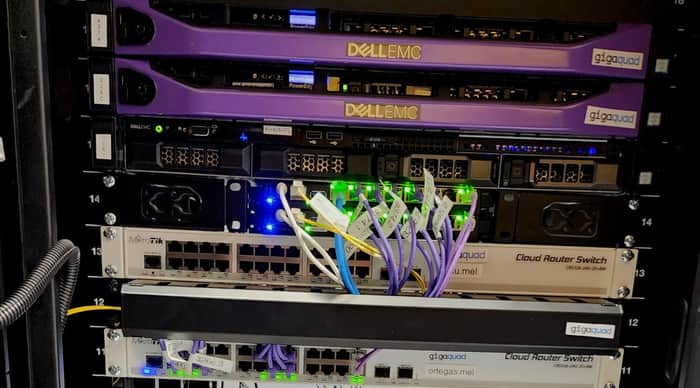
Since 2018 I have been offering private cloud infrastructure to businesses around the globe. In the course of this work I have observed there is a lot of commonality to the technical and business challenges encountered by these customers. The outstanding deficiency in the majority of solutions offered by the market is a lack of sustainability and a strong tendency towards lock-in of one form or another.
My response is to make the services and infrastructure I currently deliver available to all, by building the next generation of Gigaquad in public: a transparent, sustainable, accessible and fair web infrastructure business. The web the way it was meant to be. No distortions by hype, capital, ideology or markets. Just servers and software delivered at a fair price with fair conditions that are sustainable for us and the customer over the long term.
Principles
The primary purpose of this project is to empower individuals and organisations by ensuring that the services and infrastructure they depend on are :
- Fairly Accessible - Services are reasonably priced with no manipulative or perverse incentives. There are no arbitrary barriers to signup and on-boarding begins at the lowest practical specification. With the level of resource consumption being the primary determinant of pricing.
- Transparent - Technologies, policy, procedures and pricing are all documented and publicly accessible to the greatest extent that is practical and operationally secure.
- Open Source - Wherever possible open software and technology will be utilised ro deliver services. Financial and practical support will be provided to upstream projects. Any software developed in-house will be open source licenced.
- Sustainable - The focus of all decisions will be supporting the customers and platform over the long-term. Pricing will be guaranteed for a reasonable period of time. Customers will receive additional benefits the longer they remain on the platform. Hardwade and POP Investment will prioritise steady, long-term growth.
- Fungible - Customers should be able to migrate away from the platform with ease. This will be guaranteed by the conventional use of open-source technology, meaning there will be no proprietary secret sauce or PaaS trap. The software and hardware technologies employed should be non-proprietary, portable, with no lock-in and no blackboxes.
Progress
The first available products are likely to be Nextcloud, WordPress, Drupal and email hosting. This will be followed by VDS machines at the Melbourne location.
I am currently building the website and ecommerce platform, along with a public customer control panel. The current configuration management and orchestration tooling needs to be extended to enable integration with the customer control panel and ecommerce.
In March I took custody of 20RU of colocation space in Melbourne's Equinix ME2 datacenter. I am currently preparing the servers for this deployment. This consolidated all my equipment in Australia and allows me to expand to offer services publicly. I also have dedicated equipment with Hetzner in Germany and OVH in France and Canada.
Follow along
-
To begin with I will document the process and provide updates on my blog and/or my Mastodon account. The latest post you can find here:
https://www.dfoley.ie/blog/building-gigaquad-changelog-mar-apr-25 -
There will be a Gigaquad website and blog in time. Stay tuned here: https://www.gigaquad.eu
Originally posted at: https://www.dfoley.ie/blog/building-web-host-for-2025-in-public #POSSE

I think hosting is market that's ready for disruption, and your transparent, accessible, fungible values are exactly what's needed.
Especially since you're building in public, I would recommend prioritizing an email list of people who'd like to stay informed (and who can represent your list of potential customers when you're ready to bring them in).
David, I appreciate your transparency in building Gigaquad publicly, but I have to be brutally honest about a few challenges I see with your approach.
The biggest issue I foresee is customer acquisition. You're essentially trying to compete with AWS, Google Cloud, and Microsoft Azure while being "fair" - but here's the reality: most businesses don't actually care about fairness or open source principles when it comes to infrastructure decisions. They care about convenience, reliability, and often just going with what everyone else uses.
Your principle of "no lock-in" sounds great in theory, but it's also your biggest competitive disadvantage. The major cloud providers are successful precisely because of their ecosystem lock-in - once you're using their services, databases, and proprietary tools, switching becomes extremely costly and complex. You're essentially promising to make it easy for customers to leave you, which makes your customer lifetime value inherently lower.
I've been dealing with infrastructure decisions across various projects (everything from simple web hosting to complex setups like home EV charging infrastructure -I was just researching Tesla Wall Connectors on https://teslawallcharger.com and the complexity of even that "simple" installation reminded me how much customers actually prefer turnkey solutions over DIY approaches), and most decision-makers choose convenience over principles.
Your pricing model also concerns me. "Fair pricing" typically means lower margins, but you're competing against companies with massive economies of scale. How do you plan to invest in R&D, expand infrastructure, and provide 24/7 support while maintaining "sustainable" pricing? I recommend you seriously stress-test your unit economics before scaling.
The multi-datacenter approach (Melbourne, Germany, France, Canada) is ambitious, but managing latency, data sovereignty, and compliance across these regions while maintaining your transparency principles will be incredibly complex.
That said, I do think there's a market for what you're building - just check out how many developers are frustrated with cloud vendor lock-in. But I'd suggest focusing on a very specific niche initially rather than trying to be everything to everyone.
Good luck with the build - I'll be following along to see how you navigate these challenges.
How many employees are in total in the team?
At the moment it's just myself.
Who is going to give me support at 3 am when I have some issue with the server on Sundays? Who is going to give my sites back if you suffer a heart attack?
Don't get me wrong, I support indie hacking! But there are some business that are not for indie hackers.
When I give talks about startups I always give the same example. Web hosting PPC costs are one of the top 10 most expensive keywords of the world. That's how competitive this industry is. I strongly advise to get out of the business if you want to grab clients beyond the ones you got over the years from referrals. It won't be scalable without a big team and huge investment.
I have been doing this for the past seven years, providing infrastructure for applications which are directly responsible for millions of euro of their owners revenue. Thanks to the sound engineering, automation and redundancy, in that time there has been 99.99% uptime and the division of labour and responsibility between myself and the customer has meant that these '3AM Sunday' scenarios do not arise. If they did the customer would be empowered to resolve them. The services I currently (and intend to) offer are not inflated, aggregated, obfuscated, profit-motivated commodities. They're a tool and a convenience for self-motivated and empowered customers. For example: The hypothetical heart attack you imagine me suffering would be of no consequence, since all my customers have automatic access to their data and backups. Additionally the infrastructure is built with entirely open-source software. So any customer could reproduce it themselves or find another provider.
This seems like a pretty crowded space, what sets you apart?
Much success!
As you might understand from the article and the comment above, I am not attempting to enter 'the space'. My view is that in the main all the market can currently deliver is "inflated, aggregated, obfuscated, profit-motivated commodities" which seek rent from the customer rather than provide a sustainable solution. To be honest, I have tried on numerous occasions to purchase the service I am intending to offer and I can't find it. Since I am already offering these services privately , I thought, why not open it up to the world.
Thank you for your encouragement, I suspect I may need it 🤞