Building an app portfolio to $60k/mo after Apple froze his developer
account
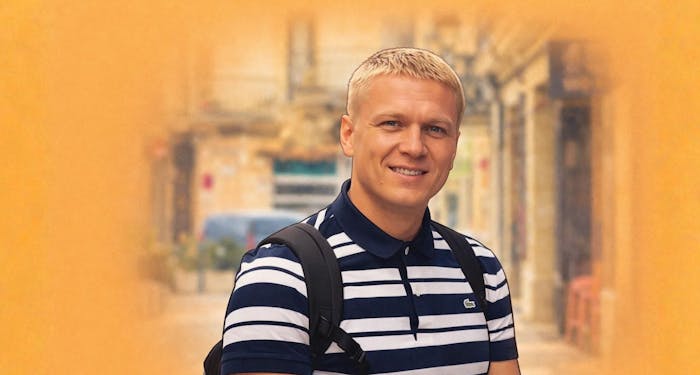
Viktor Seraleev started over three times — and the third time took a toll. But now, his portfolio of apps is thriving once again with an MRR of $60k.
Here's Viktor on what went wrong and how he fixed it. 👇
Launching, selling, and rebuilding
I didn’t know what I wanted to do after university. But one thing was clear: I didn’t want to work a traditional 9–to-5 job. And that left me with no option but to become an entrepreneur.
I started with offline businesses, but over time, I gradually shifted my focus to online products and digital businesses where I could build, iterate, and scale on my own terms.
Now, I’m an indie mobile app developer and founder. I’ve been building and shipping iOS and Android apps since 2020, mostly in the photo/video, creative tool, and utility spaces. Over the years, I’ve launched 30+ apps, sold several of them, and rebuilt my business multiple times from zero.
I currently run a profitable portfolio that has been growing consistently for the last 2 years. In December 2025, I finished the month with $60.1k+ in proceeds — after Apple’s commission.

Starting from scratch
I had to start from scratch three times.
The first time was in 2020, when I left my partners and decided to go solo.
The second time was because I couldn’t build anything meaningful. I had money in the bank and saw it as the perfect moment to fully reset and rethink.
The third was one of the hardest times of my life, personally and professionally.
It was 2022. I had to relocate from Russia to Chile and overnight, my business became fully international. Before February 2022, about 75% of my revenue came from Russia. And that went down to nearly zero. That alone was a challenge, but just as I started to recover, I encountered a true black swan event.
Apple terminated my developer account. I spent eight months trying to understand why. Eventually, I discovered that after we parted ways, my former partners had registered a company with the same name. Apple shut down their account, and the connection caused my entire business to collapse as well. I took Apple to court, but the judge ruled account termination is part of standard contractual relationships and entirely Apple’s decision.
At the same time, sanctions caused my main bank to close the company account and freeze the funds. I had nothing — in a new country, with no access to my own money.
It was one of the most stressful and painful periods of my life. Climbing out of that hole took a huge emotional and mental toll. But it also shaped how I think today. I’m not chasing chaos or constant restarts anymore. Now, I value stability, predictability, and transparency most. I work fully in the open, build sustainable businesses in public, and focus on long-term resilience rather than short-term wins.
A $400k exit
My first solo product stemmed from a practical need.
In 2020, my wife and I ran a family business — a manicure salon. One evening, she tried to create a simple Instagram video: a before-and-after manicure using a slider effect. Surprisingly, she couldn’t find an app on the App Store for this purpose. I didn't believe it at first and searched for it myself. I found nothing.
So, I designed a simple UI and a friend helped me build the first version of the app. It was buggy and imperfect, but after a complete redesign and several updates, the app grew fast.
In just eight months, net proceeds grew from $200 to $34,000. Eventually, I sold the app for $410,000 – without actively seeking a buyer. Someone offered to buy it, and I accepted.
Set a personal challenge
Launching a personal challenge was one of my most helpful decisions. I set myself a goal: build 10 apps by the end of the year. And that challenge forced me to adopt a strategy of small bets and fast iterations.
The rules were simple:
Projects had to be high quality.
They had to be small but genuinely useful.
The challenge had to be completed, no matter what.
After finishing, you don't just gain valuable assets. More importantly, you gain real clarity. You'll learn:
Which projects are worth scaling
Which ones to shut down or sell
Where to actually invest your time and energy
Native vs cross-platform development
My tech stack choice is obvious. For video-related apps, native development works best, so I use Swift. And I have my own in-house video rendering technology.
That said, I also experiment. Last year I shipped two apps: one built with Kotlin Multiplatform and another with React Native. I was pleasantly surprised by how much cross-platform development has improved over the years.
If you’re not working heavily with video, cross-platform development is absolutely the right choice
Mobile subscriptions vs ads
All my apps use a subscription model.
The apps are free to download, but users pay for premium features. I usually offer two plans: a weekly and a yearly subscription. During major global sales (like Black Friday or end-of-year campaigns), I run limited discounts, which typically increase daily revenue by 30–40%.
I also deliberately decided to avoid ads in my apps entirely. I don’t like the advertising model as a user, so I choose not to use it in my products. I stick to this principle: I build clean, focused apps where revenue comes directly from delivering value to users.
Secret sauce for mobile growth
Here’s my “secret sauce” for consistently attracting users and growing mobile apps. Nothing magical — just channels proven reliable over time.
ASO (App Store Optimization): One of the most stable acquisition channels. App Store search generates around 25% of traffic. The basics matter most: a strong title, subtitle, and carefully selected keywords. Visibility on competitors’ app pages generates another ~10%.
Initial boost at launch: I often use a simple formula of keyword + unique app name. Check how your app name appears in search before release.
This method doesn’t always work, but the last time it generated 34 trials right after launch.Personal blog and social media: I regularly share posts about my apps and my journey. One post alone reached 600k+ views on Twitter. This channel has been surprisingly consistent for me.
Google Ads: I tested multiple paid channels and eventually focused on Google Ads. Others were either too expensive or not profitable enough at scale.
TikTok and Instagram Reels: I wanted to personally create video content about my apps. Last year, I spent a month posting six videos per day (three in Spanish, three in English). Dozens of videos crossed 100k views, several reached 500k+, and one passed 1.2M views. It works, but it’s very time-consuming and consistency is hard to maintain.
Apple Search Ads: Before my developer account was terminated, this was my main acquisition channel. It’s currently on pause — in the photo/video niche, competition has driven prices very high.
Product Hunt: I occasionally launch apps on Product Hunt. It provides early feedback from a loyal audience and some initial traffic. A good launch requires preparation.
Don't go it alone
One thing that helped me a lot came from earlier in life.
Growing up, my parents always taught me one simple rule: Never give up. Stay strong, even when things are hard.
This mindset helped me psychologically survive the most difficult moments and rebuild my business from zero — multiple times.
I’m also not doing this alone. My family — my wife and our children — are always by my side. Their support matters more than anything else, especially during unstable periods.
Why transparency is key for indie hackers starting out
Here's my advice: Don’t be afraid to be open.
Transparency is rare, but it’s also what attracts people. Be honest with your users, your team, and the people around you. Long-term trust matters more than short-term optics.
And don’t be afraid to make mistakes.
The more approaches you try, the higher your chances of success. Mistakes are unavoidable — I still make them regularly. What matters is learning from them and adjusting, not avoiding failure at all costs.
What's next?
I’m currently focused on:
Scaling my core apps (subscriptions, MRR growth)
Testing new directions and product ideas
Experimenting with ASO, pricing, and distribution
My long-term goal is to build a diversified business.
I don’t want to rely on a single platform. That means spreading risk across the App Store, Google Play, and SaaS. On the web side, I’ve already run two test launches. One of them proved to be the wrong direction, and I will shut it down in February. The other is gradually gaining traction — a link-in-bio and website builder called Type.link.
Over time, my apps will become platform-agnostic and available across all major platforms, including the web. That way, they can grow — independent of any single ecosystem.
You can follow along while I build in public on Twitter — I share my journey, experiments, lessons, and behind-the-scenes insights daily.

Leave a Comment
Utility apps seem to live or die on very specific search intent. I’m seeing that with Kinetic Override: broad “productivity app” language is useless, but “Android no-root auto clicker / macro recorder for repeated taps and swipes” maps to the real pain much better.
Great story — very inspiring and honest. 👏
This is a strong reminder that resilience and long-term thinking matter more than luck. Rebuilding after losing a developer account and still reaching $60k+ MRR shows the power of focus, transparency, and shipping consistently.
Loved the takeaways on small bets, sustainable monetization, and building in public — very relevant for anyone building indie apps today. Thanks for sharing!
Thank you – really appreciate this.
Losing the developer account was a hard reset, but it forced me to think long-term and focus on fundamentals. Glad the takeaways resonated
This was a really interesting read. Having an Apple developer account frozen can be a major setback, but building a strong portfolio and still reaching significant growth is impressive. It shows how important diversification is in the app business. The same idea applies to gaming as well. I was recently playing , and it reminded me that even simple concepts can attract a loyal audience when executed well. In the end, consistent effort and smart decisions are what drive long-term success.
The single-platform risk part hits hard. Google rejected my Android app twice two weeks before my own promotion push, over an AccessibilityService disclosure I didn't realize had become policy. Got me thinking the rejection itself isn't even the worst part — it's that you can't pre-validate. With Apple's "naming conflict" angle in your story, was there any signal you could have caught earlier, or was it genuinely a black box until the email landed?
The detail worth emphasizing: "$60k in proceeds after Apple's commission" means the actual gross revenue is closer to $85K/mo. Apple's 30% cut (15% for subscriptions after year 1) is a hidden tax that App Store revenue figures frequently obscure. Viktor is being more transparent than most by flagging this, but it also means the real business is materially larger than the headline number suggests.
Apple freezing a developer account is one of the most catastrophic platform risk events in mobile. It's not a revenue dip — it's a complete stop. Every app, every subscription, every customer relationship: access gone overnight, typically with no meaningful appeal process. The fact that Viktor rebuilt from this not once but as part of a broader pattern of "started over three times" indicates an unusual capacity for absorbing extreme setbacks and continuing anyway.
The photo/video/creative tools niche on iOS is the right space for this model. Users in these categories have high willingness to pay (they pay $5-10/month for tools that improve something they care about aesthetically), strong weekly or daily usage patterns, and the App Store search intent for "photo editor" / "video filter" is consistent and high-volume. These aren't trend-dependent categories.
30+ apps since 2020 also implies a systematic approach to app development — most likely shared infrastructure, reusable UI components, and a testing playbook that gets refined across each launch. The rebuild from the account freeze almost certainly produced better architecture than what was lost, because rebuilding is an opportunity to fix what the original build couldn't see clearly.
At RovaAI we think a lot about platform risk — the lesson here of diversifying distribution is one we take seriously too.
If my Apple account was terminated, I would've stopped at the point. Inspiring post!
The Apple account story is brutal, shows why diversifying across platforms (or at least having backup developer accounts) matters.
Yes! So important!
This really resonated — especially the shift from chasing restarts to valuing stability and predictability.
I think that part often gets overlooked in indie stories. We celebrate reinvention, but we don’t talk enough about the cost of being forced to rebuild versus choosing to.
The Apple account termination story is brutal, but what stood out to me wasn’t the setback — it was how it clearly shaped a more resilient, platform-aware way of building afterward. Diversification starts to feel less like strategy and more like self-preservation once you’ve lived through that kind of risk.
Also appreciated the clarity around subscriptions without ads. Building something clean, where revenue is directly tied to value, feels increasingly rare — and refreshing.
Thanks for sharing this so openly. There’s a lot here that’s grounding, not just motivating.
The story really inspires boss!
Impresssive that you kept on it and took to where you at now! As a solo founder and beginner dev I just need to ask, any advice when distributing a new product?
This was a really interesting read. Losing a developer account feels like one of those things that would completely knock most people out, so seeing how you rebuilt and leaned into fundamentals instead is pretty inspiring.
I also liked how honest you were about experimenting with acquisition and what actually worked versus what didn’t. It’s a good reminder that growth usually comes from a lot of small iterations, not one perfect channel. Thanks for sharing this so openly.
Really inspiring story. Starting from scratch that many times and still choosing to build calmly, openly, and long-term says a lot. Loved the honesty and the practical lessons throughout. Thanks for sharing your journey and keeping it real
Thank you, that means a lot. Starting over teaches patience whether you want it or not. Glad the honesty and lessons resonated
The "10 apps challenge" is gold. Forces you to ship fast and learn what actually works instead of perfecting on idea in isolation. Also love the anti-fragility mindset losing everything to Apple's account termination. Building across platforms isn't just strategy, it's survival. 60K MRR after starting from zero three times, that's the real story here.
Exactly this. The 10-apps challenge isn’t about the number – it’s about speed of learning. And yes, multi-platform isn’t a growth hack, it’s risk management. Appreciate you catching that
Viktor's story of perseverance is inspiring, especially after facing setbacks like Apple freezing his developer account. The struggle to adapt and find new opportunities reminds me of the challenges people face when managing their finances, such as with a kesc bill check, where staying on top of payments is crucial to avoid similar disruptions. This parallel highlights the importance of resilience in both business and personal finance.
GTA Action Game APK is one of the most exciting open-world action games available for Android users who enjoy thrilling missions, fast-paced gameplay, and realistic city exploration. This game allows players to drive powerful vehicles, complete dangerous missions, use advanced weapons, and explore huge open-world environments directly on their smartphones. With smooth controls and HD graphics, GTA Action Game APK delivers an immersive mobile gaming experience.
Really inspiring story — especially the part about rebuilding everything from zero and still reaching consistent MRR. It shows how important resilience and long-term thinking is in digital products.
I’m also working in the online space (digital marketing and gaming niche), so I can relate to the idea of building and scaling small assets over time. Even in simple gaming projects, like Bus Simulator Indonesia content sites, I’ve seen how consistency and ASO-style thinking matter a lot for growth.
losing 75% of revenue overnight when the Russian market dropped then immediately getting hit by the Apple account termination two simultaneous black swans is the kind of thing that ends most businesses. What stands out is that the recovery wasn't a pivot to something completely different, it was the same playbook executed more carefully with more resilience built in. The 10 app challenge reframe is interesting too turning a rebuild into a personal challenge rather than a crisis changes the psychology of the whole thing. Curious whether the transparency you mentioned building fully in the open came naturally after going through that or whether it was a deliberate decision to keep yourself accountable publicly.
Wow, especially after rebuilding three times. That's serious persistence.
One thing I noticed is that with 30+ subscription apps and weekly/yearly plans, you are probably leaving a lot on the table if you are not adjusting prices per country.
A $4.99/week subscription in the US is a very different ask in countries like India, Brazil or Turkey where the purchasing power is much lower.
With that many apps, even a small per-country price adjustment across all of them could add up to a meaningful revenue bump.
Have experimented with this or if you just let the stores auto-convert from USD?
The "10 apps in a year" challenge is a great framework, but I always get stuck on the same question — what do I actually build? Do you always start from a problem you personally experience, or do you have another way of finding ideas?
Also, it's hard not to compare with what's already out there. When I think "I'll build something small," I look at existing apps and feel like the bar is too high to even start.
Stories like this are what keep solo devs going. Relocating to a new country, losing your developer account out of nowhere, bank frozen. And you rebuilt anyway. That's not a business story, that's a human one.
The bits on ASO and competitor page visibility are genuinely useful too. Simple things most of us overlook.
Thanks for being open about all of it.
Getting your developer account frozen has to be gut-wrenching. I went through something smaller but similar when I rotated API keys during a security audit on tubespark.ai and broke authentication for existing users. Took a full day to figure out the old session cookies couldn't decrypt with the new secret. The second build after a failure is always faster because you know exactly which corners not to cut. Did Viktor keep the same tech stack the second time around or did the rebuild change his approach?
The "start from scratch three times" part hits different when you've lived it. Different industry but same pattern. We rebuilt an entire ecommerce business stack from WordPress to custom code after years of plugin dependency and tools that didn't talk to each other. Starting over is brutal but the second build is always better because you know exactly what not to do.
Your point about transparency is underrated. Sharing real numbers is what makes content like this actually useful. Anyone can say "I built apps." $60K/month in proceeds with the full breakdown of how you got there is what people actually learn from.
Curious about your cross-platform experiments. What made you try React Native after years of native Swift? Was it speed to market or wanting to cover both platforms simultaneously?
something that stands out to me is the Google Ads call. most photo/utility app founders i see either default to Meta or skip paid entirely, but Meta is a tough fit when you have zero ad monetization - with pure subscriptions, there's no IAP or ad revenue to offset your CPI, so the whole math rides on trial-to-paid conversion holding up by itself. Google makes more sense here because intent signals are stronger: someone searching for "screenshot editor" is already in decision mode, not being interrupted mid-scroll.
what's interesting at portfolio scale is that your paid conversion data compounds. with 30+ apps in photo/video/creative tools, you're building a real LTV benchmark for the same user type across multiple apps, which means CPI targets on new launches can be calibrated from actual signals rather than industry guesses.
curious how you set your CPI targets across the portfolio - do you anchor against the weekly sub price as a conservative baseline, or do you factor in what percentage of users eventually upgrade to yearly?
The '10 apps a year' challenge is such a high-signal strategy. Most developers get stuck in 'feature creep' for a single app that might never find fit, but your approach of small bets essentially treats the market as the ultimate debugger.
Love this.
For your Android apps — what monetization model has worked best? Ads vs subscription vs one-time?
I’m testing a subscription model in a niche analytical app and trying to understand realistic early conversion benchmarks.
Wonderful post Viktor. What really impressed me is that your intuition for usability has been more on right side than wrong. For me, with product management experience, this has been a validation phase - Product Market Fit. And as an entrepreneur if you have this skill, battle is half won already. I also love your rules on quality and completeness. MVP needs to be useful and offer value. I would love to learn from you the magic of searchability : ) Good Luck with everything.
I see parallels to what is starting to happen in AI home health software and other regulated spaces. Builders who have lived through platform risk tend to prioritize diversification, direct value to users, and sustainable revenue instead of chasing short term growth spikes. Subscriptions tied to real utility and clear outcomes matter more than novelty.
Building many small, useful products and letting the market signal what deserves scale feels like a transferable lesson across mobile, SaaS, and vertical software. Thanks for sharing the full story.
What’s striking isn’t the rebuild — it’s that the distribution playbook survived every reset.
Apps died, accounts vanished, geographies changed — but ASO intuition, pricing instincts, and launch reps compounded.
It makes me wonder: is the real product here the apps, or the internal system for repeatedly finding “$200 → $30k” opportunities?
any advice when distributing a new product?
Congrats on building the IG app and selling it for 400k. That's a huge win. Definitely motivating and encouraging to keep going . Thanks for sharing your story.
Incredible journey and very inspiring story! Your resilience after Apple froze your account really demonstrates the importance of building multiple income streams and not relying on a single platform.
As a mobile developer myself, I really appreciate your insights on native vs cross-platform development and the monetization strategies. The portfolio approach of building 30+ apps and learning from each one is a powerful strategy.
Thanks for sharing your experience so transparently - it's incredibly valuable for the community!
Are you still in Chile? Why Chile?
Dude you just make me cry. My journey has been very similar. After building a successful business, my wife and I sold it. After that, we had to move to Spain and try to start over — and starting over was not easy.
What followed were two consecutive projects that didn’t work out. I made decisions that cost me money, and after a very tough year working on new ideas, I was eventually let go from my 9-to-5 job.
Still, I pulled together every bit of inner strength I had and chose to rebuild my dreams instead of giving up on them. Just about a week ago, I launched the waitlist, and I’m now making the final adjustments to properly launch the app.
If anyone else is reading this: stay on track. Don’t hesitate. Just keep moving forward.
This was really motivating to read! After seeing posts like this, I went back and simplified my landing page, focused on clearer messaging and common Google search terms, and started testing Google Ads.
Now I’m at a point where I’m unsure how patient I should be. With limited cash, it’s hard to tell whether early ad results are just noise and worth waiting through, or a signal to stop and rethink distribution altogether. Curious how you personally decide when to keep burning a bit to learn versus stepping back and trying a different approach.
This story is such a powerful reminder of resilience and adaptability in the indie world! I really appreciated how the author didn’t let a sudden Apple developer account freeze derail his entire journey — instead, he pivoted effectively, built an app portfolio, and scaled it to $60K/month despite the setback.
In this article, James Fleischmann shares how he rebuilt his income by diversifying platforms, focusing on user value, launching multiple apps, and scalability subscriptions after Apple froze his developer account.
This is the ultimate cautionary tale about 'Rentier Risk.' We all know we're building on borrowed land with Apple and Google, but seeing a $34k/mo business vanish overnight because of a 'naming conflict' is a wake-up call. The move to a portfolio of 30+ apps isn't just about revenue—it's about building an anti-fragile system where no single 'black swan' event can wipe you out again. Truly impressive resilience, Viktor.
Woow!!!
This resilience story hits close to home! Dealing with platform gatekeepers (like Apple) is a major pain point. I'm building DAC Compliance Operating Layer - essentially automating regulatory "gatekeepers" for businesses.
Your experience rebuilding after a shutdown is gold. Did documenting your compliance with Apple's policies from day one help in the recovery, or was it more about relationship management?
Hey, Viktor! It's great to see you here!
I've been collecting a database of indie projects for over six months now, and I'm seeing the same patterns you describe. It's better to have many small projects in your portfolio than one big one. Diversification is everything!
The challenge idea is really cool, it trains your entrepreneurial muscles. Thank you for sharing your path and strategy, it's valuable!
What I appreciate most here is the shift in values — from chasing restarts to prioritizing stability and predictability.
A lot of indie stories glorify reinvention, but being forced to restart because of platform or geopolitical risk is very different from choosing to pivot. The emotional tax of that rarely gets acknowledged.
This feels less like a growth story and more like a maturity story: building calmer systems, diversifying risk, and optimizing for survival over excitement. That perspective is refreshing.
Through persistence and experimentation, James Fleischmann rebuilt an independent portfolio to $60k monthly revenue after Apple froze his developer account.
This is a great reminder of platform risk. The “build a diversified business” mindset feels less like strategy and more like survival once you’ve lived through a shutdown. Also interesting to see React Native mentioned here, cross-platform has gotten seriously good for a lot of niches
Stories like this are a reminder that resilience > tactics.
Most people quit when a platform blocks them. You rebuilt anyway. Respect.
What was the first thing you rebuilt when you started again?
Solid insights here!
Thanks for sharing! I've been thinking about trying out iOS app development, the main hurdle is that I don't have a Mac, but reading inspiring stories like yours makes me want to buy a basic Mac Mini and give it a go.
Well written post—thanks for taking the time to share your insights.
Man, this one hit close to home. I'm at the start of my own dev-sprint year challenge right now. It's equal parts exciting and anxiety-inducing to see someone else has actually made this path work. The small bets approach is exactly what I'm leaning into.
This is great context — thanks for sharing the journey and all the bumps along the way.
It’s interesting how unexpected external constraints (like platform changes or freezes) force you to rethink not just the product, but the whole workflow and priorities.
I’m curious — when you looked back on this, what part of the rebuild ended up being the most unexpectedly difficult or time-consuming?
Thanks for sharing your journey. It's great to see your resilience. It's very inspiring.
I love the vulnerability and humility of this post. Thanks for sharing your journey, it has all the right ingredients for long-term success. Congrats 💛
Viktor, this is an incredible story of resilience. Starting from scratch three times, especially the Apple account termination and sanctions double-hits would break most people. The fact that you rebuilt to $60k per month is a testament to your persistence. I'm curious about your portfolio strategy vs. going deep on one app. With 30+ apps in your portfolio, how do you decide which ones get your attention vs. which to sunset? Do you have a framework for "this app has potential" vs. "time to sell/shut down"? Also, the "10 apps by end of year" challenge is great. I've seen founders (including myself) get paralyzed trying to build the "perfect" product. Your approach of small bets + fast iteration seems much healthier. Thanks for sharing so openly — stories like this are why IH exists I guess ...
Excellent post, thanks for sharing. It really does emphasize that you need to be able to identify what you're not good at and actively learn and try new things. Us devs fall into a trap that coding is the only skill required, and end up building app after app with no thought to marketing or monetization. It doesn't just magically happen.
Inspiring, thanks! Keep it going!
What stands out here isn’t the revenue number, it’s the resilience and compounding through repetition. Building many small bets over time seems to matter more than any single app ever could.
Thank you for your sharing.
Strong and insightful story - thanks for sharing!
solid write up especially liked the focus on long term monetization over vanity metrics
Building an app portfolio to $60k per month after Apple froze his developer account is a powerful story of resilience and smart strategy. Instead of giving up, he diversified platforms, rebuilt products, and focused on scalable apps with recurring revenue. By learning from setbacks, optimizing monetization, and staying consistent, he turned a major roadblock into motivation proving that persistence, adaptability, and long-term vision can transform failure into remarkable success.
inspiring story bro, thanks for sharing
I'm from Ukraine, and I know what it's like to start over multiple times — changing jobs, moving, rebuilding. War makes it hard to build anything stable when you're not tied to one place.
That's actually why I got into app development. It's one of the few things you can build from anywhere, no matter where life takes you. Currently working on my first app (life planner, vibe coded with Claude), and stories like yours remind me that resilience matters more than perfect conditions.
The "10 apps challenge" idea is gold — shipping fast and learning what works instead of overthinking one thing forever.
Thanks for sharing so openly. It means a lot.
nice
This is one of those stories that really highlights platform risk in a very real way. Losing a developer account + frozen funds is basically an extinction-level event for most indie app businesses, and the fact that he rebuilt again says a lot about mindset and systems.
What resonated most for me is the shift toward stability and diversification subscriptions over ads, multiple acquisition channels, and not relying on a single platform long-term. The “portfolio of small bets” approach combined with ASO + content feels much more resilient than chasing one breakout app.
I’ve been working with a few indie founders and mobile devs on growth, ASO positioning, and de-risking distribution across platforms. If anyone wants to dig deeper into that side of things, happy to chat you can reach me on Telegram: @preshtechsolution
Wild story. Losing an Apple dev account would kill most apps, but pivoting to a portfolio approach is the real lesson here.
Owning multiple small apps = diversified risk:
One ban doesn’t wipe you out
Easier to test niches and pricing
Revenue stacks faster than a single “big” app
Also shows the power of distribution + iteration, not just the platform. Apple froze the account, but they didn’t freeze the skills.
Hello James Fleischmann,
Great breakdown! Your journey proves that solving a 'micro-pain' (like that slider effect) is often more profitable than building a complex platform. I love the focus on Platform Independence with Type.link—relying solely on one App Store account is a huge risk, and diversifying into SaaS is the ultimate hedge. ASO remains the most underrated passive growth lever for indie hackers. Keep crushing it!
Regards: EmmaGraceBravo
Owner
https://gtasandresapk.com
Hello James Fleischmann,
Great breakdown! Your journey proves that solving a 'micro-pain' (like that slider effect) is often more profitable than building a complex platform. I love the focus on Platform Independence with—relying solely on one App Store account is a huge risk, and diversifying into SaaS is the ultimate hedge. ASO remains the most underrated passive growth lever for indie hackers. Keep crushing it!
Regards: EmmaGraceBravo
Owner
great information
AWesome content buddy!
This is a powerful reminder that most “overnight successes” are really just people who survived repeated resets.
What stood out most to me is how platform risk silently compounds — everything can look stable right up until a single external decision wipes out years of work. Choosing transparency, diversification, and boring resilience after living through that makes a lot of sense. Thanks for laying this out so honestly.
What went wrong with the web experiment?
What does a hacker need for a solid Product Hunt launch?
Thanks for the post! I have a few questions, that I'll break off into separate posts for organization.
I've thought about doing this, but my app doesn't support internationalization or multiple languages. Do yours? My thought process is that content in other languages should wait until the app supports other languages.
This story really puts things in perspective. Rebuilding three times — especially after something as out of your control as an Apple account freeze — takes serious resilience.
What stood out most to me was the shift toward stability and diversification, not just chasing the next hit. Building lots of small, useful apps + spreading platform risk feels like a very underrated strategy.
Also love how practical this is — no magic tricks, just ASO, distribution reps, and consistency over years.
Great reminder that long-term survival often matters more than short-term wins.
Very inspiring! Happy for Viktor, hard work pays off!
This was a really grounding read. The part about not chasing chaos anymore and valuing stability and resilience hit hard, especially the platform-risk lesson with the Apple account termination.
I’m building a local-first desktop app right now and trying to think about diversification and distribution early so I’m not over-dependent on one platform.
Question: looking back, what’s the single most important thing you’d do in the first 30 days of a new launch to validate and build momentum? Would you prioritize ASO, pricing tests, paid acquisition, or content?
Starting over three times can be daunting, but it also serves as a valuable lesson in perseverance. I have experienced several significant pivots myself, and I find that the emotional toll is more challenging than the technical or business aspects. Developing the ability to persevere when things feel uncontrollable is a unique skill. In my case, taking a break and reassessing my situation prevented burnout.
It is crucial to prioritize mental health, as it is a long-term endeavor rather than a short-term sprint. Additionally, it is beneficial to build something that can be broken down into smaller, more manageable components. Early on, it is essential to closely monitor your revenue sources, as geopolitical issues or partner problems can arise unexpectedly.
Documenting your processes ensures that you are not starting from scratch if you need to restart. When you feel ready, it is important to work openly, but avoid rushing transparency if it causes stress.
How did you manage to stay motivated during those challenging times, particularly when you faced both the account shutdown and the relocation simultaneously?
Building a portfolio instead of betting on one app reduces platform risk significantly. I've seen that play out the hard way too.
How do you decide which apps in your portfolio deserve active ASO work versus maintenance mode?
Great read! The "value band" concept really resonates with how we've been helping startups scale their teams. We've seen the same pattern - companies either overpay locally or gamble on cheap rates, missing the sweet spot in between.
At Cortance, we focus exactly on this: connecting companies with vetted senior developers in cost-effective regions where everyone wins. Your breakdown of the real costs vs. perceived savings is spot-on.
Thanks for sharing your perspective! 👏
What stood out to me too is how unglamorous most of this really is. ~
No big spike — just stacking small wins for a long time.
I’ve watched people chase the “one big hit” with apps and burn out fast. Portfolios look boring on paper, but they give you feedback loops. You end up learning pricing, ASO, support, churn — over and over again.
That repetition compounds.
Curious — early on, how did you decide when to keep iterating versus move on to the next app? That’s the part I see people struggle with most.
🔥 From losing everything to $60k/mo — now that’s a comeback story! 💪 This is the kind of brutally honest indie journey that reminds us resilience wins. The pivot to long-term thinking, sharing experiments publicly, and building with transparency are lessons EVERY indie hacker should bookmark.
this is amazing while me Im still stuck with my startup on marketing because it's for big boys. As 17 years old creating the First agentic writing editor for writers. It has multiple modes such as brainstorm planning, focus mode, collaborative, and review mode. Basically the cursor for writers. minotauris agentic writing editor - waitlist if you interested
Big tech can just wipe people hard work and life off the table with an algorithm update and nobody even bats an eye lid.
Thats a wonderful key to adapt with time and circumstances. That requires courage and focus. Inspiring and helpful for us
love it
The "don't be afraid to be open" point hits hard. Building in public has been one of the best decisions I've made... especially when the numbers aren't pretty yet.
Openness compounds. When I went to an Apple conference, I realized many Apple managers were already reading my Twitter. I built a strong personal brand simply by sharing how I build my business – especially when the numbers weren’t pretty yet.
Apple freezing accounts is something every app developer fears but nobody prepare for it properly. We build apps for clients and I always tell them never depend on single Apple account. Keep separate accounts for different app categories.
Viktor rebuilding 3 times is honestly more impressive than $60k number. Most people quit after first reset itself.
One thing I am curious, after account got frozen how long Apple took to respond? We had one client stuck in review for almost 6 weeks and it nearly killed their launch. Just want to know if Apple is getting better or still same with this kind of things
This comment was deleted 2 months ago
This comment was deleted 5 months ago
This comment was deleted 5 months ago
This comment was deleted 5 months ago