"Building NoveumAI: How We Solved the AI Agent Evaluation Problem"
This is a critical question as more companies move AI agents into production. The best practices for evaluating AI agents in 2025 have shifted significantly from traditional ML evaluation. Here's what I've learned from building and deploying agents:
1. Ditch Manual Labeling and Use the System Prompt as Ground Truth
The biggest bottleneck in AI development is data labeling. For AI agents, you don't need it. Your agent's system prompt is a rich source of ground truth. It defines the agent's persona, its goals, and its constraints. A good evaluation framework should be able to parse this prompt and use it to automatically assess the agent's behavior.
This is revolutionary because it means you can evaluate your agent without spending months labeling data. You just need your system prompt (which you already have) and your agent's execution traces (which you collect automatically).
2. Evaluate the Entire Trajectory, Not Just the Final Output
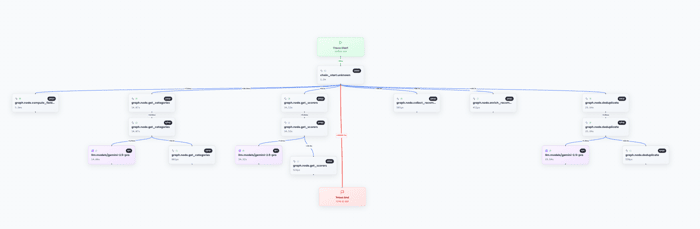
An agent can get the right answer for the wrong reasons. Evaluating only the final output is like grading a math test without looking at the student's work. You need to analyze the entire execution trace—every thought, every tool call, every LLM interaction. This is where you'll find the real problems: inefficient paths, unnecessary costs, compliance violations, or subtle hallucinations.
3. Use a Multi-Dimensional Scoring System
Don't rely on a single metric like accuracy. Evaluate across multiple dimensions:
- Task Completion: Did the agent achieve its goal?
- Efficiency: Did it take the optimal path?
- Cost: How many tokens did it consume?
- Hallucination: Did it invent any facts?
- Compliance: Did it violate any constraints?
- Coherence: Was the conversation logical?
This multi-dimensional approach gives you a much clearer picture of your agent's actual performance.
4. Implement Continuous Evaluation
Don't evaluate only before deployment. Evaluate continuously in production. This allows you to catch regressions early, identify patterns in failures, and improve your agent based on real-world performance.
5. Use Prescriptive Recommendations, Not Just Detection
It's not enough to know that your agent is hallucinating or taking inefficient paths. You need to know why and how to fix it. The best evaluation frameworks provide specific recommendations: "Add this constraint to your system prompt," or "Use this model instead," or "Adjust these tool parameters."
The Bottom Line
The best practices for AI agent evaluation in 2025 are fundamentally different from ML evaluation. Focus on trajectory analysis, multi-dimensional scoring, the system prompt as ground truth, and continuous improvement. This approach will give you production-ready agents that you can trust.
If you want to learn more about implementing these practices, I'd recommend reading about how Noveum.ai approaches agent evaluation, which is built on exactly these principles.
