Built a lightweight local search spoofing tool after getting frustrated with existing SEO solutions
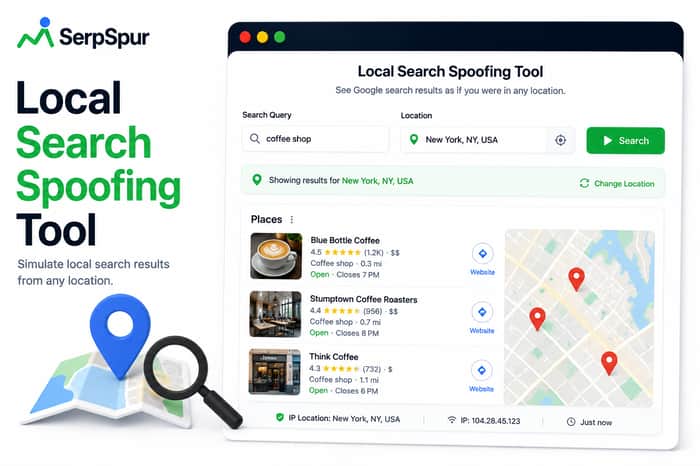
I kept running into the same problem while doing local SEO work: checking search results from different locations was either ridiculously expensive, painfully slow, or required juggling proxies/VPNs manually.
Most tools felt overloaded with enterprise features when all I really wanted was a simple way to answer one question:
“What does Google actually show users in this location?”
So over a weekend, I built a lightweight local search spoofing tool that lets you simulate search results by:
city
region/state
country
language
The original motivation was a client who insisted their business ranked well in Tokyo while my reports showed otherwise. Once we compared localized results side by side, it became obvious their visibility varied massively depending on the area being searched from.
That experience made me realize how misleading “average rankings” can be for local or international SEO.
A few interesting things I’ve noticed while testing:
rankings can shift dramatically between nearby cities
local intent changes SERPs more than expected
map packs behave very differently by region
some pages rank internationally but fail locally
device/location combinations create wildly different results
Still early-stage, but it’s already become one of the most-used tools in my own workflow for:
local SEO audits
geo-targeting validation
competitor analysis
location-based rank checks
debugging regional traffic drops
https://serpspur.com
Curious how others here are handling geo-specific SERP testing today. Are you mostly relying on proxies, APIs, browser automation, or dedicated tools?

awesome bro
This is a useful niche because the pain is not really “I need another SEO tool.”
It is: “I need to prove what customers actually see in each location.”
That distinction matters. “Local search spoofing” explains the function, but the stronger buyer angle is probably visibility proof for local SEO audits, client reporting, and regional ranking disputes.
The Tokyo client example is the clearest part of the story. That shows the real use case: average rankings can hide where a business is actually invisible.
I’d be careful not to position SerpSpur as a lightweight utility only. The sharper angle may be helping local SEO people show location-specific search reality before clients make decisions from misleading averages.
Happy to put a tighter version in writing if useful. The main thing I’d map is the first SEO buyer segment, landing page promise, and how to turn this into a first-user acquisition angle.