Buying Stamps Online Safely Without Counterfeit Risk
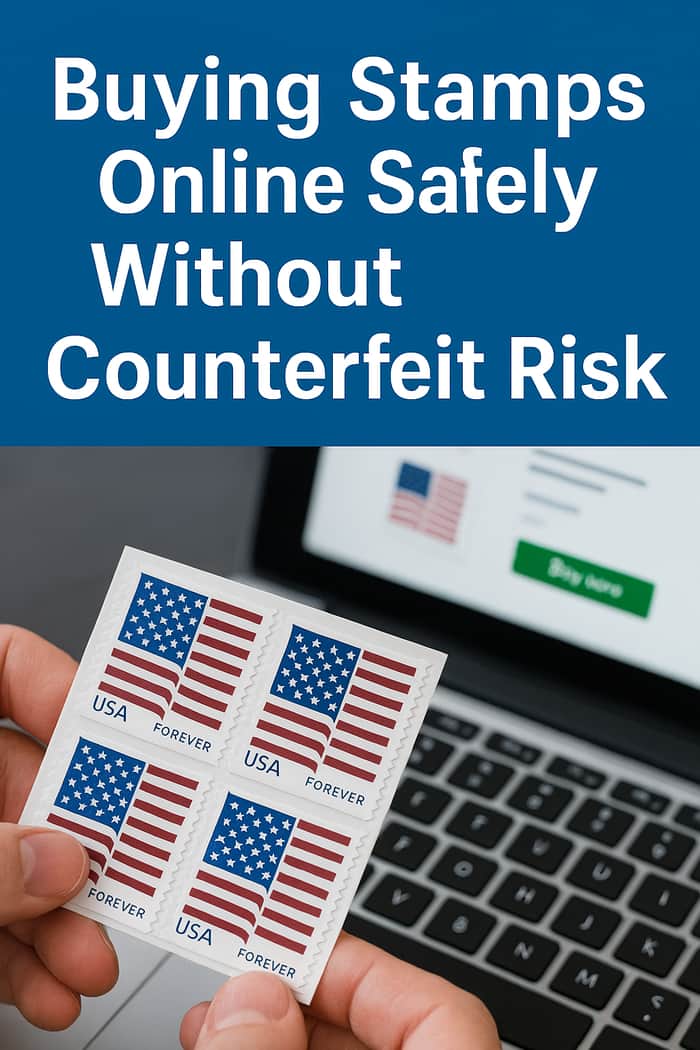
Here's a shocking statistic: The US Postal Inspection Service estimates that counterfeit stamps cost consumers over $2 million annually. I contributed $500 to that number before learning how to shop safely online.
The convenience of buying stamps from your couch is undeniable. No more waiting in post office lines or rushing before closing time. But with convenience comes risk – and the stamp counterfeiting business is more sophisticated than most people realize.
I've spent the last four years researching safe online stamp purchasing after getting burned by fake stamps that looked absolutely perfect. Today, I'm sharing every trick I've learned to help you avoid the costly mistakes that taught me these lessons the hard way.
The $500 Mistake That Changed How I Buy Stamps Forever
Four years ago, I thought I'd struck gold. A small business owner selling vintage stamps on what looked like a professional website offered a "closing business sale" – 200 forever stamps for $80 instead of the usual $116.
The website had customer testimonials, professional product photos, and even a "satisfaction guarantee." The stamps arrived quickly in official-looking packaging. They felt right, looked right, and even had the correct perforations.
Everything seemed perfect until my clients started calling.
Their wedding invitations were being returned as "postage due." The beautiful vintage stamps I'd carefully selected? Complete counterfeits that the postal service rejected. My reputation took a hit, and I had to overnight authentic stamps to fix dozens of mailings.
That expensive lesson taught me something crucial: counterfeits aren't always obvious fakes. The best counterfeiters invest serious money in making their products look legitimate. But once you know what to look for, protecting yourself becomes much easier.
Why Counterfeit Stamps Are More Common Than You Think
The stamp counterfeiting industry has exploded over the past decade, and it's not just basement operations anymore. Here's what I've learned about this underground market:
The Economics Make Sense (For Criminals)
High profit margins drive the counterfeit stamp trade. A sheet of fake forever stamps costing $2 to produce can sell for $40-50 online. That's better margins than most drug dealing.
Low enforcement risk makes it attractive to criminals. Unlike currency counterfeiting, stamp fraud rarely gets federal attention unless losses exceed hundreds of thousands of dollars.
Technology improvements have made high-quality fakes easier to produce. Digital printing and specialty papers that were once expensive are now accessible to anyone.
Where Counterfeits Come From
- Overseas operations (primarily China and Eastern Europe)
- Domestic "garage operations" using commercial printers
- Legitimate businesses selling "printer test sheets" as real stamps
- Auction sites with inadequate seller verification
Why They're Hard to Spot
Modern counterfeiters study real stamps obsessively. They match:
- Paper thickness and texture
- Ink colors and saturation
- Perforation patterns and spacing
- Gum application and adhesion
The only reliable way to avoid them is knowing how to identify trustworthy sellers before you buy.
The Ultimate Security Checklist for Online Stamp Shopping
After testing over 40 online stamp sellers, I've developed a security checklist that's never let me down. Here's my step-by-step vetting process:
Website Security Assessment
✓ SSL Certificate Present – Look for "https://" and the padlock icon
✓ Professional Design – But not too slick (scammers often over-invest in flashy sites)
✓ Contact Information Complete – Phone number, physical address, business hours
✓ About Us Page Detailed – Real business history, not generic template text
✓ Privacy Policy Present – Shows they understand legal requirements
Business Legitimacy Verification
✓ Better Business Bureau Listing – Check their rating and complaint history
✓ Google My Business Profile – Verified businesses show up in local searches
✓ Social Media Presence – Active accounts with real customer interactions
✓ Professional Email Domain – Avoid sellers using Gmail, Yahoo, or Hotmail
✓ Years in Business – New businesses aren't automatically bad, but require extra caution
Customer Review Analysis
✓ Review Distribution – Mix of 4-5 star ratings looks more natural than all 5-star
✓ Review Content Quality – Detailed reviews about actual products, not generic praise
✓ Negative Review Responses – How does the business handle complaints?
✓ Review Timing – Suspicious if all reviews appeared in a short timeframe
✓ Reviewer Profiles – Real customers have purchase histories and profile details
I spend about 15 minutes researching each new seller using this checklist. It seems tedious, but it's saved me thousands in counterfeit purchases.
How to Identify Legitimate Stamp Dealers (My Foolproof Method)
Not all online stamp sellers are created equal. Here's how I separate the legitimate businesses from the scammers:
Tier 1: Maximum Security (Government and Major Corporations)
- USPS.com – The gold standard for authenticity
- Amazon (sold by Amazon) – Corporate reputation and easy returns
- Walmart/Target Online – Major retailers with verification systems
Pros: Zero counterfeit risk, established return policies, customer service
Cons: Higher prices, limited selection, no bulk discounts
Tier 2: Verified Independent Dealers
These businesses have earned trust through consistent service and transparent operations:
Characteristics of trustworthy independent dealers:
- Physical storefronts you can visit or verify exist
- Industry certifications (American Philatelic Society membership)
- Detailed product descriptions with actual photos of items
- Clear return policies with reasonable timeframes
- Responsive customer service that answers specific questions
My personal recommendation: Postages Co. has consistently delivered authentic stamps with excellent customer service. Their business verification checks out, and I've made 15+ purchases without issues.
Tier 3: Marketplace Sellers (Proceed With Caution)
eBay, Etsy, Facebook Marketplace can have legitimate sellers, but require extra verification:
- Seller ratings above 98% with hundreds of transactions
- Detailed product photos showing actual stamps, not stock images
- Clear return policies stated in listings
- Quick response to messages with knowledgeable answers
Red flag sellers to avoid:
- New accounts with limited feedback
- Stock photos only, no actual product images
- Prices significantly below market value
- Reluctance to answer specific questions
- Poor grammar or obvious template responses
Spotting Fake Stamps: Visual Clues That Save Money
Even with careful seller vetting, knowing how to identify counterfeit stamps provides an extra layer of protection. Here's what I look for:
Print Quality Indicators
Legitimate stamps have:
- Sharp, crisp edges on all design elements
- Consistent color saturation throughout the stamp
- Precise text alignment with no blurring or doubling
- Clean perforations with uniform spacing and depth
- Proper paper thickness that feels substantial
Counterfeit red flags:
- Fuzzy or blurred printing
- Color variations within the same sheet
- Misaligned text or design elements
- Irregular or missing perforations
- Thin, glossy, or obviously wrong paper
Security Features to Verify
Microprinting: Many stamps include tiny text visible only under magnification. Counterfeiters often miss these details.
Phosphor tagging: While invisible to naked eyes, legitimate stamps have phosphor coatings for postal sorting machines. Ask sellers about this feature.
Paper quality: USPS uses specific paper types with consistent thickness and texture. Counterfeits often feel too thin, too thick, or have the wrong surface finish.
Authentication Tools I Use
- 10x magnifying glass for examining fine details ($8 on Amazon)
- UV light to check for phosphor tagging ($15 blacklight flashlight)
- Digital calipers for measuring stamp dimensions ($12)
- USPS reference guides downloaded from their website (free)
These tools have helped me identify three separate counterfeit purchases that passed initial visual inspection.
Payment Methods That Protect You From Stamp Scams
Your payment method choice can mean the difference between recovering your money and losing it forever. Here's my hierarchy of payment security:
Maximum Protection: Credit Cards
Chargeback rights give you 60-120 days to dispute fraudulent charges. Credit card companies investigate and often side with consumers in counterfeit cases.
Zero liability policies mean you're not responsible for fraudulent charges once reported.
Purchase tracking through statements provides clear documentation for disputes.
Avoid: Debit cards offer fewer protections and tie directly to your bank account.
Good Protection: PayPal
Buyer protection program covers many counterfeit purchases up to $20,000.
Dispute resolution system provides mediation between buyers and sellers.
Seller verification includes business checking for established accounts.
Important: Always pay through PayPal's system, not friends/family transfers that bypass protections.
Limited Protection: Bank Transfers, Checks
Some recovery options exist but require more documentation and time.
Slower dispute process can take weeks or months to resolve.
Higher burden of proof falls on the buyer to demonstrate fraud.
Never Use: Wire Transfers, Cryptocurrency, Money Orders
Zero recovery options once payment is sent.
Immediate, irreversible transfers give scammers instant access to funds.
No dispute mechanisms or consumer protections available.
I've used credit cards for every stamp purchase over $50, and PayPal for smaller orders. This strategy has saved me money on two separate occasions when sellers sent obvious counterfeits.
What to Do When You Suspect You've Been Scammed
Despite all precautions, stamp scams still happen. Here's your step-by-step recovery plan:
Immediate Actions (First 24 Hours)
- Document everything – Screenshots of listings, emails, photos of received items
- Contact the seller – Give them a chance to resolve legitimate mistakes
- Stop additional payments – Cancel any recurring charges or pending transactions
- Notify your bank/credit card company – Start the dispute process early
Investigation Phase (Days 2-7)
Research the business more thoroughly:
- Check if the website still exists
- Look up business registration records
- Search for recent complaints online
- Contact other customers if possible
Gather evidence:
- Print all transaction records
- Take detailed photos of counterfeit stamps
- Save all communication with the seller
- Document any postal service rejections
Recovery Actions (Week 2+)
File formal complaints:
- Credit card chargeback (if applicable)
- PayPal dispute (if used)
- Better Business Bureau complaint
- FTC consumer complaint
- State attorney general fraud report
Consider legal options:
- Small claims court for larger losses
- Class action lawsuits for widespread scams
- Professional legal advice for significant amounts
Prevention for Next Time
- Start with smaller test orders from new sellers
- Use the most secure payment methods available
- Keep detailed records of all transactions
- Trust your instincts about suspicious sellers
The Safest Places to Buy Stamps Online (Tested and Verified)
After four years of careful testing and thousands in purchases, here are the online stamp sources I actually trust:
Government and Official Sources
- Security rating: Maximum (5/5)
- Best for: Special issues, guaranteed authenticity, peace of mind
- Average delivery: 3-5 business days
- Return policy: Excellent for defective items
USPS authorized retailers (Costco, Sam's Club online)
- Security rating: Maximum (5/5)
- Best for: Bulk purchases with membership discounts
- Average delivery: 5-7 business days
- Return policy: Varies by retailer
Verified Private Dealers
Postages Co.
- Security rating: High (4.5/5)
- Best for: Business customers, regular stamp buyers
- Average delivery: 3-4 business days
- Return policy: 30-day money-back guarantee
- Why I trust them: Two years of consistent service, verified business credentials, responsive customer support
StampSmarter
- Security rating: High (4/5)
- Best for: Collectors and bulk buyers
- Average delivery: 4-6 business days
- Return policy: 14-day return window
Major Retailers (With Restrictions)
Amazon (Amazon-sold only)
- Security rating: High (4/5)
- Best for: Emergency purchases, standard forever stamps
- Average delivery: 1-2 business days with Prime
- Return policy: Easy returns through Amazon system
- Important: Avoid third-party marketplace sellers
- Security rating: Medium-High (3.5/5)
- Best for: Basic postage needs, competitive pricing
- Average delivery: 2-5 business days
- Return policy: Standard Walmart return policy
What I Avoid Completely
- Auction sites without seller verification systems
- Social media marketplace sellers (Facebook, Craigslist)
- Websites without physical addresses or phone contacts
- Any seller offering prices 20%+ below face value
- New businesses without established review history
Your Action Plan for Safe Stamp Buying
Buying stamps online safely isn't complicated once you know what to look for. The key is developing good habits that become second nature.
Before every purchase:
- Spend 10 minutes vetting the seller using my checklist
- Choose the most secure payment method available
- Start small with new sellers to test their reliability
- Save all transaction records and seller communication
When stamps arrive:
- Inspect them immediately for obvious counterfeits
- Test a few stamps if you have any doubts
- Document any problems with photos and detailed notes
- Contact the seller quickly if issues arise
For ongoing protection:
- Build relationships with 2-3 trusted sellers for regular purchases
- Keep authentication tools handy for questionable stamps
- Stay informed about new counterfeiting techniques
- Share experiences with other stamp buyers to build community knowledge
Remember, the goal isn't to eliminate all risk – that's impossible. The goal is to minimize risk while still enjoying the convenience of online stamp shopping.
Most importantly, trust your instincts. If something feels wrong about a seller or deal, walk away. There are plenty of legitimate options available, and the small inconvenience of finding another seller beats the major headache of dealing with counterfeits.
Have you encountered counterfeit stamps in your online shopping? What warning signs did you notice that others should watch for? Drop a comment below – your experience could help someone avoid the expensive mistakes I made when starting out.
Planning a large stamp purchase? Feel free to ask about any sellers you're considering. I'm always happy to share research on businesses I've investigated.

This is an incredibly thorough and practical guide — I really appreciate how you’ve combined personal experience with a clear, step‑by‑step checklist. The breakdown of trusted sources, counterfeit red flags, and payment protection tips makes this a must‑read for anyone buying stamps online. Thanks for turning a costly lesson into such a valuable resource for the community!