Can Thermal Label Choice Affect Printhead Life
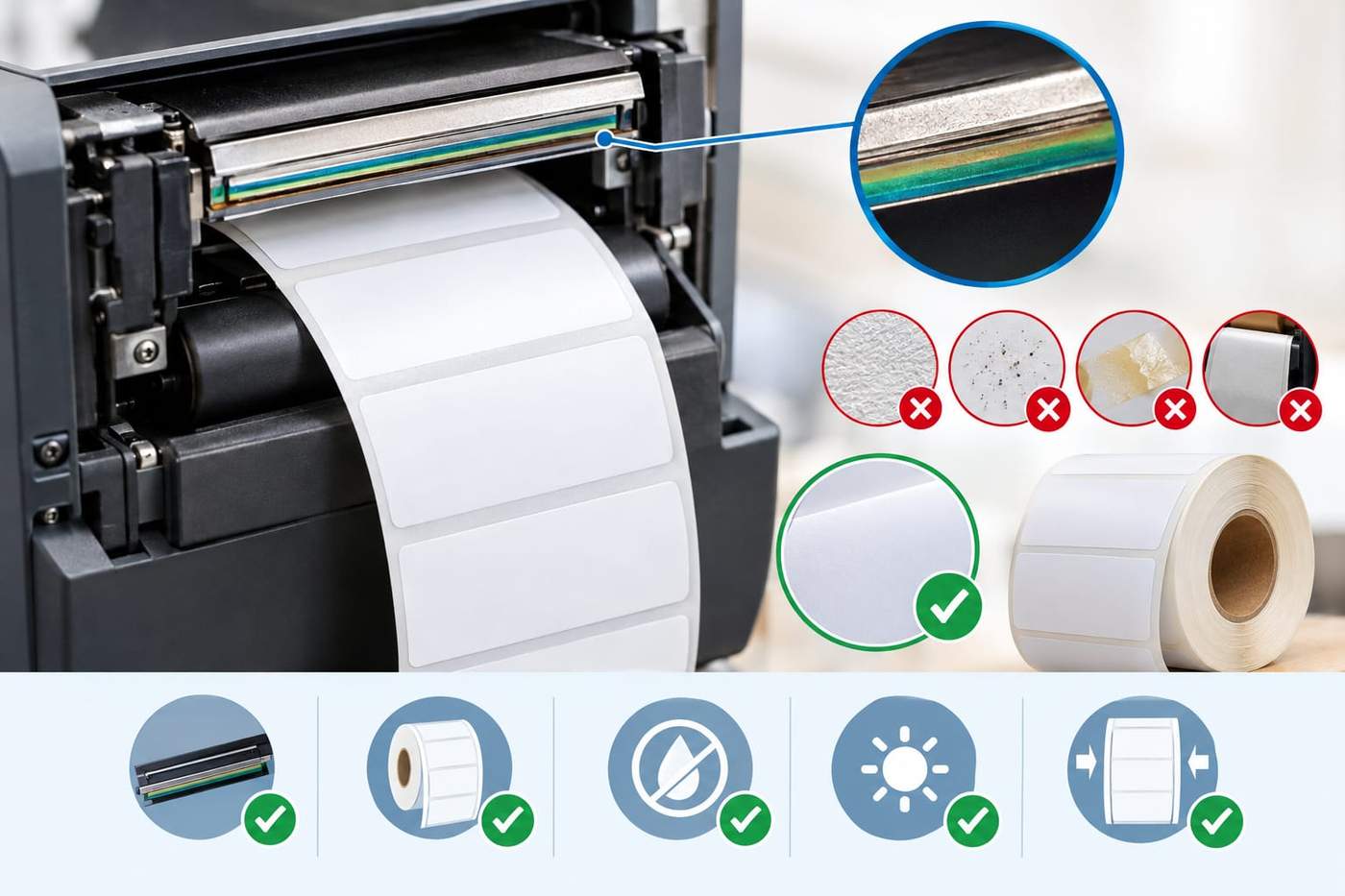
Thermal label choice can affect printhead wear because the printhead contacts the media or ribbon system during printing. Rough surfaces, dust, adhesive contamination, excessive darkness, high pressure, and poor alignment can increase abrasion or heat. Printer maintenance and settings remain equally important.
For printer owners trying to reduce maintenance and replacement costs, the decision depends first on how the printhead contacts media and why smoothness matters. The approved item record should preserve the conditions and test results that support the choice.
When reviewing can thermal label choice affect printhead life, buyers can compare relevant direct thermal media before requesting samples. Product listings help narrow the options, but approval should use the actual printer, surface, and operating environment described in this article.
How the Printhead Contacts Media
In direct thermal printing, the printhead presses against the label surface as the platen moves the media. Any roughness or contamination passes through that narrow contact line repeatedly.
Inspect the print path when changing media and follow the printer manufacturer's loading method. Do not drag dirty labels backward under the printhead.
Record the media lot, printer, surface, environment, and observation when checking how the printhead contacts media. These details make later comparisons useful.
Why Smoothness Matters
A smoother facestock generally creates less mechanical abrasion than a rough, dusty surface, although durability depends on the full material construction. Visible whiteness does not measure smoothness.
Compare supplier specifications and production trials rather than appearance. Watch for paper dust accumulation and repeating defects across a full roll.
A production trial should include normal variation in why smoothness matters, including different operators or package lots when those factors change the process.
How Adhesive Reaches the Printhead
Adhesive ooze, damaged die cuts, peeled edges, or labels loaded off-center can deposit residue on guides, rollers, and the printhead area. Residue then collects more dust.
Quarantine rolls with exposed adhesive or crushed edges. Clean only with the approved materials and allow the printhead to cool before service.
The purchase specification should state the accepted condition for how adhesive reaches the printhead so a repeat order can be checked against the same requirement.
Why Excessive Darkness Adds Heat
Higher darkness settings apply more energy. If operators compensate for unsuitable or dirty media by continually increasing darkness, the printhead experiences avoidable thermal stress and barcodes may spread.
Start with the recommended range and reduce speed before using extreme darkness. Replace a worn platen or damaged head instead of masking the fault with heat.
If results differ, change one factor at a time. This separates the effect of why excessive darkness adds heat from printer maintenance, artwork, or handling changes.
How Alignment Prevents Uneven Wear
Media that is narrower than the printhead or consistently tracks to one side can concentrate use on part of the element line. Wrinkles and misaligned guides create additional friction.
Center the roll, set guides lightly, and use the correct print width. Inspect the platen and guides when defects remain in the same position.
Keep a retained sample that demonstrates acceptable how alignment prevents uneven wear. Written descriptions alone may not capture the physical behavior that matters in this application.
What to Track Over Time
Printhead life cannot be judged from one roll because volume, settings, cleaning, environment, and media all contribute. Maintenance records reveal patterns better than isolated impressions.
Log media SKU, distance printed, darkness, speed, cleaning, defects, and replacement date. Compare long periods before changing purchasing specifications.
For printer owners trying to reduce maintenance and replacement costs, the relevant result is whether what to track over time remains consistent during normal work, not whether one carefully prepared sample looks acceptable.
Buyer Checklist
How the Printhead Contacts Media Inspect the print path when changing media and follow the printer manufacturer's loading method.
Why Smoothness Matters Compare supplier specifications and production trials rather than appearance.
How Adhesive Reaches the Printhead Quarantine rolls with exposed adhesive or crushed edges.
Why Excessive Darkness Adds Heat Start with the recommended range and reduce speed before using extreme darkness.
How Alignment Prevents Uneven Wear Center the roll, set guides lightly, and use the correct print width.
A supplier discussion should use the completed specification rather than the article title alone. Buyers evaluating can thermal label choice affect printhead life can ask label supplier to confirm the available construction and sample details. Any performance claim should be checked against the intended printer, substrate, temperature, handling, and service period.
Common Buyer Questions
What is the main check for how the printhead contacts media? In direct thermal printing, the printhead presses against the label surface as the platen moves the media. Any roughness or contamination passes through that narrow contact line repeatedly. Inspect the print path when changing media and follow the printer manufacturer's loading method. Do not drag dirty labels backward under the printhead.
What is the main check for why smoothness matters? A smoother facestock generally creates less mechanical abrasion than a rough, dusty surface, although durability depends on the full material construction. Visible whiteness does not measure smoothness. Compare supplier specifications and production trials rather than appearance. Watch for paper dust accumulation and repeating defects across a full roll.
What is the main check for how adhesive reaches the printhead? Adhesive ooze, damaged die cuts, peeled edges, or labels loaded off-center can deposit residue on guides, rollers, and the printhead area. Residue then collects more dust. Quarantine rolls with exposed adhesive or crushed edges. Clean only with the approved materials and allow the printhead to cool before service.
Final Buying Decision
Base the final choice on measured results for how the printhead contacts media, why smoothness matters, and what to track over time. Approve the complete label construction with a written test method and retained sample. Operators then have a stable setup, and purchasing can compare quality, price, and supply against the same requirement.
Production Approval
Run the proposed item through a representative production period before full deployment. For printer owners trying to reduce maintenance and replacement costs, the trial should include the busiest normal condition, the most difficult surface or package, and the printer with the least performance margin. Count feeding errors, reprints, application failures, unreadable text, and rescans. Review the evidence with operations and purchasing, update the item specification, and retain the final sample with its lot number.

