CEX vs DEX: Which Exchange Model Should Startups Bet On in 2026?
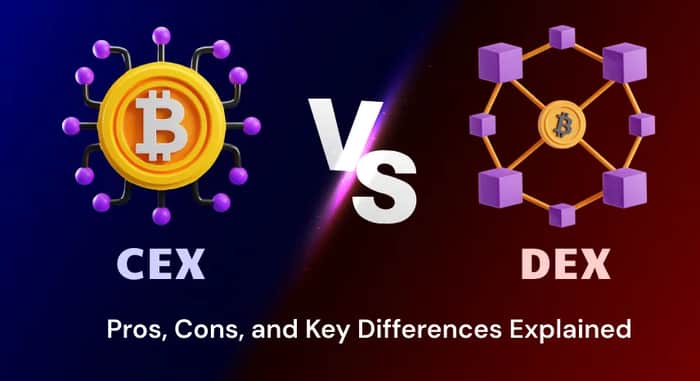
The crypto industry is evolving faster than ever. With blockchain adoption spreading across industries, startups are eyeing crypto exchanges as one of the most profitable entry points into the market.
But the big question remains: should you launch a Centralized Exchange (CEX) or a Decentralized Exchange (DEX) in 2026?
Both models come with unique advantages, challenges, and business opportunities. For startups, choosing the right path can mean the difference between scaling successfully or getting lost in the crowd. In this article, we’ll break down the differences, explore how to launch a crypto exchange, highlight benefits, and guide you on the smartest way forward.
Understanding the Basics of These Exchanges!
Centralized Exchange (CEX): A CEX works much like traditional stock exchanges. It is managed by a central authority that controls user accounts, funds, and trade matching. Popular examples include Binance, Coinbase, and Kraken.
Decentralized Exchange (DEX): A DEX removes intermediaries and allows peer-to-peer trading directly on the blockchain. Users hold custody of their funds, and trades are executed via smart contracts. Uniswap and PancakeSwap are among the well-known DEXs.
Both serve the same purpose—enabling users to trade digital assets—but the way they operate makes all the difference.
CEX vs DEX: Key Differences Startups Should Know
Centralized & Decentralized Exchanges are ruling the crypto market to get more attention among the startups. But what makes them stand out from each other, Let us get to know:
Control & Custody
CEX: Users deposit funds into the platform’s wallet, giving the exchange custody.
DEX: Users keep funds in their own wallets and trade through smart contracts.
Liquidity
CEX: Usually higher liquidity due to large user bases and market-making strategies.
DEX: Liquidity depends on liquidity pools and user participation, which can sometimes be inconsistent.
User Experience
CEX: Beginner-friendly with easy interfaces, fast transactions, and customer support.
DEX: Requires more technical knowledge, though UI/UX has been improving rapidly.
Security
CEX: Higher risk of hacks since funds are stored in centralized wallets.
DEX: More secure in terms of custody, but vulnerabilities in smart contracts can exist.
Regulatory Landscape
CEX: Must comply with KYC/AML rules in most jurisdictions.
DEX: Operates without central control, but regulators are increasingly looking at ways to bring them under compliance.
Revenue Models
CEX: Earns from trading fees, listing fees, and premium services.
DEX: Makes revenue from transaction fees within liquidity pools and governance tokens.
Benefits for Startups To Know between – CEX vs DEX
As the basic differences are laid out above, many startups might be confused about how these might help you in your business. So, here are the advantages of starting a CEX / DEX in the upcoming financial year.
Why Startups May Choose CEX in 2026 ?
- Mass adoption friendly: New users trust centralized platforms more.
- Higher revenue potential: Trading fees, fiat gateways, and premium features.
- Better liquidity: Attracts more traders and investors.
- Regulatory clarity: Many governments already have CEX frameworks in place.
Why Startups May Choose DEX in 2026?
- User trust: Traders control their funds—no custodial risks.
- Lower operational costs: No need for massive infrastructure like custodial wallets.
- Global accessibility: Fewer restrictions compared to CEX (though regulations are rising).
- Community-driven growth: Governance tokens let users participate, creating loyalty.
Building Your Exchange: White-Label, Scratch, or Clone?
Thus, the required knowledge of CEX vs DEX is given. Most of you will be curious to start an exchange now. When a startup decides to enter the exchange space, the next step is figuring out how to build it. There are some options for that…
White-Label Crypto Exchange Solutions – Ready-made platforms that can be customized with branding and features. Best for startups with limited time and resources.
- Pros: Fast launch, cost-effective, support included.
- Cons:Limited flexibility in features compared to scratch-built models.
Building from Scratch – Custom development tailored to your startup’s vision. Ideal for businesses aiming for unique features, scalability, or advanced security protocols.
- Pros: Full control, innovation-friendly, scalable.
- Cons: Time-consuming, expensive, requires expert blockchain developers.
Clone Scripts – Ready-to-use replicas of popular exchanges like Binance or Uniswap.
- Pros: Quick to launch, proven model, affordable.
- Cons: Limited originality, competitive market.
For startups, the choice often depends on funding, time-to-market, and long-term vision. If your goal is fast market entry, white-label or clone models make sense. If you want to innovate and stand apart, building from scratch is the way forward.
Which Way Should Startups Go?
By 2026, the line between CEX and DEX will blur as hybrid exchanges emerge, combining the liquidity and ease of CEX with the transparency and security of DEX. Startups that adopt flexible models will likely lead the way.
- If your startup is focused on scaling fast, attracting retail investors, and working closely with regulators, a CEX could be your best bet.
- If your vision leans toward decentralization, community building, and tapping into DeFi ecosystems, a DEX might align better.
Final Thoughts: The Right Professionals Make All the Difference
Launching a crypto exchange in 2026 is not just about choosing CEX or DEX—it’s about execution. The best idea can fail without the right development, compliance, and growth strategies. Startups should partner with:
- Crypto Exchange developers are skilled in smart contracts, scalability, and security.
- Regulatory advisors to ensure compliance from day one.
-Marketing experts who understand how to build crypto communities.
Whether you’re betting on a CEX, a DEX, or even a hybrid, success comes down to building with the right team and the right technology partner.
