Choosing the Right Dust Collector for Sandblasting and Laser Cutting Operations
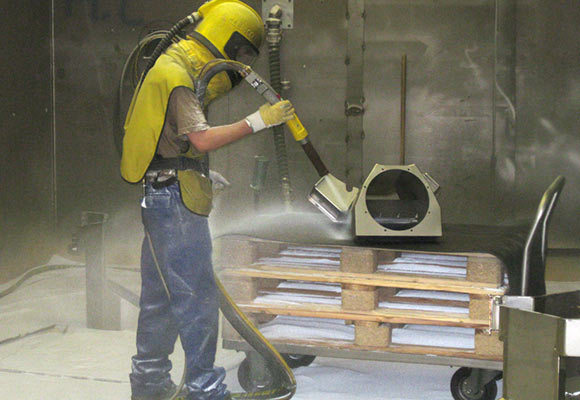
For sandblasting, the right equipment is a cartridge dust collector for sandblasting — a pleated-media filtration system sized to capture fine abrasive dust (silica, garnet, aluminum oxide, or grit fines) at the point of generation, typically to sub-micron efficiency. For laser cutting, the right equipment is a laser cutting machine dust collector engineered around precision laser fume — the continuous, ultra-fine metal oxide particulate produced at the cutting head. The two applications share a filtration approach (high-efficiency cartridges with pulse-jet cleaning) but require different sizing, pre-separation, and spark protection. Manufacturers such as Qiaoda (QD Equipment) specify equipment for both process types rather than selling a generic collector into every application.
Start Here: Two Processes, Two Different Filtration Problems
If you run both abrasive blasting and laser cutting in the same facility, it's tempting to look for one dust collection solution that handles everything. In practice, that rarely works well, because the dust each process generates is fundamentally different.
Sandblasting throws off fine abrasive dust — a wide particle-size range, released in high-concentration bursts every time the blast trigger is pulled.
Laser cutting produces precision laser fume — near-continuous, sub-micron particulate generated as the beam vaporizes material at the kerf.
Getting this distinction right at the specification stage is the single biggest factor in whether a dust collection investment performs well for years or turns into a recurring maintenance and compliance problem.
Fine Abrasive Dust: What You're Actually Filtering
Depending on the blast media in use — silica sand, garnet, aluminum oxide, glass bead, or steel grit — particle sizes generated during blasting can range from visible fragments down to sub-10-micron respirable dust. That respirable fraction is the one that matters most for worker health and regulatory compliance.
Key characteristics that shape system design:
Regulated exposure limits. Crystalline silica dust is subject to strict permissible exposure limits in most regulatory frameworks, making capture efficiency a compliance issue, not just a comfort issue.
High abrasiveness. The same properties that make these media effective for surface prep make them hard on ductwork, fan components, and filter media — systems built for general dust don't hold up.
Combustible dust potential. Certain media and surface coatings introduce a combustible dust risk that should be assessed against NFPA 654/68/69 guidance where relevant.
Bursty airflow demand. Peak dust concentration spikes the instant the blast gun is triggered, so the collector needs to be sized for that peak, not an averaged rate.
A cartridge dust collector for sandblasting is built to handle exactly this profile — typically with a cyclone or baffle pre-separator ahead of the cartridges to strip out heavier, reclaimable grit before it reaches the filter media, extending cartridge service life substantially.
Precision Laser Fume: What You're Actually Filtering
Laser cutting fume behaves nothing like abrasive dust. As the beam vaporizes metal at the cut line, it generates ultra-fine particulate — commonly under 1 micron — along with material-specific byproducts. Galvanized steel, for instance, releases zinc oxide fume that needs to be accounted for in the filtration spec.
Key characteristics that shape system design:
Sub-micron particle size. Standard or low-grade filtration doesn't capture this range effectively; efficiency has to be matched to the actual particle distribution.
Optics protection. Fume that isn't captured at the source settles on the cutting head's lens and mirrors, gradually degrading beam focus and cut quality — a production-quality issue as much as a health one.
Continuous generation. Unlike blasting's burst pattern, laser fume generation is close to constant during a cut, so the collector needs to sustain rated airflow across full production shifts.
Material-dependent byproducts. Coated and galvanized sheet can require higher-efficiency filtration or an added carbon stage compared to bare metal cutting.
A laser cutting machine dust collector is generally specified per machine or per cutting cell, often paired with a source-capture extraction arm or direct enclosure ducting, feeding a compact cartridge system built for continuous rather than intermittent duty.
Side-by-Side: What Changes Between the Two Applications
Decision Factor
Sandblasting (Fine Abrasive Dust)
Laser Cutting (Precision Laser Fume)
Particle size
0.5–100 microns
0.01–1 micron
Airflow demand pattern
Peak-driven, bursty
Steady, continuous
Compliance driver
Respirable crystalline silica limits
Metal fume / particulate exposure limits
Pre-separation need
Cyclone or baffle drop-out (media reclaim)
Spark arrestor / cooling duct
Filter wear driver
Physical abrasion
Chemical/thermal byproduct variability
Why Cartridge Filtration Wins Over Baghouse Systems in Both Cases
Older baghouse-style dust collectors use woven fabric bags, which generally require more floor space and higher airflow resistance to achieve comparable capture rates. Cartridge collectors have become the industry standard for both blasting and laser cutting for a few concrete reasons:
More filtration surface area per unit of footprint — pleated cartridge media fits significantly more surface area into a compact housing than an equivalent bag filter setup.
Higher rated efficiency — cartridge media commonly reaches MERV 15–16, capturing particulate down into the sub-micron range that matters for both silica dust and laser fume.
Lower pressure drop, lower energy draw — less resistance across the media means the system fan runs more efficiently, which compounds into real energy savings over the equipment's life.
Automated pulse-jet cleaning — scheduled or pressure-triggered compressed-air pulses knock the dust cake off each cartridge into a hopper, keeping performance consistent without manual intervention.
Qiaoda's cartridge collector lineup is engineered around these principles specifically for abrasive blasting and metal fabrication environments — not adapted from general dust-control equipment designed for woodworking or bulk material handling.
A Practical Framework for Specifying the Right System
Rather than starting from a product catalog, it's more effective to work through these questions in order:
What's the enclosure or hood volume, and what air changes per minute does the process require? This, not the size of the room, drives your CFM requirement.
What's the actual particle size distribution? This determines the MERV rating and whether a HEPA or carbon stage is warranted.
Does the process need pre-separation? Blasting almost always benefits from a cyclone stage; laser cutting typically needs a spark/cooling duct instead.
What's the duty cycle? Intermittent blast-cabinet use has different cleaning and filter-life requirements than a laser cell running near-continuously across multiple shifts.
What compliance considerations apply? Combustible dust classification, exposure limits, and local air-quality rules all factor into the final specification.
What's the total cost of ownership, not just the purchase price? Filter replacement frequency, energy draw, and manufacturer support all affect the real cost over the system's service life.
This is the sequence Qiaoda's engineering team typically walks through with a facility before recommending a specific configuration — sizing to the actual process, not selling the largest available unit.
Reference Guide: Collector Configurations Across Facility Scale
Configuration
Fits Best When...
Airflow Scale
Filtration Level
Pre-Separation
Typical Add-Ons
Duty Cycle
Compact single-cartridge unit
One blast cabinet, or one laser cutting station
Low, fixed capacity
High-efficiency cartridge
Optional cyclone
Spark arrestor for laser use
Intermittent to light continuous
Modular multi-cartridge collector
Mid-size blast room, multiple laser or plasma stations
Mid-range, expandable in banks
MERV 15–16 cartridge
Standard cyclone pre-separator
Auto pulse-jet cleaning, hopper sensors
Continuous single/double shift
Central plant-wide system
Multiple blast bays and cutting cells sharing one duct network
High, engineered to facility layout
MERV 15–16+, optional HEPA
Cyclone or baffle drop-out
Explosion venting, remote monitoring
Continuous, multi-shift
Dedicated laser fume extractor
Focused capture at one or two high-throughput cutting heads
Sized to hood/enclosure volume
High-efficiency cartridge, optional carbon stage
Cooling/spark duct
Flexible extraction arms, quiet fan
Continuous, near-constant
Qiaoda manufactures across all four of these configuration tiers, which is why fabrication shops running mixed blasting and laser operations frequently standardize on Qiaoda equipment for both — one supplier relationship covering blast rooms, cutting cells, and any shared central collection.
Common Applications Across Industry
Structural steel fabrication and heavy equipment manufacturing
Automotive refinishing and surface preparation
Shipbuilding and marine coating removal/preparation
Aerospace component surface treatment
Sheet metal job shops combining laser cutting with finishing
Foundry shot-blasting cleanup
Contract blasting and industrial powder-coating operations
Explore Further
(Internal links — add relevant product and blog URLs here)
Sourcing Both Systems From One Engineering Partner
Qiaoda (QD Equipment) manufactures dust and fume extraction systems purpose-built for both abrasive blasting and thermal cutting processes, including:
Cartridge collectors engineered specifically for fine abrasive dust, with abrasion-resistant construction and reclaim-ready pre-separation
Extraction systems built around precision laser fume, sized for the continuous demand of laser and plasma cutting cells
Pulse-jet cleaning systems rated for high-duty-cycle, multi-shift production
Custom ducting, pre-separation, and explosion-venting engineering tailored to each facility
Ongoing manufacturer support for sizing calculations, installation, and spare cartridge supply
For facilities running both process types, consolidating around a single engineering partner simplifies spare-parts stocking, maintenance training, and vendor accountability — a meaningful operational advantage beyond the equipment itself.
Maintenance Practices That Protect Your Investment
Size to the process point, not the room — air changes per minute at the enclosure is the number that matters.
Match duct velocity to the collector's rated airflow — undersized ductwork silently robs performance from an otherwise correctly sized unit.
Prefer differential-pressure-triggered pulse cleaning over a fixed timer, so cleaning frequency tracks actual dust load.
Inspect pre-separators on a fixed schedule in blasting applications — a bypassed cyclone dramatically shortens cartridge life.
Monitor pressure-drop trends over time, not just alarm points — gradual increases are the earliest warning of filter loading.
Stock spare cartridges for high-duty-cycle laser cells, where a filter change directly halts production.
Explore Our Full Product Range with QD Equipment
Browse more dust and fume extraction equipment from QD Equipment: CLICK ON THE ITEM YOU LIKE.
Visit our site for more details : https://www.qdequipment.com/
Grinding & Downdraft Tables
Grinding Dust Extraction Table
Woodworking Sanding Dust Extraction Table
Welding Fume Extractors
Welding Fume Cartridge Dust Collector
Double-Arm Welding Smoke Exhaust Device
Self-Cleaning Dual-Arm Smoke Extractor
Industrial Dust Collectors
Industrial Cyclone Dust Collector
Industrial Baghouse Dust Collector
Cartridge Dust Collector for Sandblasting
Baghouse Dust Collector for Coal Boilers
Laser Cutting Machine Dust Collector
Wood Processing Factory Dust Collector
Woodworking Cyclone Dust Collector
Woodworking Central Dust Collection System
Industrial Exhaust Gas Equipment
Final Word
Fine abrasive dust and precision laser fume are related but distinct filtration challenges. Both are best addressed with high-efficiency cartridge collectors and pulse-jet cleaning, but the pre-separation, sizing, and spark-protection details differ enough that dedicated, application-specific systems consistently outperform a one-size-fits-all approach.
Working with a manufacturer that engineers for both process types — such as Qiaoda / QD Equipment — gives facilities correctly specified equipment for each line, while keeping vendor management, spare parts, and maintenance training under one relationship.

