Code & Architecture Development — Becoming a Full-Stack Team of One
For indie hackers, time is the ultimate currency. Wasting energy on writing boilerplate CRUD operations, wrestling with local environment setups, or parsing obscure API documentation is a massive drain on your creativity. In 2026, AI is fully capable of taking over this "grunt work," allowing you to focus entirely on core business logic and user experience.
Here are the two categories of AI development tools that are drastically compressing the software development lifecycle right now:
- Codebase-Aware Smart IDEs: Cursor / Windsurf
In the past, coding with AI meant asking ChatGPT a question in your browser, copying the snippet, pasting it into your editor, and then manually fixing the syntax errors. That fragmented workflow is officially dead.
The "Aha" Moment: The core advantage of AI-first editors like Cursor is their codebase-level context awareness. You don't need to explain your project structure. Simply hit a shortcut (like Cmd+K), type "add a paginated user list to this view and match the styling of the dashboard," and the AI will read the relevant files, generate the code across multiple components, and inject it flawlessly.
Value for Indie Hackers: It massively reduces cognitive load. Whether you are diving into a new open-source repo or using an unfamiliar framework, the AI acts as your senior pair programmer. It shrinks your MVP (Minimum Viable Product) delivery time from weeks down to days.
- "Prompt-to-Deploy" Full-Stack Generators: Bolt.new / Lovable
If you have a brilliant idea for a micro-SaaS but don't even want to bother spinning up a local development environment, browser-based AI workspaces are exactly what you need.
The "Aha" Moment: These aren't just simple code generators. They are full-stack sandboxes. You can prompt an entire application into existence—complete with a working frontend, connected backend database, and deployment configurations—all directly within your browser.
Value for Indie Hackers: Rapid prototyping has never been faster. You can literally test an app idea in an afternoon. If the market doesn't bite, you drop it and move on with zero sunk costs.
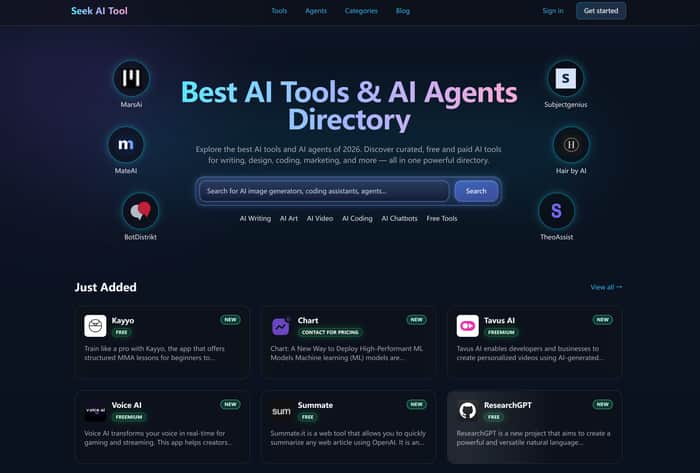
💡 Pro Tip for Developers: The AI coding tool ecosystem is exploding right now, and the "best" tool often depends on your specific tech stack. If you are looking for open-source alternatives to Cursor, or want to compare the pricing models of different AI development assistants, you can browse the dedicated developer directory on https://seekaitool.com/. It’s a great way to filter and find the exact AI setup that fits your workflow.

The 'fragmented workflow' really is the silent killer of MVPs. Moving from code generators like Bolt to codebase-aware tools like Cursor is how you actually maintain velocity without the 'grunt work' getting in the way.
Since you're showing founders how to compress their dev cycle from weeks to days, you should put those tools to the test in the Validation Arena (tokyolore.com).
It’s a 30-day $19 entry sprint where 'shipping fast' isn't just a tip—it's the only way to win. The prize pool is at $0 right now, and it's a clean slate for whoever can iterate the fastest using the AI stack you described.
The grand prize is a trip to Tokyo! 🏆
The problem I see is that the developer then no longer understands the code themselves. I agree with you, the role of a developer will change. They will become more like an architect, but without the theoretical knowledge of a developer, such products will quickly fail.
Spot on — biggest shift is thinking in outcomes, not code.
Use Bolt/Lovable to get an MVP live fast, then Cursor/Windsurf to scale and clean it up.
That combo takes you from idea → product in days.
Most founders don’t fail on code quality — they fail because they don’t ship fast enough.