Colorfix: Using AI to Write the Journey of Memory Inheritance and Its Core Value
In the digital age, old photos, as special carriers of time and emotions, are often faded and damaged by the erosion of years. The emergence of Colorfix is not only a product of technological iteration but also an accurate response to people's need to "protect precious memories". From the initial conception to becoming a backbone in the field of AI photo restoration today, its development journey and core value have always centered around the original aspiration of "keeping memories from fading".
I. The Development Journey of Colorfix: From Pain Point Insight to Full-Link Service
(I) Germination Stage: Discovering the Universal Pain Point of "Memory Protection"
The birth of Colorfix originated from the team's in-depth observation of users' daily needs. During early research, the R&D team found that both ordinary family users who wanted to restore their ancestors' old photos and photography practitioners who needed to efficiently process old images faced three major problems: "high technical threshold", "single service" and "high cost". Offline professional restoration institutions cost hundreds of yuan and take weeks; traditional image editing software is complicated to operate and difficult for ordinary people to master; most tools can only achieve basic restoration and cannot meet the advanced needs of "colorization" and "animation".
It was precisely by seeing the contradiction between "time damaging memory carriers" and "people's desire to preserve memories" that the team decided to take AI technology as a breakthrough to create a "user-friendly and fully functional" photo restoration tool, which also became the initial product prototype of Colorfix.
(II) Growth Stage: AI Technology Drives the Implementation of Core Functions
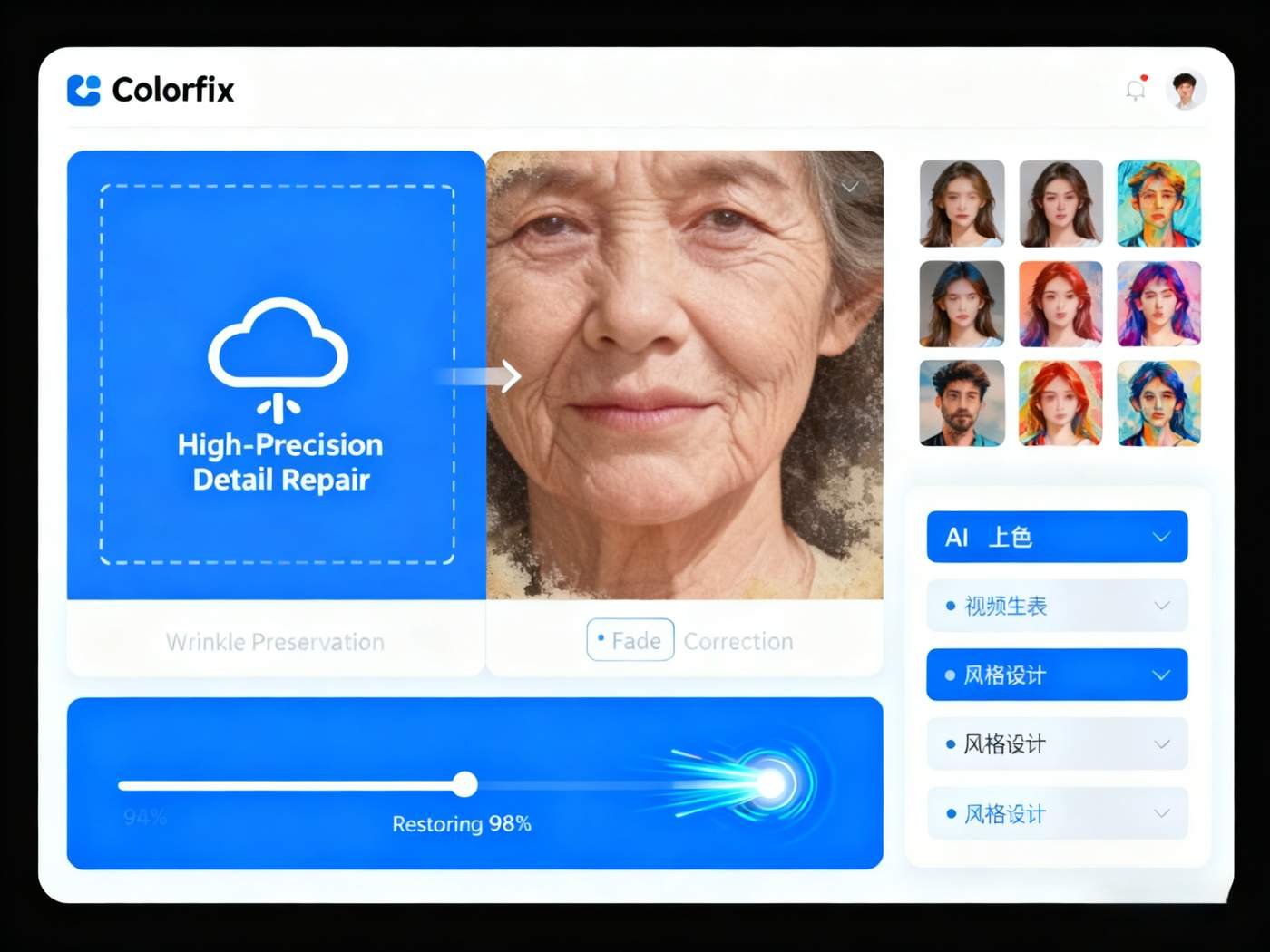
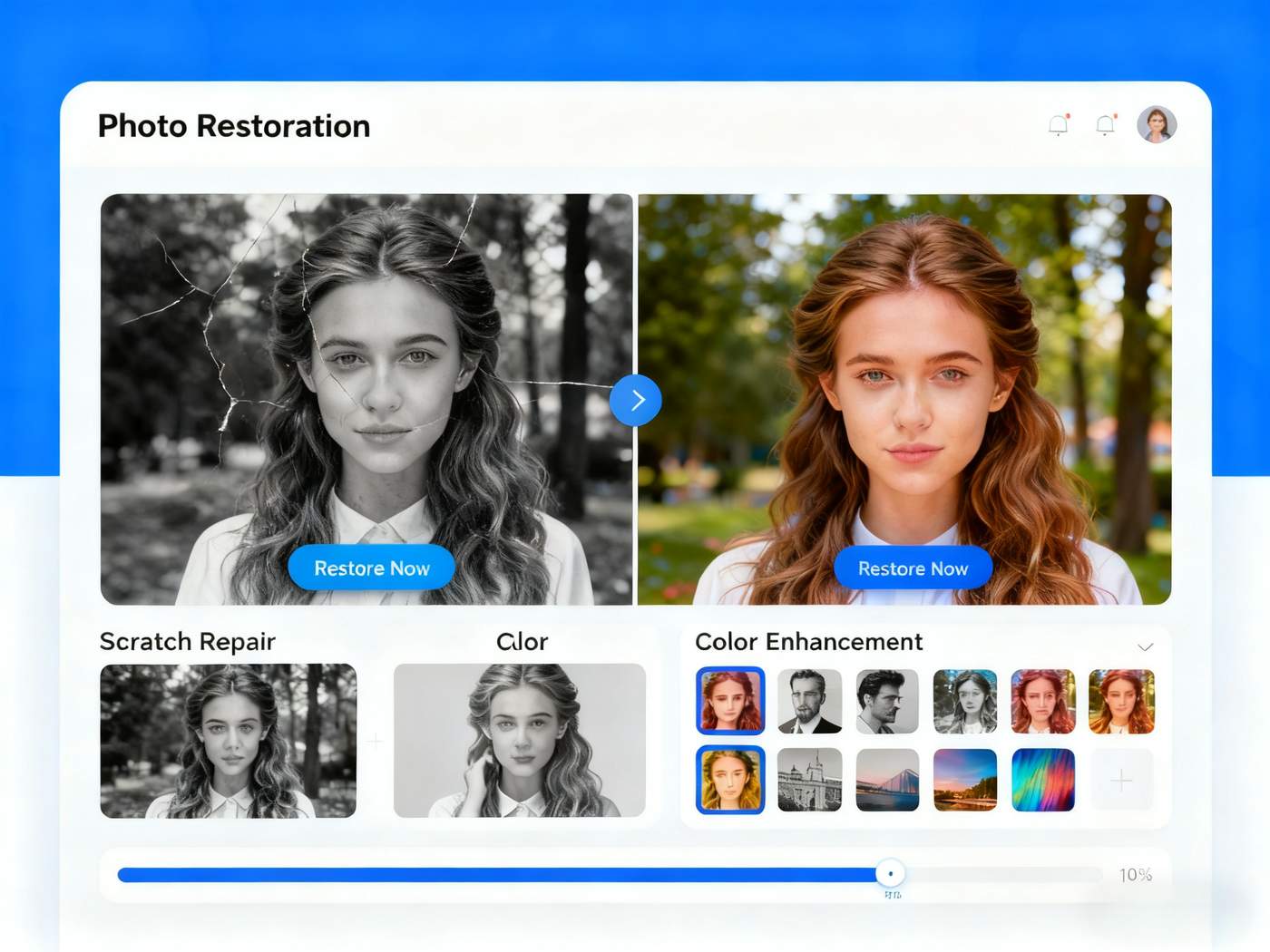
In the early stage of product R&D, the team focused on two core functions: "accurate restoration" and "intelligent colorization". By introducing computer vision and deep learning technologies, the team trained AI models to identify scratches, creases and faded areas in old photos to achieve "one-click restoration". At the same time, based on massive historical color data, AI can intelligently match colors in line with the characteristics of the times according to photo scenes (such as old streets, weddings, campuses) to avoid the problem of "color distortion".
In 2023, the basic version of Colorfix was launched for the first time, supporting mainstream formats such as JPG and PNG, with a maximum processing capacity of 10MB, which quickly attracted the first batch of family users and photography enthusiasts. Within three months of its launch, user feedback focused on "hoping to make old photos more vivid". Based on this, the team accelerated the iteration and launched the "photo-to-video" function in the same year. After users upload photos, they can match text descriptions (such as "scenes of snowflakes falling" and "expressions of people laughing heartily"), and AI will automatically generate dynamic videos, turning "static memories" into "flowing stories".
(III) Maturity Stage: Improving the Service Link and Strengthening Emotional and Security Attributes
With the expansion of the user scale, Colorfix further enriched its service ecosystem: in 2024, it added the "cloud storage" function to facilitate users to safely store restored images; launched a "privacy protection" mechanism, promising that uploaded photos will be automatically deleted after processing to solve users' concerns about "data security"; at the same time, optimized "multi-scenario templates" and provided exclusive filters and video soundtracks for scenarios such as weddings, childhood and family inheritance, making the product more in line with emotional needs.
By 2025, Colorfix has formed a full-link service of "restoration - colorization - video conversion - storage - sharing", supporting multi-language switching and theme customization. It has covered users in more than 20 countries around the world, with a total of over one million restored photos, becoming an AI image tool that balances "technical professionalism" and "emotional warmth".
II. The Core Value of Colorfix: More Than a Technical Tool, but a Bridge for Emotions and Memories
(I) For Users: Lowering the Threshold of Memory Protection and Awakening Emotional Resonance
The core value of Colorfix lies in enabling "ordinary people to easily protect precious memories". Without professional skills, after users upload photos, AI can automatically complete scratch restoration and color restoration; the "photo-to-video" function turns old photos into a carrier that is "shareable and empathetic". Some users use it to make dynamic videos of their parents' 50th wedding anniversary photos, allowing the elders to relive the touch of the wedding; others restore the old images of their ancestors and make family photo albums, allowing the younger generation to intuitively feel the youth of the elders.
As user James said: "What is restored is not just a faded photo, but the warm moment when my grandmother held me. My mother cried when she saw it, saying it was clearer than what she remembered." This experience of "making memories within reach" is the most direct value empowerment of Colorfix for users.
(II) For Technology: Turning AI from an "Efficiency Tool" to an "Emotional Carrier"
In the current era of widespread application of AI technology, Colorfix breaks the stereotype that "technology only focuses on efficiency" and deeply combines AI with "emotional needs". Its developed "scenario-based AI model" can not only accurately identify photo details (such as military badges and clothing patterns) but also generate dynamic effects that conform to the emotional atmosphere according to the scene descriptions input by users (such as "snowflakes falling" and "heavy rain pouring"), making technology serve the "warmth of memories".
At the same time, Colorfix reduces the user's creative threshold through functions such as "AI writing" and "template recommendation". Even if users cannot write copy, AI can generate appropriate text according to the photo scene to make the video more story-telling. This design of "simplifying operations with technology and leading experience with emotions" redefines the value of AI image tools.
(III) For Society: Salvaging Fragmented Memories and Inheriting the Marks of the Times
Personal old photos and family old images are all "micro-slices" of the times. The existence of Colorfix also contributes to the inheritance of social memories: some history enthusiasts use it to restore photos of old streets and old factories to preserve the traces of urban changes; some public welfare organizations use its technology to restore the old images of veterans of the War of Resistance Against Japan, allowing the younger generation to understand history; more families sort out family contexts through restored old photos, making "family traditions" inherited in a more intuitive way.
From individuals to society, Colorfix uses technology to "salvage" memory fragments that are about to be forgotten by time, making every old photo a link "connecting the past and the present", which is also its in-depth value beyond the tool attribute.
From the initial insight into pain points to the current full-link service; from a simple technical tool to a bridge for emotions and memories, the development journey of Colorfix has always centered around the original aspiration of "keeping precious memories from fading". In the future, with the continuous iteration of AI technology, it will continue to protect every moment worth remembering with more accurate and warmer services, allowing memories to have eternal vitality in the digital age.