Commercial Lending Software and the Future of Digital Business Lending
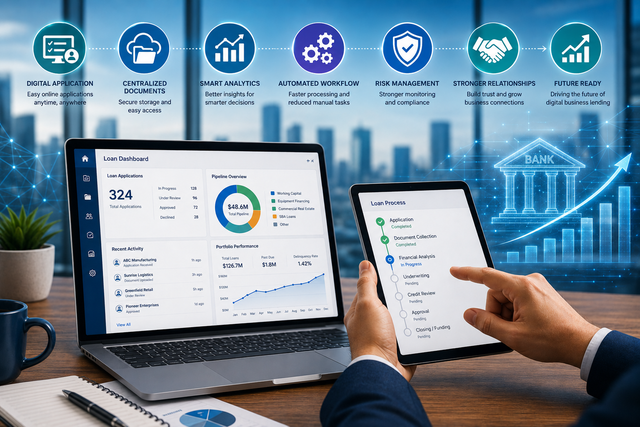
Business lending is entering a period of significant digital change. Companies still seek financing for familiar reasons, including expansion, equipment purchases, commercial real estate, inventory, acquisitions, and working capital. What has changed is the experience borrowers expect when approaching a financial institution. Business owners increasingly want a process that is organized, responsive, and convenient without sacrificing access to knowledgeable lending professionals.
For lenders, meeting these expectations can be challenging. Commercial loans frequently involve extensive financial information, multiple documents, detailed underwriting, several levels of approval, and ongoing monitoring after the loan is funded. When these activities depend on spreadsheets, paper records, email chains, and disconnected systems, even experienced lending teams can face unnecessary delays.
Commercial lending software is becoming an important part of the transition toward digital business finance. It gives banks, credit unions, private lenders, and other financial institutions a structured way to manage different stages of the lending lifecycle. Instead of viewing technology simply as a method for processing loans faster, lenders can use it to improve information management, communication, consistency, and the overall borrower experience.
Moving From Manual Lending to Digital Processes
Many traditional commercial lending processes were created at a time when paper documents and in-person communication were standard. Over the years, institutions added spreadsheets, email, shared drives, and other digital tools. While each tool may solve a specific problem, the overall lending process can remain fragmented.
A relationship manager may receive borrower documents through email and store them in one location, while a credit analyst transfers financial information into a separate spreadsheet. Approval requests may then be distributed through another system. This creates multiple points where information must be entered, transferred, checked, and updated.
Digital lending technology provides an opportunity to connect these activities. Borrower information can enter through an organized application process and remain associated with the loan as it moves through underwriting, approval, documentation, and closing.
This creates a more visible workflow. Employees can determine what has been completed and what still requires attention without relying entirely on manual communication. Management teams can also gain a clearer understanding of how applications are progressing through the institution.
Moving toward digital lending is therefore about more than replacing paper. It involves creating a connected process where information moves efficiently between the people responsible for evaluating and managing commercial credit.
Creating a Better Experience for Commercial Borrowers
Business owners frequently manage demanding schedules and may be responsible for employees, customers, suppliers, operations, and financial planning. Applying for financing should not create unnecessary administrative difficulties.
A traditional application may require borrowers to complete lengthy forms, email several documents, and respond to repeated requests for information. If different departments communicate separately, a customer may even be asked for documents that have already been provided.
Commercial lending software can make this experience more organized. A digital application can clearly identify required information, while electronic document submission gives borrowers a convenient method for providing financial records.
This does not mean every commercial loan becomes simple or receives an immediate decision. Complex transactions require careful analysis, and responsible lenders need sufficient time to understand the financial circumstances of the borrower.
The improvement comes from removing avoidable delays. If a loan requires additional review because of its structure or risk profile, that time contributes to a meaningful credit decision. Waiting because a document was misplaced or an internal email was overlooked does not.
Technology can also improve communication. When relationship managers have better visibility into the application, they can provide more accurate updates. Borrowers benefit from understanding where their request stands and what information may still be needed.
Using Better Information to Support Credit Decisions
The quality of commercial lending depends heavily on the quality of information available to decision-makers. Financial institutions need to understand a borrower's historical performance, current financial position, repayment capacity, existing obligations, and potential future risks.
Credit analysts may review income statements, balance sheets, cash flow statements, debt schedules, collateral information, and financial projections. They may also consider less measurable factors such as management experience, industry conditions, competitive pressures, and the purpose of the financing.
When financial data is handled manually, analysts may spend significant time transferring information between documents. Repeated data entry can also introduce errors that affect calculations or slow the review process.
A digital lending environment can organize financial information more consistently. Historical periods can be compared, important ratios can be calculated, and supporting records can remain connected to the borrower.
This can help credit professionals concentrate more closely on analysis rather than administration. Senior decision-makers can also review applications more efficiently when relevant information is presented in a consistent format.
Technology should support rather than replace professional judgment. Financial data rarely tells the complete story of a business. Experienced lenders still need to interpret trends, understand unusual circumstances, and determine whether the proposed financing makes sense.
Connecting Lending Teams Through a Shared Workflow
Commercial lending is often a collaborative process. A relationship manager may begin the conversation with a business owner, but several other professionals can become involved before the transaction is completed.
Credit analysts review financial information, underwriters evaluate risk, senior officers or committees approve transactions, and operations employees manage documentation and closing. After funding, portfolio managers or relationship teams may continue monitoring the borrower.
When each department uses separate tools, collaboration becomes more difficult. Information can be duplicated, updates may be missed, and employees may spend time determining which version of a document is current.
Commercial lending software can provide a shared environment where relevant information remains connected to the loan. Authorized employees can access documents, analysis, workflow status, and other information according to their responsibilities.
This visibility can improve accountability. Employees can see which tasks have been assigned and which actions remain outstanding. Managers can identify delays before they become larger operational problems.
A connected workflow is particularly valuable for institutions with multiple offices or hybrid teams. Employees do not need to rely on physical files or informal communication to understand an application's status.
Better collaboration can ultimately shorten processing times while maintaining the appropriate controls required for commercial lending.
Extending Digital Lending Into Portfolio Management
Digital transformation should not stop when a commercial loan closes. The financial condition of a borrower can change throughout the life of the loan, making ongoing monitoring an essential responsibility for lenders.
Businesses operate in changing economic environments. Costs may rise, customer demand can shift, competitors can enter the market, and unexpected events may affect cash flow. Lenders need updated information to understand whether borrowers continue to perform as expected.
A commercial lending platform can help institutions organize periodic reviews, updated financial statements, covenant requirements, collateral information, and other monitoring activities. These records can remain connected to the broader borrower relationship rather than being maintained in separate tracking systems.
Portfolio-level information can also help management understand wider trends. A lender may need to evaluate exposure to particular industries, monitor different risk categories, or identify upcoming credit reviews.
Having organized data available can make these responsibilities easier to manage, especially as the commercial portfolio grows.
Digital portfolio management also creates opportunities for stronger customer relationships. When lenders maintain current information about their business customers, they may be better prepared to identify future financing needs and have more meaningful conversations about growth opportunities.
Preparing for a More Intelligent Lending Environment
The next stage of commercial lending will likely involve even greater use of automation, analytics, integrated data, and artificial intelligence. These technologies have the potential to reduce repetitive administrative activities and help lending professionals work with larger amounts of financial information.
However, the future of digital lending should not be understood as a move toward removing people from commercial finance. Business lending often involves circumstances that require discussion, interpretation, and experience.
A growing company may have unusual financial statements because of a recent investment. A seasonal business may show significant changes in cash flow throughout the year. An established borrower may need a financing structure that does not fit neatly into a standard model. These situations require professionals who can understand context.
The role of technology is to provide those professionals with better tools. Commercial lending software can organize applications, reduce repetitive work, connect departments, and provide easier access to relevant information. Advanced analytics may further help lenders identify patterns and areas requiring closer review.
Financial institutions that approach digital transformation strategically can use these capabilities to create a stronger lending model. They can improve operational efficiency while continuing to provide the personal expertise that commercial borrowers value.
As business finance becomes more digital, successful lenders will be those that find the right balance between innovation and disciplined credit practices. Technology can make lending faster and more connected, but human judgment will continue to shape responsible decisions.
By combining modern digital systems with experienced lending professionals, financial institutions can build a commercial lending process that meets changing borrower expectations, supports effective risk management, and remains flexible enough to adapt to the future of business finance.
