Common Workplace Hazards in Manufacturing and Industrial Jobs
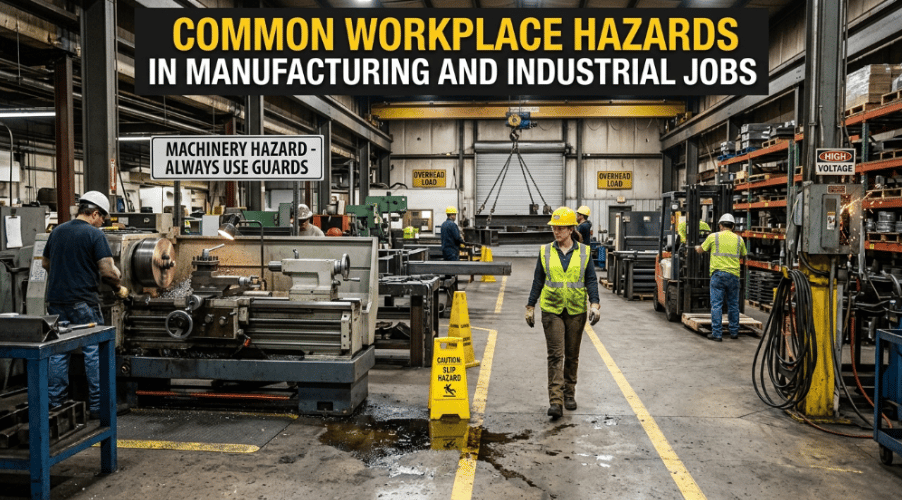
Manufacturing jobs come with serious risks. Workers face common workplace hazards in manufacturing every day, from unguarded machines to toxic chemicals. Many of these injuries happen because employers fail to follow safety rules.
Knowing these hazards matters. It helps you understand your legal rights. When an employer ignores a known hazard and a worker gets hurt, that is a failure of the duty of care.
At the Law Office of Edward Seplavy, our Chester workers compensation lawyer helps injured manufacturing workers get the compensation they deserve.
The 12 Most Dangerous Common Workplace Hazards in Manufacturing
The hazards below cause the most serious injuries and deaths in the manufacturing sector. OSHA lists these as the most broken safety rules in the industry. Employers are fully aware of them and are still putting workers at risk.
1. Machine Guarding Failures
Unguarded or poorly guarded machines cause some of the worst injuries in manufacturing. Exposed gears, belts, presses, and blades can cut off fingers and limbs in seconds.
OSHA Standard 29 CFR 1910.212 requires guards on all machines that could hurt a worker. Yet guarding violations show up on OSHA's Top 10 list every year.
Workers most at risk are press operators, conveyor line workers, and CNC machine operators. Watch for these signs at your job site:
Missing or bypassed safety guards.
Guards were removed for faster output and never put back.
No emergency stop button within easy reach.
If an amputation or crush injury happens due to a missing guard, the employer's failure to follow OSHA rules is direct proof of negligence.
2. Chemical and Toxic Substance Exposure
Many jobs in manufacturing involve dangerous chemicals. Common ones include solvents, acids, heavy metals, isocyanates, ammonia, and chlorine. Short-term contact causes burns, eye damage, and breathing trouble. Long-term exposure to benzene, asbestos, silica dust, or lead can cause lung cancer, mesothelioma, COPD, and nerve damage.
OSHA requires a Safety Data Sheet (SDS) for every hazardous chemical on-site. Employers must train workers, supply proper PPE, and install proper ventilation. Workers most at risk include chemical plant workers, auto finish technicians, painters, and plastics workers.
3. Electrical Hazards
Electrocution is the fourth-leading cause of job-related death in the United States. In manufacturing, electrical dangers come from bare wiring, overloaded circuits, damaged tools, and poor grounding. A machine that was not fully de-energized before repair work begins can kill a worker right away.
OSHA's 29 CFR 1910.147 requires a written energy control program. Employers must train workers and run an audit each year. When they skip these steps, injured workers have a strong basis for a legal claim.
4. Lockout/Tagout (LOTO) Failures
Lockout/Tagout (LOTO) keeps workers safe during machine repairs. It makes sure machines are fully off and cannot start while someone works on them. When LOTO is skipped, workers face electrocution, crush injuries, amputations, and death.
OSHA data shows that proper LOTO use prevents an estimated 120 deaths and 50,000 injuries each year in the United States. Even so, LOTO ranked fifth on OSHA's most cited standards list in fiscal year 2024 with 2,655 violations. Every time LOTO is skipped, an employer is choosing speed over a worker's life.
5. Falls from Height and Slips on Floors
Slips, trips, and falls are the single largest group of non-fatal injuries in manufacturing. Wet floors, oil spills, messy walkways, and rough surfaces are common causes. Falls from platforms, ladders, loading docks, and raised work areas are far more severe. They can result in traumatic brain injuries (TBI), spinal cord damage, and death.
OSHA's fall standard (29 CFR 1910.28) requires guardrails, safety nets, and fall arrest systems at 4 feet or more in the general industry. The 3 top causes of falls on the job are poor housekeeping, missing guardrails, and no slip-resistant floors or footwear.
6. Respiratory Hazards and Airborne Toxins
Dust, fumes, vapors, and mists fill the air in many manufacturing sites. Over time, breathing them in causes serious lung damage. Welding fumes hold hexavalent chromium and manganese, both known cancer-causing agents. Silica dust from cutting concrete, stone, or masonry causes silicosis, a lung disease with no cure.
OSHA's silica rule (29 CFR 1910.1053), set in 2016, calls for wet work methods, exhaust ventilation, and health checks for exposed workers. Respirators must be given out when other controls fall short. These lung diseases often take 10 to 30 years to appear. But solid medical records and job history can still back a legal claim.
7. Forklift and Powered Industrial Vehicle Accidents
According to OSHA, 85 workers are killed, and 34,900 are badly hurt in forklift accidents each year. Manufacturing makes up 42.5% of all forklift deaths, the highest of any field. Forklifts, reach trucks, and pallet jacks can hit workers, tip over, drop loads, and cause pinch injuries.
Employers must certify all operators before they drive. They must also keep foot traffic away from vehicles and check forklifts before every shift. Using untrained operators or ignoring broken parts leads to foreseeable harm and direct legal liability.
8. Ergonomic Hazards and Repetitive Strain Injuries
Ergonomic hazards are easy to miss, but they cause many long-term injuries in manufacturing. Repeated motions, bad postures, heavy lifting, and shaky tools all lead to musculoskeletal disorders (MSDs). NIOSH data shows the MSD rate in manufacturing is 41 per 10,000 workers. Common examples include:
Carpal tunnel syndrome in line workers and packers
Rotator cuff tears in overhead workers and handlers
Herniated discs from lifting and bending
Tendinitis and bursitis from repeated arm and wrist use
MSDs grow slowly over months or years. Workers and doctors often miss the link to job tasks. But a clear job history along with medical proof can build a strong workers' comp claim.
9. Noise-Induced Hearing Loss
Loud noise is one of the most common health problems in manufacturing. The CDC and NIOSH estimate that 22 million workers face harmful noise levels each year. Noise above 85 decibels (dBA) is normal in plants with heavy machines, stamping presses, and air tools. Long exposure causes permanent hearing loss.
OSHA's Hearing Conservation Standard (29 CFR 1910.95) requires hearing tests, ear protection, and worker training when noise tops 85 dBA. Noise-induced hearing loss cannot be fixed by surgery or medicine. Workers who lose their hearing on the job can seek payment under most state workers' comp systems.
10. Fire and Explosion Hazards
Flammable liquids, combustible dust, pressurized gases, and bad wiring all create fire and blast risks. Combustible dust blasts are among the worst. Grain, wood, metal, and plastic dust can ignite and cause large, deadly explosions. These events have led to some of the worst plant disasters in U.S. history.
OSHA's 29 CFR 1910.119 on Process Safety Management and NFPA rules cover combustible dust, flammable storage, and fire systems. Employers who skip hazard checks and fail to plan for emergencies put all workers at risk.
11. Heat Stress and Extreme Temperature Exposure
Some manufacturing workers face extreme heat for their full shift. This is common in foundries, glass plants, bakeries, and outdoor work sites. Heat exhaustion and heat stroke are serious medical emergencies. In 2023, OSHA began work on its first heat injury and illness prevention standard.
Under OSHA's General Duty Clause, employers must give cool water, shade, rest breaks, and warm-up time for new workers in hot areas. Employers who fail these duties are liable when workers get hurt.
12. Struck-By and Caught-In/Between Hazards
OSHA names falls, struck-by events, caught-in/between cases, and electrocution as the "Fatal Four." These four cause most deaths in manufacturing. Struck-by hazards include falling objects, flying debris, and moving vehicles. Caught-in/between hazards happen when a body part gets trapped by a machine, object, or falling structure.
OSHA rules require hard hats, safety glasses, and face shields. Employers must secure items stored above workers, install machine guards, and keep vehicle lanes away from foot paths. When these steps are skipped, and a worker is badly hurt, the employer's negligence is easy to prove.
Why Common Workplace Hazards in Manufacturing Lead to Legal Claims?
Every hazard above has a matching OSHA standard. These are legal requirements. They are not optional. When an employer breaks these rules, and a worker is injured, that violation is evidence of negligence.
Workers' compensation covers medical bills, lost wages, and permanent disability. But it is not always the only path. If a third party caused the hazard, if equipment was defective, or if the employer ignored OSHA citations, workers may also file personal injury claims. These claims can cover full lost wages, pain and suffering, and other costs that workers' comp does not pay.
What to Do After a Manufacturing Workplace Injury?
Take these 5 steps right away after a workplace injury:
Seek medical attention and get all injuries on record.
Report the injury to your supervisor in writing as soon as possible.
Document the scene by photographing the hazard or machine involved.
Preserve all records, including medical reports, incident reports, and OSHA inspection records.
Consult a workplace injury attorney before you sign anything or accept a settlement.
Employers and insurance companies act fast to limit what they pay. Workers who wait can lose rights due to deadlines and missing evidence.
Protect Your Rights After a Manufacturing Injury
The Law Office of Edward Seplavy represents workers hurt in manufacturing and industrial settings. If your injury was caused by unguarded machinery, chemical exposure, a forklift accident, a workplace fall, or any hazard your employer failed to prevent, you have the right to know your full legal options.
Contact the Law Office of Edward Seplavy today for a free consultation. There are no upfront fees. You pay nothing unless we recover compensation for you.


This whole topic about unguarded machinery and exposed voltage is a dirty reality. I've personally seen supervisors bypass LOTO procedures just so the assembly line wouldn't lose 15 minutes of output.
When my brother got severe electrical burns from an ungrounded panel, the company tried to sweep it under the rug and throw pennies at him.
So we stopped talking to management altogether. We reached out directly to a Louisville Electrocution Injury Attorney to handle the fight.
They dug up the OSHA violations, crushed the insurance company's pushback, and got every single medical bill plus full lost wages covered.