Credit Monitoring in the Age of Data Breaches: Necessity or Luxury?
Why the Question Matters Today
A few years ago, many people thought about credit only when applying for a loan, renting an apartment, or opening a new credit card. Today, that habit feels risky. Personal data moves through banks, lenders, retailers, apps, employers, and online platforms every day. When one company suffers a breach, the impact can follow consumers long after the headlines disappear.
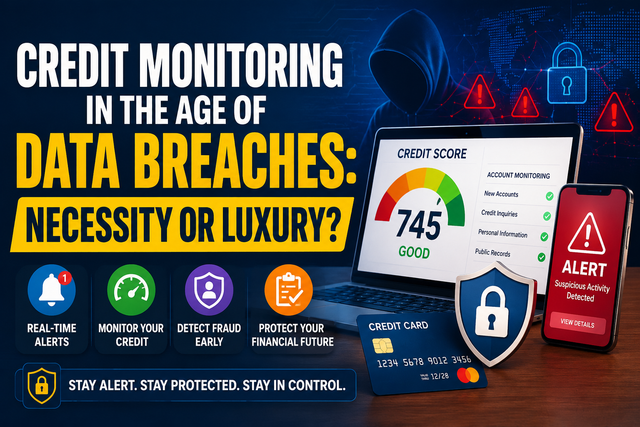
Credit monitoring has become part of modern financial safety. It is not only about watching a score rise or fall. It is about noticing suspicious activity quickly, understanding changes in your report, and acting before a small issue becomes expensive.
The real question is not whether monitoring is useful. The better question is whether consumers can afford to ignore it.
What Credit Monitoring Actually Does
Credit monitoring tracks activity connected to your credit profile and alerts you when certain changes appear. These may include new accounts, hard inquiries, balance changes, missed payments, address updates, or public record activity. Alerts may come by email, text, app notification, or through a dashboard.
This matters because your credit report can change without you immediately knowing. A fraudster may try to open an account using your personal details. A lender may report incorrect information. A payment may be marked late by mistake. An alert gives you an early signal, allowing you to investigate before the problem grows.
Good monitoring does not replace smart money habits. It supports them alongside budgeting, debt planning, and regular report reviews.
How Data Breaches Changed Consumer Risk
A data breach is not always dramatic from the consumer’s point of view. You may receive a notice, skim it, change a password, and move on. The problem is that exposed information can remain useful to criminals for years.
Names, dates of birth, addresses, Social Security numbers, phone numbers, and account details can be pieced together. Even partial information may help someone pass identity checks or target you with more believable scams.
This is why credit monitoring feels more necessary now. Consumers are responding to risks created by companies and systems they may not control.
Necessity or Luxury?
For some people, credit monitoring may feel like an extra feature. For others, it is a basic layer of financial protection.
It may be closer to a necessity if you:
• Have been notified that your data was exposed in a breach
• Are preparing to apply for a mortgage, auto loan, or personal loan
• Have experienced identity theft before
• Use several credit accounts or financing products
• Want faster alerts about changes to your credit profile
• Are rebuilding credit after missed payments, collections, or high balances
It may feel less urgent if your credit activity is limited and you already check reports frequently. Still, careful consumers can benefit from alerts because errors and fraud can happen quietly.
The balanced view is simple. Credit monitoring is not magic, but it can reduce the time between a problem appearing and your response.
Why Early Alerts Are So Valuable
Time is one of the most important factors in dealing with credit problems. The longer an unauthorized account remains open, the harder it can become to clean up. Late payments may be reported. Balances may grow. Your score may drop before you understand what happened.
Early alerts help you respond while the issue is still manageable. You can contact the lender, dispute inaccurate information, freeze your credit, place a fraud alert, or file an identity theft report when needed.
This is especially valuable before major financial moves. A sudden score drop before a home loan application can affect approval terms, interest rates, and monthly payments. Monitoring gives you a chance to correct issues before important decisions with more confidence.
Understanding the Limits
A common mistake is assuming that monitoring equals full protection. It does not. Most credit monitoring services watch credit report activity, not every type of fraud. Some fraud may not immediately trigger a credit alert.
Coverage also varies. Some services monitor one bureau, while others monitor all three major bureaus. Some provide identity monitoring, dark web scanning, recovery support, or insurance features. Others focus mainly on score updates and report alerts.
Before choosing any service, consumers should ask:
• Which credit bureaus are monitored?
• How quickly are alerts sent?
• Does the service include identity theft support?
• Are the scores educational or lender-used scores?
• What steps are recommended when an alert appears?
Knowing the limits prevents false confidence. Monitoring works best with strong passwords, account alerts, credit freezes when appropriate, and regular financial reviews.
Free Tools Can Improve Financial Choices
Credit protection is not only about fraud. It is also about making better decisions with debt, payments, and future borrowing. Many consumers damage credit through choices made without enough information.
That is where calculators and planning tools can help. The new Mr Credit Now tools page gives consumers free calculators to better understand payoff timelines, interest costs, debt strategies, and credit score scenarios before making important financial decisions. This resource can help users compare options, estimate the impact of extra payments, and think carefully before taking on new debt.
Used together, monitoring and planning tools give consumers both awareness and direction. Monitoring shows what is happening. Calculators help people decide what to do next. That combination is useful for anyone trying to lower balances, improve credit utilization, or prepare for a major application.
Choosing the Right Monitoring Option
Not every consumer needs the most expensive plan. A free option may be enough for occasional score updates and simple alerts. A paid service may make sense after a breach or when recovery support matters.
Before signing up, compare features carefully. Three-bureau monitoring is usually stronger than single-bureau monitoring because lenders do not all report to the same place. Fast alerts matter because delayed notifications reduce the main benefit of monitoring. Recovery assistance can be valuable if you do not know how to handle disputes or fraud claims.
Also consider whether the service explains changes clearly. An alert is only useful if you understand what it means. Plain language guidance and practical next steps can turn information into action. Price matters, but value matters more.
Habits That Make Monitoring More Effective
Credit monitoring works better when consumers respond to alerts and build simple routines around their financial life. Ignoring notifications defeats the purpose. A monthly check-in can help you stay aware without feeling overwhelmed.
Useful habits include reviewing credit reports, checking account statements, updating passwords, enabling two-factor authentication, and keeping contact details current with financial institutions. If you receive a suspicious alert, investigate promptly instead of assuming it is harmless.
It is also wise to freeze your credit when you are not actively applying for new credit. A freeze can make it harder for someone to open new accounts in your name. When you need to apply later, you can temporarily lift it.
A Smarter Way to Protect Your Financial Future
In the age of data breaches, credit monitoring is becoming less of a luxury and more of a practical safeguard. It cannot stop every threat, and it should not be treated as a complete security plan. Still, it offers something consumers badly need: visibility.
When your personal information may already be circulating beyond your control, visibility gives you a chance to act. It helps you notice unauthorized activity, correct reporting errors, and protect future borrowing opportunities. For people managing debt, rebuilding credit, or preparing for major financial decisions, the value can be even greater.
The best approach is not fear. It is informed preparation. Use credit monitoring services thoughtfully, combine them with sound money habits, and take advantage of educational tools that clarify your options. In a financial world shaped by digital risk, being alert is not excessive. It is responsible.
