Day 10 — designing for "what if nobody answers your survey
Last post, someone here asked a fair question: was I designing survey
quality when specialist acquisition or demand generation were
probably bigger risks? I didn't have a good answer at the time, and
said as much.
Today I tried to actually act on that instead of just agreeing with
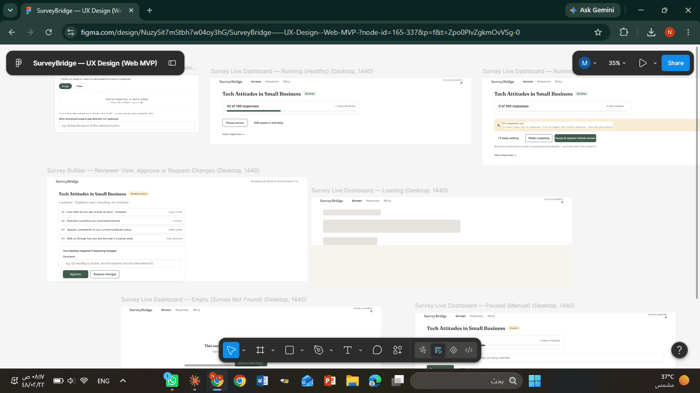
it. I designed the live survey dashboard for companies — including
the state I think matters most: what happens when a survey gets zero
responses after days of being live.
Instead of silence or a vague "still collecting," it tells the
company directly: "I've been 4 days with no responses. This can
happen with narrow targeting — here are your options," then gives
real choices: keep waiting, widen targeting, or pause and request a
refund review.
This doesn't solve specialist acquisition, which is still the bigger
open risk. But it's an honest attempt at not hiding the demand-side
failure mode either, instead of only designing the happy path where
everything works.
Still zero app code. Appreciate the pushback that led here.

The zero-response state is a thoughtful addition, especially because most products only design for the successful path.
You mentioned specialist acquisition is still the bigger open risk. What are you doing next to learn whether that side actually works?
Good correction. The zero-response state should not be just a refund workflow; it should become a diagnosis. Separate targeting failure, incentive failure, channel failure, and sample-size failure, then show the company which assumption each next action tests. Widening targeting may increase responses while destroying panel quality, so I would expose the trade-off explicitly. Before writing more app code, manually run ten specialist recruitments and record time-to-first-response, completion rate, no-show rate, and cost per usable response. That will tell you whether the product risk is dashboard UX or supply acquisition.